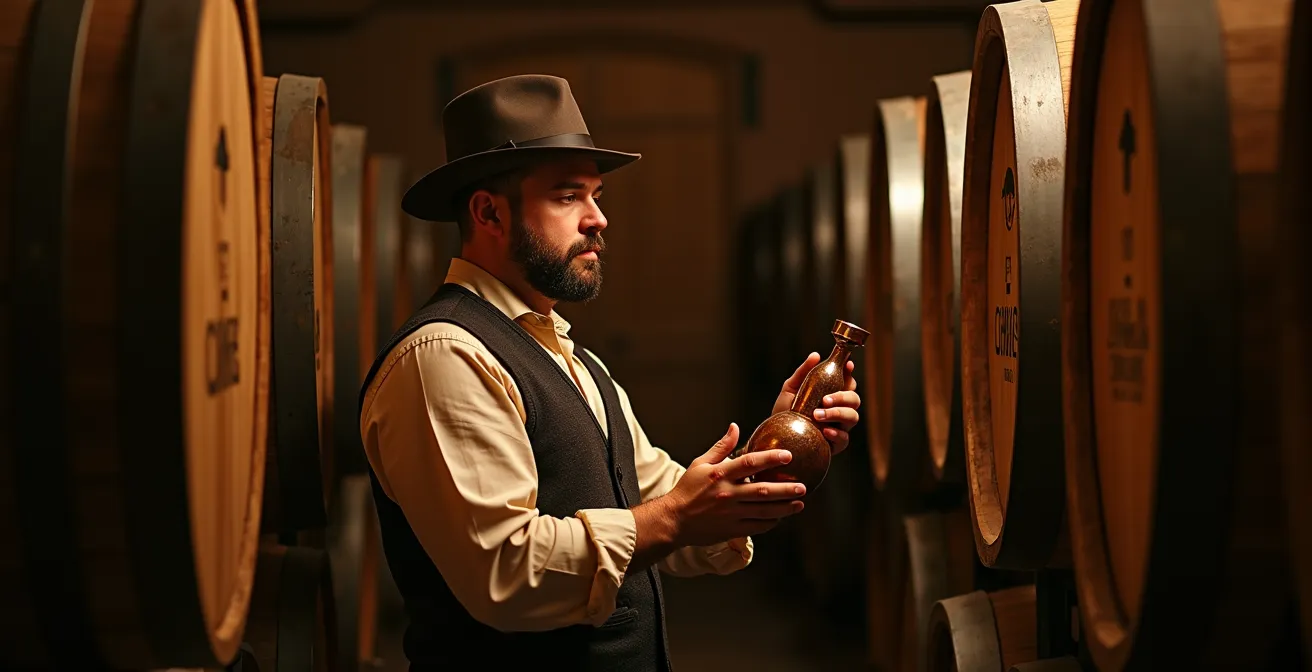
Modern cocktail culture has rediscovered what French artisans have known for centuries: true luxury in a glass cannot be rushed, manufactured, or replicated. While contemporary craft spirits emphasize innovation and speed, cognac’s centuries-old traditions offer something fundamentally different—a depth of flavor and cultural resonance that transforms cocktails from drinks into experiences.
This transformation begins not in the glass, but in the chalky soils of southwestern France, where geographic heritage creates a tangible flavor architecture. The world’s leading bartenders increasingly turn to Rémy Martin mixology techniques precisely because cognac’s production methods—rooted in terroir, multi-generational blending wisdom, and patient aging—provide mixological tools unavailable in younger spirits.
What distinguishes cognac in modern cocktail culture extends beyond taste profiles or production timelines. It represents an invisible knowledge transfer from cellar masters to bartenders, a philosophical alignment between French luxury heritage and contemporary demands for authenticity, and ultimately, the integration of cultural memory into every sip. This article explores how geographic heritage evolves into intangible cultural wisdom that fundamentally redefines cocktail creation and experience.
French Cognac in Modern Mixology: Essential Insights
Cognac’s unique position in cocktail culture stems from its terroir-driven flavor complexity, time-created molecular depth, and centuries of accumulated blending expertise. Unlike contemporary spirits, cognac provides bartenders with built-in structural complexity, consistent quality guaranteed by AOC standards, and rich storytelling potential. This combination transforms cocktails from simple mixed drinks into culturally-resonant luxury experiences that honor both tradition and innovation.
When Terroir Becomes Technique: How Cognac’s Geographic Legacy Shapes Flavor Architecture
Geographic origin operates as more than marketing romance in cognac production—it functions as an active flavor-building system that skilled mixologists leverage with surgical precision. The Cognac region’s subdivisions create what professionals call a “flavor grammar,” where specific soil compositions, microclimates, and maritime influences generate predictable aromatic compounds that bartenders orchestrate like instruments in a symphony.
The foundation of this system lies beneath the surface. The region’s distinctive geology, particularly in premier crus like Grande Champagne, creates mineral structures that fundamentally alter how cognac interacts with other cocktail components. Research reveals that chalky soils contribute 70% of cognac’s mineral backbone, providing a structural foundation that anchors citrus-forward cocktails differently than grain-based spirits ever could.

This chalky limestone substrate creates a crisp mineral thread that runs through the final distillate, offering bartenders a natural counterpoint to acidic modifiers without the heaviness associated with barrel-aged whiskeys. The maritime influence from the Atlantic Ocean, meanwhile, introduces subtle salinity notes that modern mixologists exploit in savory cocktail trends—an earthy, almost umami-like quality that cannot be artificially replicated through salt tinctures or saline solutions.
Understanding sub-regional terroir variations allows bartenders to compose cocktails with the same intentionality a conductor selects musicians. A Grande Champagne cognac’s floral elegance and delicate structure naturally complement botanical modifiers like elderflower or chamomile, creating layered aromatics that evolve throughout the drinking experience. Conversely, cognacs from Borderies, with their distinctive violet and nutty characteristics derived from clay-chalk soil mixtures, provide an entirely different compositional direction.
| Region | Soil Type | Flavor Profile | Cocktail Application |
|---|---|---|---|
| Grande Champagne | Pure chalk | Floral, elegant | Citrus-forward cocktails |
| Borderies | Clay-chalk mix | Nutty, violet notes | Botanical cocktails |
| Fins Bois | Red clay | Fruity, robust | Fruit-based cocktails |
This geographic precision transforms ingredient selection from guesswork into strategic architecture. A bartender crafting a spring menu cocktail featuring fresh pea and mint might specifically select a Borderies cognac, knowing its violet notes will bridge the green, vegetal elements while its nutty undertones provide warmth. The same cocktail built on a Fins Bois cognac, with its red clay-derived fruit-forward robustness, would create an entirely different flavor trajectory—bolder, less nuanced, potentially overwhelming the delicate vegetable components.
The practical impact extends to cocktail stability and evolution. Terroir-driven mineral content affects how cognac oxidizes in stirred cocktails versus shaken preparations, influencing texture development and flavor integration over time. This geological inheritance becomes particularly crucial in batch-aged cocktail programs, where understanding how specific cru characteristics evolve during extended bottle aging separates competent bartending from true craft mastery.
The Cellar Master’s Palette: Translating Centuries of Blending Wisdom into Cocktail Composition
While terroir provides the raw material, human expertise transforms geographic potential into liquid artistry. The cognac industry’s cellar masters—maîtres de chai—possess accumulated knowledge spanning generations, an invisible library of sensory memory and blending philosophy that directly informs sophisticated modern cocktail construction. This knowledge transfer operates beneath the surface of cocktail culture, rarely acknowledged yet fundamentally influential.
The traditional cognac house structure embodies this wisdom transfer. As industry documentation confirms, the role demands exceptional skill and consistency.
Each cognac house has a master taster who blends spirits so that cognac will have a consistent house style, similar to blending whisky or Champagne
– Wikipedia Contributors, Wikipedia – Cognac
This parallel between cognac blending and cocktail layering extends far deeper than simple mixing. The cellar master’s concept of “marriage”—allowing blended cognacs to rest together so disparate elements harmonize before bottling—mirrors the contemporary bartending trend toward batch-aging cocktails. Both practices recognize that time allows flavors to integrate at a molecular level, creating unified profiles impossible through simple combination alone.
The assemblage technique itself offers a template for modern cocktail texture building. Cellar masters balance young eaux-de-vie, which provide vibrancy and fresh fruit characteristics, with older reserves that contribute complexity, length, and structural depth. This youth-age tension creates dynamic flavor profiles that evolve from initial sip through finish. Progressive bartenders apply identical principles when constructing layered cocktails, using fresh citrus for brightness while relying on cognac’s inherent aged complexity to provide backbone and resonance.
Perhaps most significantly, the industry’s commitment to multi-generational expertise creates quality baselines that enable creative confidence. Current data shows over 200 cognac producers maintain multi-generational blending traditions, ensuring that institutional knowledge accumulates rather than resets with each generation. This continuity means a bartender selecting a particular house style can rely on flavor consistency maintained across decades.
The practice of “petites eaux”—the controlled addition of distilled water to gradually reduce cognac to bottling strength—demonstrates another knowledge transfer point. Cellar masters learned centuries ago that abrupt dilution shocks the spirit, creating textural harshness and flavor imbalance. Instead, they reduce strength incrementally over months, allowing the spirit to integrate water molecules gradually. Modern mixologists apply this wisdom when considering dilution rates in stirred cognac cocktails, understanding that proper water integration enhances rather than diminishes complexity.
This cellar master philosophy of “taste memory”—mentally cataloging how specific barrels, vintages, and blends evolve over years and decades—teaches bartenders to think beyond immediate flavor. A well-constructed cognac cocktail should not present all its complexity in the first sip. Like the spirit itself, it should reveal layers progressively, rewarding contemplation and encouraging slower, more mindful consumption. This represents a philosophical departure from the immediate flavor impact prioritized in many contemporary cocktails, aligning instead with luxury’s emphasis on sustained experience.
Time as Ingredient: Why Cognac’s Patient Aging Unlocks Mixological Possibilities
Modern craft spirits culture celebrates innovation, experimentation, and rapid iteration. Distilleries release limited editions monthly, bartenders rotate menus seasonally, and consumers chase novelty. Cognac offers something fundamentally different: time itself as an irreplaceable ingredient, creating molecular complexity that decades in oak barrels generate but no contemporary technique can replicate or accelerate.
Extended barrel aging transforms cognac through processes invisible to the naked eye but profoundly impactful on the palate. Oak contact over years and decades creates vanillin and tannin structures that provide what mixologists call “built-in complexity”—layered flavor architecture already present in the base spirit, reducing the need for multiple modifiers, bitters, and sweeteners that would be required to achieve similar depth with younger spirits.
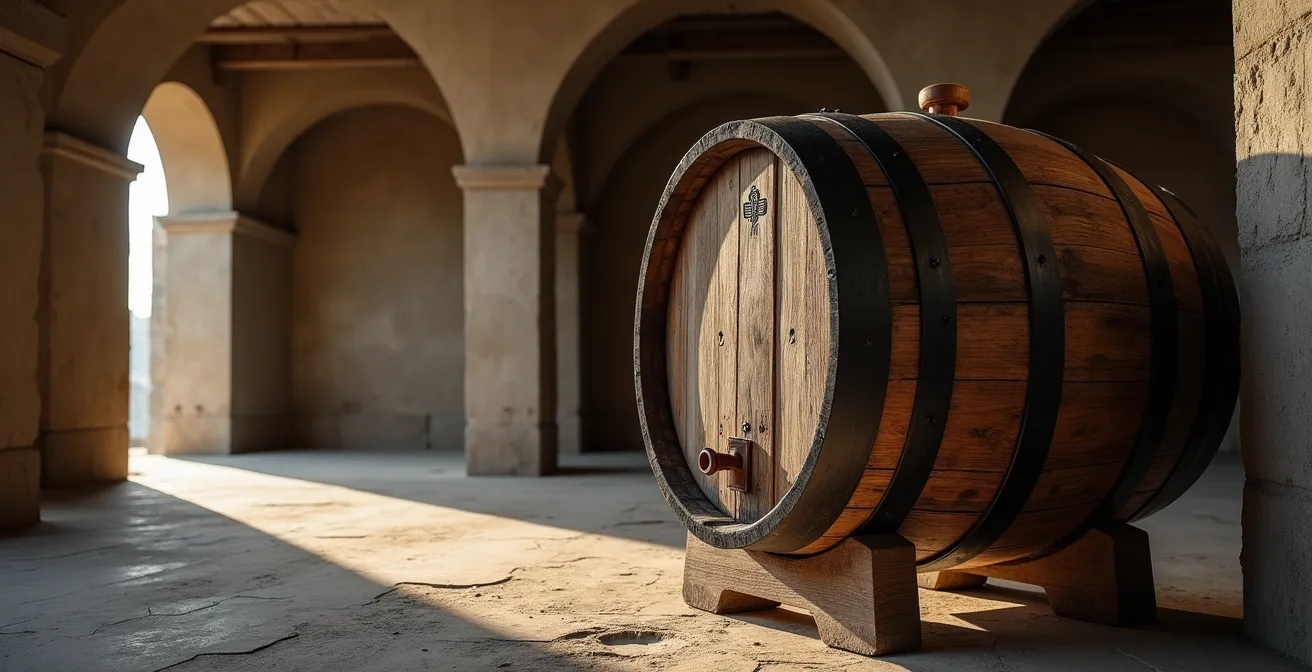
This time-created complexity manifests most dramatically in the rancio character found in well-aged cognacs. This term, borrowed from the wine world, describes a distinctive umami-like quality that develops only after extensive oxidative aging—often requiring two decades or more. The rancio profile introduces savory depth reminiscent of mushrooms, leather, and aged cheese, enabling cocktail innovation impossible with young spirits. Progressive bartenders leverage this inherent savoriness in cocktails featuring ingredients like miso, tomato water, or smoked elements, where cognac’s rancio characteristics provide harmonic resonance rather than flavor clash.
The aging process also creates what spirits scientists call “stable flavor platforms.” Unlike reductive-aged spirits that develop in closed environments with minimal oxygen exposure, cognac matures oxidatively. This oxygen interaction during decades of barrel aging creates molecular structures remarkably resistant to further oxidation, meaning cognac-based cocktails maintain flavor integrity through dilution and mixing better than many contemporary spirits. A stirred cognac cocktail left on a bar for twenty minutes evolves rather than degrades, revealing different aromatic facets instead of simply becoming watery and dull.
From a molecular perspective, time enables esterification—chemical reactions between acids and alcohols that produce complex fruity compounds impossible to replicate through fresh fruit additions. These esters create the dried fruit, fig, and apricot notes characteristic of aged cognac, providing natural sweetness and fruit complexity without added sugar or muddled ingredients. This inherent fruitiness allows bartenders to construct “clean” cocktails with sophisticated fruit profiles using fewer components, appealing to modern preferences for transparency and simplicity in cocktail construction.
The textural dimension of aged cognac deserves equal consideration. Decades of barrel interaction create a silky, almost oily mouthfeel that contemporary spirits rarely achieve. This texture contributes to cocktail body and weight, creating luxurious sensory experiences even in relatively simple preparations. A cognac Old Fashioned built with minimal dilution showcases this textural complexity in ways a bourbon equivalent, despite its own barrel aging, cannot fully match due to different aging philosophies and timeframes.
Perhaps most importantly for cocktail culture, time-aging creates irreproducibility—a quality increasingly valuable in an era of mass production and global distribution. Each barrel ages uniquely based on cellar location, seasonal temperature variations, and wood characteristics. This inherent variation means that older cognac reserves possess individuality that becomes part of the cocktail’s story, offering exclusivity and uniqueness that resonate with luxury consumer psychology.
From AOC Rigor to Creative Freedom: How French Authenticity Standards Elevate Cocktail Integrity
Regulations often constrain creativity, imposing rigid frameworks that limit innovation. Yet cognac’s strict AOC regulations reveal a paradox competitors consistently overlook: how systematic quality standards create the consistent baseline that liberates rather than restricts creative experimentation. For mixologists, this regulatory rigor translates directly into professional confidence and reproducible excellence.
The AOC framework mandates specific distillation methods—copper pot stills and double distillation—that create flavor consistency bartenders rely upon when developing cocktail specifications. Unlike unregulated “brandy” categories where production methods vary wildly between producers, any cognac adhering to AOC standards meets predictable quality thresholds. This means a bartender in Tokyo specifying “VSOP Grande Champagne” in a cocktail recipe can trust that a bar in New York using different producers within the same classification will achieve substantially similar results without recipe reformulation.
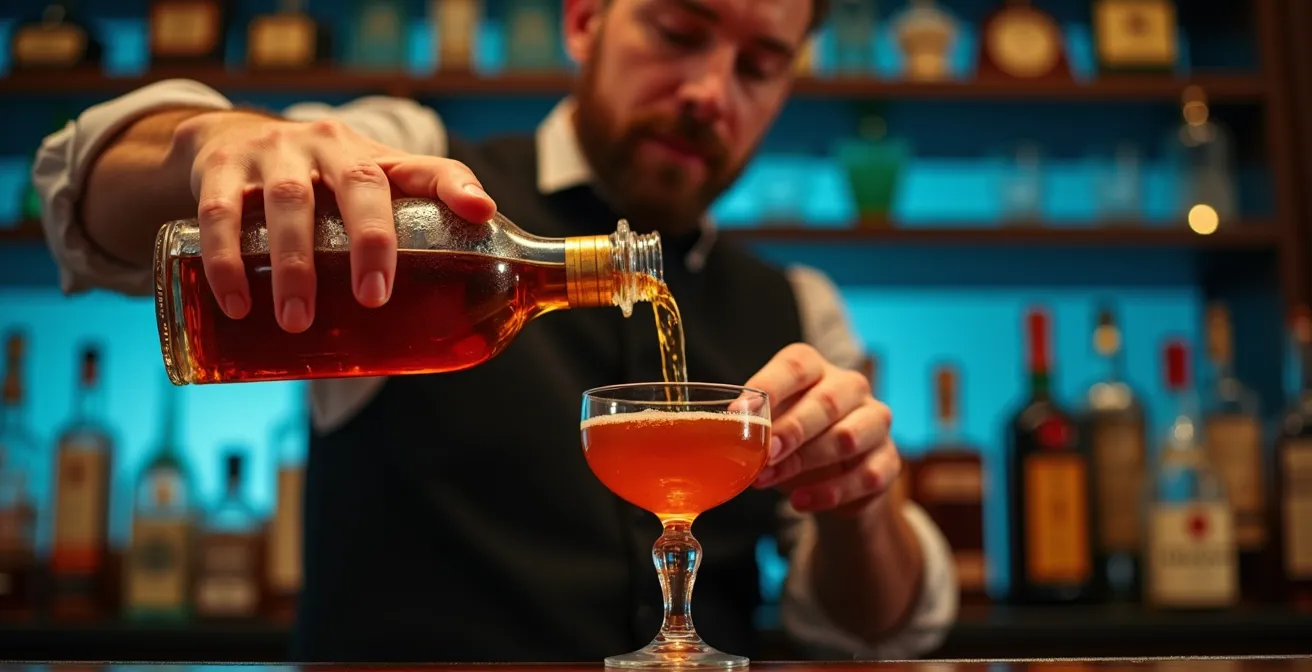
Geographic boundary enforcement through AOC designation ensures that terroir characteristics remain authentic and verifiable. When regulations guarantee that Grande Champagne cognac originates exclusively from specific chalky limestone terroir, bartenders can make ingredient selections based on predictable flavor profiles rather than marketing claims. This traceability addresses modern cocktail culture’s increasing demand for ingredient transparency and provenance—values that align perfectly with French luxury heritage’s historical emphasis on controlled origin and authentic craftsmanship.
The philosophical alignment extends beyond mere technical specifications. French AOC philosophy emerged from the same cultural values that now drive premium cocktail culture: respect for tradition, commitment to quality over quantity, and recognition that certain products cannot be authentically produced anywhere or by anyone. This shared value system creates natural synergy between cognac heritage and contemporary craft cocktail movements, both of which reject industrialization and mass production in favor of artisanal integrity.
For practical cocktail program management, regulatory consistency enables crucial operational flexibility. Bartenders can substitute cognac producers within the same classification without significant recipe impact, providing supply chain resilience while maintaining cocktail integrity. If a preferred VSOP becomes unavailable, another AOC-certified VSOP from the same cru offers reliable replacement, unlike unregulated spirit categories where producer substitution might fundamentally alter cocktail balance.
This regulatory framework also protects against quality degradation over time. Because cognac standards remain legally enforced rather than voluntary, producers cannot gradually reduce quality to increase profit margins without losing designation. For bar programs building signature cocktails around specific cognac classifications, this legal protection ensures the drinks they perfect today will remain achievable with equivalent quality five or ten years forward—crucial for establishing signature serves and maintaining brand consistency.
The constraint-enables-creativity principle manifests most clearly in how AOC limitations force innovation within boundaries. Just as classical poetry’s strict meter and rhyme schemes challenged poets to achieve beauty through disciplined creativity, cognac’s production constraints challenge both producers and mixologists to innovate through refinement rather than radical departure. This produces evolution that honors heritage while embracing modernity, precisely the balance luxury consumers increasingly seek in their drinking experiences.
Key Takeaways
- Cognac’s chalky terroir creates mineral complexity that anchors cocktails with structural depth unavailable in grain spirits
- Multi-generational cellar master blending techniques directly inform modern cocktail layering and batch-aging practices
- Decades of oxidative aging produce molecular complexity and stable flavor platforms that enhance cocktail integrity through dilution
- AOC regulations ensure quality consistency that enables bartenders to experiment creatively with reliable foundational ingredients
- Cognac’s cultural heritage transforms cocktails from drinks into storytelling experiences that resonate with luxury consumer psychology
Cultural Memory in the Glass: How Cognac Heritage Redefines Modern Luxury Drinking Experiences
Technical excellence alone cannot explain cognac’s elevated position in cocktail culture. Beyond terroir systems, blending wisdom, time-created complexity, and regulatory consistency lies something less tangible but equally powerful: cultural memory. This accumulated heritage transforms cocktails from skillfully mixed drinks into narrative-rich experiences, addressing modern luxury’s fundamental shift from product acquisition to meaning creation.
Multi-generational family house narratives provide storytelling depth that single-origin craft spirits cannot match. When a bartender prepares a cocktail using Hennessy, Rémy Martin, or Courvoisier, they incorporate not just liquid but legacy—stories of families who have refined their craft across centuries, surviving wars, economic upheavals, and changing tastes while maintaining unwavering commitment to quality. These narratives add emotional resonance to the drinking experience, creating connections between contemporary consumers and historical continuity that extends beyond the immediate sensory moment.
This connection to history operates psychologically through what researchers call “inherited luxury”—the perception that centuries-old production methods create inherent value transcending actual taste differences. While blind tastings might reveal smaller quality gaps than price differences suggest, the knowledge that one drinks from a tradition maintained across generations creates psychological satisfaction that pure flavor cannot provide alone. This explains why cognac cocktails command premium pricing even when ingredient costs only partially justify the markup—consumers pay not just for liquid but for participation in cultural heritage.
The association between cognac and French art de vivre philosophy creates additional resonance with modern cocktail culture’s evolution beyond simple intoxication toward “experience design.” Both traditions emphasize quality over quantity, encourage slow appreciation rather than rapid consumption, and frame drinking as a cultural practice embedded in broader lifestyle aesthetics. When contemporary bars invest in custom glassware, precise ice programs, and theatrical presentation, they echo centuries-old cognac serving rituals that treated spirits as worthy of ceremony rather than mere utilitarian consumption. Exploring these broader cultural connections, such as French lifestyle traditions, reveals the philosophical foundations underlying premium cocktail culture.
The ritual dimension itself carries significance. Traditional cognac service—warmed snifters, contemplative sipping, post-dinner timing—informed modern elevated cocktail presentation and theater. Progressive bars adopt similar ritualistic elements: hand-carved ice spheres presented tableside, cognac-based cocktails served in specialized glassware, elaborate garnish preparations performed before guests. These rituals slow consumption, encouraging mindfulness and appreciation that align with luxury’s positioning against mass-market accessibility and speed.
This cultural weight also addresses authenticity concerns increasingly central to luxury consumer psychology. In an era of mass production and global homogenization, cognac’s protected designation and regional specificity offer verifiable authenticity that marketing alone cannot manufacture. For cocktail programs, this authentic heritage provides differentiation in oversaturated markets where technical skill has become commodified. When dozens of bars can execute perfect Manhattans, the narrative surrounding ingredient selection becomes the crucial differentiator—and cognac’s cultural memory provides richer stories than newer spirits can offer.
The heritage dimension creates permission for premium pricing structures that benefit both producers and venues. Consumers accept that drinks incorporating cognac cost more not merely due to ingredient expense but because they access cultural capital and historical legacy. This psychological acceptance enables sustainable business models for craft cocktail programs while maintaining quality standards that would be economically impossible with commodity pricing expectations. Just as understanding French wine excellence requires appreciating heritage alongside technique, cognac cocktails demand recognition that cultural memory enhances rather than decorates the drinking experience.
Ultimately, cognac’s cultural heritage transforms cocktail creation from technical exercise into cultural conversation. Each drink becomes a bridge between past and present, tradition and innovation, French artisanal heritage and global contemporary culture. This elevated positioning redefines what luxury drinking means in modern contexts—not ostentatious consumption but meaningful participation in traditions that honor quality, patience, and cultural continuity. In this transformation, geographic terroir becomes flavor architecture, cellar master wisdom informs bartender craft, time creates irreplaceable complexity, regulations enable creative freedom, and heritage memory elevates mere drinks into cultural experiences worthy of contemplation, conversation, and celebration.
Frequently Asked Questions About French Cognac Mixology
What makes cognac different from other spirits in cocktails?
Cognac brings multi-layered complexity developed through terroir-specific production, extended oak aging, and traditional blending techniques. Unlike contemporary spirits, it provides built-in flavor architecture with mineral backbone, fruity esters from years of barrel interaction, and stable aromatic platforms that maintain integrity through dilution. This depth reduces the need for multiple modifiers while creating cocktails that evolve rather than fade as ice melts.
How does cognac terroir affect cocktail flavor profiles?
Different cognac regions produce distinct flavor compounds based on soil composition and climate. Grande Champagne’s chalky limestone creates floral elegance ideal for citrus-forward drinks, while Borderies’ clay-chalk soils produce nutty, violet notes that complement botanical ingredients. Fins Bois delivers robust fruitiness suited to fruit-based cocktails. Understanding these terroir variations allows bartenders to select cognacs that harmonize with specific cocktail components rather than fighting against them.
Why do bartenders prefer cognac over regular brandy for premium cocktails?
Cognac’s AOC regulations guarantee consistent production methods and quality standards that unregulated brandy categories lack. This consistency enables bartenders to develop reproducible cocktail specifications with predictable results. Additionally, cognac’s mandatory minimum aging requirements ensure complexity levels that many brandies never achieve. The combination of regulatory protection and traditional production methods creates reliable quality that justifies premium cocktail positioning and pricing.
Can cognac replace whiskey in classic cocktails?
Cognac can successfully substitute for whiskey in many classic templates, though the results differ from the originals. A cognac Old Fashioned emphasizes fruit and floral notes rather than grain and caramel characteristics. Cognac Manhattans become silkier and more elegant with pronounced dried fruit complexity. The key is understanding that substitution creates new drinks rather than replicas—cognac’s oxidative aging and grape base produce fundamentally different flavor profiles than whiskey’s reductive aging and grain foundation.