Paris insolite
Beyond the Eiffel Tower and the grand Haussmannian boulevards, there exists a parallel capital, codified and often invisible at first glance. Exploring hidden Paris does not simply mean searching for anecdotal curiosities, but understanding how to access the closed circles of contemporary creation, whether in art, design, or gastronomy.
This resource aims to give you the keys to navigating this complex ecosystem. Whether you are an amateur collector seeking to understand why prices differ between London and Paris, or a culture enthusiast wishing to avoid the crowds of the Louvre to experience genuine aesthetic immersion, we decode here the practices and strategies of insiders.
Understanding and navigating the Paris art market
Paris remains a major hub of the global art market, but its mechanisms can seem opaque to newcomers. It is not uncommon to observe significant price differences for the same artist depending on whether the work is acquired in a Parisian gallery or through an international intermediary. Understanding these dynamics is essential for anyone looking to build a coherent collection.
The dichotomy between the Right Bank and the Left Bank
The choice of neighborhood is not trivial and often defines the type of art you will encounter. While Le Marais concentrates an exceptional density of international contemporary art galleries, Saint-Germain-des-Prés retains a more traditional aura, often associated with tribal art or historical design. Knowing how to identify the district that matches your artistic sensibility is the first step in optimizing your visits.
Investment: Institutional artists or independent ones?
A distinctive feature of France lies in the strong public support for creation through the FRAC (Regional Contemporary Art Funds). For collectors, a question arises: should one prioritize artists supported by these institutions, a sign of cultural recognition, or focus on self-represented talents? Analyzing documentation and the provenance of artworks is crucial here to secure your acquisitions and avoid common pitfalls linked to a lack of historical records.
Accessing private circles: private viewings and showrooms
Access to the most cutting-edge creation in Paris is often by invitation or appointment. Unlike standard retail spaces, the best designers and most influential galleries cultivate a level of discretion that can be intimidating. However, these doors are not closed—they simply require the right approach to open them.
The art of networking for private viewings
Attending a private opening or exhibition preview before the general public is not reserved for a social elite. There are specific strategies to get invited without necessarily knowing the organizers personally. This often involves demonstrating genuine professional or artistic interest ahead of the event. Understanding the difference between a museum opening (often institutional) and a gallery vernissage (more conducive to networking) is also essential.
Gaining access to discreet design showrooms
Many French designers do not have street-facing storefronts. Their creations are only visible in private showrooms, often located in inner courtyards or apartments. To secure an appointment without being an accredited professional, a precise etiquette should be followed via email:
- Avoid generic requests; show that you are familiar with the creator’s work.
- Clearly state your intent (collector, specific interior project).
- Adopt a tone that respects the time constraints of these artisans.
Visiting strategies for national museums
Visiting the Louvre or the Musée d’Orsay can become an endurance test if one does not master visitor flows. However, it is entirely possible to find oneself alone in front of masterpieces—even in the world’s busiest museums—by adopting a tactical approach.
Optimizing your visit to the Louvre
The classic mistake is trying to see everything or heading straight to the Mona Lisa, which guarantees a crowd-heavy experience. A successful visit to the Louvre requires preparation:
- Timing: Prefer evening openings or weekday lunch slots.
- Specialization: Instead of wandering aimlessly, focus on a specific department, such as Egyptian antiquities or Italian painting (outside the Grande Galerie), which often feature less crowded rooms.
- The 3-hour route: Plan a precise itinerary in advance to avoid museum fatigue and confusion due to the palace’s complex layout.
Cultural alternatives: Pompidou, Orsay, and smaller museums
If the Louvre requires significant logistics, other venues such as the Centre Pompidou or the Musée d’Orsay offer different visiting experiences. Additionally, do not overlook smaller, more confidential museums or specialized galleries (Art Nouveau, contemporary photography), which often provide a more intimate and memorable connection with the works, away from tourist crowds.
The art of living: bistronomy and authenticity
Hidden Paris is also about a certain approach to taste and lifestyle, far removed from the “romantic” clichés often crafted for foreign visitors. The true Parisian scene unfolds in bistronomy dishes and in artisan workshops.
The bistronomy scene and its codes
Bistronomy has transformed Parisian dining by combining fine cuisine with a relaxed atmosphere. However, the best tables—such as Septime or Clown Bar in their early days—require careful planning. The most common booking mistake is waiting too long or ignoring menu seasonality, when chefs express their creativity at its peak.
Breaking the clichés of Parisian style
Whether in interior design or gastronomy, beware of “FrenchRomantic” labels, which often describe inauthentic and historically inaccurate aesthetics designed for an external gaze. True quality is found among artisans who do not aim to match a preconceived image, but instead preserve genuine craftsmanship—such as true artisan chocolatiers who process beans from scratch, as opposed to chains targeting tourists.
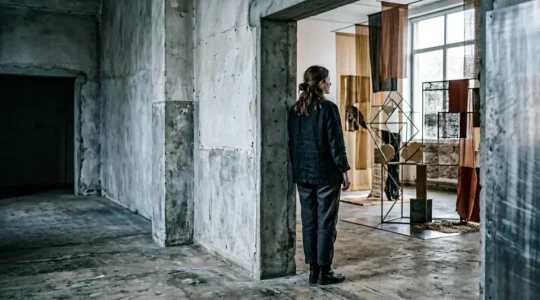
Why Does French Avant-Garde Art Feel Inaccessible Even to People Who Love Contemporary Art?
The baffling nature of French avant-garde art isn’t a failure of your understanding; it’s a feature of a unique cultural system you haven’t been taught to navigate. France operates under a policy of “cultural exception,” funding art to protect its…
Read more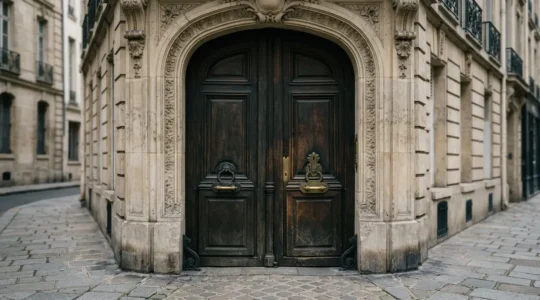
Why Can’t You Find the Design Showrooms That Appear in French Magazines?
Contrary to popular belief, you don’t need to be an interior designer to access France’s most exclusive showrooms; you need to understand and respect their cultural codes. Exclusivity is a deliberate brand strategy, not a logistical hurdle. It protects the…
Read more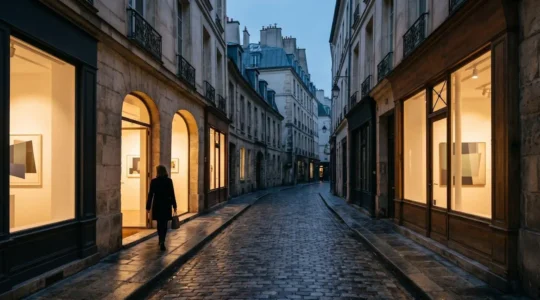
Why Do You Only Hear About Paris Exhibitions After They’ve Already Closed?
The frustration of missing a Paris art show stems from relying on public information, while the real scene operates on a semi-private ‘operational calendar’. The most coveted events (vernissages, private views) are not for tourists, but for a professional network…
Read more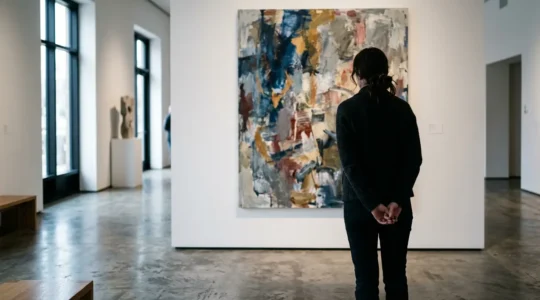
Why Do Tiny Paris Galleries Sometimes Offer More Memorable Art Experiences Than the Louvre?
The belief that you need insider connections to access Paris’s best art is a myth; the real key is understanding the city’s unique gallery ecosystem. Small galleries are not just shops but talent incubators, surviving by launching artists onto the…
Read more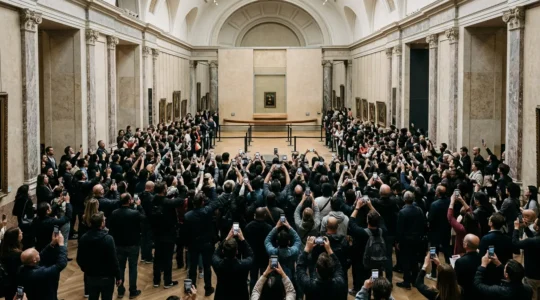
Why Do People Leave the Louvre Having Only Seen the Mona Lisa They Couldn’t Get Near?
Contrary to popular belief, a successful Louvre visit has nothing to do with seeing the ‘Big Three’ and everything to do with outsmarting the museum’s design. The Louvre’s confusing layout isn’t a flaw; it’s a strategic tool you can use…
Read more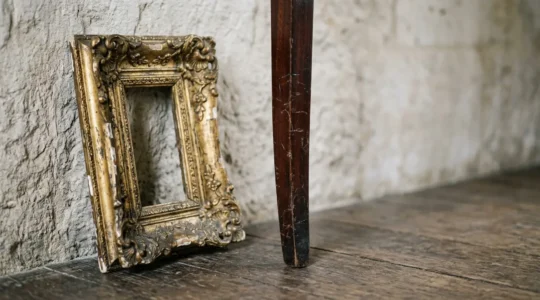
Why “French Romantic” Decoration So Often Looks Clichéd
The “French Romantic” cliché comes from copying a look without understanding its soul: it was a philosophical movement, not a shopping list. Authentic Romanticism prioritises emotion, history, and individualism over formulaic decoration. True elegance is found in restraint, the patina…
Read more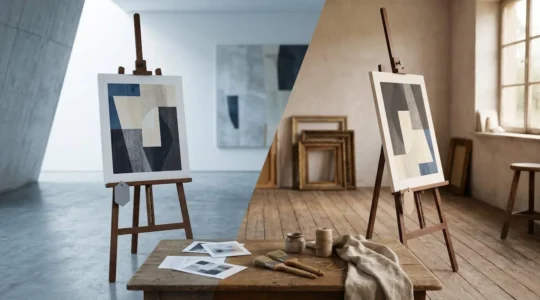
Why UK Collectors Pay a 40% Premium for French Art in London—And How to Avoid It
The higher price for French art in London isn’t arbitrary; it’s a “tax” on information asymmetry that savvy collectors can strategically bypass. Structural costs like Brexit-related red tape and the French artist’s resale right (*droit de suite*) are often bundled…
Read more