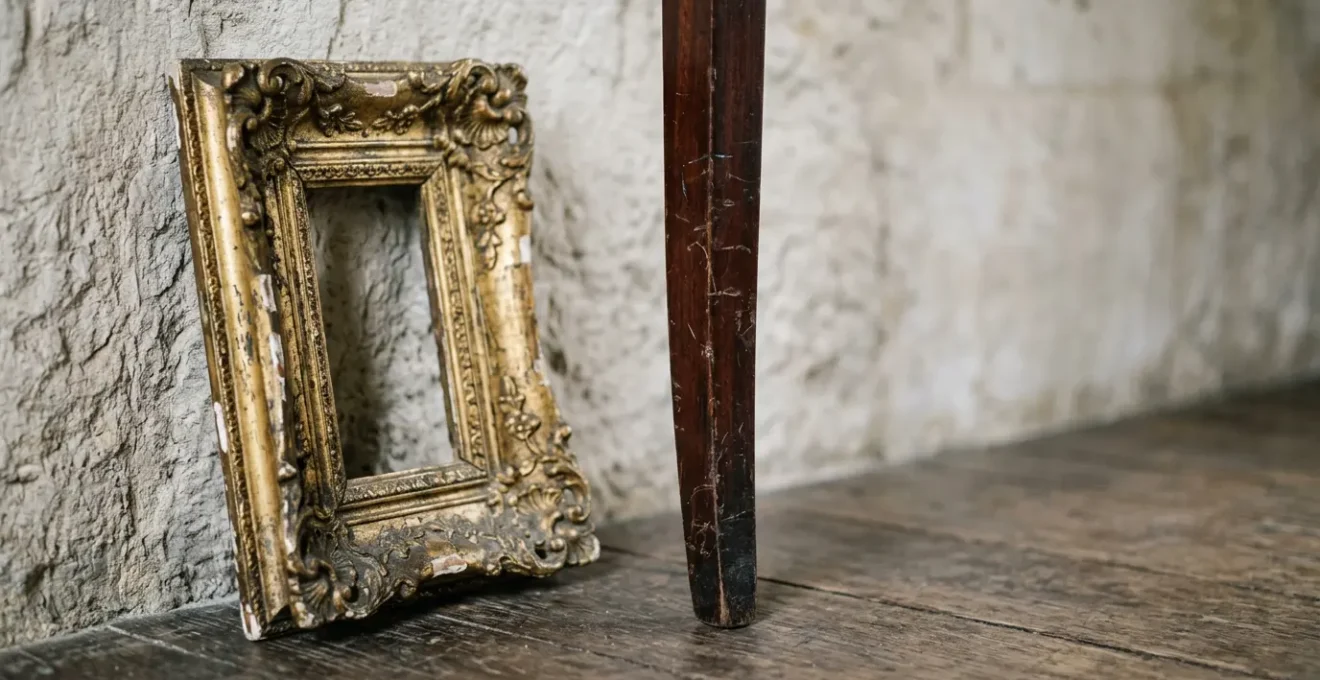
The “French Romantic” cliché comes from copying a look without understanding its soul: it was a philosophical movement, not a shopping list.
- Authentic Romanticism prioritises emotion, history, and individualism over formulaic decoration.
- True elegance is found in restraint, the patina of time, and mixing old with new, not in a themed reproduction.
Recommendation: Stop trying to decorate a “French Romantic” room and start curating a personal space that tells a story, values imperfection, and embraces intellectual confidence.
There is a peculiar frustration familiar to many design enthusiasts. You see an image of a Parisian apartment, effortlessly chic, steeped in a certain historical poetry. You try to replicate it, carefully sourcing a gilded mirror, a roll of toile de Jouy, perhaps a chaise lounge. Yet, the result feels… wrong. It looks less like a home in the 6th arrondissement and more like a stage set, a costume drama parody. The “French Romantic” style, so alluring in theory, often becomes a collection of clichés in practice.
The common advice to simply acquire a list of “romantic” items is the very source of the problem. This approach reduces a profound cultural and intellectual movement to a series of decorative props. It confuses the historic Romanticism of the early 19th century—a rebellion of emotion and individualism—with the modern, commercialised aesthetics of “shabby chic” or generic “French country.” The truth is, authentic French style has never been about slavish adherence to one look.
But what if the key wasn’t in what you add, but in what you understand? What if the soul of French Romanticism isn’t an aesthetic to be copied, but a philosophical stance to be embodied? This is not a guide on what to buy, but a historical exploration of *why* certain spaces feel authentic while others feel like souvenirs. We will deconstruct the commercial cliché to uncover the intellectual and emotional foundations of true romantic design.
By exploring the movement’s historical roots, its valuation of time and imperfection, and its deep-seated belief in elegance through restraint, you will learn how to reference this powerful period in your own home with intelligence and authenticity, creating a space that feels not just decorated, but truly alive.
Summary: Deconstructing the “French Romantic” Cliché
- Why Do Interior Designers Use “French Romantic” to Mean Something Completely Unhistorical?
- How to Reference French Romanticism in Your Home Without Looking Like a Period Drama Set?
- Original 19th-Century Piece or Quality Reproduction: Which Brings More Romantic Atmosphere?
- The Decoration Excess That Turns Romantic Inspiration Into Costume Drama Parody
- When Should You Visit French Brocantes for Best Access to 19th-Century Decorative Arts?
- Why Do French Tables Look More Elegant With Less on Them?
- Why Does One Medieval Village Feel Alive While Another Feels Like a Museum Set?
- Why Do “Medieval Villages” Full of Souvenir Shops Feel Less Medieval Than Quiet Hamlets?
Why Do Interior Designers Use “French Romantic” to Mean Something Completely Unhistorical?
The term “French Romantic” as used in many modern design catalogues is, frankly, a marketing invention. It bundles together vague notions of old-world charm, ornate details from various eras (often more Rococo or Baroque than 19th century), and a commercialised “shabby chic” aesthetic. This conflation ignores the historical reality: Romanticism was a specific, revolutionary movement. Historically, the 19th century witnessed a significant shift towards Romanticism in French culture and design, acting as a passionate counterpoint to the rigid logic and order of the preceding Neoclassical and Enlightenment periods.
At its heart, Romanticism was a philosophical rebellion. Thinkers like Jean-Jacques Rousseau championed the purity of nature, the primacy of individual feeling, and the beauty of the untamed and sublime. It was about introspection, emotion, and a deep connection to the natural world and the past. In design, this translated not into a specific set of rules or motifs, but into an atmosphere. It valued personal expression over prescribed formulas, comfort over formality, and the character of aged materials over the perfection of the new.
The modern cliché arises because it’s easier to sell a “look” than a philosophy. A mass-produced, artificially-distressed mirror is a simple product. The concept of valuing an object for its lived history is abstract. Therefore, “French Romantic” has been co-opted to mean “ornate and vaguely old-looking,” completely stripping it of its intellectual and emotional core. It has transformed a complex movement into a simplified brand.
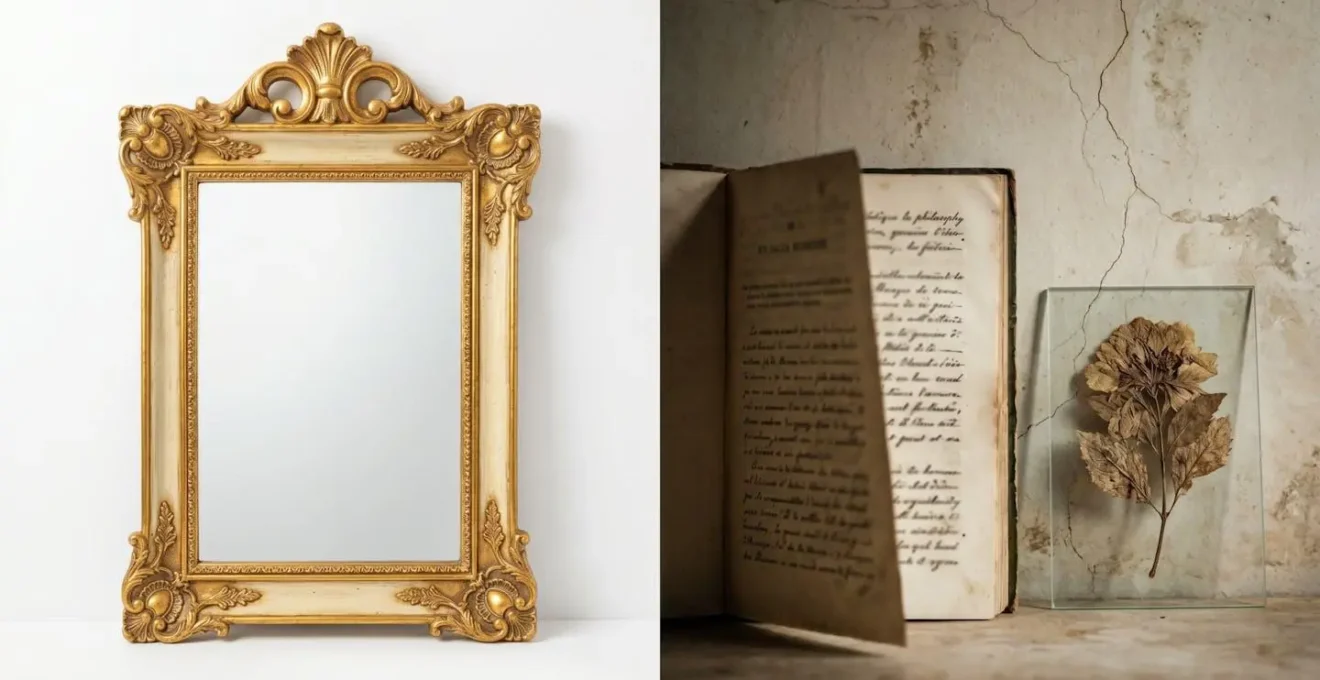
This image perfectly illustrates the divergence. On one side, we see the commercial interpretation: formulaic, artificially aged, and symmetrical. On the other, the authentic spirit: a connection to philosophy, nature, and the genuine patina of time. The cliché isn’t French or Romantic; it’s a commercial simplification that misses the entire point of the movement.
How to Reference French Romanticism in Your Home Without Looking Like a Period Drama Set?
The fastest way to turn a home into a pastiche is to pursue historical purity at all costs. An authentic Parisian apartment is compelling precisely because it is *not* a museum. It is a living space where different eras coexist and converse. The key to referencing Romanticism without creating a sterile period drama set is to embrace this dialogue between the past and the present. It’s about layering, not theme-park replication.
This means allowing a piece of 19th-century furniture to share space with a modern sofa, or hanging contemporary art above a marble fireplace that’s seen two centuries. The goal is not to erase the present in favour of the past, but to create a rich tapestry where each element highlights the character of the others. This approach requires confidence; it shows you respect the history of the space and the objects within it, but are not enslaved by them. It’s the difference between wearing a historical costume and wearing a vintage jacket with modern jeans.
As Paris-based designer Betsy Kasha explains, this balance is fundamental to the French approach. In an interview with Homes and Gardens, she notes:
French design may not be timeless, but it certainly time-travels. Contemporary elements do not dominate the apartment’s original or restored features, rather they work together to showcase the apartment’s character.
– Betsy Kasha, Designer, Homes and Gardens
To achieve this, focus on creating a foundational layer of historical integrity—restored parquet floors, original moldings, a salvaged fireplace mantel. This becomes the “stage.” Upon this stage, you can then place pieces from your own life and time. The tension between old and new is what generates energy and personality. A room filled exclusively with 19th-century reproductions feels dead because it tells only one story, and it’s a borrowed one. A room that mixes eras tells the unique story of its inhabitants.
Original 19th-Century Piece or Quality Reproduction: Which Brings More Romantic Atmosphere?
In the context of Romanticism, which values emotion and history, an original 19th-century piece will almost always bring more atmosphere than even the highest quality reproduction. The reason lies in a single, inimitable quality: patina. Patina is not merely “wear and tear”; it is the physical manifestation of an object’s history. It’s the darkening of wood where hands have rested for a century, the subtle crazing in a varnish, the soft erosion of gilded details. It is a living record of time’s passage, something that cannot be convincingly faked.
A reproduction, no matter how well-crafted, is a snapshot. It is born without a history. An original, however, carries its story with it. It has survived, been used, been cared for (or neglected), and moved through generations. This accumulated history imparts a sense of soul or presence that is central to the Romantic sensibility. It’s the difference between a printed photograph and the actual person. One is a representation; the other has lived a life.
Antique authentication experts note that true, deep patina is a process that cannot be rushed. Research published on Reality Pathing highlights that significant aging of over 100 years results in deeper color changes, crackling varnish layers, and uneven tarnish patterns that are nearly impossible to replicate artificially with any degree of authenticity. These are the very imperfections that a Romantic worldview celebrates.
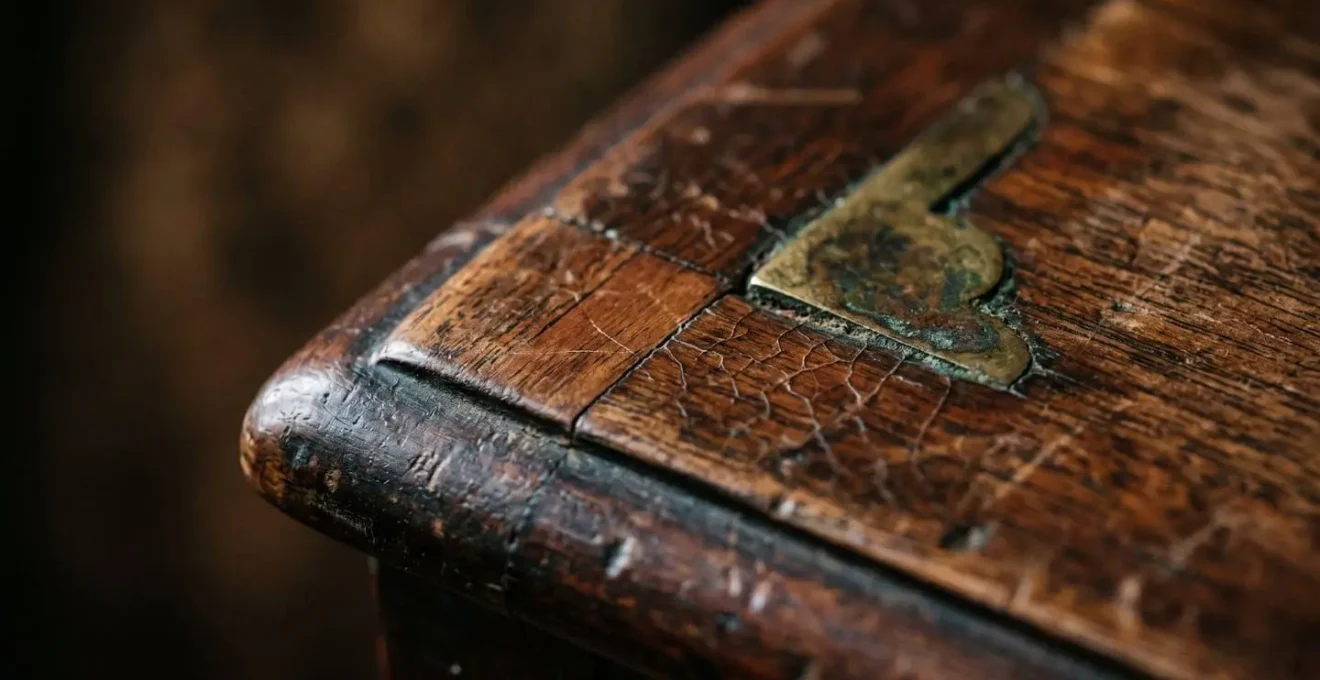
Choosing an original is an act of curation, not just decoration. You are not just buying a chest of drawers; you are becoming the next custodian of its story. This doesn’t mean every piece must be a priceless antique. A simple, time-worn wooden stool from a flea market can bring more genuine romantic character to a room than a brand-new, ornate, and expensive “Louis XV-style” armchair.
The Decoration Excess That Turns Romantic Inspiration Into Costume Drama Parody
One of the great paradoxes of French design is that its perceived richness often comes from an underlying principle of restraint. The “costume drama” parody happens when this is misunderstood, leading to an excess of signifiers. When a room is crammed with damask, swags of fabric, endless gilded objects, and overt French symbols, it suffocates. It becomes a caricature because it is trying too hard to signal “Frenchness” and “romance.”
Authentic elegance, in the French tradition, relies heavily on what is left out. It requires “negative space”—room for objects and inhabitants to breathe. An exquisite antique commode makes a far greater impact when placed against an otherwise empty wall than it does when crowded by a dozen other decorative items. This restraint isn’t about minimalism in a cold, modern sense; it’s about intellectual confidence. It’s the confidence that the quality of a few well-chosen pieces is enough, without the need for theatrical props.
The design team at The Cabinet Doctors puts it bluntly when advising on how to avoid this trap, stating that an over-reliance on obvious symbols is the fastest route to a clichéd result.
There are more inspired ways to highlight French design than graphics of the Eiffel Tower, French phrases, or the French flag. Using too many of these French symbols can make your design seem cliche and reminiscent of a themed child or teenager’s bedroom.
– The Cabinet Doctors Design Team, The Dos and Don’ts of French Home Design
Instead of adding more, the French approach is often to take away until only the essential remains. This “editing” process is where the real artistry lies. It’s a philosophy of *sprezzatura*, or studied carelessness, where a space appears effortlessly chic because the immense effort of curating and editing is invisible. The parody emerges when the effort is all too visible—when every surface is covered, and every corner is filled.
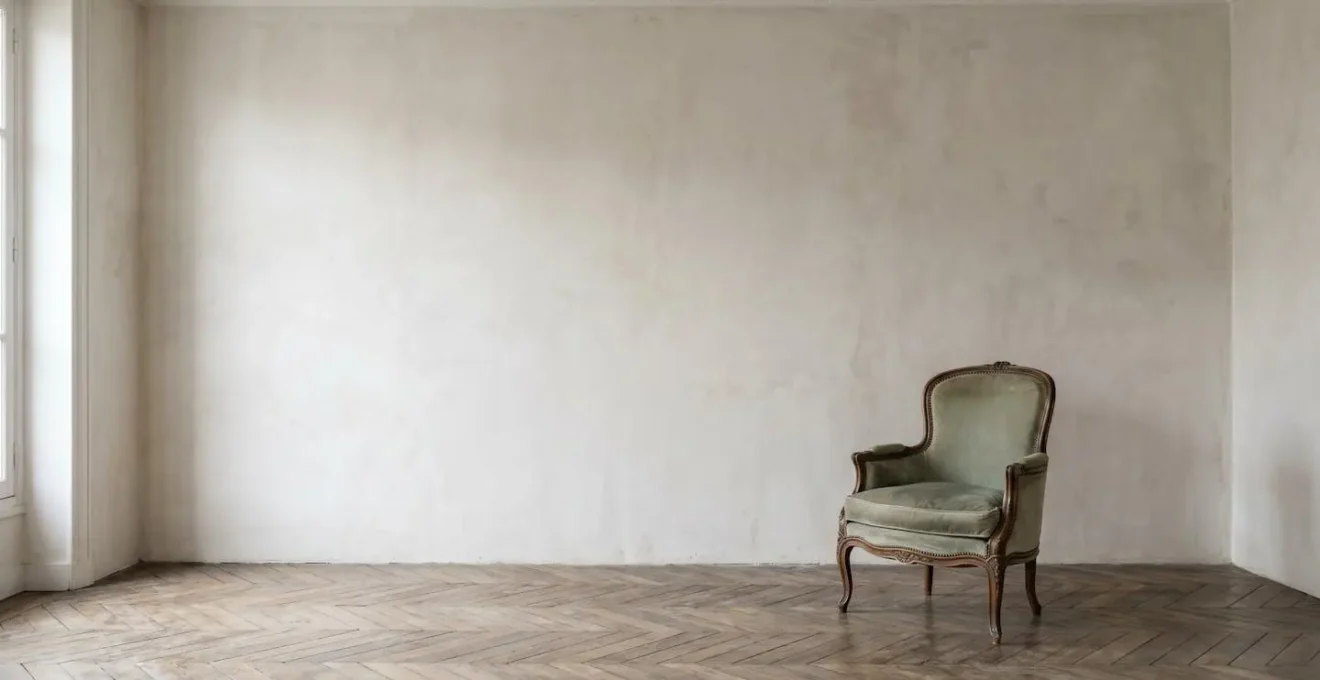
This image demonstrates the power of restraint. The beauty comes not just from the chair itself, but from the space around it. That intentional emptiness allows the object’s form, texture, and history to become the focal point. It is a quiet, confident statement, the very opposite of decorative excess.
When Should You Visit French Brocantes for Best Access to 19th-Century Decorative Arts?
To find the authentic pieces that carry the stories and patina we’ve discussed, one must go to the source: the French *brocante* (flea market) or *vide-grenier* (attic sale). However, not all visits are created equal. Success depends on strategic timing, which differs for the professional dealer seeking top inventory versus the bargain hunter looking for a steal.
Case Study: Strategic Timing for French Brocante Success
As noted by longtime Paris resident and market expert David Lebovitz, timing is everything. Professional dealers and serious collectors arrive at the crack of dawn, often around 8am as vendors are still setting up. This “early bird” strategy grants access to the best and rarest items before they are picked over by the public. The trade-off is a more chaotic environment and prices that are at their highest. Conversely, the “late-game” strategy involves arriving in the last hour or two before the market closes. Selection is heavily diminished, but vendors are far more willing to negotiate, preferring to sell an item at a discount rather than pack it up again. This is where true bargains can be found, but it’s a gamble.
Beyond the time of day, the time of year and type of market are critical. Major professional fairs (*grands déballages*) offer the highest quality but also the highest prices, while local village *vide-greniers* are where you can find personal treasures with real soul and history for a few euros. Understanding this landscape is key to an effective hunt for 19th-century decorative arts.
Action Plan: Finding Peak Brocante Opportunities in France
- Use the Right Tools: Utilise websites like `brocabrac.fr` (translatable) to search for markets by postal code and date. It’s the most comprehensive resource used by locals.
- Target Key Seasons: Focus on weekends following major public holidays and the September *rentrée* (the “return” after summer holidays), as these are times when people are most likely to be clearing out their homes.
- Go Local: Check municipal town hall websites directly for schedules of small, local *vide-greniers*. These often have better prices and more authentic items than large, tourist-focused markets.
- Know Your Market Type: Differentiate between professional antique fairs (*salons des antiquaires*), large mixed markets (*brocantes*), and community attic sales (*vide-greniers*) to match your goals and budget.
- Consider Regional Peaks: Plan your visits according to regional calendars. Provence’s markets are best in spring and autumn, while Northern France’s famous Lille Braderie, Europe’s largest flea market, happens on the first weekend of September.
Why Do French Tables Look More Elegant With Less on Them?
A French dinner table often provides a perfect microcosm of the entire French design philosophy. An outsider might see a sparsely set table—a simple linen cloth, good silverware, wine glasses, and perhaps only a loaf of bread and a block of butter—and interpret it as stark or minimalist. This misses the point entirely. The elegance of a French table comes not from minimalism, but from a concept one could call “confident essentialism.”
This is the deep-seated confidence that the quality of the essential items is so high that no further decoration is needed. The focus is entirely on what matters: the quality of the food, the wine, and the conversation that will unfold. The bread is not just any bread; it is an exceptional loaf from a master *boulanger*. The butter is not a generic stick; it is a premium, high-fat butter from Normandy or Brittany. The wine has been chosen with care. Each element is the best of its kind, and the table is set with the assurance that their quality alone is sufficient.
Case Study: The Philosophy of Confident Essentialism
The French approach to tablescaping treats the table as a dynamic stage for the human experience of a meal, not as a static decorative display. As documented in analyses of French interior philosophy, this reflects a broader preference for quality over quantity. The table is cleared and reset between courses, allowing each part of the meal to have its moment. This ‘confident essentialism’ rejects decorative clutter—like elaborate centerpieces or placemats—because they are seen as distractions from the main event. It’s a philosophy built on the belief that if the core components are excellent, they need no adornment. This same logic applies to interiors: a single, exceptional antique is trusted to carry a room, without the need for supporting props.
This philosophy prioritises the *function* of the space over its *form*. A table is for eating and conversing. By removing all non-essential decorative items, you enhance that function. The “decoration” becomes the vibrant colour of the wine, the crust of the bread, and the people gathered around it. It is an aesthetic of life, not of still life, rooted in the foundational principles of French design: comfort, practicality, and a beauty that emerges from purpose.
Why Does One Medieval Village Feel Alive While Another Feels Like a Museum Set?
The difference between a living historical place and a sterile museum set can be felt almost instantly. A village like Gordes in Provence, though beautiful, can feel like a tourist attraction, while a lesser-known hamlet nearby might feel deeply, authentically old. This same principle applies directly to interiors. The “alive” feeling comes from a quality one might call “functional diversity,” while the “museum set” feeling stems from a “commercial monoculture.”
A living village has functional diversity. It contains homes where people actually live, a working post office, a *boulangerie* that bakes bread daily, a mechanic’s garage, private gardens. It is a complex, functioning system with many different, authentic purposes. A tourist-trap village, by contrast, often suffers from commercial monoculture: every storefront has been converted to sell the same generic souvenirs, postcards, and lavender sachets. Its original, diverse functions have been erased and replaced by a single commercial purpose: to sell a simplified idea of “Provence.”
Case Study: Commerce vs. Community in Design
French-born designers often highlight this parallel. A room filled entirely with matching “French Romantic” furniture from a single catalogue is an interior with a commercial monoculture. It feels flat and inauthentic for the same reason a tourist village does. A truly “alive” French interior, however, displays functional diversity. It has an antique desk that is clearly used for work, not just for show. It has a modern, comfortable reading lamp next to an old armchair. It might repurpose an old farm tool as a piece of sculpture. Objects have real, distinct, and varied functions beyond just “looking romantic.” This mix of purposes creates layers of reality and history, reflecting a complex life being lived, not a theme being decorated.
This is rooted in a cultural aversion to the obvious. An interior where every piece fits a single, predictable style is seen as boring and tacky. The French preference is to care for the legacy of the past, as Hommés Studio notes, by renovating and using old features rather than replacing them with fashionable novelties. This respect for legacy, combined with the integration of modern life, creates the vibrant, layered authenticity that makes a space feel truly alive.
Key Takeaways
- Authentic “French Romantic” is a philosophy of feeling and history, not a checklist of decorative items.
- The most crucial element is restraint; elegance comes from confidence in a few high-quality, meaningful pieces, not from excess.
- True atmosphere is found in the genuine patina of antique objects and the dynamic dialogue between past and present.
Why Do “Medieval Villages” Full of Souvenir Shops Feel Less Medieval Than Quiet Hamlets?
The “souvenir shop effect” is a powerful killer of authenticity, in places and in interiors. It arises from the human desire for easy answers. A souvenir shop provides a simple, digestible, pre-packaged identity: “You are in Provence, and this lavender soap proves it.” It replaces a complex, layered history with a single, commercialised message. The quiet hamlet, by contrast, offers no easy answers. It forces you to look closer, to notice the worn stone, the different eras of architecture, the signs of a continuous, evolving life. You have to piece the story together yourself.
An interior that looks like a cliché is suffering from this same effect. It screams a single, simple identity: “This is a French Romantic room!” It does so with a predictable vocabulary of imitation antiques and overt symbols. A truly authentic space, however, whispers multiple stories. It speaks of the 19th-century history of the building, of the owner’s travels, of a love for modern art, of family life. It is complex, sometimes even contradictory, just like a real person or a real place. It embodies a philosophy of balance and restraint, a mix of craftsmanship and a touch of whimsy.
The art lies in the mix. As celebrated French designer Dorothée Meilichzon states, a key French talent is the ability to “mix styles from different eras: classic influences with styles from the 20th century, together with graphic elements and modern colors.” This is not a chaotic jumble but a carefully curated conversation. Contemporary pieces are chosen because they “give a nod to traditional style, rather than directly opposing it,” as one expert from Ligne Roset explains. This approach allows the historical space to maintain its importance while being fully part of the present.
Ultimately, a space that feels less “medieval” or “romantic” despite being full of signifiers fails because it is shouting one loud, simple lie. A space that feels authentic succeeds because it is whispering many quiet, complex truths. To escape the cliché, one must abandon the search for a pre-packaged identity and embrace the more difficult, but infinitely more rewarding, task of telling a personal and layered story.
The next logical step is to stop thinking like a decorator following a trend, and start thinking like a curator building a personal collection. Evaluate your space not for what you can add to make it look “more French,” but for what you can edit away to let the soul of the space, and your most treasured objects, truly shine.