The higher price for French art in London isn’t arbitrary; it’s a “tax” on information asymmetry that savvy collectors can strategically bypass.
- Structural costs like Brexit-related red tape and the French artist’s resale right (*droit de suite*) are often bundled into London gallery prices.
- The Parisian art scene operates on a dense network of smaller, relationship-driven galleries that offer direct access and better value than large, transactional institutions.
Recommendation: Shift your focus from London’s secondary market to direct engagement with Paris’s primary ecosystem—its artists, small galleries, and state-supported institutions—to acquire art at its source value.
For the discerning UK art collector, the allure of the French contemporary scene is undeniable. Yet, a persistent frustration lingers: the same piece by a rising French artist often carries a significantly higher price tag in a Mayfair gallery than in a Parisian one. Many assume this is simply the “cost of London” or a standard market mark-up. This is a costly oversimplification. The premium you pay is often a direct consequence of an information gap between the two markets, one built on complex local regulations, cultural nuances, and hidden access points.
While the mainstream advice is to visit major art fairs or established international galleries, this approach keeps you on the surface, interacting with a market that has already priced-in layers of transactional costs and intermediaries. The real opportunity for a UK collector lies not in playing the same game, but in understanding and navigating the unique structural DNA of the French market itself. This involves looking beyond the blue-chip names and engaging with the vibrant ecosystem of state-supported artists, hyper-local gallery networks, and a culture of patronage that operates on different principles from the Anglo-Saxon model.
The key is to transform from a passive buyer into an active, informed patron. This means learning why prices diverge, how to gain access to exclusive Parisian openings without a pre-existing network, and how to assess an artist’s long-term value based on French institutional markers like FRAC support. It’s about performing a kind of cultural arbitrage—using specific knowledge of the French system to unlock value that remains opaque to the average international buyer.
This guide demystifies the French contemporary art scene from a UK collector’s perspective. We will dissect the hidden costs inflating London prices, provide a roadmap for infiltrating Paris’s intimate gallery culture, and offer the strategic insights needed to not only buy smarter, but to build a more meaningful and valuable collection directly from the source.
This article breaks down the essential strategies for any UK collector looking to engage intelligently with the French art market. The following sections provide a complete roadmap, from understanding pricing structures to discovering the most rewarding art experiences.
Summary: A UK Collector’s Strategic Guide to the French Art Market
- Why Are the Same Artists Priced Different in Paris Versus London Galleries?
- How to Get Invited to Private Openings in Paris Without Knowing Anyone?
- FRAC-Supported or Self-Represented: Which French Artists Offer Better Investment Potential?
- The Documentation Gap That Makes French Art Purchases Risky for UK Buyers
- When Should You Visit Paris for Best Access to New Collections and Fair Prices?
- Why Does Paris Have So Many Small Galleries and How Do They Survive?
- Vintage Chanel Bag or Contemporary Dior Dress: Which French Luxury Holds Value Better?
- Why Do Tiny Paris Galleries Sometimes Offer More Memorable Art Experiences Than the Louvre?
Why Are the Same Artists Priced Different in Paris Versus London Galleries?
The price difference for a French artist’s work between a Paris and London gallery is not just a simple mark-up; it’s the result of concrete, structural costs. Post-Brexit, the complexities of moving art into the UK have intensified. London’s standing as a global art hub has been challenged, with its global market share at 18% in 2022, impacted by new layers of administrative and transactional friction. As one analysis notes, the primary driver for this is the “appalling red-tape and cost needed to transact in London.” These costs—shipping, insurance, customs duties, and legal fees—are inevitably passed on to the collector.
A crucial factor often overlooked by UK buyers is the French artist’s resale right, or *droit de suite*. This legal mandate grants artists (or their heirs) a royalty on the resale price of their work. While this right exists in the UK, its application and liability in France create a unique cost layer. The royalty is typically 4% on resales up to €50,000. Historically, this cost was borne by the seller. However, a landmark case involving Christie’s in France set a precedent that fundamentally impacts buyers.
Case Study: The Christie’s ‘Droit de Suite’ Liability Shift
In France, auction house Christie’s attempted to shift the financial burden of the *droit de suite* from sellers to buyers via its terms and conditions. After extensive litigation that reached the European Court of Justice, French courts confirmed a nuanced reality: while the royalty can be contractually passed to the buyer, the seller and the art market professional (the gallery or auction house) remain legally liable for its payment. As detailed in an analysis of the artist resale royalty right, this creates a transactional complexity and risk. A London gallery, acting as an intermediary, must price this liability risk into the artwork, adding another layer to the final cost for a UK buyer—a cost that is more transparent and often lower when dealing directly within the French system.
Therefore, the higher price in London is not merely profit. It is a bundled cost that includes logistical hurdles, customs friction, and the priced-in legal risk associated with uniquely French regulations like the *droit de suite*. By purchasing directly in Paris, a collector can unbundle these costs and transact closer to the artwork’s source value.
How to Get Invited to Private Openings in Paris Without Knowing Anyone?
Breaking into the Parisian gallery scene, known for its intimate and sometimes insular nature, seems daunting for an outsider. Unlike the more transactional feel of larger art capitals, Paris operates on relationships. However, getting onto the guest list for a *vernissage* (opening) or a more exclusive private view is more about strategy than connections. It requires a shift from passive consumption to active, informed engagement. The goal is to signal that you are not a tourist, but a serious and knowledgeable enthusiast.
The first step is geographical. Paris’s gallery scene is highly concentrated in specific neighbourhoods. Focus your efforts on Le Marais (3rd arrondissement) and Saint-Germain-des-Prés (6th arrondissement). Many galleries in these areas coordinate their openings, especially on Thursday evenings or for weekend “gallery hops.” Walking these streets during these times is a form of self-invitation, allowing you to discover multiple shows and be seen by gallerists.
This physical presence should be complemented by digital engagement. Follow your target galleries and their represented artists on social media, particularly Instagram. Gallerists monitor this activity closely. A thoughtful, substantive comment on an artist’s technique or conceptual basis is far more effective than a generic “beautiful work.” This demonstrates genuine interest and knowledge, turning your digital profile into a compelling introduction. Often, this is the catalyst for a future invitation. This approach requires patience, but it lays the groundwork for authentic relationships.
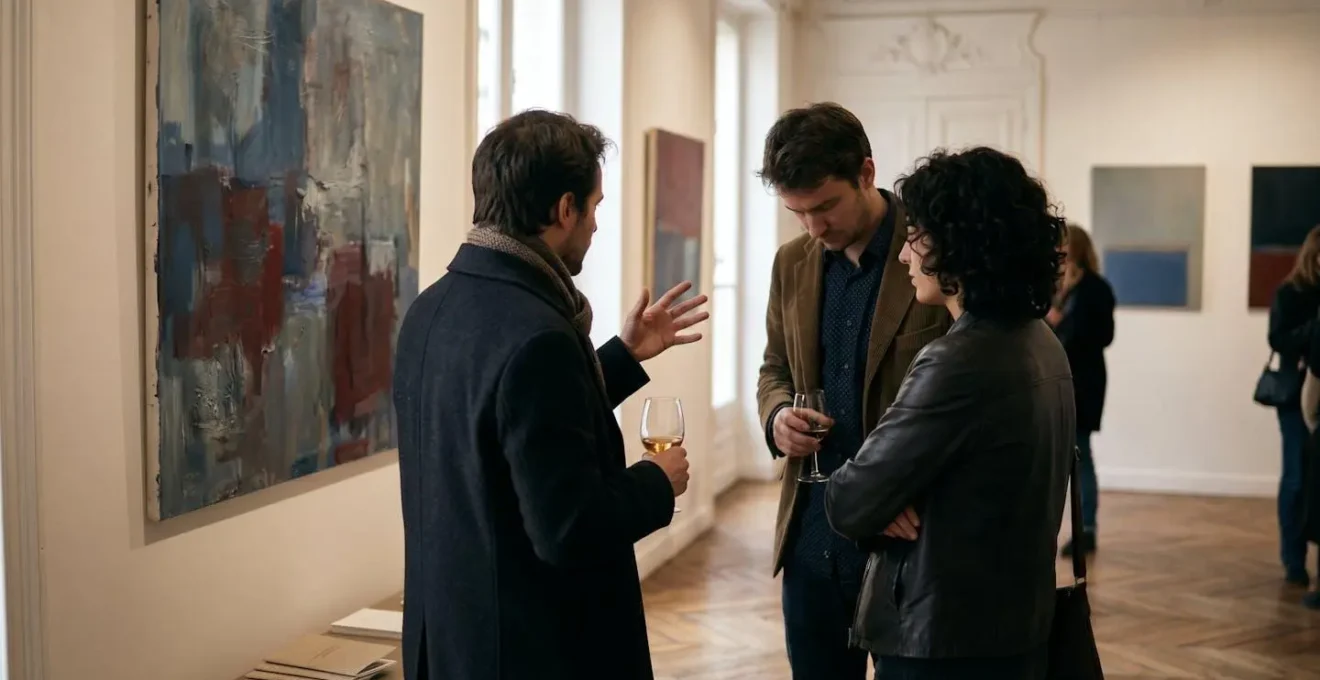
Once you attend a public opening, your objective is to move from anonymous attendee to recognised contact. A powerful but underutilised tactic is to target the *finissage* (closing event) instead of the crowded opening. These events are quieter, offering more direct and meaningful access to both the artist and the gallery owner. Here, you can have a real conversation, ask for a business card, and request to be added to their mailing list for future events. This simple act is a direct signal of serious intent.
- Research gallery-dense neighbourhoods like Le Marais and Saint-Germain-des-Prés, where coordinated openings are common.
- Engage intelligently on social media by leaving informed comments on gallery and artist posts to get noticed by gallerists.
- Attend public *vernissages* and *finissages*, using the latter for more intimate access to artists and owners.
- Collect business cards and pamphlets at events and politely ask to be added to the gallery’s exclusive mailing list.
- Use online resources like Slash/Paris and Paris Gallery Map to find schedules for upcoming openings.
FRAC-Supported or Self-Represented: Which French Artists Offer Better Investment Potential?
For a UK collector, assessing the investment potential of a French artist requires understanding a key local institution: the Fonds Régionaux d’Art Contemporain (FRAC). Created in 1982 through a state-region partnership, the 22 FRACs across France build public collections of contemporary art. Their mission is not market-driven; it is to support artistic creation, disseminate art to the public, and build a national cultural heritage. An artist whose work is acquired by a FRAC has received a powerful form of institutional validation.
This validation acts as a significant de-risking factor. Unlike an artist whose value is driven by auction results or gallery hype—which can be volatile—a FRAC-supported artist is effectively endorsed as culturally significant by the French state. This positions their work as a ‘blue-chip’ cultural asset with proven long-term heritage value. As the FRAC Centre-Val de Loire mission states, they are committed to ensuring artists have ongoing institutional visibility through loans and exhibitions. This sustained support builds a credible and durable legacy, insulating the artist’s value from short-term market fluctuations.
Each year, the Fracs distribute several hundred works from their collections ‘in motion’ through loans, establishing ongoing institutional visibility and credibility for represented artists.
– FRAC Centre-Val de Loire, FRAC institutional mission statement
In contrast, a self-represented artist or one backed only by commercial galleries offers a different risk/reward profile. Here, the potential for rapid financial appreciation is higher, driven by market demand and speculative interest. However, the risk of volatility is also far greater. Their value is tied to the gallery’s success, market trends, and the artist’s ability to maintain momentum without institutional backing. This is a higher-stakes investment, more akin to venture capital than to buying a blue-chip stock.
The choice depends entirely on your collection strategy. If your goal is stable, long-term value and cultural significance, a FRAC-supported artist is an exceptionally strong candidate. The financial upside may be slower, but the foundation is far more secure. If you have a higher risk tolerance and are seeking potentially explosive growth, a carefully vetted emerging artist from a reputable commercial gallery could be the right choice. For most collectors, a balanced portfolio including both types of artists offers a robust strategy for navigating the French market.
The Documentation Gap That Makes French Art Purchases Risky for UK Buyers
Acquiring art directly from an artist’s studio or a small Parisian gallery is an exhilarating experience, offering a direct connection to the creative source. However, this path is also fraught with risk, primarily stemming from a “documentation gap.” Unlike purchasing from an established London gallery that provides a comprehensive paperwork package as standard, direct acquisitions in France—especially from emerging artists—can sometimes lack the rigorous provenance and documentation UK buyers expect. This gap can jeopardise an artwork’s long-term value and authenticity.
The burden of due diligence falls squarely on the collector. You must proactively request and verify the critical documents that form the work’s identity and history. The most fundamental of these is the *Certificat d’Authenticité* (Certificate of Authenticity), signed by the artist. But this is just the starting point. A truly secure investment is backed by a deeper paper trail. This includes a detailed exhibition history, records of previous sales to establish a consistent market price, and professional condition reports for any significant purchase.
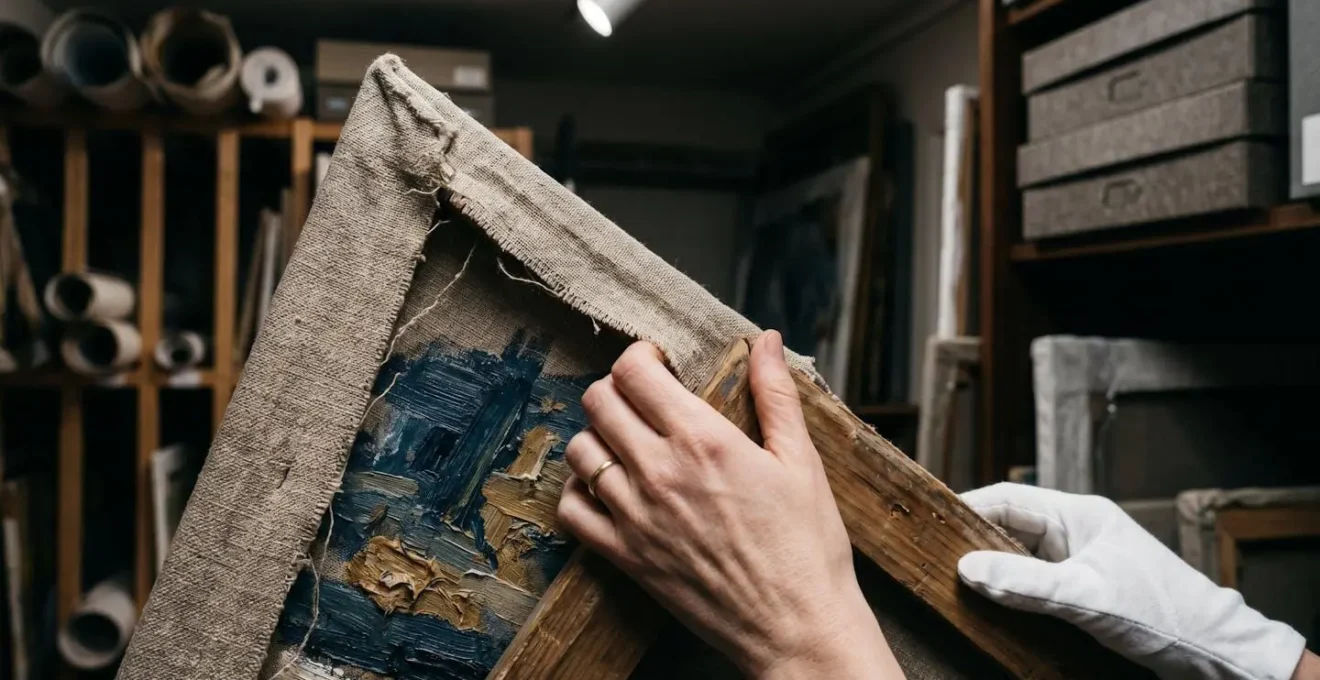
For artists of a certain stature, the ultimate document is the *Catalogue Raisonné*—a comprehensive, authoritative listing of all known works by an artist. Inquiring whether a catalogue is in progress is a key indicator of an artist’s professional trajectory and commitment to their legacy. For substantial investments, engaging a certified French art expert (*expert d’art*) for independent authentication and valuation provides an essential layer of security. These steps are not optional extras; they are the fundamental building blocks of a secure and valuable art investment, protecting you from risks of forgery, misattribution, and overpayment.
Building a relationship with the artist and gallerist is not just for social access; it is a core part of this due diligence process. Trust is built through conversation and transparency, enriching your understanding and providing access to the very information needed to close the documentation gap.
Your Action Plan: Vetting a Direct-from-Studio Acquisition
- Contact Points: Identify and engage with all key figures in the artist’s ecosystem—the artist, their primary gallerist (if any), and curators who have exhibited their work to build a holistic view.
- Collection: Inventory all available documentation, including a signed Certificate of Authenticity, a complete list of past exhibitions, press mentions, and any existing sales records.
- Coherence: Confront the artist’s narrative and pricing with external data. Does the asking price align with their exhibition history and previous sales? Consult market databases or an advisor.
- Provenance & Memorability: Assess the strength of the work’s origin story. Is there a future or existing Catalogue Raisonné? This is the ultimate test of authenticity and long-term value.
- Integration Plan: Before purchase, define the logistical plan. Commission a professional condition report, and arrange for specialised transport, insurance, and any specific conservation needs.
When Should You Visit Paris for Best Access to New Collections and Fair Prices?
Timing is everything when planning a collection trip to Paris. While the city is a year-round destination, the art world operates on a distinct seasonal calendar. Aligning your visit with key moments in this calendar can dramatically increase your access to new works, influential people, and favourable market conditions. Avoid the tourist-heavy summer months of July and August, when much of the art world decamps and galleries often run “greatest hits” shows or close altogether.
The most important period in the Parisian art calendar is *la rentrée* in September. After the summer lull, the city’s cultural life reawakens with a concentrated burst of energy. Galleries launch their most ambitious exhibitions of the year, artists unveil new bodies of work, and the entire ecosystem is primed for serious business. This is the moment to see the freshest material before it is offered to the wider market. The atmosphere is electric, and your presence during this time signals a serious commitment to the scene.
A second strategic window is mid-October, timed to coincide with the major international art fair, Paris+ par Art Basel. While the fair itself is a central event, its true value lies in the “off” programming and the city-wide gallery activity that surrounds it. Every gallery, from emerging spaces to established institutions, puts its best foot forward. This creates an unparalleled density of high-quality art to see in a short period. It’s a moment of critical mass, attracting collectors, curators, and critics from around the world, making it a prime opportunity for both discovery and networking.
This momentum is part of a larger market shift. Since Brexit, Paris has been steadily gaining ground on London. As gallerist Jocelyn Wolff noted in 2023, “I see Paris as the capital of the European art market, or at least its primary market.” This confidence is backed by action, with mega-galleries like David Zwirner, Gagosian, and Hauser & Wirth all opening Parisian outposts. An analysis in The Art Newspaper confirms Paris continues to benefit from this shift, with a steady flow of gallery openings and robust sales, making it an increasingly vital destination for any serious collector.
Why Does Paris Have So Many Small Galleries and How Do They Survive?
A walk through Le Marais or Saint-Germain-des-Prés reveals a defining characteristic of the Parisian art market: an extraordinary density of small, independent galleries. For a UK collector accustomed to the consolidated, mega-gallery model of London, this can be puzzling. How do so many small operations not only survive but thrive? The answer lies in the unique economic and cultural structure of the French art market, which values transaction volume and cultural patronage over sheer blockbuster sales.
Economically, France’s art market punches above its weight in a specific way. While it ranks fourth globally in market turnover, a 2024 global art market report reveals France is second worldwide in the sheer number of transactions, just behind the USA. This high volume of sales, even at lower price points, creates a sustainable ecosystem for a larger number of galleries. Their business model is not predicated on selling a few multi-million-pound works, but on a steady flow of sales to a dedicated local and European client base. This structure inherently supports a more diverse range of artists and galleries than a top-heavy market.
Furthermore, these galleries are not just commercial ventures; they are crucial cogs in a cultural machine deeply supported by the French state and a tradition of patronage. They act as the primary talent incubators, discovering and nurturing artists at the grassroots level. This role is implicitly recognised and supported by a network of public institutions, regional collectors, and a cultural mindset that views supporting art as a civic duty. As French cultural authorities stated in response to market growth, this dynamism is owed to “the major international art fairs, galleries, auction houses, our cultural institutions and of course our artists.”
These small galleries survive because they operate with lower overheads, a focus on a specific niche, and deep personal relationships with their artists and a loyal collector base. They are not trying to compete with Gagosian. Instead, they offer a different value proposition: discovery, intimacy, and a direct connection to the creative pulse of the city. For a collector, these galleries are the most fertile ground for finding an artist’s early work, building a meaningful relationship with their career, and acquiring art with a story, not just a price tag.
Vintage Chanel Bag or Contemporary Dior Dress: Which French Luxury Holds Value Better?
The question of value retention in French luxury—a classic Chanel bag versus a contemporary couture piece—offers a powerful analogy for investing in French contemporary art. A vintage Chanel 2.55 holds its value through a combination of timeless design, controlled scarcity, and an enduring brand narrative. It is a known entity, a blue-chip asset in the world of fashion. In contrast, a contemporary Dior dress by Maria Grazia Chiuri is a bet on current cultural relevance and artistic vision. Its long-term value is less certain, but its immediate impact is greater.
This same dynamic is at play in the art world, and the line between luxury and art is becoming increasingly blurred. The major French luxury conglomerates have become some of the most powerful patrons of contemporary art, creating a direct transfer of cultural capital that dramatically elevates the market value of the artists they champion. When a brand like Louis Vuitton or Cartier associates itself with an artist, it imbues their work with its own narrative of exclusivity, quality, and longevity.
Case Study: François Pinault and the Bourse de Commerce
The most potent example of this phenomenon is luxury magnate François Pinault (Kering Group: Gucci, Saint Laurent). He spent nearly $200 million and two decades transforming Paris’s Bourse de Commerce into a world-class private museum for his contemporary art collection. This act of patronage does more than just display art; it anoints it. Artists featured in the collection gain immense institutional credibility and their market value is solidified by the association with Pinault’s luxury empire. This creates a feedback loop where the art lends cultural depth to the brands, and the brands provide a stable, high-profile platform that secures the art’s long-term value—much like a classic Chanel bag.
This trend underscores a broader market reality: contemporary art has proven itself to be a remarkably resilient asset class. It is not merely a decorative purchase. The contemporary art market’s growth of 1,800% since 2000 confirms its status as a safe haven in times of economic crisis. For a collector, this means an artist backed by a major luxury patron is akin to a ‘blue-chip’ stock, offering a blend of cultural significance and financial stability that is hard to ignore.
Key Takeaways
- The London price premium is a function of structural costs (Brexit, *droit de suite*) and information asymmetry—not just a simple mark-up.
- Access to the Parisian scene is earned through strategic engagement: focus on gallery-dense areas, use social media intelligently, and target *finissages* for meaningful contact.
- An artist’s investment profile is clarified by their support system: FRAC backing signals long-term cultural value, while commercial gallery representation offers higher risk and potential reward.
Why Do Tiny Paris Galleries Sometimes Offer More Memorable Art Experiences Than the Louvre?
Visiting the Louvre is a monumental experience, a pilgrimage to witness the grand sweep of art history. You stand before the Mona Lisa or the Winged Victory of Samothrace with a sense of reverence and awe. Yet, for many seasoned collectors, the most memorable and transformative art encounters happen not in these vast, crowded institutions, but within the quiet, intimate confines of a small gallery in Le Marais. The reason is simple: one is an act of observation, the other is an act of connection.
Mega-museums present art as a finished, sanctified product. The work is behind glass or rope, its story concluded and its place in the canon secured. In contrast, a small gallery offers a portal into the living, breathing process of art. It is a space for dialogue, not monologue. Here, you can speak directly with the gallerist who has a deep, personal relationship with the artist, or even with the artist themselves. You can step into the ‘back room’ and see unstretched canvases, works in progress, and pieces that might never be publicly shown. This is where art’s vulnerability and humanity are revealed.
This intimate scale fosters a different kind of engagement. It’s an experience that can be challenging and direct, as collector Catherine Petitgas describes. By hosting events in her home featuring provocative art, she demonstrates that the most powerful experiences often happen outside the polished, reverential halls of a museum. It is in these settings that you can truly grapple with an artist’s ideas. As London-based collector Grazyna Kulczyk advises, the key is to understand that “building relationships with galleries, curators, and artists will help enrich your understanding.” This enrichment is the true return on investment.
It’s important to buy things that aren’t necessarily pretty.
– Catherine Petitgas, Collector
The Louvre gives you history; a small Parisian gallery gives you a stake in the future. It offers the chance to be part of an artist’s journey, to acquire a work imbued with the memory of a conversation, a discovery, and a personal connection. That kind of memorable experience is something no blockbuster exhibition can replicate, and for a true collector, it is priceless.
Armed with this understanding of the French market’s unique structure and cultural nuances, the next step is to put it into practice. Start by exploring the galleries of Le Marais and Saint-Germain, not as a tourist, but as an informed participant ready to engage in the conversation.