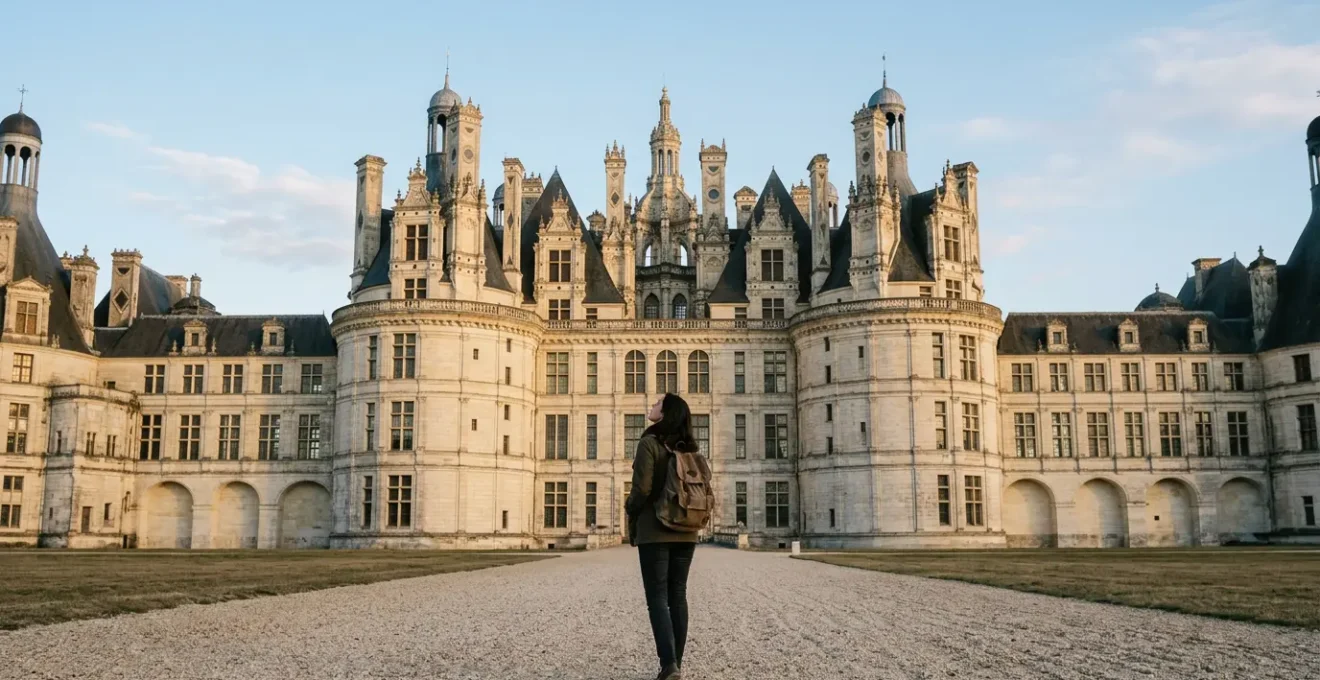
The dizzying blur of Loire châteaux stems from treating them as a checklist, leading to cognitive overload where magnificent details merge into an indistinct memory.
- The key is not to see more, but to understand more by curating a visit around contrasting “architectural narratives.”
- A strict “two châteaux per day” rule, combined with contrarian timing to avoid tour bus surges, transforms a frantic race into a deep, memorable experience.
Recommendation: Shift your mindset from a tourist collecting sights to a historian reading stories in stone. Choose three distinct châteaux that tell different stories, rather than ten that tell the same one.
You’ve done it. You’ve meticulously planned the perfect three-day itinerary, a whirlwind tour of the Loire Valley’s greatest hits. Day one: Chambord’s staggering scale, then Cheverny’s pristine elegance. Day two: Chenonceau’s graceful arches over the Cher, followed by Amboise’s royal history. By day three, as you stand in the gardens of Villandry, a strange fog descends. Was the double-helix staircase in the castle with the river bridge? Or was that the one with Diane de Poitiers’ garden? The intricate tapestries, the soaring spires, the frescoed ceilings—they all begin to collapse into a single, overwhelming, and ultimately forgettable impression of “old, fancy French castle.”
This phenomenon, a kind of cultural jetlag often called “château fatigue,” is a common plight for the diligent heritage enthusiast. The conventional wisdom is to see as much as possible, to follow the signposted tourist circuits and tick off the UNESCO-listed icons. But this approach treats these profound historical documents as mere photo opportunities. It ignores the fundamental reason they feel so different yet become so confused in our minds: they are not just buildings; they are chapters in a sprawling national story, written in stone across centuries.
But what if the solution wasn’t to see more, but to see *deeper*? What if the key to a truly memorable trip wasn’t a better route planner, but a better mental framework for understanding what you’re seeing? This guide abandons the checklist. Instead, it offers a strategy for curation. It will equip you to read the architectural narratives of these great houses, to understand why some feel like grim fortresses and others like fairytale palaces, and to select a small, contrasting handful that will leave a lasting imprint on your memory long after you’ve returned home.
By exploring the strategic choices behind which châteaux to visit, when to arrive, and what to look for, you’ll learn to transform a dizzying tour into a meaningful journey. This article provides the framework to appreciate the depth and diversity of the Loire Valley, ensuring each visit is distinct, resonant, and unforgettable.
Summary: A Strategic Guide to Experiencing the Loire Valley Châteaux
- Why Do Some Loire Châteaux Feel Medieval While Others Feel Like Palaces?
- How to Choose 3 Loire Châteaux That Will Be More Memorable Than Racing Through 10?
- Chambord or Chenonceau: Which Loire Château Delivers Better Experience for Architecture Lovers?
- The Arrival Time That Puts You in Every Castle Room With 200 Other Visitors
- When Should You Visit Loire Châteaux for Best Gardens and Quietest Interiors?
- Art Museums or Historic Sites: Which Cultural Focus Creates Deeper French Understanding?
- How to Experience Versailles’s Lesser-Known Trianons and Hamlet Without Crowds?
- Why Does Versailles Feel More Like Theme Park Than Royal Palace?
Why Do Some Loire Châteaux Feel Medieval While Others Feel Like Palaces?
The fundamental reason some châteaux feel like grim, defensive fortresses while others feel like opulent Renaissance palaces is that they are products of entirely different eras and purposes. The Loire Valley is not a static museum; it’s a timeline of French power and aesthetics transitioning from the feudal Middle Ages to the ambitious Renaissance. The confusion arises from visiting these distinct architectural narratives back-to-back without understanding the story each one tells. There are, after all, over 300 châteaux in the region, spanning from 10th-century fortified keeps to lavish 16th-century pleasure domes.
Medieval châteaux, like a Château de Langeais or the original structure of Loches, were built for warfare and control. Their language is one of defence: thick stone walls, high ramparts, arrow-slit windows, and a commanding position over the landscape. They were power bases for feudal lords, designed to intimidate and protect. Their interiors are often stark and functional because their primary role was security, not comfort or artistic expression. They tell a story of a fragmented and dangerous France.
The Renaissance châteaux, by contrast, were built for pleasure and prestige. Under powerful monarchs like François I, the French court discovered the art, philosophy, and architectural ideals of the Italian Renaissance. The château transformed from a military stronghold into a stage for royal power and a showcase for sophisticated taste. Large windows replaced arrow slits, ornate carvings covered the facades, and vast, symmetrical gardens replaced defensive moats. These chateaux speak a language of art, light, and humanism.
Chambord is the ultimate expression of this transition. It’s a fascinating blend of both worlds. As Britannica’s analysis of château architecture notes, its overall plan feels semi-fortified, with a central keep and corner towers reminiscent of a Gothic castle. Yet, its fantastical roofline, classical details, and interior innovations like the double-helix staircase are purely about showmanship. It’s a military fortress in its bones but a fairytale palace in its soul, a perfect potpourri of motifs that captures France at a pivotal moment. Understanding this transition is the first step to telling them apart. You are not just seeing stone; you are reading a story of evolving power.
How to Choose 3 Loire Châteaux That Will Be More Memorable Than Racing Through 10?
The secret to a memorable Loire Valley trip is brutal, curatorial discipline. The goal is not to “collect” as many châteaux as possible, but to select a few that offer contrasting experiences. Visiting ten châteaux in a few days creates a state of cognitive overload, where the brain, overwhelmed by similar-yet-different stimuli (stone carvings, tapestries, four-poster beds), can no longer form distinct, lasting memories. The solution is to trade quantity for “experience density.” A two-hour, unhurried visit to one château is infinitely more rewarding than three rushed one-hour stops.
To achieve this, adopt the simple but powerful “Two Châteaux Per Day” rule. This is the absolute maximum for a meaningful visit. This allows for roughly three hours at each site—enough time to explore the interiors, wander the gardens, and perhaps even absorb the atmosphere from a nearby café. This deliberate pacing transforms a frantic checklist into an immersive journey. It gives your mind the space to process what it’s seeing and to cement the unique character of each location before moving on.
This deliberate curation forces you to make strategic choices. Instead of just picking the most famous names, select châteaux based on their contrasting architectural narratives. For an ideal trio, you might choose:
- One high-medieval fortress (like Langeais or Chinon) to understand the context of defence.
- One iconic Renaissance palace (like Chenonceau or Chambord) to see the explosion of art and prestige.
- One “jewel box” or garden-focused château (like Villandry or Azay-le-Rideau) to appreciate intimacy and the art of landscape design.
This approach ensures that each visit provides a distinctly different chapter of the Loire’s story, preventing the memories from blurring together into an incomprehensible whole.
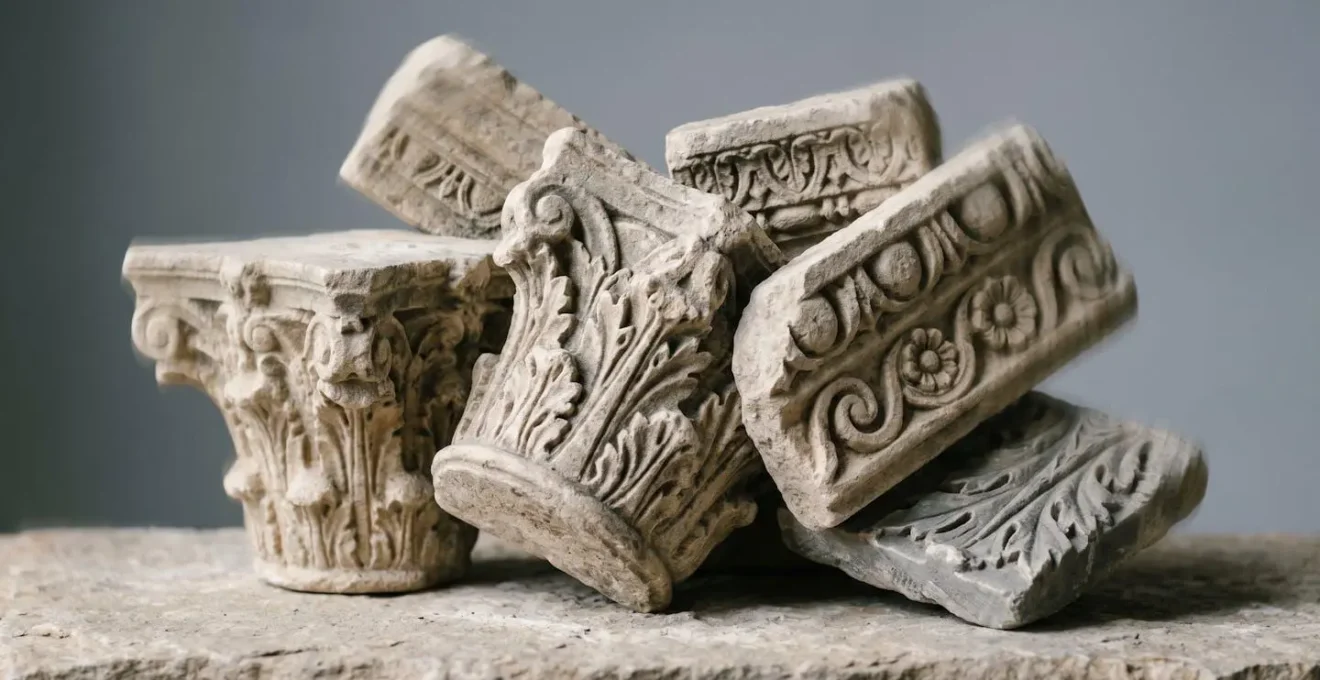
As the image above metaphorically suggests, rapid, successive visits cause distinct architectural memories to overlap and blur. By limiting your intake and choosing contrasting styles, you allow each château to retain its sharp, individual identity in your mind. This is the essence of moving from a tourist to a true connoisseur of the region.
Chambord or Chenonceau: Which Loire Château Delivers Better Experience for Architecture Lovers?
The choice between Chambord and Chenonceau is a classic Loire Valley dilemma, but for the architecture lover, it’s not about which is “better,” but which architectural story you want to read. One is a bold, uncompromising monologue of royal ego; the other is an elegant, multi-generational dialogue written across the water. As the independent guide Loire Lovers succinctly puts it: “If you’re looking for a romantic château with a lovely garden and furnishings, choose Chenonceau. If you’re looking for an impressive château with royal architecture, choose Chambord.”
Chambord is an architectural statement of overwhelming power and audacity. It was conceived by a young and ambitious François I to be nothing less than a symbol of his magnificence. Its scale is almost incomprehensible: 440 rooms, 365 chimneys, and the legendary double-helix staircase, a piece of theatrical genius possibly touched by Leonardo da Vinci. However, this focus on external grandeur means the interior can feel vast and empty. With most rooms unfurnished, the experience is about appreciating the sheer architectural ambition and the breathtaking rooftop skyline, a forest of spires and lanterns. It’s an intellectual experience of scale and form.
Chenonceau, by contrast, offers a story of elegance, influence, and adaptation. Its unique character comes from its iconic gallery bridge, built by Catherine de Medici over the foundations laid by her rival, Diane de Poitiers. This architectural feature makes it unique in France. Unlike Chambord’s emptiness, Chenonceau feels like a home, albeit a magnificent one. It is richly furnished with period tapestries and art, and every room features stunning fresh flower arrangements. The scale is more intimate, and its history is shaped by the powerful women who lived there, whose rival gardens still face each other across the grounds. It is an emotional and romantic experience of history lived-in.
The best choice depends entirely on what you seek. For a visceral understanding of raw royal ambition expressed through revolutionary architecture, Chambord is unparalleled. For an appreciation of refined elegance, historical narrative, and a building in perfect harmony with its landscape, Chenonceau is the clear winner. The following table summarises the key differences for the discerning visitor, based on a detailed comparative analysis.
| Characteristic | Chambord | Chenonceau |
|---|---|---|
| Architectural Statement | Bold, uncompromising monologue by François I | Flowing, multi-generational dialogue across centuries |
| Annual Visitors | Nearly 1 million (most visited Loire château) | Second most visited château in France after Versailles |
| Scale & Rooms | 440 rooms, 365 chimneys, 282 fireplaces—overwhelming grandeur | Intimate scale, elegantly furnished rooms with fresh flowers |
| Key Architectural Feature | Double-helix staircase (possibly Leonardo da Vinci) | Gallery bridge spanning the Cher River (unique in France) |
| Interior Furnishing | Mostly unfurnished—only 1-2 period rooms | Richly furnished with period tapestries, art by Rubens & Van Dyck |
| Gardens | Vast 13,000-acre forest park, formal French gardens | Intimate gardens designed by powerful women (Diane de Poitiers, Catherine de Medici) |
| Best For | Visitors seeking architectural audacity and overwhelming scale | Visitors seeking elegance, history of powerful women, romantic atmosphere |
The Arrival Time That Puts You in Every Castle Room With 200 Other Visitors
There is a specific window of time, a “rush hour” for French châteaux, that guarantees you will experience these historic sites shoulder-to-shoulder with hundreds of other visitors: between 10:00 AM and 11:30 AM. This is the predictable surge created by the arrival of large tour buses. Tour operators, aiming to cram two or even three châteaux into a single day, typically allocate a tight 90-minute slot for each, and their schedules almost invariably deposit their passengers at the gates shortly after opening.
Arriving during this peak window means you will be part of a slow-moving herd, shuffling through roped-off rooms and vying for a glimpse of a fireplace or a portrait. The quiet contemplation these spaces demand becomes impossible. As one traveller noted from a July visit, arriving at Chenonceau first thing in the morning meant the château was “practically empty.” This simple timing adjustment completely transforms the experience from a crowded queue into a private viewing.
To avoid the crush and reclaim the magic of these spaces, you must adopt a contrarian timing strategy. This doesn’t just mean “arrive early”; it means understanding the flow of the crowds and positioning yourself against it. The goal is to be where the masses are not. This is the single most effective tactic for enhancing your visit, far more impactful than any pass or pre-booked ticket. By mastering this, you can feel like you have these magnificent places almost to yourself, even in high season.
Your Action Plan: Contrarian Timing to Avoid the Crowds
- The Dawn Patrol: Arrive 30 minutes *before* the official opening time (e.g., 9:30 AM for a 10:00 AM opening). This ensures you are among the very first through the gates, granting you at least an hour of relative peace before the tour buses descend.
- The Sunset Shift: Plan your visit for the last two hours before closing. Most tour buses depart by 4:30 PM to get back to their home base, causing a significant drop in visitor numbers. At Chenonceau, for instance, crowds often peak around 3:30 PM and thin out dramatically after 4:30 PM.
- The Reverse Itinerary: At large, multi-part sites like Chambord or Versailles, deliberately defy the suggested route. Most visitors follow a predictable path. At Chambord, start at the very top—the rooftop terraces—and work your way down as the crowds entering below you disperse through the vast ground floor.
- Identify the Bottlenecks: For each château, identify the main draw (e.g., the double-helix staircase at Chambord, the gallery at Chenonceau, the Hall of Mirrors at Versailles). Visit this key feature either immediately upon arrival or during the last hour of the day.
- Check the Clock: If you find yourself caught in a surge, don’t just follow it. Step out into the gardens for 30 minutes or visit a less popular wing. The tour-group “pulse” is often intense but short-lived; a brief, strategic pause can allow it to pass.
When Should You Visit Loire Châteaux for Best Gardens and Quietest Interiors?
Choosing the right season to visit the Loire Valley involves a crucial trade-off between blooming gardens and bustling crowds. The region’s châteaux, which welcome a staggering 3.3 million visitors annually, experience dramatic seasonal shifts in both atmosphere and visitor density. While the summer months of July and August offer long days and a packed schedule of events, they also represent the absolute peak of the tourist season, making quiet contemplation nearly impossible without rigorous planning.
For the visitor seeking a balance, the shoulder seasons of spring and autumn present the most compelling options. Spring (April-June) is undeniably the best time for garden lovers. This is when the famous floral displays are at their most spectacular, with wisteria, peonies, and thousands of roses reaching their peak in May and early June. The crowds are more moderate than in summer, offering a chance to enjoy the blooms in relative comfort. The weather is generally pleasant, perfect for long strolls through the meticulously designed landscapes of places like Villandry or Chenonceau.
Conversely, autumn (September-October) is the “sweet spot” for photographers and those seeking comfortable temperatures. The intense summer heat has subsided, and the crowds have thinned considerably. The gardens take on a different kind of beauty, with the rich colours of the harvest and late-blooming dahlias. The ornamental vegetable garden at Villandry, for example, is arguably at its most impressive during this period. The warm, soft light of autumn is ideal for capturing the châteaux’s architecture without the glare of summer or the grey of winter.
For the true history enthusiast whose primary focus is the architecture and interiors, winter (November-March) offers an experience of near-solitude. Many gardens will be dormant or closed, but inside the châteaux, you can wander through halls and galleries with only a handful of other people. This is the time for quiet, unhurried reflection, allowing you to appreciate the details of a tapestry or the construction of a vaulted ceiling without distraction. Furthermore, châteaux like Chambord and Chenonceau host magical Christmas events, offering a unique and festive atmosphere.
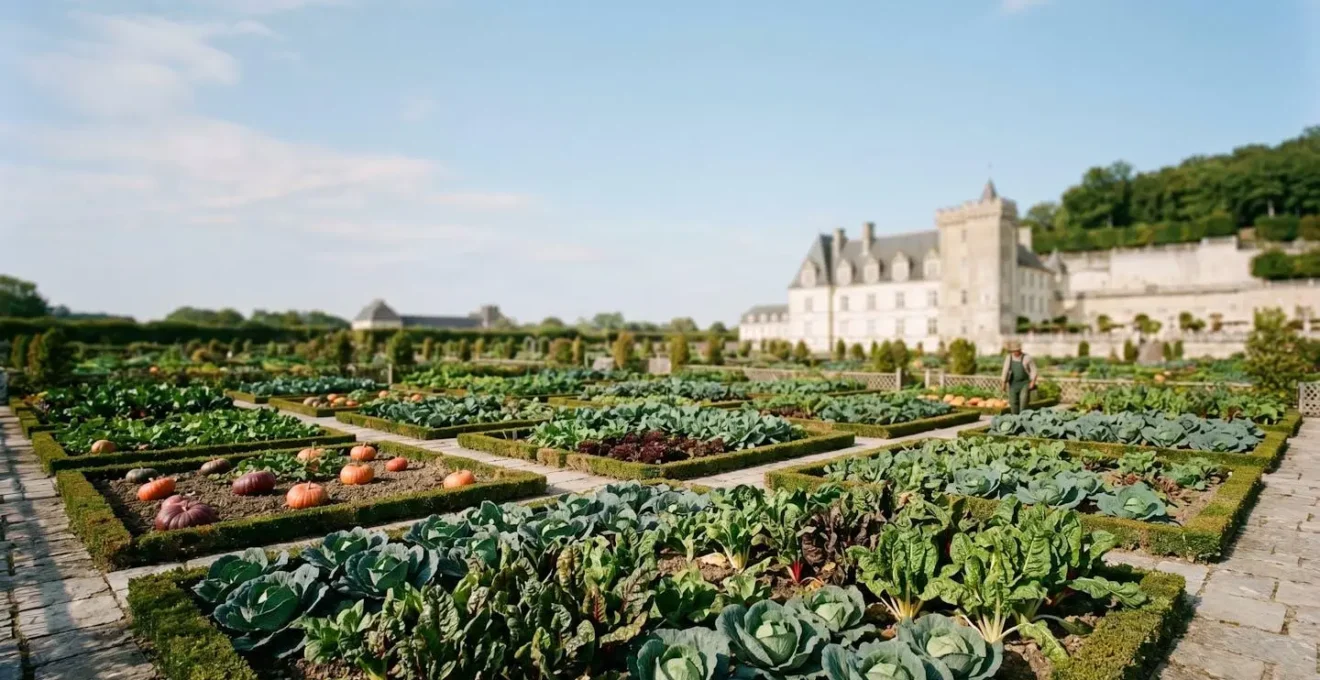
The decision ultimately hinges on your priorities. The following table provides a clear comparison to help you choose the perfect time for your visit.
| Season | Garden Condition | Crowd Level | Best For |
|---|---|---|---|
| Spring (April-June) | Full bloom—peonies, roses, wisteria peak in May-early June | Moderate—smaller than summer | Garden lovers seeking blooms with manageable crowds |
| Summer (July-August) | Lush but past peak bloom; very hot | Highest—peak tourist season, advance booking essential | Sound & light shows; wine fairs; outdoor activities despite heat |
| Autumn (September-October) | Dahlias bloom; harvest colors; Villandry vegetable garden at peak | Low—shoulder season sweet spot | Photographers; wine harvest experiences; comfortable temperatures |
| Winter (November-March) | Dormant—many gardens closed | Lowest—near-solitude in interiors | History enthusiasts seeking quiet contemplation; Christmas events at Chambord/Chenonceau |
Art Museums or Historic Sites: Which Cultural Focus Creates Deeper French Understanding?
The question of whether to prioritise art museums like the Louvre or historic sites like the Loire châteaux is a false dichotomy. Pursuing one without the context of the other is like reading a book’s text without seeing its illustrations, or vice versa. A truly deep understanding of a culture, particularly one as rich as France’s, emerges from the powerful connection made when you experience both the content and its context. The châteaux are the context; the art is the content.
A historic site, by its very nature, is an immersive, three-dimensional document. When you walk through a château, you are walking on the stage where history happened. You see the power structures in the height of the walls, the social hierarchy in the separation of servant and noble quarters, and the dawning of new ideas in the shift from a defensive moat to a pleasure garden. You understand the scale of a king’s ambition by standing in his vast, empty throne room. These sites provide the physical and social framework that gave birth to the art.
An art museum, on the other hand, provides the intimate, human details that populated that stage. A portrait of François I in the Louvre is just a picture of a man in fancy clothes until you have stood in the shadow of Chambord and felt the sheer force of his ego. Only then does the portrait become a window into the mind that conceived such a structure. The art gives a face to the history, populating the grand, empty rooms with the personalities, dramas, and fashions of the time.
The most profound cultural understanding comes from deliberately pairing these experiences. The relationship is symbiotic and creates connections that cement both in your memory.
Historic Sites (like châteaux) are the stage. They show you the power structures, the social hierarchy, and the daily life that produced the art. The deepest understanding comes from pairing them—visiting the Loire Châteaux (context) and then seeing portraits of their owners like François I in the Louvre (content) creates a powerful, memorable connection.
– Article’s Editorial Position
Therefore, the goal shouldn’t be to choose between them, but to orchestrate your travels to see them in conversation with each other. Visit the home of a great patron, then seek out the art they commissioned. This approach transforms passive sightseeing into an active investigation, building a richer, more resilient understanding of French culture.
How to Experience Versailles’s Lesser-Known Trianons and Hamlet Without Crowds?
The vast estate of Versailles operates as a powerful magnet for crowds, but its sheer size also offers opportunities for the strategic visitor. While the main palace can feel like an endless procession, the more intimate and arguably more fascinating domains of the Trianons and Marie-Antoinette’s Hamlet can be experienced in relative peace. The key is to defy the standard visitor flow with a “reverse strategy.”
Most visitors with a full ‘Passport’ ticket follow a prescribed route: they begin at the main Château in the morning, move through the gardens in the early afternoon, and finally arrive at the Trianons late in the day, tired and rushed. The Trianons (Grand and Petit) typically open later than the main palace, often around noon. By reversing this logic, you can enjoy these exquisite smaller palaces when they are at their quietest. Go directly to the Trianons as soon as they open. While the masses are packed into the Hall of Mirrors, you can be wandering the tranquil, human-scaled rooms of the Petit Trianon or the Grand Trianon’s marble colonnade.
Another powerful tactic is to overcome the “tyranny of distance.” The Trianons and the Hamlet are a significant walk from the main palace (over 1.5 km), which acts as a natural crowd filter. You can leverage this to your advantage:
- Rent a golf cart or bicycle. As soon as you enter the gardens, make renting transport your first priority. This allows you to bypass the walking masses and arrive at the far-flung parts of the estate long before they do.
- Purchase a focused ticket. If your main interest is the more personal world of Marie-Antoinette, consider buying the “Domaine de Trianon” ticket. This grants access only to the Trianons and the Hamlet, allowing you to bypass the main palace and its crowds entirely for a more focused and peaceful experience.
By employing these contrarian strategies—reversing the standard itinerary and using transport to beat the walkers—you can experience the most charming and personal parts of the Versailles estate not as a crowded tourist attraction, but as the private royal retreats they were intended to be.
Key Takeaways
- “Château fatigue” is a real phenomenon caused by cognitive overload; the solution is to visit fewer châteaux with greater intention.
- Choose a small, curated selection of châteaux with contrasting architectural narratives (e.g., medieval vs. Renaissance) to create distinct memories.
- Master contrarian timing: arrive before opening or late in the afternoon to avoid the 10:00-11:30 AM tour bus surge, transforming your experience.
Why Does Versailles Feel More Like Theme Park Than Royal Palace?
The feeling that Versailles sometimes resembles a theme park more than a royal palace is an unfortunate but logical consequence of its own monumental success. The crushing weight of its icon status, attracting millions of visitors each year, necessitates a level of crowd management that inevitably sanitises and depersonalises the experience. It’s a paradox: to preserve the palace from the sheer volume of people who love it, it must be managed in a way that can erode the very atmosphere they come to seek.
The core of the issue lies in the operational requirements of mass tourism. To guide vast numbers of people safely and efficiently through priceless, historic rooms, organisers must implement systems. These include roped-off pathways, one-way flows, and the ubiquitous audio guide. While necessary, these measures fundamentally alter the visitor’s relationship with the space. You are no longer a guest exploring a home, but a participant on a pre-determined track. The freedom to wander, to double back, to linger in a quiet corner, is sacrificed for the sake of orderly progression. This structured, linear experience is the hallmark of a theme park ride, not a personal encounter with history.
Furthermore, the sheer volume of people erodes the sense of place. The echoes of courtly intrigue and whispered secrets are drowned out by the chatter of a thousand tourists and the disembodied voice from an audio guide. The focus shifts from imagining the life that was lived here to simply navigating the crowd. The château becomes a backdrop for selfies rather than a portal to the past.
Versailles’s problem is its own icon status. It has to manage millions of visitors, which necessitates crowd-control measures (ropes, one-way systems, audio guides) that inevitably create a depersonalized, theme-park-like flow.
– Article’s Editorial Analysis
This is the cautionary tale for all major heritage sites and the ultimate argument for the strategies outlined in this guide. The only way to reclaim the authentic experience of a place like Versailles or the most popular Loire châteaux is to actively work against the grain of mass tourism. By choosing off-peak times, focusing on less-visited areas, and prioritising depth over breadth, you can peel back the layers of the “theme park” and reconnect with the soul of the palace beneath.
By shifting your approach from a tourist’s checklist to a curator’s itinerary, you empower yourself to conquer château fatigue. The goal is no longer to see everything, but to remember everything you see. Start planning your next trip not by asking “How many can I fit in?” but by asking “Which stories do I want to hear?”