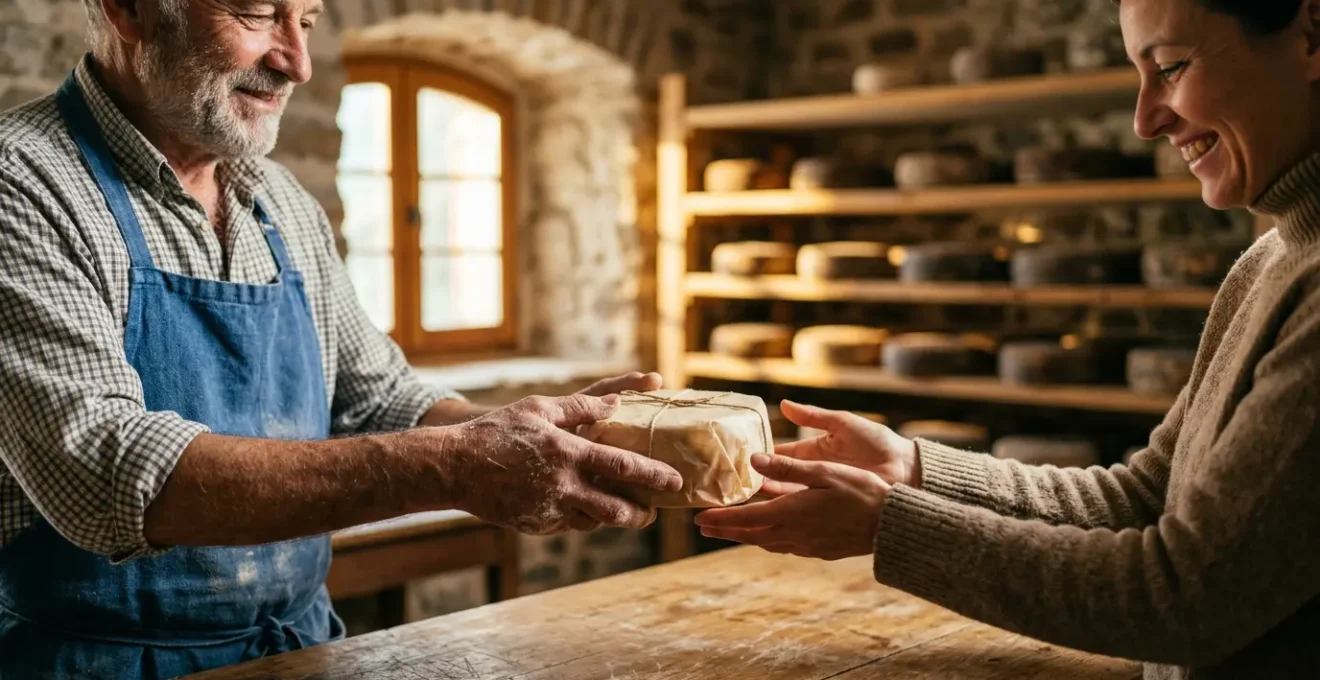
The incredible taste of French artisan food isn’t just about freshness; it’s a measurable psychological effect stemming from your direct connection with the maker.
- The story, environment, and human interaction of a purchase directly influence your sensory perception of flavour.
- Authenticity has clear signals (AOP certification, seasonality, natural imperfections) that separate real producers from wholesalers.
Recommendation: To capture and maintain that authentic taste, focus on building and sustaining relationships with producers, not just making one-off purchases.
You remember it vividly. That slice of cheese, tasted in a cool, stone-walled cellar in the Dordogne. That spoonful of lavender honey, bought from a smiling woman at a sun-drenched market stall in Provence. It tasted better than anything you’d ever had from a supermarket. The common explanation is simple: it’s fresher, made with better ingredients, and crafted with traditional methods. These things are undoubtedly true, but they only tell half the story.
The reality is that many products found in UK delis claim the same French provenance, yet they never quite capture that same magic. The search for authenticity often leads us down a path of reading labels and trusting marketing, but the core of that memorable flavour remains elusive. We assume the secret lies entirely within the product itself—the recipe, the milk, the soil.
But what if the most powerful ingredient isn’t in the food at all? What if it’s the human connection, the context, and the story that provides a kind of narrative seasoning? The superior taste of direct-from-producer food stems from a powerful cognitive and sensory synergy; the encounter with the maker fundamentally alters our perception of flavour, transforming a simple purchase into a memorable experience. It’s an effect you can understand, identify, and even cultivate from your own home in the UK.
This guide will explore the science behind why that connection tastes so good. We will uncover the practical signals that separate a true artisan from a reseller, and provide actionable strategies to maintain those precious food relationships, ensuring you can continue to enjoy the true taste of France without needing to visit every year.
Summary: Unlocking the True Taste of France by Connecting With Its Makers
- Why Does the Same Cheese Taste Better When the Maker Handed It to You Personally?
- How to Keep Buying From French Producers You Met on Holiday Without Visiting Annually?
- Market Stall or Farm Gate: Which Approach Finds More Genuine Producers During French Trips?
- The Market Vendor Clue That Reveals They Buy From Wholesalers Rather Than Make Products
- When Should You Visit a Goat Cheese Producer to See Making Rather Than Just Buying?
- Why Does AOP Certification Matter More Than Producer Marketing Claims?
- The Booking Habit That Keeps 90% of Visitors From Genuine French Encounters
- Why Do “Regional Specialities” Sold in Paris Bear Little Resemblance to the Real Thing?
Why Does the Same Cheese Taste Better When the Maker Handed It to You Personally?
The profound difference in taste isn’t just a nostalgic illusion; it’s a well-documented psychological phenomenon. Your brain doesn’t process flavour in isolation. It combines sensory inputs (smell, texture, taste) with cognitive inputs—your knowledge, emotions, and the story behind the food. When a producer personally hands you their creation, they are adding a powerful layer of context that fundamentally enhances your perception of its quality. This is the magic of cognitive-sensory crosstalk.
Think of it as narrative seasoning. The producer’s story, the sight of the farm where the animals were raised, the pride in their eyes as they describe their process—all these details are processed by your brain alongside the taste. This positive context creates an expectation of quality, and our brains are wired to have experiences that confirm our expectations. The flavour is amplified because you are not just tasting a cheese; you are tasting a story of place, passion, and authenticity.
Academic research confirms this link between knowledge and taste perception. As researchers studying the psychology of food marketing noted, the information surrounding a product can be just as important as the product itself. In their study on how information affects taste, they explain:
External information provided about the food is processed more deliberately, and it affects taste perception in a cognitive manner.
– Elder & Krishna, Negative Information, Cognitive Load, and Taste Perceptions – Journal of Food Marketing
This means the act of meeting the maker provides your brain with rich, positive “external information” that it uses to construct a more pleasurable tasting experience. The personal handover is not merely a transaction; it’s the final, crucial ingredient that makes the product unforgettable.
How to Keep Buying From French Producers You Met on Holiday Without Visiting Annually?
The fleeting joy of a holiday purchase often ends with the last bite, leaving you wondering how to recapture that authentic flavour back in the UK. The logistical hurdles for a small-scale French producer to ship internationally can seem insurmountable. However, the rise of digital platforms and collaborative strategies has created new pathways for maintaining these precious connections. The key is to shift your mindset from “buying a product” to relationship-based sourcing.
A prime example of this is Pourdebon.com, France’s largest online marketplace connecting consumers directly with artisans. It solves the shipping puzzle by consolidating orders from over 800 producers, allowing customers to receive fresh products from across France in a single, temperature-controlled delivery. By 2024, the platform had shipped over a million orders, demonstrating a powerful and growing demand for this model. It proves that distance no longer needs to be a barrier to supporting the producers you love.
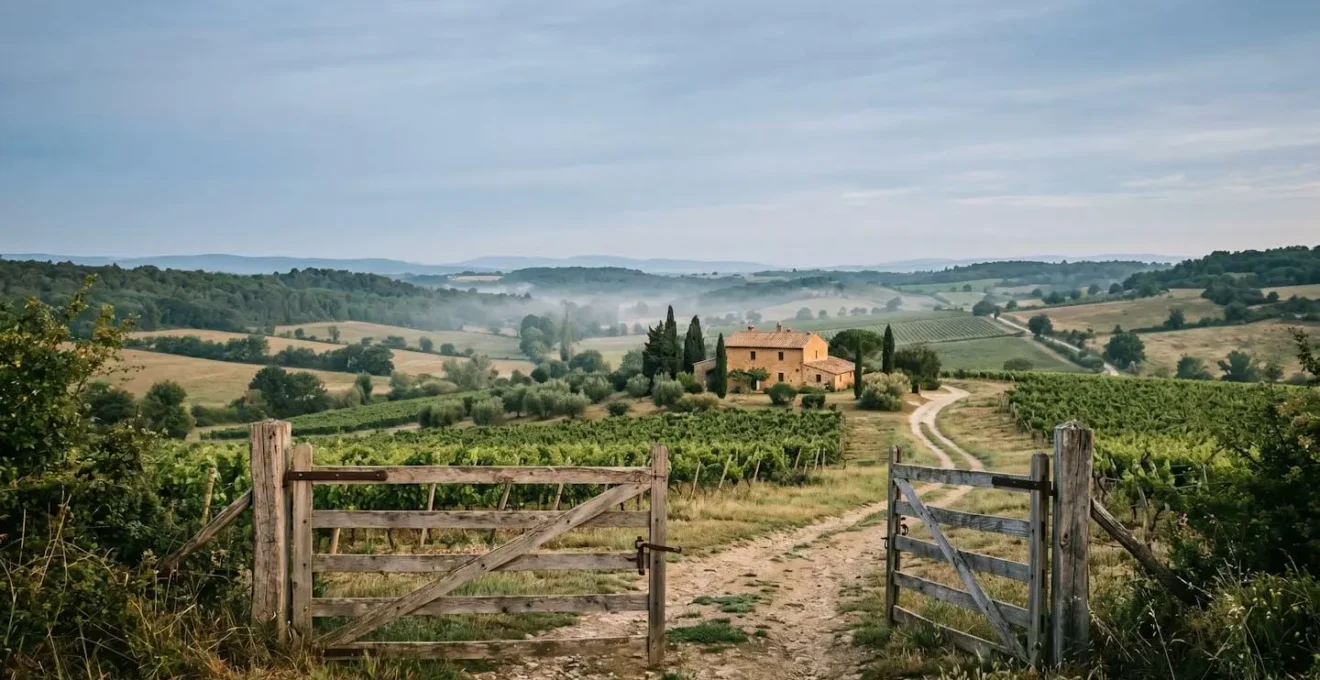
Beyond these large platforms, several practical strategies can work. First, search for “groupement de producteurs” (producer collectives) or “épicerie fine en ligne terroir.” These smaller, often specialized, collectives group artisans to make shipping viable. Secondly, consider a “group buy.” Connect with fellow food enthusiasts in your area via social media to place a single, large order for non-perishable goods like honey, confits, or cured meats, making the international shipping costs worthwhile. Finally, for a truly personal touch, contact a producer directly via email during their off-season (typically late autumn or winter). A polite request in French, acknowledging their busy periods, can often result in a willingness to arrange a special shipment.
Market Stall or Farm Gate: Which Approach Finds More Genuine Producers During French Trips?
When searching for authentic products in France, you’re faced with two primary channels: the bustling local market and the quiet farm gate. Each offers a different experience and requires a distinct approach. While there is no single “best” way, understanding their dynamics is key to finding the most genuine producers. The French themselves are deeply engaged in this culture; a recent barometer found that 64% of French people regularly bought direct from producers in 2024, a testament to the value placed on these connections.
The farm gate (`vente à la ferme`) is the gold standard for authenticity. Here, the connection is absolute. You are on the producer’s land, often seeing the very fields, animals, or workshops involved in production. This method provides the deepest narrative and the strongest cognitive-sensory experience. The downside is logistics; it requires planning, a car, and a willingness to venture off the beaten path. Not all farms are open to the public, so it’s wise to check online or call ahead.
The local market (`marché local`) offers convenience and variety, gathering numerous producers in one place. It’s an excellent way to discover a region’s specialities. However, it demands more discernment. Markets are a mix of genuine producers (`producteurs`) and resellers (`revendeurs`) who buy from wholesale markets. While not inherently bad, buying from a reseller breaks the direct connection that enhances the tasting experience. The market is a treasure hunt where your ability to spot authenticity signals is paramount. It’s a place for discovery, but the farm gate is the place for deep, confirmed connection.
The Market Vendor Clue That Reveals They Buy From Wholesalers Rather Than Make Products
Navigating a French market is a delightful sensory experience, but for a food enthusiast seeking a true connection, it’s also a detective mission. Distinguishing a genuine artisan producer from a reseller who simply buys and marks up wholesale goods is a critical skill. Resellers are not part of the story; they are merely distributors. Fortunately, they often leave a trail of clues—subtle authenticity signals that, once you know them, become glaringly obvious.
The most reliable signals relate to the product’s appearance, availability, and the vendor’s own story. A true artisan’s work has character and imperfections, while industrial products are defined by uniformity. By learning to spot these red flags, you can confidently identify the vendors who pour their heart into their work, ensuring your purchase comes with the invaluable ingredient of a genuine human story.
Your Checklist for Spotting True Artisans at a French Market
- Unnatural Uniformity: Look for slight variations in size, colour, and shape. Perfectly identical, shrink-wrapped, or flawless products often suggest industrial sourcing from a central supplier. True handcrafted items are never perfectly uniform; their imperfections are a mark of authenticity.
- Over-Abundance & All-Season Stock: A small producer has finite stock and respects seasonal cycles. Be wary of a stall piled high with mountains of everything, especially out-of-season items (like strawberries in December). This indicates they are sourcing from a massive wholesale market like Rungis, not their own land.
- Generic Signage & Evasive Answers: A real producer is proud of their origin. Look for handwritten signs with their name, farm, and village. Most importantly, ask the simple question: “C’est vous qui le faites?” (Did you make this?). A true producer will respond with passion and detail. A reseller will give a short, vague, or evasive answer.
By using these points as a mental checklist, you can cut through the noise of a busy market and zero in on the people who are the true source of the region’s culinary heritage.
When Should You Visit a Goat Cheese Producer to See Making Rather Than Just Buying?
A visit to a goat cheese farm (`chèvrerie`) offers a chance to witness alchemy: the transformation of fresh milk into a complex, flavourful cheese. However, arriving at the wrong time can lead to disappointment, leaving you at a quiet counter with only the finished product. To see the process in action, timing is everything. France is a titan in this field; it’s the world’s leading manufacturer, having produced over 122,000 tonnes of goat cheese in 2022, and this vast production runs on a strict natural and daily schedule.
There are two golden windows for witnessing cheese making. The first and most reliable is in the morning, typically between 8 AM and 10 AM. Milking usually occurs at dawn (6-8 AM), and producers begin the cheese-making process immediately after to work with the freshest milk. Arriving during this window gives you the best chance to see them ladling the fresh, delicate curd (`caillé`) into moulds (`faisselles`). The second window is after the evening milking, around 5-7 PM. However, this is less certain, as some smaller operations may only conduct one fabrication session per day, chilling the evening milk for the next morning’s batch. Always call ahead to confirm their specific schedule.
Beyond the daily schedule, seasonal awareness is crucial. Goat cheese production is not a year-round activity. The peak season follows kidding in late winter and spring (roughly February to May). Conversely, most goat farms have a “dry period” (`période de tarissement`) from approximately November through January, when the goats are not producing milk. During these months, it is impossible to see fresh cheese being made, and you will only find aged varieties. If you miss the fabrication window, don’t despair. Ask to see the `cave d’affinage` (aging cellar). This temperature-and-humidity-controlled room is where cheeses develop their character over weeks or months, and it offers a fascinating insight into the role of time and microbiology in creating flavour.
Why Does AOP Certification Matter More Than Producer Marketing Claims?
In the world of French food, you will encounter many labels and marketing terms: “artisanal,” “traditional,” “farm-made.” While these can be suggestive, they are often unregulated and subjective. There is, however, one label that stands above all others as a legally binding guarantee of authenticity: the Appellation d’Origine Protégée (AOP). This isn’t a marketing claim; it’s a rigorous legal framework. Understanding its power is crucial, especially when you learn that while 65% of French consumers recognize the AOP label, an overwhelming 80% trust it as a definitive mark of quality.
An AOP designation legally dictates three critical factors: origin, ingredients, and method. It guarantees that the product comes from a specific geographical area, uses raw materials from that same area, and is made according to a strict, traditional process (`cahier des charges`) that is subject to thousands of annual inspections. This framework ensures that the product’s unique character, derived from its specific `terroir`—the unique combination of soil, climate, and local know-how—is preserved. It is the ultimate authenticity signal, an enforceable promise that you are getting the real thing, not an imitation.
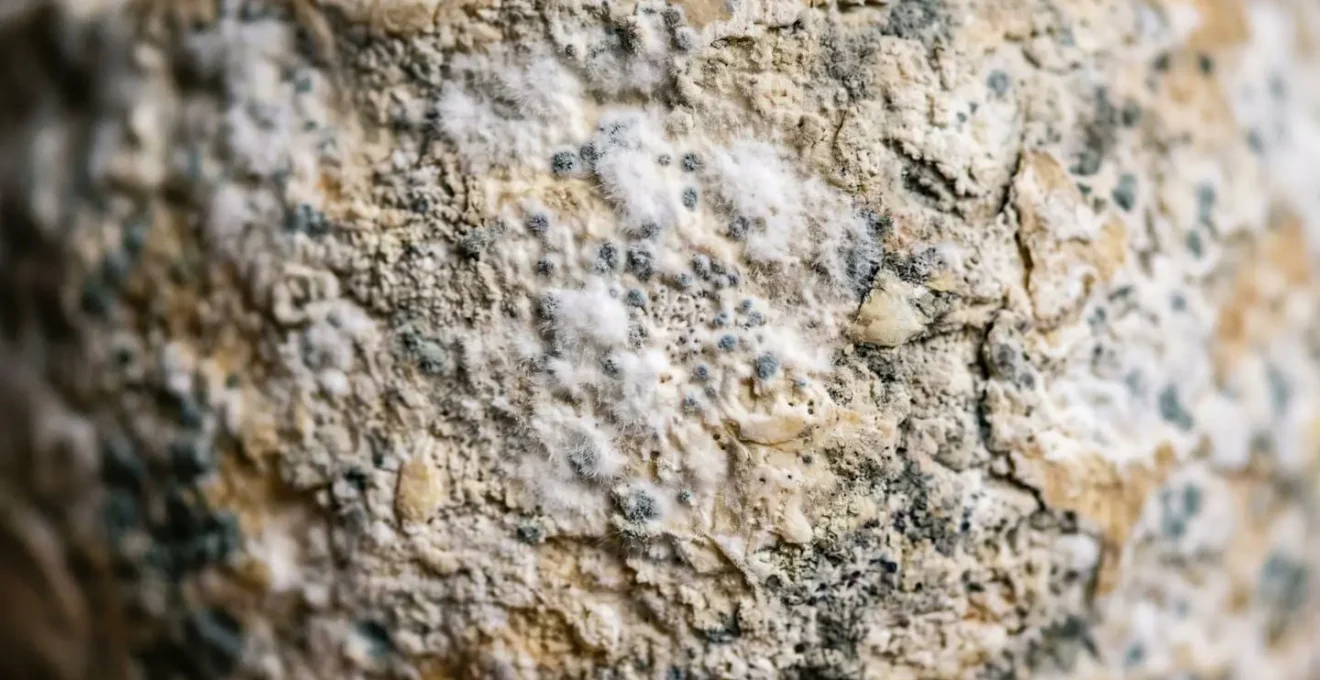
The case of Roquefort AOP is a perfect illustration. A 1961 court ruling decreed that only cheese aged in the natural caves of Mont Combalou in Roquefort-sur-Soulzon can bear the name. The AOP specifications go further, mandating that the milk must come from a specific breed of sheep (Lacaune), be unheated, and that the crucial `Penicillium roqueforti` mould must be cultivated within those same caves. This creates a micro-bacterial environment and a tangy flavour profile that is impossible to replicate elsewhere. No marketing slogan can compete with this legally-defined contextual integrity. When you see an AOP label, you are buying a piece of legally protected heritage, not just a product.
The Booking Habit That Keeps 90% of Visitors From Genuine French Encounters
The most common mistake that prevents travellers from having truly authentic food experiences in France isn’t a lack of knowledge or a limited budget; it’s a packed itinerary. The habit of over-scheduling a holiday—booking every tour, museum slot, and dinner reservation in advance—leaves no room for discovery. Genuine encounters happen in the unplanned moments: the detour down a country lane prompted by a small sign for `fromage de chèvre`, the conversation with a local at a café who recommends a hidden gem, or the time to simply wander a market and follow your senses.
When your schedule is filled to the minute, you default to the most visible, tourist-oriented options. You eat at the restaurants with prominent English menus near the main square, rather than the small, family-run bistro on a side street that the locals frequent. This behaviour inadvertently isolates you from the very culture you came to experience. You end up in places that cater to tourists, which often means they don’t source their ingredients from the small, local producers that define the region’s authentic flavour.
This disconnect is not just a loss for the tourist; it goes against a core principle of French food culture. In a recent survey, an overwhelming 77% of French people stated they believe restaurateurs who don’t source locally are actively contributing to the decline of French agriculture. By leaving space in your schedule, you give yourself the freedom to find and support the places that uphold this value. You create the opportunity to stumble upon a real producer, to have a conversation, and to forge a connection. The most memorable encounters are rarely found in a guidebook; they are found in the margins of a flexible schedule.
Key Takeaways
- Taste is Perception: The story and human connection with a producer are powerful ingredients that directly enhance your sensory experience of flavour.
- Authenticity Has Signals: You can learn to distinguish true artisans from resellers by spotting clues like natural imperfection, seasonality, and AOP certification.
- Relationships Over Transactions: The most rewarding way to enjoy authentic French products is to build and maintain relationships with producers, a goal now achievable through online collectives and direct contact.
Why Do “Regional Specialities” Sold in Paris Bear Little Resemblance to the Real Thing?
You’ve found it: a beautiful cheese shop in Paris selling the very Camembert de Normandie AOP you enjoyed on your trip. Yet, when you taste it, something is missing. The flavour is milder, the texture less complex, the character muted. This isn’t your imagination. The “regional speciality” sold hundreds of kilometres from its origin is often a fundamentally different product, even when it carries the same name. The culprit is the compromise required for mass distribution and extended shelf life.
The scale of this distribution is immense. Even for protected AOP cheeses, official figures show that 60% of sales are made in hypermarkets and supermarkets. To make this possible, many producers operate a two-tier production strategy. The first tier is the true artisanal product, often made with raw milk (`lait cru`). This version is teeming with the complex, local micro-bacteria that create the deep, authentic `terroir` flavours. It is fragile, has a short shelf life, and is reserved for farm-gate sales and local markets where the cold chain is short and controlled.
The second tier is the wholesale version, destined for distant shops in Paris or for export. To survive the journey and sit on a shelf for weeks, this product is almost always made with pasteurized milk. The heating process kills the unique local bacteria, both good and bad, resulting in a safer, more stable, but ultimately blander product. It’s a shadow of the original. The `contextual integrity` of the food is lost—not just its geographical location, but its microbial identity. This is why the same cheese can taste dramatically different at its source. The one in Paris is designed for travel; the one at the farm is designed for taste.
On your next trip to France, don’t just be a tourist. Be a partner. Start by seeking out one true producer, ask them their story, and forge a connection that you can savour long after you’ve returned home. This is the path to the authentic flavour you’ve been searching for.