The frustrating gap between the promise of a “unique” French tour and the generic reality stems not from a lack of options, but from a flawed booking approach.
- Standard “curation” is often a repackaging of the most popular, crowded routes, driven by logistical efficiency, not cultural depth.
- True personalisation comes from vetting the human expert—the guide, the artisan—not the advertised itinerary.
Recommendation: Shift your mindset from a consumer buying a product to an architect designing an experience. Prioritise access to expertise and strategic timing over pre-set tour packages.
You’ve seen the adverts. “Curated French Experiences.” “Unlock the secrets of Paris.” “Live like a local.” You invest your time and money, expecting a journey brimming with authenticity, only to find yourself on a slightly smaller bus, following a nearly identical path to the masses. This feeling of disappointment is common among discerning UK travellers. You’re promised a bespoke suit but handed an off-the-peg garment, and the sense of a missed opportunity is profound.
The conventional wisdom is to “go off the beaten path” or “hire a local guide,” but this advice barely scratches the surface. The market is saturated with so-called “boutique” offerings that are, in reality, the tourism industry’s version of fast fashion: standardised products designed for volume. They leverage the language of exclusivity while operating on a model of mass efficiency. The problem isn’t a lack of desire for authenticity; it’s that the system is engineered to deliver the opposite.
But what if the key wasn’t in finding a better tour, but in adopting a better framework for choosing? The secret to a genuinely personal French encounter lies not in the *what*—the list of sights or activities—but in the *how* and the *who*. It requires a fundamental shift from being a passive tour-taker to an active “experience architect.” It’s about understanding the structural forces that create genericness and learning how to circumvent them.
This guide deconstructs the common pitfalls of curated travel in France. We will explore the mechanisms that make unique-sounding tours feel sterile, provide a blueprint for identifying true experts, and reveal the booking habits that keep most visitors trapped in a superficial cultural loop. By the end, you will have the strategic mindset to design a trip that delivers the depth and personal connection you’re seeking.
To help you navigate these insights, we’ve structured this article to address the most pressing questions for a traveller determined to go beyond the postcard version of France. The following sections will guide you through the process of crafting a truly memorable journey.
Summary: A Traveller’s Guide to Authentic French Experiences
- Why Do “Curated” Experiences Often Feel Exactly Like Non-Curated Mass Tourism?
- How to Find Expert Guides Who Actually Customise Rather Than Deliver Scripts?
- Private Guide or Small Group: Which Curated Format Delivers Better Value for Cultural Access?
- The “Exclusive Access” Claim That Almost Always Means Standard Tourist Experience
- When Should You Book Curated French Experiences for Best Expert Availability?
- The Booking Habit That Keeps 90% of Visitors From Genuine French Encounters
- How to Use a French Cooking Class to Actually Learn About French Culture?
- Why Do Week-Long French Holidays Leave You Knowing Less Than Expected?
Why Do “Curated” Experiences Often Feel Exactly Like Non-Curated Mass Tourism?
The term “curated” promises thoughtful selection and unique insight, yet the on-the-ground experience often mirrors that of any standard tour. The reason is a simple, structural one: economic gravity. Most tour operators, even small ones, are bound by the same logistical and financial pressures. They build itineraries around proven “hits” because it’s efficient and predictable. This creates a feedback loop where popular spots become more popular, and the infrastructure to serve them becomes more industrialised. The “curation” is often just a marketing layer applied to a pre-existing, optimised route.
The core issue is overtourism, but not just in terms of crowds. It’s about the concentration of the entire tourism apparatus. Research on tourist distribution patterns reveals that 80% of tourists in France are concentrated in just 20% of its territory. This means that whether you’re on a large bus tour or a “private” tour for two, you are likely being funnelled through the same heavily trafficked corridors. The guide’s script may be more polished and the vehicle more comfortable, but the underlying experience—the sights, the shops, the photo stops—remains fundamentally the same.
This is the paradox of modern tourism: the more an experience is optimised for mass appeal, the less individual value it holds. The “hidden gem” bakery featured in a popular blog quickly becomes a queue-filled tourist spot. An “authentic” village market, once discovered, gets added to the official tour circuit. True experience architecture requires understanding this dynamic and actively seeking out the exceptions, which are rarely found on the first page of a Google search for “unique tours.”
How to Find Expert Guides Who Actually Customise Rather Than Deliver Scripts?
The belief that a good guide is the key to unlocking a destination is widespread and correct. A 2024 GetYourGuide survey confirms that 89% of travelers believe a local guide is the best way to explore a new place. However, the critical distinction lies between a “guide” and an “expert.” A guide delivers a service, often a well-rehearsed script. An expert shares a passion and a deep, personal body of knowledge. They don’t just know the history; they know the historian who debates it. They don’t just know the best croissant; they know the baker’s family history.
Finding these individuals requires a shift from browsing platforms to active vetting. A true expert’s value is in their ability to engage in human-centric curation—tailoring the experience to your specific interests in real-time. The first red flag of a scripted itinerary is a rigid, unchangeable schedule. A real expert will want to know about you *before* the tour begins. Their pre-tour communication will be inquisitive, asking about your interests, your travel style, and what you hope to discover. They are co-designing the experience with you.
Look for evidence of deep, niche expertise. Does the guide have a blog, publications, or a social media presence dedicated to a specific aspect of French culture (e.g., Napoleonic history, Art Deco architecture, regional cheese-making)? This is a sign of genuine passion, not just a job. When you inquire, test their flexibility. Instead of asking “What will we see?” ask, “I’m particularly fascinated by the medieval guild system in this town. Could we focus on that?” The response will tell you everything you need to know about whether you’re hiring a lecturer or a conversationalist.
Your Action Plan: Vetting a Potential Expert Guide
- Initial Inquiry: Go beyond “Are you available?”. Send a detailed email outlining your specific, even niche, interests. A scripted guide will send a boilerplate response; an expert will engage with your interests.
- Review Their Digital Footprint: Look for a personal blog, academic papers, or a highly specialised Instagram feed. A portfolio of passion is a stronger signal than a page of five-star reviews on a major platform.
- The “Flexibility Test”: Propose a hypothetical detour or a change in focus. For example, “If we discover an interesting antique market on the day, would it be possible to adjust our schedule?” Their answer reveals their adaptability.
- Ask About Their Sources: Ask a question like, “What’s the best book you’ve read recently about this region’s history?” An expert will have an immediate, enthusiastic answer. A guide reciting a script will likely falter.
- Request a Brief Call: A 15-minute video call can confirm personality fit and conversational ability. It’s much harder to maintain a façade in a live conversation than in an email exchange.
Private Guide or Small Group: Which Curated Format Delivers Better Value for Cultural Access?
Once you’ve committed to finding an expert, the next decision is the format. The market is increasingly bifurcated between hyper-exclusive private tours and intimate small-group experiences. Both reject the impersonal nature of large coach tours, but they offer different kinds of value. The choice isn’t about which is “better,” but which is better aligned with your specific goal, whether that’s maximum flexibility or shared discovery. Understanding this trade-off is key to optimising your investment.
A private guide offers the ultimate in customisation. The itinerary is yours to command. If a particular street, museum, or conversation captivates you, you can linger for hours without worrying about a group schedule. This format is ideal for travellers with highly specific interests, photographers who need time to get the perfect shot, or those who simply value privacy. The market for this level of service is robust; market research indicates the global private tour market is projected to grow significantly, reflecting a strong demand for tailored travel. However, the cost is proportionally higher, and the social dynamic is limited to you and the guide.
Small group tours, typically with fewer than 10 people, present a compelling middle ground. While you sacrifice total control over the itinerary, you gain a different kind of value: the shared experience. A 2024 study revealed that nearly half of travellers prefer small or private group formats. The questions and perspectives of fellow travellers can enrich your own understanding, and the lower price point can make expert-led tours more accessible. The best small group tours are not just downsized versions of large ones; they are designed around a cultural access point that benefits from a group dynamic, like a meal at a chef’s home or a debate with a local historian.
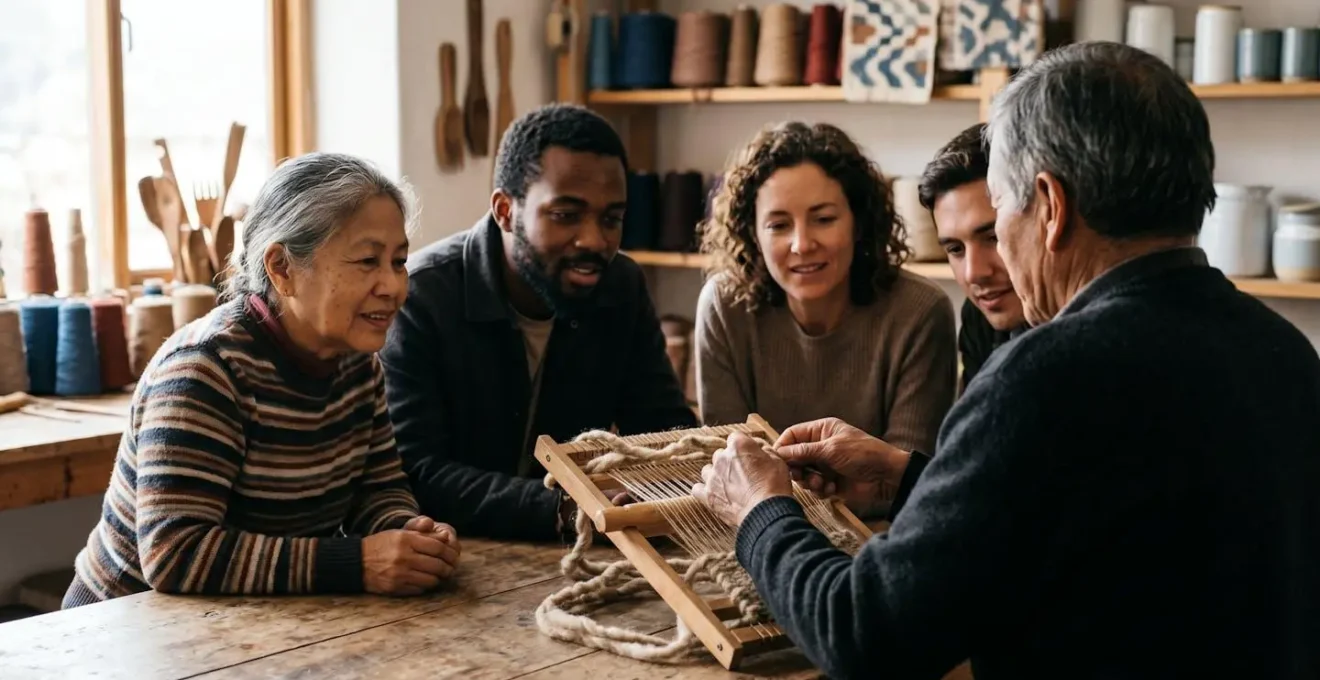
As the image above illustrates, the magic of a small group often lies in the shared human connection. The right format depends on your goal. For deep-diving into a niche passion, a private guide is unparalleled. For a rich, well-rounded cultural immersion with a social element, a well-chosen small group often provides superior value for money.
The “Exclusive Access” Claim That Almost Always Means Standard Tourist Experience
One of the most potent lures in the bespoke travel industry is the promise of “exclusive access.” It conjures images of empty museums, private viewings, and entry into places forbidden to the general public. While genuine exclusivity exists, it is rare and expensive. More often than not, the term is a marketing gimmick used to repackage a standard experience with a higher price tag. It’s crucial to deconstruct what “exclusivity” really means in the context of tourism.
Often, “exclusive” simply means “pre-booked” or “skip-the-line.” You are not getting access to a secret part of the Louvre; you are simply bypassing the main ticket queue, along with hundreds of other “exclusive” tour groups. The experience inside is the same crowded, noisy affair. The term preys on the desire to feel special, but the logistical reality is unchanged. A powerful example of this is the management of France’s most famous landmarks.
Case Study: The Illusion of Exclusivity at the Palace of Versailles
The Palace of Versailles is a masterclass in the challenges of overtourism. Despite receiving eight million visitors annually, it markets premium and “exclusive” experiences. However, studies on its management show that even with higher-priced tickets, the core experience can be one of severe crowding, where the heritage is threatened and the visitor’s sense of wonder deteriorates. The “exclusivity” is often a strategy to manage crowd flow (exploitation) rather than provide a genuinely different experience (exploration). It demonstrates how even the most iconic sites struggle to deliver true exclusivity when faced with overwhelming demand.
This highlights a fundamental truth that discerning travellers must embrace. As one industry analysis notes, true exclusivity is about human connection, not just logistics.
True exclusivity is human, not logistical. Real exclusive access isn’t about an empty landmark; it’s a personal introduction to an artisan in their workshop.
– Tourism industry analysis, Cultural tourism trends report
The next time you see “exclusive access,” ask a simple question: “Exclusive of whom?” If the answer is “the main ticket line,” you’re likely paying a premium for convenience, not a unique experience. True exclusivity is being the only one there, not just the first in line.
When Should You Book Curated French Experiences for Best Expert Availability?
In the architecture of a perfect trip, timing is as crucial as the choice of guide or destination. The best experts—the academics, artisans, and specialist guides who provide unparalleled cultural access—are a scarce resource. They are often booked months, sometimes even a year, in advance, especially for travel during peak season. Securing their time requires a strategic approach to your booking window, leveraging what we can call a temporal advantage.
The tourism landscape in France is highly seasonal. Official statistics show that France welcomed over 100 million tourists in 2023, with the vast majority concentrated in the peak summer months of July and August and in the same few regions. During this period, demand for all guides skyrockets. The true experts are the first to be booked, leaving a large pool of less-experienced, script-based guides to handle the last-minute surge. Booking a “private tour” in Paris for a date two weeks away in July almost guarantees you will get an available guide, not necessarily the best one.
The most powerful temporal advantage comes from travelling in the “shoulder seasons” (April-June, September-October) or the off-season (November-March). Not only are landmarks less crowded, but the best guides have more availability and are often more relaxed and generous with their time. Your request is no longer one of a hundred, but one of a few. This allows for more thoughtful planning and genuine customisation.
If you must travel during peak season, the rule is simple: book far in advance. For a trip in July, you should be finalising your expert guide by January at the latest. This counter-intuitive, long-range planning is what separates the experience architect from the average tourist. It’s the difference between securing a conversation with a history professor and getting a standard lecture from a student on summer break.
The Booking Habit That Keeps 90% of Visitors From Genuine French Encounters
The single most common habit preventing discerning travellers from accessing authentic experiences is an over-reliance on large, online travel agencies (OTAs) and aggregator platforms. While these websites offer unparalleled convenience and a dizzying array of options, they are fundamentally designed for volume and standardisation. Their algorithms prioritise tours with the most reviews, the slickest photos, and the highest conversion rates—metrics that favour mass-market products, not niche expertise.
The convenience is a double-edged sword. Industry data reveals that online channels for tour bookings nearly doubled from 17% in 2019 to around 30% by 2021, and this trend has only accelerated. We’ve become conditioned to one-click booking, expecting instant confirmation. This process actively discourages the very thing required for true customisation: a conversation. By reducing an expert guide or a unique workshop to a transactable “product” with a “Book Now” button, these platforms strip away the opportunity for the collaborative design process that defines a bespoke experience.
The result is a catalogue of “scripted itineraries.” Even if a tour is listed as “private,” it’s often a pre-set package that the guide is contracted to deliver identically for every booking. There is no room for your personal interests to shape the day. You are buying a fixed commodity, not engaging a service. This system is efficient for the platform and the high-volume operator, but it fails the traveller seeking depth. As one analysis of the experience economy puts it, “Travellers are losing interest in pre-packaged, standard tourism. They are looking for tailor made, unique and authentic experiences.” Yet, our booking habits often lead us directly to the products we claim to be trying to avoid.
Breaking this habit means using OTAs for research and discovery, but not for the final booking. Use them to identify potential guides, then search for that guide’s personal website or contact information to initiate a direct conversation. This simple extra step re-inserts the human element and opens the door to genuine customisation.
How to Use a French Cooking Class to Actually Learn About French Culture?
A French cooking class is a perfect microcosm of the “curated” experience dilemma. It can either be a sterile, tourist-centric activity where you follow a recipe for Coq au Vin, or it can be a profound cultural access point—a gateway to understanding French history, agriculture, and the concept of *terroir*. The difference, once again, lies in moving beyond the standard offering and applying the principles of experience architecture.
First, scrutinise the “what.” A class focused solely on famous, complex restaurant dishes is often a performance, not a lesson. A truly cultural class focuses on *la cuisine bourgeoise* (traditional family cooking) or regional specialities. Look for classes that include a market visit. This is not just a charming photo opportunity; it’s a lesson in seasonality, a conversation with vendors, and an introduction to the French reverence for produce. The shopping is as important as the chopping.
Second, and most importantly, vet the “who.” Who is teaching? Is it a professional chef in a sterile, stainless-steel kitchen, or is it a *grand-mère* in her family home, sharing recipes passed down through generations? The latter is infinitely more valuable for cultural immersion. Look for instructors who frame their class in a cultural context, talking about the history of the dish, the local farmers who grew the ingredients, and the family traditions surrounding the meal. The food is the medium; the culture is the message.
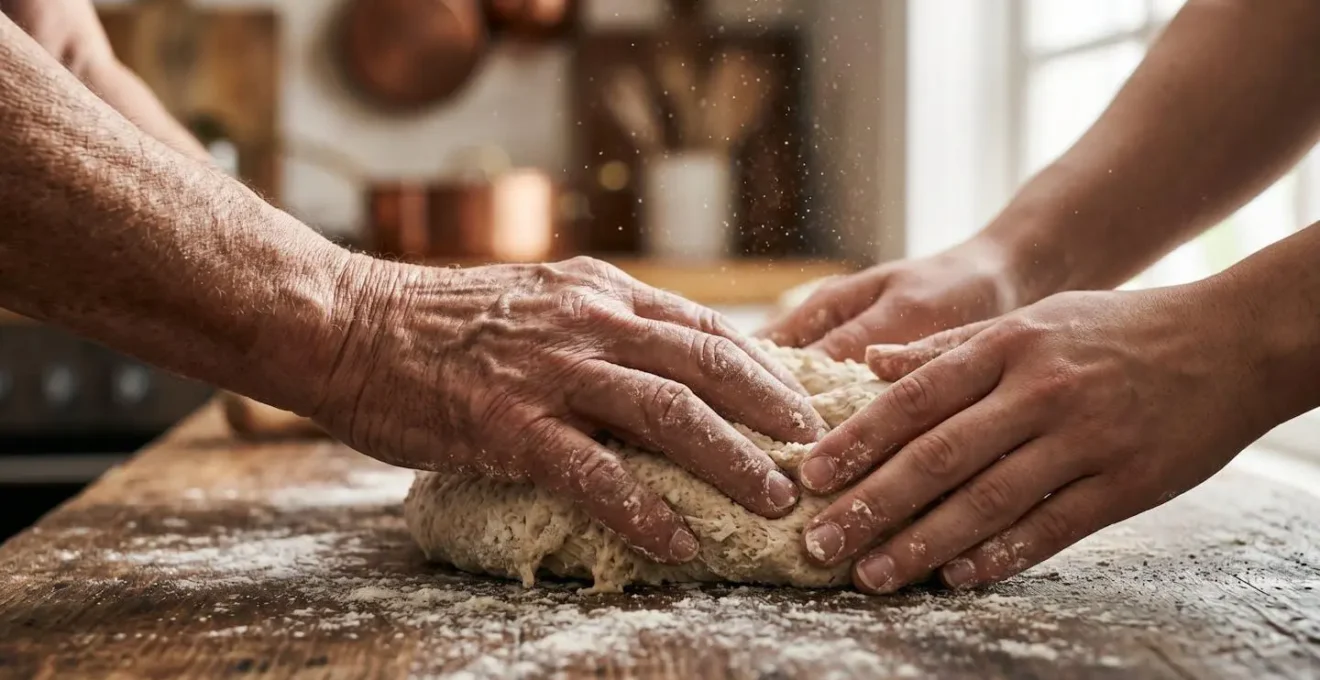
The most authentic experiences are hands-on, tactile, and personal. It’s in the feel of the dough, the smell of the herbs, and the shared stories over the meal you’ve prepared together that real learning happens. Avoid classes with large groups or demonstration-only formats. The goal is participation, not observation. Ask the potential instructor: “Will we be cooking the entire meal ourselves? Can you tell me about the history of the dishes we’ll be making?” Their answers will reveal whether you’re signing up for a cooking lesson or a cultural one.
Key Takeaways
- Generic experiences are a structural problem; you must actively design your way around the mass-market system.
- Prioritise the expert, not the itinerary. True curation is a conversation with a passionate specialist, not a pre-set package.
- Leverage your temporal advantage. Booking well in advance or during the off-season is your most powerful tool for securing authentic expertise.
Why Do Week-Long French Holidays Leave You Knowing Less Than Expected?
There is a peculiar emptiness that can follow a week-long holiday in France. You’ve ticked off the landmarks, eaten in well-regarded restaurants, and snapped hundreds of photos, yet you return home with a feeling that you’ve only skimmed the surface. This isn’t a failure of duration; visitor data shows that a significant portion of tourists stay for a similar length of time. For example, 24.2% of EU visitors stay for 4-6 days. The issue isn’t the number of days spent, but the *density* of the experience within those days.
A typical holiday itinerary is a checklist of sights, a “dot-to-dot” of famous locations. This approach prioritises movement and breadth over stillness and depth. You spend more time in transit between points of interest than you do absorbing the atmosphere of any single one. You see the Mona Lisa, but you don’t have a conversation with a local artist. You visit a vineyard, but you don’t spend an afternoon talking to the winemaker about the challenges of a changing climate. You accumulate sights but not insights.
This is the illusion of knowledge that modern travel can create. As one cultural commentator aptly observed:
The fact that television and tourism have made the whole world accessible has created the illusion that we enjoy intimate knowledge of other places, when we barely scratch their surface.
– Anonymous, Tourism industry reflections
To counter this, the experience architect designs a trip with fewer, but deeper, engagements. Instead of five towns in five days, they choose one town and seek out its human access points. They trade a frantic schedule for the luxury of unplanned time, allowing for spontaneous discoveries and genuine conversations. A single, three-hour discussion with a local historian can teach you more about a region than a week of rushing between châteaux. The goal is to leave not with a full camera roll, but with a few meaningful stories and a real sense of connection.
By shifting your focus from consuming a pre-packaged holiday to actively designing a personal journey, you reclaim the power to have a truly transformative experience. Start today by rethinking your approach for your next trip to France; the depth of connection you can achieve is well worth the effort.