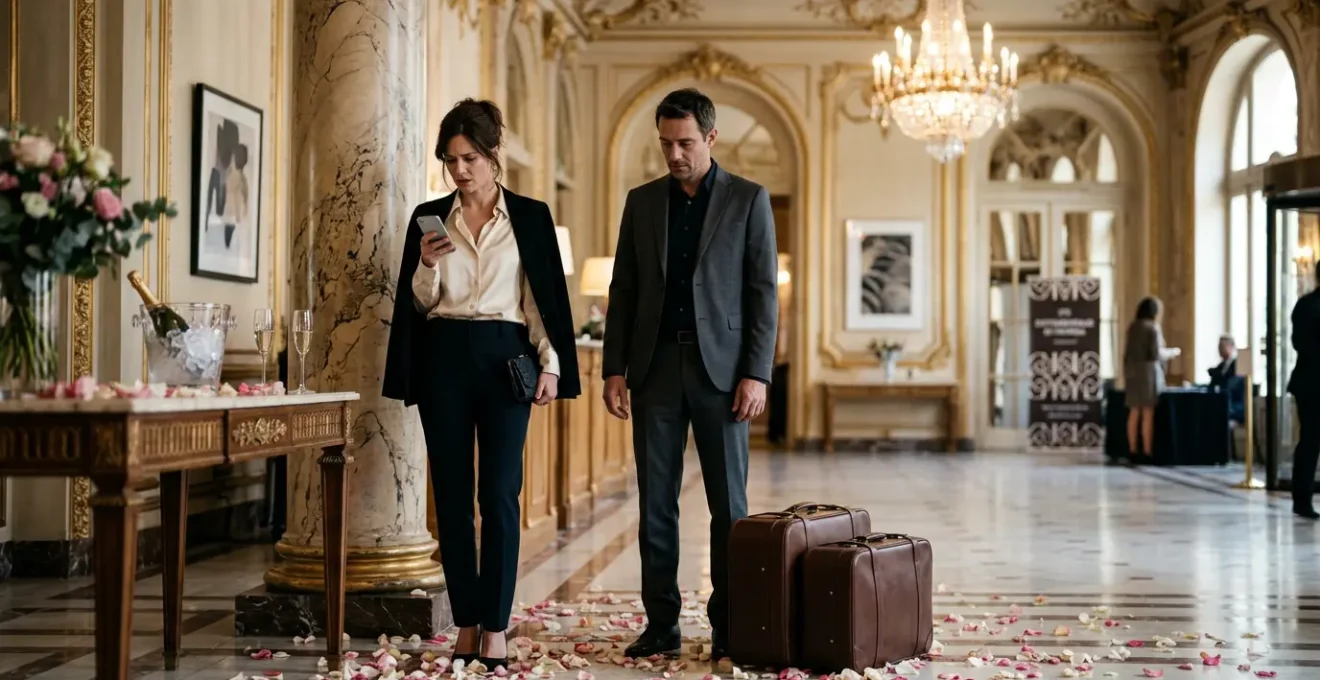
The key to a truly romantic French escape isn’t the “romantic package”—it’s intentionally avoiding it to make space for genuine connection.
- Generic hotel packages often create awkward, performative moments rather than fostering real intimacy.
- Rushing between tourist hotspots leads to exhaustion and arguments, not shared inspiration.
Recommendation: Stop trying to find pre-made romance. Instead, design your trip together around shared values and spontaneous discovery, transforming your holiday from a checklist into a shared story.
You see the picture online: a chic Parisian room, rose petals scattered on the bed, a bottle of champagne chilling on ice. It’s the quintessential “romantic package,” a promise of instant intimacy. Yet, for many couples, the reality feels strangely hollow. You stand in the room, the performance of romance laid out before you, and a sense of awkward pressure descends. This experience isn’t unique. So many couples, especially those from the UK who are wary of overly commercialised displays, invest time and money into a French getaway hoping for connection, only to find themselves navigating a minefield of clichés and crowds that pushes them further apart.
The common advice is to book the “best” hotels, see the “top” sights, and follow a meticulously planned itinerary. But this approach often ignores the fundamental truth about connection. It treats romance as a product to be consumed—a checklist of experiences to tick off. What if the stress and disappointment stem from this very mindset? What if the relentless pursuit of prescribed romantic moments is the very thing that kills the mood?
This is where we shift our perspective. The secret to a deeply connecting French holiday isn’t about finding romance; it’s about designing a journey that allows romance to find you. It’s about creating intentional space for spontaneity, understanding what truly resonates with both of you, and stepping away from the tourist trail to discover something authentic together. This guide is built on that principle. We will deconstruct the common pitfalls of “romantic” travel and give you a framework for designing an experience that strengthens your bond, leaving you more inspired and connected than when you arrived.
In the following sections, we will explore the practical ways to apply this philosophy to your trip. From rethinking your planning process to choosing the right region and avoiding cultural faux pas, you’ll find the tools to craft a journey that is uniquely and authentically yours.
Summary: Why Do “Romantic” French Hotels Often Leave Couples More Stressed Than When They Arrived?
- Why Does the “Romantic Package” With Rose Petals and Champagne Feel More Awkward Than Intimate?
- How to Plan a Week in France That Satisfies Both Partners Without Constant Compromise?
- Loire Valley or Côte d’Azur: Which French Region Suits Couples Seeking Adventure Over Relaxation?
- The “Most Romantic” Parisian Experience That Actually Kills the Mood Every Time
- When Should Couples Visit Provence to Have Villages to Themselves Without Missing Lavender Season?
- The Booking Habit That Keeps 90% of Visitors From Genuine French Encounters
- The Dinner Party Mistake That Brands British Guests as Impolite in French Homes
- Why Does Rushing Through 5 French Cities in 10 Days Leave You More Exhausted Than Inspired?
Why Does the “Romantic Package” With Rose Petals and Champagne Feel More Awkward Than Intimate?
The “romantic package” is the hotel industry’s one-size-fits-all answer to a deeply personal emotion. It’s built on a set of universal symbols—champagne, roses, chocolates—that are supposed to short-circuit the path to intimacy. Yet, for many, it achieves the opposite. This pre-packaged romance creates what can be called the “Authenticity Gap”: the chasm between a manufactured romantic setting and your genuine, unique connection as a couple. The experience feels performative because it is. You are actors walking onto a pre-built set, and the pressure to “feel romantic” can be intensely awkward.
The problem lies in its generic nature. As one marketing analysis aptly puts it, the core contradiction is clear:
If modern romance is so unique, why do our ‘romance’ hotel packages all look the same?
– Blue Magnet Interactive, How Your Hotel’s Romance Package May be a Turn Off for Modern Couples
This approach misunderstands the nature of modern connection. It assumes a passive model where romance is delivered to your door. Hotels may see some success; hospitality market data reveals that adding extras like “intimacy kits” can result in a satisfaction increase of around 15% for some guests. However, for couples seeking authentic connection, these formulaic add-ons often feel more like a business transaction than a heartfelt gesture. True intimacy is co-created. It arises from shared experiences, inside jokes, and navigating the unexpected together—not from a checklist provided by the front desk.
Ultimately, rejecting the “romantic package” isn’t about rejecting romance itself. It’s about reclaiming it and making it your own, moving away from passive consumption and toward active, intentional creation of your shared story.
How to Plan a Week in France That Satisfies Both Partners Without Constant Compromise?
The traditional model of travel planning for couples often devolves into a negotiation of competing wish lists. One partner wants to spend days exploring historical châteaux; the other dreams of lingering in food markets. The result is often a compromised itinerary where each person gets a fraction of what they wanted, leading to a disjointed trip where neither feels truly seen or satisfied. To break this cycle, you must shift from “planning an itinerary” to “designing a shared experience.” This approach prioritises the *why* behind your desires, not just the *what*.
Instead of creating two separate lists of attractions, start by discussing your “travel values.” Are you seeking adventure, tranquillity, intellectual stimulation, or sensory indulgence? Understanding these underlying motivations allows you to find activities that achieve Connection Resonance—experiences that satisfy both of your core desires simultaneously. A trip to a vibrant local market, for instance, can satisfy a desire for culinary discovery and a desire for authentic cultural immersion at the same time.
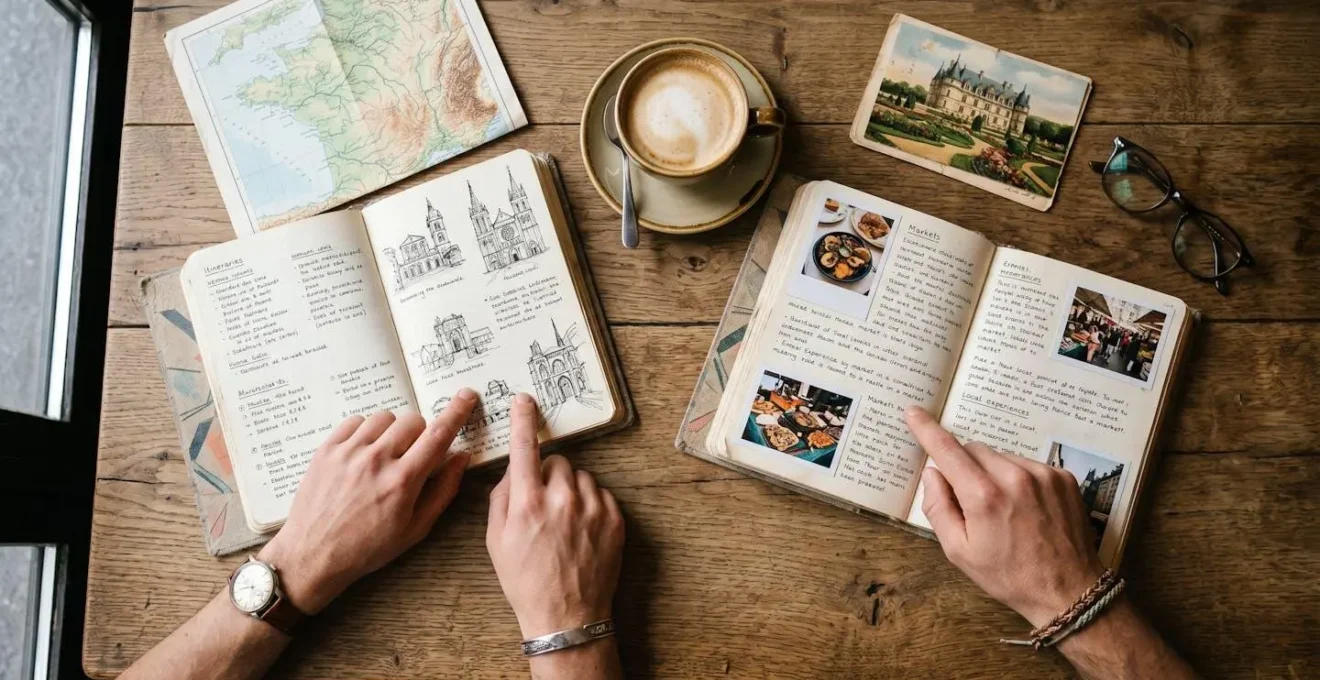
This image perfectly captures the classic conflict: two separate visions for the same trip. The goal of experience design is to find the elements that bridge this gap, creating a single, cohesive narrative. This means building an itinerary with intentional space, leaving room for spontaneous discoveries. Some of the most memorable moments of connection happen in these unplanned gaps—getting lost in a charming alley, discovering a hidden café, or deciding on a whim to follow a scenic road.
Your Action Plan: The Experience Design Method
- Define Core Desires: Before listing any places, discuss your ideal feelings. Do you want to feel relaxed, adventurous, inspired, or pampered? List these emotional goals first.
- Collaborate on a Theme: Based on your shared desires, create a theme for your trip. Is it “A Culinary Adventure in Burgundy” or “Uncovering Roman History in Provence”? This provides a unifying filter for all decisions.
- Adopt the “Hub and Spoke” Model: Choose one town as a base for 5-7 days. This eliminates the stress of constant packing and allows you to settle in, exploring the surrounding area on relaxed day trips that cater to different moods.
- Schedule “Intentional Space”: Block out entire afternoons on your calendar with no plans. This isn’t just downtime; it’s dedicated time for spontaneity, giving you the freedom to follow your curiosity together.
- Plan One “Solo-Together” Activity: Dedicate an afternoon where you are in the same town but pursue individual interests for a few hours before meeting up for dinner. This respects individuality and gives you new things to talk about.
This design-led approach transforms planning from a source of conflict into a creative, collaborative act—the first step in building your shared travel story.
Loire Valley or Côte d’Azur: Which French Region Suits Couples Seeking Adventure Over Relaxation?
Choosing the right region is fundamental to designing a trip that resonates. Too often, couples default to the famous names—the glamour of the Côte d’Azur or the fairytale châteaux of the Loire Valley—without asking if the region’s personality matches their own. For couples who define connection through shared challenges and active discovery rather than poolside relaxation, this choice is even more critical. Both the Loire Valley and the Côte d’Azur offer adventure, but they cater to very different styles of exploration.
The Loire Valley offers a more gentle, pastoral form of adventure. Its defining feature is the Loire à Vélo, an 800km cycling path that winds along the river, connecting historic towns and world-famous châteaux. The adventure here is one of endurance and discovery, punctuated by cultural immersion. Imagine kayaking under the arches of Château de Chenonceau or soaring over the landscape in a hot-air balloon at sunrise. It’s an active-yet-elegant experience, blending physical activity with history and gastronomy.
In contrast, the Côte d’Azur provides a more rugged, adrenaline-fueled adventure. The dramatic coastline where the Alps meet the Mediterranean creates a natural playground. Here, you can go canyoning in the Gorges du Loup, climb a via ferrata in the red Esterel mountains, or paraglide over Monaco. The adventure is visceral and high-energy, defined by stunning sea views and heart-pumping activities. The following table breaks down these distinct adventure profiles to help you find your perfect match.
This comparative analysis, drawing from an overview of regional activities, highlights the distinct characters of each destination.
| Adventure Type | Loire Valley | Côte d’Azur |
|---|---|---|
| Water Activities | Kayaking under Château de Chenonceau arches, Loire à Vélo cycling trail along river | Jet-skiing in Calanques, parasailing over Mediterranean, efoil (electric foil boarding) |
| Aerial Experiences | Hot air ballooning over châteaux at sunrise with champagne toast | Paragliding in Roquebrune, microlight flights over coastline |
| Land Adventures | Cycling between châteaux (Loire à Vélo 800km trail), exploring underground troglodyte caves | Via ferrata climbing in Esterel mountains, canyoning in Gorges du Loup, hiking coastal trails |
| Unique Experiences | Vineyard motorcycle tours, Segway tours in Amboise, wine tasting cycling routes | Coastal hiking in Calanques National Park, hilltop village exploration (Eze, Saint-Paul-de-Vence) |
Ultimately, the “best” region is the one that provides the right backdrop for your shared narrative. Choosing a destination that reflects your energy as a couple is a foundational act of experience design.
The “Most Romantic” Parisian Experience That Actually Kills the Mood Every Time
Ask anyone to name the most romantic spot in Paris, and the answer is almost always the same: the top of the Eiffel Tower. It has been marketed for a century as the pinnacle of romantic gestures. Yet, in reality, this experience is often a masterclass in stress, frustration, and disappointment—the very antithesis of intimacy. The dream of a quiet, shared moment overlooking the city collides with the harsh reality of mass tourism. It’s a classic example of the Authenticity Gap, where the marketed fantasy is completely disconnected from the on-the-ground experience.
The numbers alone tell a story of romantic friction. Every year, the Eiffel Tower welcomes around 7 million visitors. This translates into long, tedious queues and crowded platforms where you are jostling for a sliver of railing space. During peak season, the wait to get to the top is significant, with some reports noting that queue times during peak periods can reach exceeding 2 hours. By the time you reach the summit, any romantic spark has likely been extinguished by exhaustion and irritation. You’re left with an obligatory selfie in a crowd, a moment more about “proving” you were there than actually *being* there together.
The solution isn’t to abandon the Eiffel Tower, but to change your relationship with it. The real magic lies not in conquering its summit, but in admiring it from a place of peace and comfort. This is where you can design a truly romantic moment. Instead of joining the queue, embrace the Chic Picnic Strategy. Go to a local *fromagerie* (cheese shop) and *boulangerie* (bakery), select a quality bottle of wine, and find a spot on the Champ de Mars or across the river at Trocadéro. As dusk falls and the tower begins to sparkle, you’ll have an intimate, unhurried, and deeply personal experience—the very thing you were seeking at the top, but without the stress and expense.
Other superior alternatives include finding a quiet moment in the garden café of the Musée de la Vie Romantique or watching the city lights from the steps of the Sacré-Cœur in Montmartre. The most romantic Parisian experience is the one you create for yourselves, far from the madding crowds.
When Should Couples Visit Provence to Have Villages to Themselves Without Missing Lavender Season?
Provence in full lavender bloom is one of France’s most iconic and alluring images. But that beauty comes at a price: immense crowds. From late June to mid-July, the roads around the Valensole Plateau and the Luberon villages are clogged with tour buses and cars, and the fields are filled with people seeking the perfect Instagram shot. For a couple seeking a quiet, intimate experience, arriving during peak season can feel more like visiting a theme park than a tranquil rural paradise. The challenge is timing your visit to catch the magic without the masses.
The secret lies in targeting the “shoulder of the season.” The lavender bloom is a gradual process, not an overnight event. While the absolute peak is typically the first two weeks of July, the fields start showing significant colour as early as mid-June and often last until the very end of July, especially at higher altitudes. By planning your trip for the last two weeks of June, you hit the sweet spot. The lavender will be vibrant and fragrant, but you will have arrived before the main European school holidays begin, dramatically reducing the number of tourists.
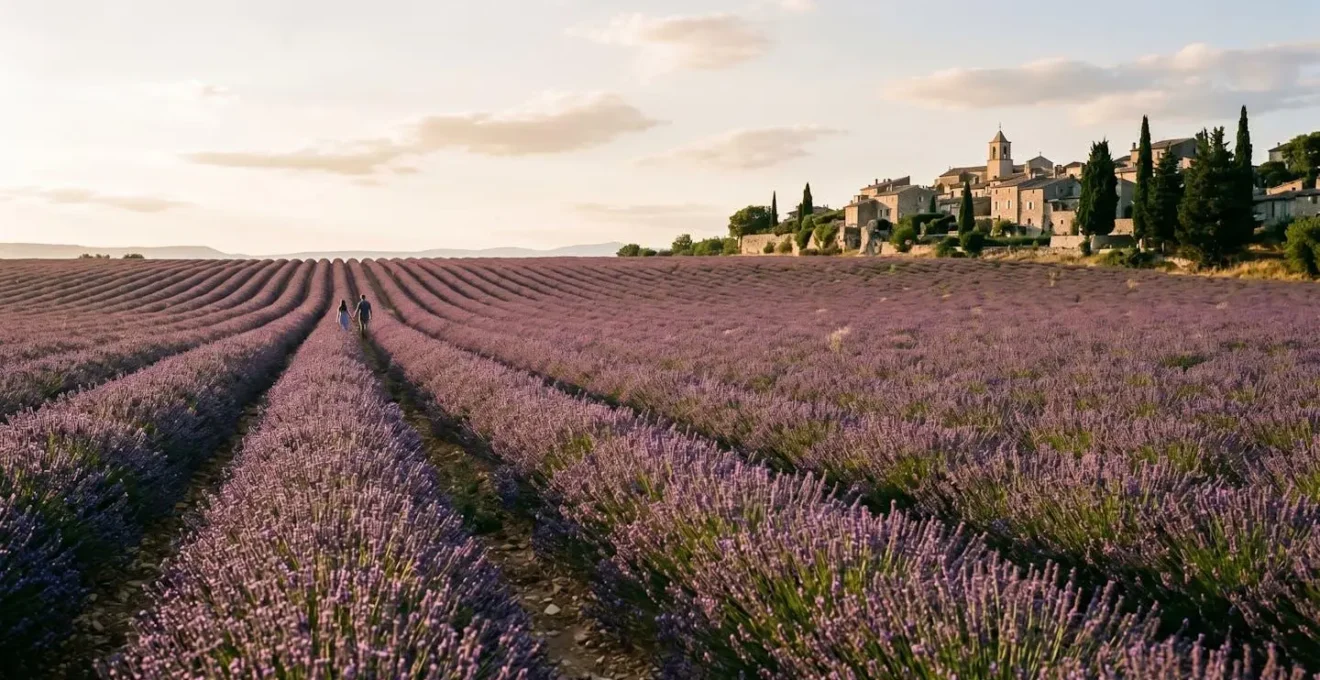
This is the dream: having this breathtaking landscape almost to yourselves. To achieve this, your strategy must go beyond just timing. Focus on the less-famous areas. While everyone flocks to Valensole, explore the fields around Sault, at the base of Mont Ventoux, where the harvest happens later. Additionally, structure your days to avoid the midday rush. Visit the popular hilltop villages like Gordes or Roussillon either early in the morning (before 10 AM) or in the late afternoon (after 5 PM). The midday heat is best spent relaxing by a pool or exploring a quiet, lesser-known village.
By choosing this strategic window, you trade the “perfect” peak bloom for a “perfectly intimate” experience. You’ll be able to wander through villages without jostling crowds, find a quiet spot in a lavender field for a photo, and feel the true, peaceful soul of Provence together.
The Booking Habit That Keeps 90% of Visitors From Genuine French Encounters
In the age of digital convenience, the default booking habit is to turn to large, international platforms. While efficient, this practice funnels the vast majority of travellers into a standardised, impersonal ecosystem of hotels and rentals designed for mass-market tourism. This habit is the single biggest barrier to genuine French encounters because it insulates you from the very people and places that define authentic French hospitality: the independent, family-run establishments that prioritise connection over commissions.
These large platforms often charge properties high commission fees (15-25%), which forces owners to standardise their offerings and minimise personal interaction to protect their margins. You become a booking number, not a guest. The real soul of French accommodation lies in the network of *chambres d’hôtes* (B&Bs) and *gîtes* (holiday cottages), many of which are not even listed on major international sites. The hosts of these properties are often your best guide to the region, offering personal recommendations for restaurants, markets, and hidden gems that you would never find in a guidebook.
To break this habit and access these authentic experiences, you need to adopt an alternative booking strategy. It requires a little more effort but pays enormous dividends in terms of connection and creating a memorable stay. Your goal is to bypass the international intermediaries and connect directly with the heart of French hospitality. Here are the key methods:
- Explore French-Specific Platforms: Start your search on sites like Gîtes de France or Clévacances. These are French networks that certify and list independent properties, ensuring a standard of quality while promoting authentic local character.
- Use the Logis Hôtels Network: This is a cooperative of over 2,000 independent, mostly family-run hotels and restaurants across France. They are renowned for their focus on regional cuisine and personal welcome.
- Apply the “Direct Booking” Technique: Use Google Maps to find interesting-looking hotels or B&Bs in your target area. Once you have a name, search for it directly to find their own website. Booking direct is almost always cheaper and begins a personal relationship with the host from the start.
- Target Smaller Towns: Deliberately look for accommodation in villages or smaller towns just outside the main tourist centres. You’ll find more authentic properties and experience the rhythm of everyday French life.
By making this small change, you are not just booking a room; you are opening the door to genuine human connection, insider knowledge, and the kind of spontaneous, warm encounters that transform a simple holiday into a cherished memory.
Key takeaways
- True romance on a trip comes from designing shared experiences, not consuming pre-packaged clichés.
- Prioritise depth over breadth: exploring one region slowly is more connecting than rushing through five cities.
- Authenticity lies beyond the major booking platforms and tourist hotspots; seek out independent B&Bs and local advice.
The Dinner Party Mistake That Brands British Guests as Impolite in French Homes
Being invited into a French home for dinner is a significant gesture of hospitality and a wonderful opportunity for a genuine cultural encounter. For a British guest, accustomed to the tradition of bringing a bottle of wine to contribute to the meal, this situation can unwittingly lead to a major cultural blunder. Arriving with a bottle and expecting it to be opened with dinner is a common mistake that can be perceived as impolite, and it stems from a fundamental misunderstanding of the host’s role in French dining culture.
In the UK, bringing a bottle is seen as a helpful contribution to the party’s supplies. In France, the dynamic is entirely different. The host has likely spent hours, if not days, meticulously planning the entire meal. This includes not just the food but also the precise wine pairings for each course. Your arrival with a bottle, especially if you imply it should be served immediately, can suggest that you doubt their ability to provide for their guests or that their chosen wines are not good enough. It inadvertently disrupts the host’s carefully orchestrated culinary narrative.
As one cultural etiquette expert explains, the gift has a completely different purpose:
In French culture, the host has meticulously orchestrated the meal, including specific wine pairings. Your wine is a gift for the host to enjoy later, not a contribution to the meal.
– Cultural Etiquette Expert, French Dining Etiquette and Cultural Expectations
So, what should you do? You should absolutely still bring a gift to show your appreciation. A bottle of wine is a fine choice, but when you present it, you should make it clear that it is a gift for the host to enjoy at a later time. A simple phrase like, “Ceci est un petit cadeau pour vous, pour plus tard” (“This is a small gift for you, for later”) signals that you respect their role as host and are not trying to interfere with their plans. Other excellent gifts include high-quality chocolates, a beautiful bouquet of flowers (but never chrysanthemums, which are for funerals), or a speciality from your home region in the UK.
By understanding and respecting this nuance, you move beyond being just a “tourist” and become a thoughtful guest, showing a level of cultural awareness that will be deeply appreciated and will enrich your social encounters in France.
Why Does Rushing Through 5 French Cities in 10 Days Leave You More Exhausted Than Inspired?
The “highlights reel” itinerary is a common travel trap. Driven by a fear of missing out, couples try to cram as many famous cities as possible into a short trip: Paris, Nice, Lyon, Marseille, Strasbourg in 10 days. On paper, it looks like an efficient way to “see France.” In reality, it is a recipe for exhaustion, arguments, and a profoundly superficial travel experience. Instead of creating a tapestry of shared memories, this approach results in a blur of train stations, hotel check-ins, and frantic sightseeing that leaves you more in need of a holiday than when you started.
The core problem is that this pace eliminates the most crucial ingredient for connection: time to breathe. When you are constantly on the move, your energy is consumed by logistics—packing, navigating, and worrying about the next connection. There is no mental space left for spontaneous discovery, deep conversation, or simply being present with one another. Travel becomes a task to be completed rather than an experience to be savoured. As one traveller noted after a fast-paced trip, what works for a solo adventurer can create immense stress for a couple: “The pace of the first section of this trip is one that I would not suggest normally… ‘To thine own self be true’ applies to travel.” This insight reveals that respecting a couple’s shared need for a relaxed pace is paramount.
The antidote to this travel burnout is the “Hub and Spoke” model. This strategy involves choosing one city or town as your base (the hub) for 5 to 7 days and taking relaxed day trips (the spokes) to explore the surrounding area. For example, you could base yourselves in Tours to explore the Loire Valley châteaux, or in Avignon to discover the villages of Provence. This approach transforms your trip by:
- Eliminating Logistical Stress: You unpack once, settle into your accommodation, and establish a comfortable home base.
- Fostering Routine and Relaxation: Having a familiar place to return to each evening allows for a sense of stability and promotes deeper relaxation.
- Creating Flexibility: You can decide each morning whether to venture out on a day trip or simply enjoy a slow day exploring your hub town, free from the pressure of a rigid travel schedule.
- Enabling Deeper Discovery: By spending more time in one region, you move beyond the surface-level sights and begin to appreciate its unique character, discovering local markets, quiet cafés, and hidden gems.
By choosing depth over breadth, you give your relationship the space it needs to flourish. You trade a frantic checklist for a rich, shared narrative, and you return home not just with photos, but with the renewed sense of connection that was the goal of your trip all along.