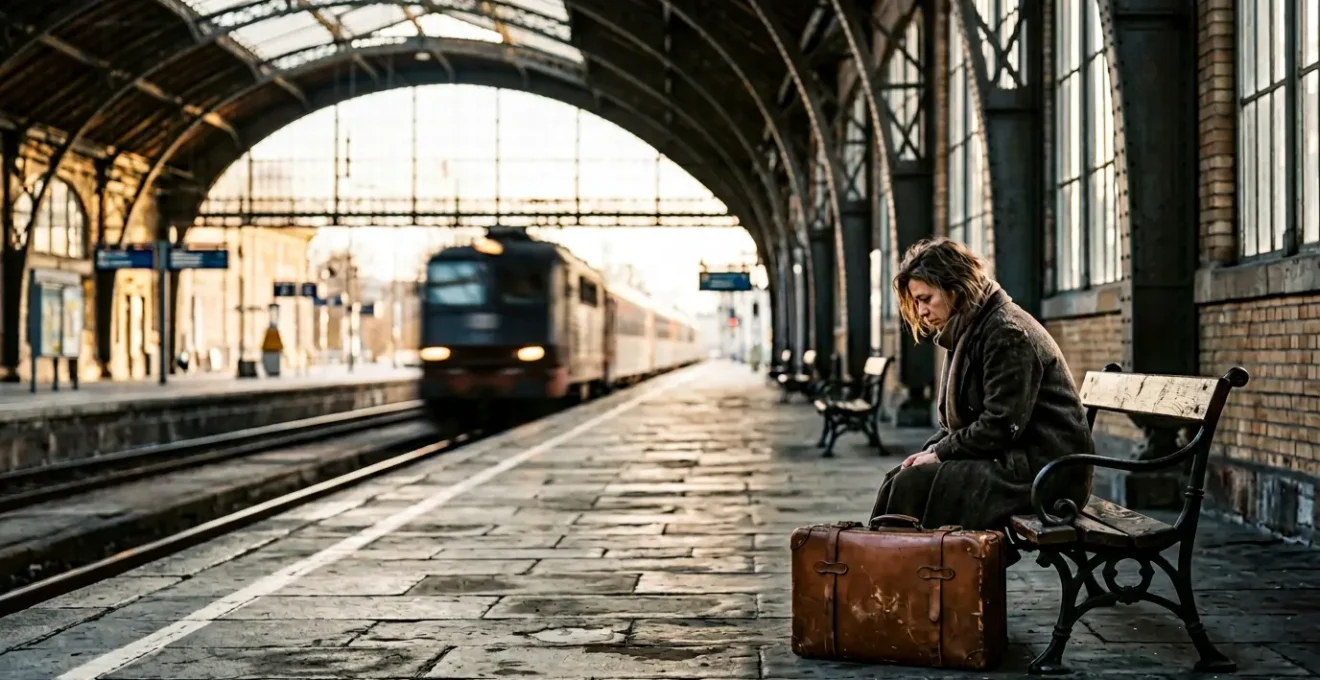
The paradox of modern travel is that in our quest to see everything, we experience nothing. A truly transformative French journey isn’t about the number of cities you visit, but the depth of connection you forge in a single place.
- Constant movement triggers decision fatigue and prevents your brain from forming rich, long-term memories.
- Genuine French culture isn’t found in a whirlwind tour, but in the quiet observation of daily rhythms and interactions with living craftsmanship.
Recommendation: Abandon the checklist. Instead of planning what to see, plan how you want to feel. Choose one village or region as a base and let the place itself reveal its secrets to you.
You return with a camera roll full of icons—the Eiffel Tower, a lavender field, a sun-drenched vineyard. Yet, as you scroll through the images, a strange feeling emerges. The memories feel thin, like postcards from a life someone else lived. The rush from airport to train, from museum to monument, has blurred into a single, exhausting montage. You’ve ‘done’ France, but you don’t feel you truly know it. This experience is common for the seasoned traveller, the one who has already ticked off the main sights and now craves something more substantial.
The typical advice is to “go off the beaten path” or “live like a local,” but these platitudes offer little practical guidance. The problem isn’t a lack of desire for authenticity; it’s a flawed approach to travel planning itself. We are conditioned to think in terms of destinations, creating frantic itineraries that prioritise seeing over being. We believe that more cities, more sights, and more activities equal a better holiday. But what if the opposite were true? What if the key to a profoundly inspiring French experience lies not in covering more ground, but in standing still?
This is not another guide to hidden gems. This is a look at the mechanics of meaningful travel. We will explore the psychology of why staying put creates stronger memories and how the structure of French life itself rewards those who slow down. We’ll deconstruct the difference between types of accommodation, reveal the booking habit that sabotages authentic encounters, and show you how to engage with French culture not as a spectator, but as a participant. It’s time to trade the exhaustion of the tourist trail for the deep satisfaction of genuine immersion.
This article is structured to guide you from the ‘why’ to the ‘how’ of slow travel in France. Each section builds on the last, offering a complete framework for planning a more meaningful and memorable journey.
Summary: A Guide to Deeper French Travel
- Why Do Travellers Who Stay 10 Days in One French Village Remember More Than Those Who Visit 10 Cities?
- How to Plan a 2-Week Stay in Burgundy Without Running Out of Things to Experience?
- Gîte, Chambre d’Hôte or Village Rental: Which Accommodation Deepens Your French Experience Most?
- The Booking Habit That Keeps 90% of Visitors From Genuine French Encounters
- When Should You Visit Alsace to Experience Village Life Rather Than Tourist Season?
- How to Use a French Cooking Class to Actually Learn About French Culture?
- How to Experience Genuine French Compagnonnage Craftsmanship Rather Than Museum Displays?
- Why Do Week-Long French Holidays Leave You Knowing Less Than Expected?
Why Do Travellers Who Stay 10 Days in One French Village Remember More Than Those Who Visit 10 Cities?
The answer lies in the fundamental wiring of the human brain. We romanticise the whirlwind tour, but our minds are not designed for it. A rapid succession of new places, faces, and experiences creates a cognitive overload. Instead of savouring each moment, your brain is in a constant state of low-grade stress, trying to process logistics: check-out times, train schedules, museum opening hours. This is the very definition of decision fatigue, a state where the sheer volume of choices depletes our mental resources, leaving us less able to appreciate our surroundings.
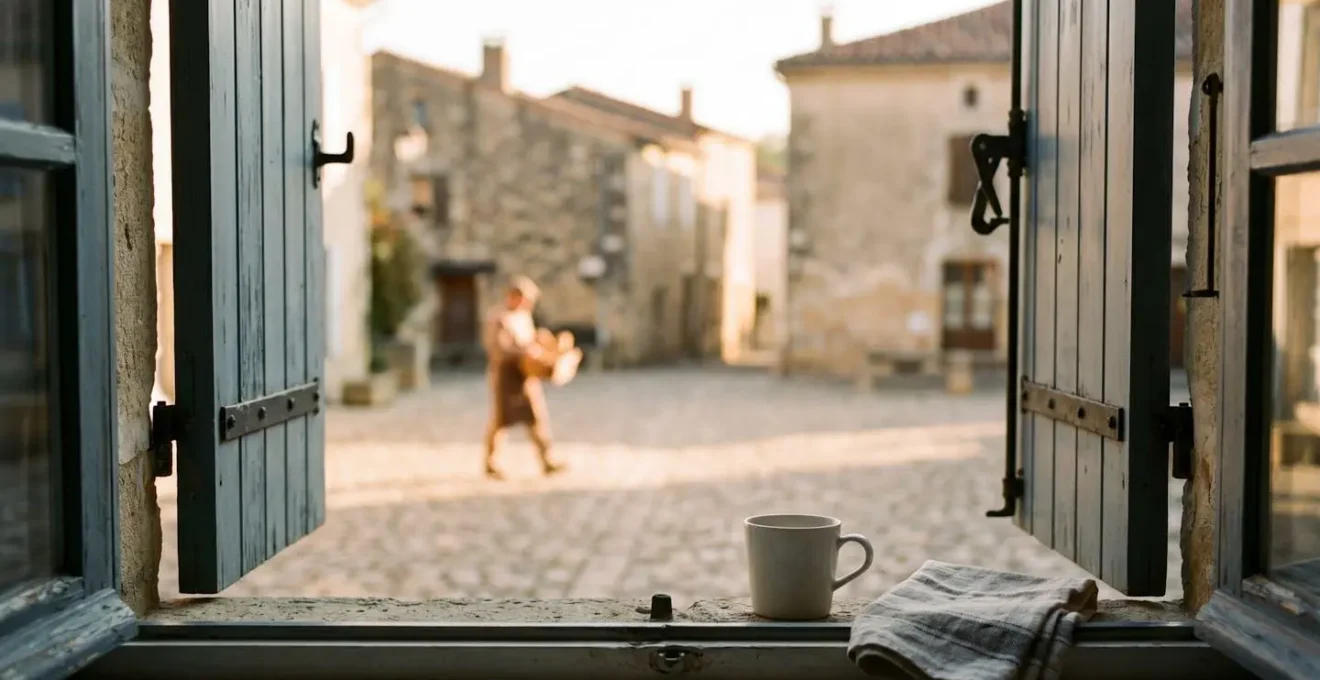
Conversely, staying in one place allows for repetition and routine, which are crucial for memory. The simple act of visiting the same boulangerie each morning, exchanging a “bonjour,” and seeing the same faces in the village square creates a pattern. Our brains are built to encode these patterns. As neuroscience research on memory formation shows, memory consolidation transforms fleeting sensory inputs into stable, long-term memories through repetition and emotional connection. The brief glimpse of a cathedral from a tour bus is a temporary file; the daily ritual of watching the morning light hit the stones of your village is an experience your brain can save and cherish.
This is the difference between collection and connection. A ten-city tour is an exercise in collecting snapshots. A ten-day stay in one village is an exercise in building a connection to a rhythm of place. You stop being a visitor who consumes sights and start becoming a temporary resident who observes life. You notice the subtle shifts in village activity: the morning rush for bread, the quiet lull of early afternoon, the evening gathering for an apéritif. These are the details that form the texture of a real memory, details that are utterly lost in transit.
Humans deplete internal resources when performing acts of self-regulation, such as processing information to formulate a decision.
– Grant Pignatiello et al., Decision fatigue research study
Ultimately, you remember the feeling of belonging, however temporary, far more vividly than the fleeting image of a landmark seen in haste.
How to Plan a 2-Week Stay in Burgundy Without Running Out of Things to Experience?
The fear of boredom is the greatest obstacle to slow travel. We pack our itineraries because we’re afraid of empty time. But in a region as rich as Burgundy, “empty” time is simply an invitation for serendipity. The key is not to have no plan, but to have a flexible, thematic one. Instead of a rigid list of towns, think of your stay as a “hub-and-spoke” model, built around a central narrative.
First, establish your base. A town like Beaune or a quiet village in the Côte de Nuits allows you to unpack, settle in, and create a home. From this hub, you can explore. The secret is to anchor each day with just one major experience—a visit to the Hospices de Beaune, a cellar tasting with a specific winemaker, a tour of the Abbaye de Cluny. Book this one thing. The rest of the day is deliberately left open. This structure provides a gentle sense of purpose without the tyranny of a minute-by-minute schedule.
This approach allows for what the travel industry cannot sell: unplanned discovery. After your morning wine tasting, you might get a tip from the vigneron about a fantastic local lunch spot, or you might decide to simply follow a small road through the vineyards to see where it leads. This is where the real magic happens. You are no longer following a script; you are co-authoring your own journey. The goal is to understand the ecosystem of the place, moving beyond wine to meet the people who make the barrels or to simply sit and watch life by the Canal de Bourgogne.
7-Day Burgundy Slow Travel Itinerary Success Model
Into the Vineyard’s refined 7-day Burgundy itinerary demonstrates the slow travel model: travelers move from Dijon to Côte de Nuits, to Beaune and Côte de Beaune, with optional extensions to Côte Chalonnaise or Chablis. The approach prioritizes 2-3 curated experiences per day with leisurely lunches and cellar conversations, rather than packed schedules. Travelers report this rhythm ‘feels effortless’ and allows them to ‘understand the wines, villages and people’ rather than merely seeing landmarks.
By creating “serendipity windows” in your schedule, you aren’t risking boredom; you are making space for the authentic experiences that drew you to France in the first place.
Gîte, Chambre d’Hôte or Village Rental: Which Accommodation Deepens Your French Experience Most?
Your choice of accommodation is the single most important decision you’ll make in designing an immersive trip. It’s not just a place to sleep; it’s the lens through which you will experience French life. The three main options—Chambre d’Hôte, Gîte, and village rental—are not interchangeable. Each offers a distinct type of immersion, and the best one for you depends entirely on your travel goals.
A Chambre d’Hôte (the French equivalent of a B&B) offers what can be described as “curated immersion.” Here, the host is paramount. They are not merely an innkeeper but a cultural broker. They provide breakfast, local recommendations, and, most importantly, context. They can explain the nuances of a local festival, make a reservation at a restaurant you’d never find, or connect you with an artisan. This is ideal for travellers seeking guidance and a personal connection, a friendly face to help translate the subtleties of the culture.
A Gîte, or self-catering rental, offers “practical immersion.” By handing you the keys to a fully equipped house or apartment, it forces you to engage with the local economy on its own terms. You must navigate the supermarché, decipher labels, and time your shopping around the often-bewildering opening hours. You’ll learn which day the local market happens and what’s in season. This path provides autonomy and is perfect for families or those who want to experience the rewarding challenge of running a temporary French household.
Finally, a long-term village rental facilitates “community immersion.” By staying for several weeks or months, you transition from visitor to temporary neighbour. The goal is to integrate into the weekly cycles and social fabric of the village. The choice depends on your desire for independence versus guidance. The following table, based on an analysis of French accommodation types, breaks down these goals.
| Accommodation Type | Immersion Goal | Key Characteristics | Best For |
|---|---|---|---|
| Chambre d’Hôte (B&B) | Curated Immersion | Room in host’s home, breakfast included, max 5 rooms, host acts as cultural broker connecting you to authentic artisans and local events | Travelers seeking personal guidance and cultural translation from knowledgeable locals |
| Gîte (Self-Catering) | Practical Immersion | Independent house/apartment, fully equipped, forces engagement with local markets and shops, you manage all meals and routines | Families and groups wanting autonomy to run a French household and develop local routines |
| Village Rental (Long-term) | Community Immersion | Extended stay (weeks/months), become temporary neighbor, participate in village rhythms and weekly cycles | Slow travelers committed to experiencing the complete social fabric of village life |
There is no “best” option, only the one that best matches your desired level of interaction and autonomy.
The Booking Habit That Keeps 90% of Visitors From Genuine French Encounters
The habit is over-planning, fueled by the paradox of choice. In the digital age, we have access to infinite information, and it has turned travel planning into a high-stakes research project. We scroll through endless reviews, compare dozens of restaurants, and create spreadsheets to optimise our time. The impulse is understandable: we want to make the “best” choices. But this relentless pursuit of the optimal path is precisely what robs the journey of its soul.
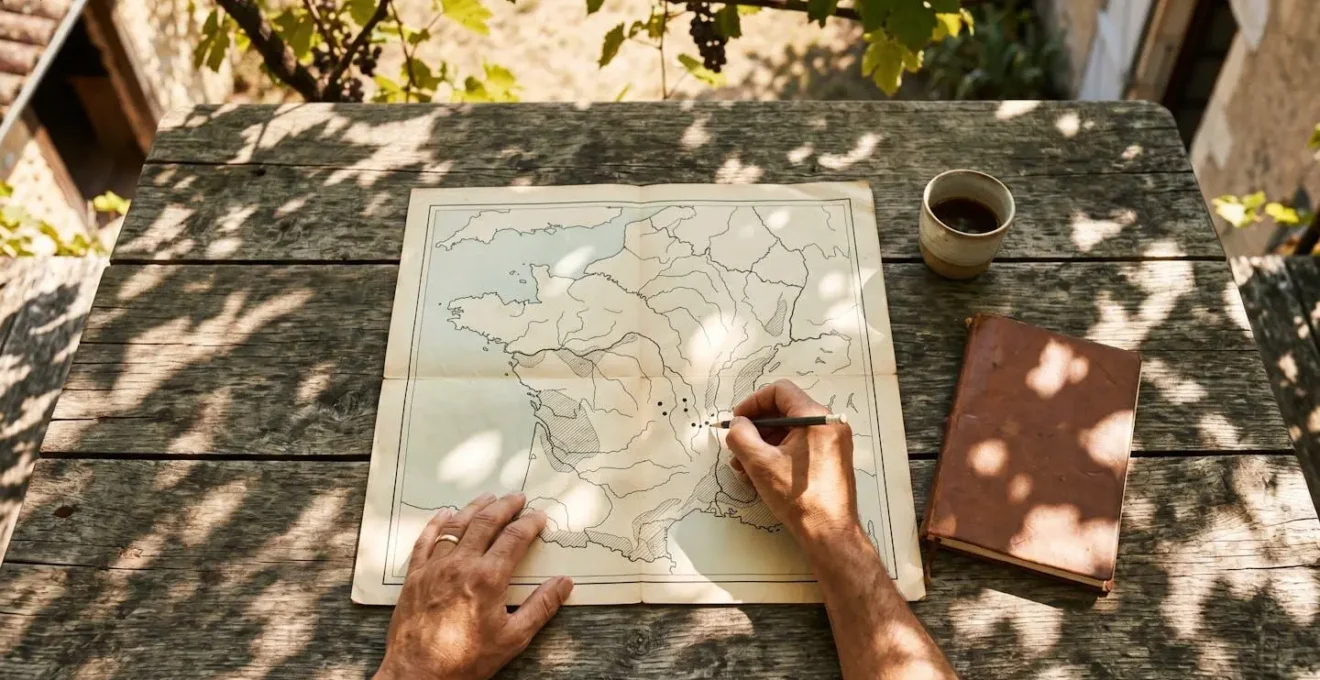
The numbers reveal the scale of this behaviour. It’s not uncommon for travellers to search up to 48 times on average before booking, a clear symptom of decision fatigue setting in before the trip even begins. When we carry this habit into the trip itself—constantly researching the “best” next step on our phones—we are no longer present. We are staring at a screen in a charming village café instead of looking at the architecture or listening to the conversations around us. We are managing a project, not having an experience.
The antidote is to practice anticipatory design in your travel. This means making a few, crucial, big-picture decisions beforehand (your base location, your accommodation type, your rental car) and then deliberately trusting that the smaller details will fall into place. It’s about having the confidence to walk into a village and choose a restaurant based on the enticing smell coming from its kitchen, rather than the number of stars it has online. It means asking a local for a recommendation instead of consulting an algorithm.
This requires a leap of faith. It requires letting go of the illusion of control and embracing the possibility of serendipity. The most memorable encounters—the conversation with a shopkeeper, the discovery of a hidden courtyard, the invitation to a local event—are never on the itinerary. They happen in the spaces you leave open. By scheduling every moment, you are inadvertently scheduling these opportunities out of your trip.
The most genuine French encounters are not found on a booking platform; they are found in the moments you allow to be unplanned.
When Should You Visit Alsace to Experience Village Life Rather Than Tourist Season?
The standard advice is to visit in “shoulder seasons” like May or September. This is generic advice for a generic tourist. For the traveller seeking genuine immersion in a region like Alsace, the answer is far more nuanced. You must ignore the mainstream tourism calendar and instead align your visit with the region’s own deep-seated agricultural and cultural rhythms. This is about timing your visit for micro-seasons that are meaningful to locals but largely invisible to the crowds.
For example, instead of the crowded Christmas markets of December, consider January or February. The tourists are gone, the vineyards are dusted with snow, and the villages return to themselves. This is the season of “stub-à-stub,” a cozy tavern-hopping culture where you can share a slice of tarte flambée and a glass of Riesling in a warm, welcoming room filled with Alsatian dialect, not a cacophony of international languages. You aren’t a consumer of a festive product; you’re a quiet observer of authentic winter life.
Another powerful micro-season is late April. This is when the white storks, a profound symbol of Alsatian identity, return to their nests on rooftops and chimneys. For villagers, this is the true marker of spring’s arrival, a moment of collective celebration far more authentic than any manufactured tourist event. Similarly, the first two weeks of October offer the full atmosphere of the vendange (grape harvest) without the peak summer crowds. The air is electric with activity, and the wineries are hives of purposeful work, offering a glimpse into the heart of the region’s economy and soul.
The strategy is to research hyper-local events. Look for a village’s “Fête du Vin Nouveau” (New Wine Festival) or a “Fête de la Châtaigne” (Chestnut Festival). These are not events for tourists; they are events for the community, where a village is most authentically itself. True immersion comes from witnessing a place not when it’s performing for visitors, but when it’s simply being.
- Late April (Stork Return Season): Visit when white storks return, a local symbol of spring renewal unknown to most tourists.
- First two weeks of October (Vendange Intensity): Experience the grape harvest atmosphere without peak crowds; wineries are active and approachable.
- January-February (Stub-à-Stub Season): Embrace the post-Christmas calm and discover the cozy tavern-hopping culture.
- Research hyper-local festivals: Target village-specific events like ‘Fête du Vin Nouveau’ to see the community at its most authentic.
By bypassing the standard tourism calendar, you bypass the crowds and find the quiet, authentic heart of Alsace.
How to Use a French Cooking Class to Actually Learn About French Culture?
Many travellers book a French cooking class hoping for an authentic experience, only to find themselves in a sterile kitchen learning generic techniques to make croissants. A truly immersive class is not about mastering a recipe; it’s about deciphering the cultural code embedded in French cuisine. The key is to choose a class that teaches the “why” behind the “how.”
First, prioritise “Market-to-Table” experiences. The class should begin not in the kitchen, but in the aisles of a local market. A good instructor acts as a guide, teaching you how to select ingredients based on seasonality, how to interact with vendors, and most importantly, explaining the French concept of le produit. This is the belief in the primacy of the raw ingredient. Understanding why a French chef will choose a slightly gnarled but flavourful heirloom tomato over a perfect-looking but bland hothouse one is the first lesson in the French ‘art de vivre’.
Second, choose regional specificity over generic “French” cooking. Learning to make cassoulet in Toulouse or bouillabaisse in Marseille connects you directly to the history, economy, and terroir of that specific place. These dishes are culinary artifacts, shaped by centuries of local life. Learning their stories is as important as learning the cooking steps. Ask your instructor *why* certain ingredients are used, or why a particular technique developed. The answers reveal deep truths about regional identity and resourcefulness.
Finally, use the class to deconstruct the meal ritual itself. The structure of a traditional French meal—the social role of the apéritif, the sequence of the courses, the ‘salad after’ rule, the function of the cheese course—is a lesson in social rhythm and the French prioritisation of conviviality. Pay attention to the unspoken elements: the pace of preparation, the way ingredients are discussed with reverence, the communal act of sharing the meal. These are the details that reveal the culture far more than any written recipe ever could.
The goal is not to leave with a new recipe, but with a new understanding of how the French think about food, time, and togetherness.
How to Experience Genuine French Compagnonnage Craftsmanship Rather Than Museum Displays?
France has a unique and profound respect for craftsmanship, a concept encapsulated by patrimoine vivant, or “living heritage.” While museums offer a glimpse into the past, the true spirit of French artisanship is found not behind glass, but in the active, breathing workshops of today’s masters. Experiencing this requires moving beyond the tourist trail and seeking out the living tradition of compagnonnage.
The French government has created official systems to recognise and preserve this heritage, and these provide a roadmap for the discerning traveller. Instead of just visiting a museum, seek out artisans who hold the title of Meilleur Ouvrier de France (MOF). This is the nation’s highest award for craftsmanship, and these masters—from chocolatiers to knife-makers in Laguiole—often welcome visitors to their ateliers for a dynamic alternative to a static display.
Another incredible tool is to follow the Routes des Métiers d’Art. These are official, signposted driving routes that guide you through a region, connecting a network of designated artisan workshops. Potters, glassblowers, woodworkers—these routes transform the discovery of craft into an immersive treasure hunt, where the journey between workshops is as much a part of the experience as the destination.
For a deeper dive, look for companies with the Entreprise du Patrimoine Vivant (EPV) label. This government designation recognizes companies with rare and traditional know-how. Many of these businesses, from centuries-old printing houses to the silk weavers of Lyon, offer tours that show craft in action on an industrial yet artisanal scale. It’s history made manifest. The ultimate step, however, is to move from observer to participant. Many of these artisans offer half-day or full-day apprenticeships. This is where true understanding happens—not by looking, but by doing.
Your Action Plan: Accessing Living French Craft Heritage
- Seek Out ‘Meilleurs Ouvriers de France’ (MOF): Research and visit the workshops of MOF title holders—France’s highest craftsman award—for a dynamic alternative to static museum displays.
- Explore ‘Routes des Métiers d’Art’: Follow these official, signposted routes that guide visitors through regions to designated artisan workshops, turning craft discovery into an immersive road trip.
- Visit ‘Entreprises du Patrimoine Vivant’ (EPV): Target companies with this government label recognizing rare know-how; many offer tours showing craft in action.
- Book Workshops, Not Tours: Instead of observing, participate in apprenticeships to understand the tactile reality of traditional techniques.
- Time Visits to Production Cycles: Research when artisans are actively working (avoiding holidays) to witness authentic processes rather than staged demonstrations.
By engaging with these living traditions, you are not just buying a souvenir; you are becoming a patron of a cultural legacy.
Key takeaways
- Slowing down is not a compromise; it’s a strategic choice that leverages neuroscience to create richer, more lasting memories.
- The most authentic French experiences are not scheduled events but moments of serendipity found in the ’empty’ spaces of your itinerary.
- Your choice of accommodation (Gîte vs. Chambre d’Hôte) is a critical decision that defines your entire mode of cultural immersion.
Why Do Week-Long French Holidays Leave You Knowing Less Than Expected?
The seven-day holiday is a construct of the modern work schedule, not the rhythm of cultural absorption. It promises a refreshing escape but often delivers a superficial skim. A week is just long enough to get your bearings, to start recognizing faces and learning the rhythm of a place, and then it’s time to leave. You depart in a state of unresolved curiosity, knowing more than when you arrived, but acutely aware of how much you’ve missed.
This feeling is particularly pronounced in a country as culturally dense as France. The problem is one of depth versus breadth. In seven days, you can see the highlights of a region, but you cannot begin to understand them. You can taste the wine, but you don’t have time to talk to the winemaker, walk through their vineyards, and understand the year of work that went into that single glass. Research into wine tourism patterns highlights this issue perfectly; most wine travellers only stay for 4.3 days, which is described as “barely enough time to uncork the surface.”
A week-long trip forces you into the role of a consumer. You consume sights, meals, and experiences in a transactional manner. There is simply no time for the non-transactional interactions that build genuine understanding: the long, leisurely lunch that turns into an afternoon conversation, the unplanned detour that leads to a hidden chapel, the simple act of sitting on a bench and watching village life unfold. These are the moments that require a sense of spaciousness in your schedule, a luxury the one-week holiday rarely affords.
The solution is not necessarily to travel for longer, but to travel with a narrower focus. A one-week trip dedicated to exploring a single small corner of the Perche or the Luberon will leave you with a far greater sense of knowledge and connection than a week spent rushing between Paris, Lyon, and Marseille. It’s a fundamental shift from a mindset of “seeing France” to one of “experiencing a piece of France” deeply.
By trading geographic ambition for experiential depth, you transform a fleeting holiday into a lasting memory, leaving you feeling not exhausted, but genuinely inspired.