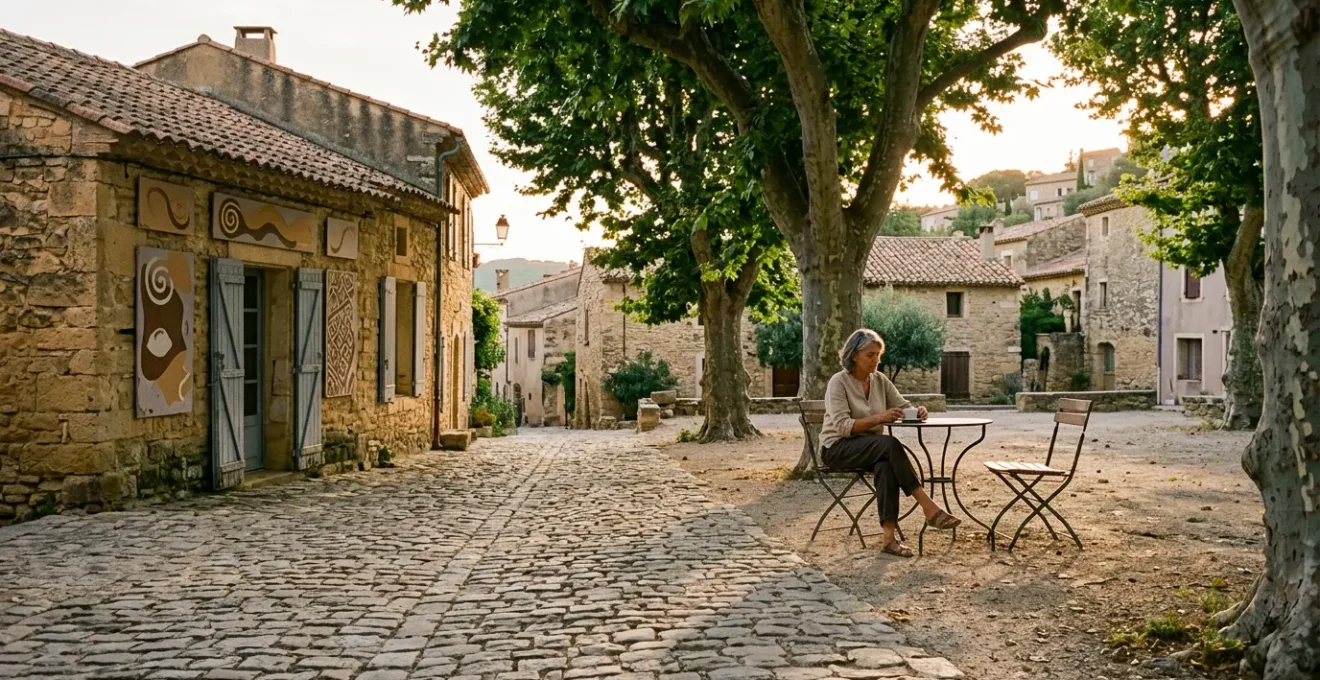
The common belief is that to see France, you must see as much as possible. This article argues the opposite: the relentless pursuit of activities and destinations is precisely why your trips feel hollow. True cultural immersion comes not from a checklist, but from trading pace for presence. We’ll explore why slowing down creates deeper memories and how to shift from a passive tourist to an active participant in French life, transforming your next holiday from a blur into a rich, unforgettable experience.
You’ve done everything right. You booked a week-long trip to France, a significant investment of time and money. Your itinerary was a masterpiece of efficiency, packed with museums, landmarks, and maybe even a quick dash to a second or third city. Yet, upon returning to the UK, a frustrating feeling lingers. You have a camera roll full of photos but a distinct lack of genuine connection. The culture, the people, the “real” France you hoped to find remained just out of reach, a backdrop to your own hurried movement. You saw everything, but you understood very little.
The conventional wisdom for “authentic travel” often involves generic advice like learning a few phrases or visiting smaller towns. While well-intentioned, this approach still frames travel as a series of actions to complete. It doesn’t address the core problem: the “tourist checklist” mindset. You’ve been taught that the value of a trip is measured in the number of things you’ve “done.” This article proposes a radical shift in perspective. What if the key to a transformative French experience isn’t about adding more to your itinerary, but about fundamentally changing your approach to it?
The secret isn’t in what you do, but in how you are. It’s about cultivating presence and embracing a participant’s mindset over a consumer’s. By swapping a frantic pace for intentional depth, you don’t just see France; you begin to feel it. This guide will deconstruct why your current methods are failing and provide a clear framework for engaging with French culture on a level that leaves you not exhausted, but genuinely inspired and connected. We will explore how to turn simple activities into deep cultural dives and why staying in one place can be far more rewarding than seeing ten.
This article provides a roadmap to move beyond surface-level tourism. Below, we break down the common pitfalls of modern travel and offer actionable strategies to foster the deep, meaningful connection with France you’ve been searching for.
Table of Contents: Why a Packed Itinerary Fails in France
- Why Does Doing More Activities Leave You Understanding France Less?
- How to Use a French Cooking Class to Actually Learn About French Culture?
- Language Homestay or Working Farm: Which Immersion Creates Deeper French Connection?
- The Accommodation Choice That Guarantees You Never Actually Meet French People
- When Should You Plan a French Immersion Trip to Balance Weather, Availability and Crowds?
- Why Do Travellers Who Stay 10 Days in One French Village Remember More Than Those Who Visit 10 Cities?
- How to Experience Genuine French Compagnonnage Craftsmanship Rather Than Museum Displays?
- Why Does Rushing Through 5 French Cities in 10 Days Leave You More Exhausted Than Inspired?
Why Does Doing More Activities Leave You Understanding France Less?
The paradox of modern travel is that in our quest to maximise experience, we often minimise understanding. The belief that a packed itinerary equals a successful trip is the first hurdle to overcome. When you rush from a museum to a landmark to a photo opportunity, you aren’t immersing yourself in culture; you are merely collecting data points. Your brain, overwhelmed by a constant stream of new information, struggles to form deep, lasting memories. This isn’t a personal failing; it’s a well-documented psychological phenomenon.
This mental saturation is known as cognitive overload. As research in Tourism Management highlights, tourists have a limited memory and are exposed to massive amounts of information that can impede their decision-making and memory formation. The study notes that tourists have a limited memory that may impede their ability to process experiences deeply. Each new activity adds another layer of data without context, preventing you from seeing the connections between them. The morning market, the local church, the artisan’s shop—seen in isolation, they are just items on a list. Experienced slowly, they weave together to tell the story of a place.
Shifting from a “doing” to a “being” mindset is the antidote. Instead of asking “What’s next?”, ask “What’s here?” Spend three hours in a single neighbourhood instead of three neighbourhoods in an hour. The goal is not to see more of France, but to see France more deeply. This reduction in quantity allows for an exponential increase in the quality of your attention. It’s in the unplanned moments—the conversation with a shopkeeper, the time spent just watching the world from a cafe terrace—that true understanding begins to dawn. You trade a long list of superficial encounters for a handful of meaningful ones.
By consciously choosing to do less, you create the mental space required for genuine connection and, ironically, for creating the rich, lasting memories you sought in the first place.
How to Use a French Cooking Class to Actually Learn About French Culture?
A French cooking class is a perfect example of an activity that can either be a superficial tourist diversion or a profound cultural deep-dive. The difference lies entirely in your intention. Many classes are designed for speed and simplicity, teaching you to replicate a dish. A transformative class, however, teaches you to understand the ‘why’ behind the food. It connects you to the very soul of a region: its terroir.
Terroir is a concept that goes far beyond a simple definition of soil or climate. It’s the intricate, living relationship between a place, its history, and its people, all expressed through the taste of its food and wine. As one expert explains, terroir refers to the unique combination of environmental and human factors that give food its distinct flavour. When you choose a cooking class, look for one that speaks this language. Does it start at the local market to meet the producers? Does the chef talk about the history of the dish, why certain ingredients are used in that specific region, and how the seasons dictate the menu? This is where the learning happens.
This approach shifts you from a passive recipe-follower to an active participant in a cultural tradition. You’re not just learning to make a *Coq au Vin*; you’re understanding why that specific wine from that specific region is used, how the dish evolved from a peasant meal, and what it represents to the local community. The physical act of working with the ingredients becomes a tactile connection to the land and its history.
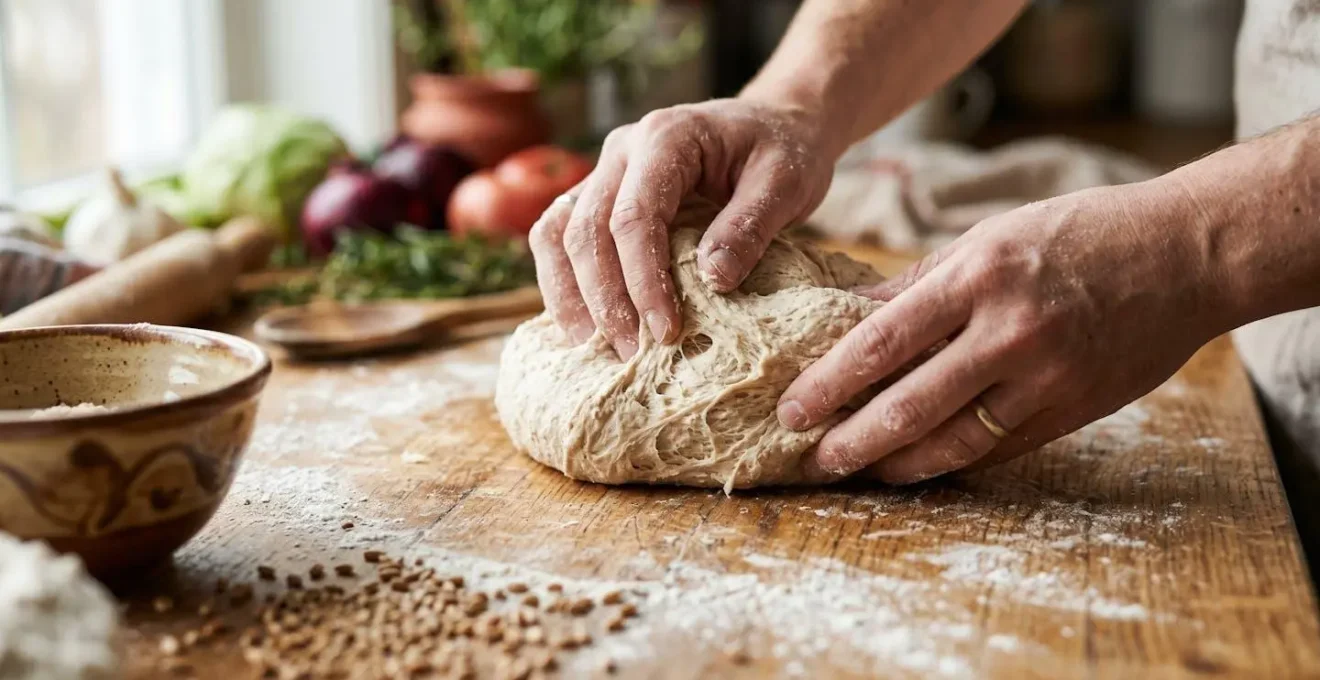
As you can see, engaging with the raw elements of French cuisine is a direct line to its cultural heart. The goal is to seek an experience that uses food as a lens through which to view the entire culture. Ask questions, engage with the story, and treat the ingredients not as a list, but as characters in a regional narrative. This is how a simple meal becomes a terroir of experience—unique, memorable, and deeply French.
Ultimately, a great cooking class shouldn’t just send you home with a recipe; it should send you home with a story that you can taste.
Language Homestay or Working Farm: Which Immersion Creates Deeper French Connection?
For the traveller serious about immersion, moving beyond hotels is a given. The next logical step often appears to be a language homestay. While these can be effective for structured learning, they often maintain a transactional dynamic: you are the student-client, and the host family is the service provider. A deeper, more transformative connection can often be forged through an alternative model: the working farm or artisan stay. The key difference is the shift from a teacher-student relationship to one of reciprocity and shared purpose.
Traditional classroom settings are excellent for grammar and vocabulary, but as language experts at ILAC note, nothing beats the organic learning that comes from immersion in real-life situations. The limitation of a standard homestay is that these “real-life” situations can sometimes feel staged. A working farm stay, by contrast, erases the line between learning and living. You are not a guest to be entertained; you are a participant with a role to play. Your language skills develop not through formal lessons, but through the necessity of communication to complete a shared task, whether it’s harvesting olives, assisting in a fromagerie, or helping with the grape harvest.
This “reciprocity model” creates a relationship of equals. You contribute your time and labour in exchange for lodging, food, and, most importantly, an authentic place within a French family or community. Your French improves because you need it to ask questions, understand instructions, and share in the daily triumphs and challenges of rural life. This creates a context for language that is impossible to replicate in a classroom.
Case Study: The Reciprocity Model in Practice
While not in France, the Academia Buenos Aires farmstay program perfectly illustrates this principle. Participants first study Spanish formally, then live with a farming family, contributing to the daily work. They learn the language 24/7 through shared labour and authentic cultural exchange, moving far beyond the structured dynamic of a typical homestay. This model of exchanging work for deep immersion is available in France through networks like WWOOF (World Wide Opportunities on Organic Farms) and others, offering a powerful alternative for genuine connection.
For the traveller aiming for true integration, becoming a temporary part of the working fabric of a place offers an unparalleled depth of connection that a simple homestay can rarely match.
The Accommodation Choice That Guarantees You Never Actually Meet French People
Your choice of accommodation is perhaps the single most decisive factor in whether you will experience France from inside a bubble or from within its cultural fabric. There is one category of lodging that, by its very design, almost guarantees you will leave without having had a single meaningful conversation with a local: the large, international chain hotel or the anonymous, self-check-in holiday apartment.
These places are built for efficiency and isolation, not connection. The front desk staff at a global hotel chain are trained in a standardized, international brand of hospitality. They are professional and helpful, but their role is to provide a seamless, friction-free service, not to be a cultural conduit. Similarly, an apartment rented through a large platform where you retrieve a key from a lockbox is a private bubble. You could be in Paris, London, or Tokyo; the experience is sanitized and uniform. You are shielded from the very “intentional friction” that sparks real interaction.
Intentional friction is about choosing a path that requires a little more engagement. It’s the opposite of the seamless, automated experience. To break out of the bubble, you must choose accommodation where human interaction is part of the package. The premier choice in France is the chambre d’hôtes (the equivalent of a B&B). Here, you are staying in someone’s home. The owner is your host, your breakfast companion, and your most valuable source of local knowledge. They can tell you about the best boulangerie, the upcoming village festival, or the history of their 200-year-old house.
Another excellent option is a gîte rural, a self-catering holiday home often run by owners who live nearby. While offering more independence than a chambre d’hôtes, the connection to the host is still central. They welcome you, they are on hand for advice, and they provide a human link to the place you are visiting. In both cases, you are not an anonymous room number; you are a guest. This simple shift in dynamic is the gateway to countless small, authentic interactions that build a true sense of place.
By deliberately choosing lodgings that prioritise the host-guest relationship, you are not just booking a room; you are booking an entry point into local life.
When Should You Plan a French Immersion Trip to Balance Weather, Availability and Crowds?
The question of “when” to travel is typically answered with weather charts and holiday schedules. For an immersion trip, however, the calculus is different. Your goal isn’t just to find sunshine and avoid queues at the Eiffel Tower; it’s to find France when it is most itself. The best time for deep cultural engagement is almost always during the “shoulder seasons”: April to June, and September to October.
The high season of July and August is a challenging time for authentic connection. Major cities and tourist regions are overwhelmed, prices are at their peak, and many French people are themselves on holiday, often away from their homes and businesses. The locals you do meet are frequently stressed and overworked, catering to a massive influx of visitors. It’s a difficult environment to foster the slow, patient connection you’re seeking. Winter can be magical, but the shorter days and colder weather can limit opportunities for the spontaneous, outdoor-oriented interactions that define French life.
The shoulder seasons, in contrast, offer the perfect equilibrium. The weather is typically pleasant, the summer crowds have not yet arrived or have already departed, and life has returned to its normal rhythm. This is when you can experience a village market that is for locals, not just for tourists. It’s when an artisan has more time to talk about their craft, and a restaurant owner is more likely to share the story behind a dish. Availability is better, prices are lower, and the overall atmosphere is more relaxed, creating a fertile ground for spontaneous encounters.
This desire for a more meaningful, less-crowded experience reflects a broader trend. A recent survey revealed that a significant number of travellers are actively seeking this style of travel, with 69% of American travelers aiming to incorporate slow travel into their future plans. Planning a trip in the shoulder season is a practical first step towards achieving this. It’s a strategic decision to trade the peak-season buzz for the quieter, more authentic hum of everyday French life.
By aligning your travel dates with the rhythm of local life rather than the peak of the tourist season, you set the stage for a much richer and more rewarding immersion.
Why Do Travellers Who Stay 10 Days in One French Village Remember More Than Those Who Visit 10 Cities?
The maths of memory don’t align with the maths of a checklist. Visiting ten French cities in ten days might seem like an efficient way to “see France,” but it’s a deeply inefficient way to remember it. The human brain forges strong memories through repetition, emotion, and context—three things that are sacrificed in a high-speed tour. In contrast, spending those same ten days in a single village allows for the creation of memorable tourism experiences (MTEs), which are the building blocks of a truly transformative trip.
Research in the field of tourism confirms that MTEs play an essential role in decision-making and revisit intentions. These are not just fleeting moments but deeply felt experiences that become part of your personal story. Rushing through a city, your brain is too busy processing logistics—navigating, checking in, finding the next landmark—to allow for MTEs to form. Staying in one place replaces logistical stress with the gentle rhythm of daily life. The first time you visit the village boulangerie, you are a stranger. By the third day, you’re a familiar face. By the seventh, the baker might have your croissant ready before you even ask.
This small, daily ritual is a powerful MTE. It’s a micro-relationship built on recognition and routine. It’s the difference between observing French life from a distance and becoming, even in a small way, a part of its daily fabric. You start to notice the details: the old man who walks his dog at the same time every morning, the way the church bells mark the hours, the weekly market day that transforms the quiet town square into a vibrant hub of social activity. These are the details that a ten-city tour completely misses.

This transition from anonymous visitor to temporary local is where the magic happens. Your memories become anchored not to a famous monument you saw for fifteen minutes, but to the taste of the local cheese, the sound of conversations in the café, and the feeling of belonging, however briefly, to a community. You leave with fewer photos of different places, but with a richer, more coherent story of one place that you have come to truly know.
Your Action Plan: Deepening Your Village Stay
- Establish a Routine: Identify your “local.” Visit the same café for your morning coffee or the same boulangerie for your daily bread. This is the fastest way to become a familiar face.
- Engage the Market: Don’t just browse the weekly market; use it. Plan a meal around ingredients you buy there. Ask a vendor for a recommendation—”Comment est-ce que vous cuisinez ça?” (How do you cook this?).
- Participate in Local Life: Check the “salle des fêtes” (village hall) or Mairie (town hall) for posters. Attend a local concert, a “vide-grenier” (car boot sale), or a pétanque game. Don’t just watch; participate if invited.
- Walk with No Destination: Dedicate an afternoon to simply walking the footpaths (“chemins ruraux”) around the village. This is how you discover the hidden chapel, the beautiful viewpoint, or the quiet stream.
- Document a Story, Not Just Sights: Change your photography goal. Instead of collecting landmarks, try to tell the story of one thing: the lifecycle of the market, the details of the church architecture, or the daily life of the town square.
By choosing depth over distance, you allow France to reveal itself to you slowly, creating memories that are not just seen, but felt and lived.
How to Experience Genuine French Compagnonnage Craftsmanship Rather Than Museum Displays?
France’s rich history of craftsmanship, or *savoir-faire*, is a huge draw for culturally curious travellers. Too often, however, this experience is confined to a museum. You might see a cooper’s ancient tools or a weaver’s disused loom behind glass, but you miss the living soul of the craft. To truly connect with this heritage, you must seek out the living tradition of the *artisan d’art* and the spirit of *Compagnonnage*—a historic and ongoing system of apprenticeship where artisans travel to perfect their skills.
The key is to shift your focus from the past to the present. Instead of visiting a museum of tools, find the workshop (*atelier*) where the tools are still in use. France has a vibrant community of master craftspeople—potters, knife-makers, leather workers, glassblowers—who are often passionate about sharing their work. This is the “participation mindset” in action: engaging with the creator, not just the creation. Ask them about their process, the origin of their materials, and the years of practice it took to achieve mastery. This conversation is infinitely more valuable than reading a museum placard.
So, how do you find these living workshops? Look for signs that say *”Artisan d’Art”* or *”Atelier Ouvert”* (Open Workshop). Many regions have a *”Route des Métiers d’Art”* (Crafts Trail) which you can find at the local tourist office. Some artisans offer short introductory courses, allowing you to move from observer to participant. This hands-on experience, even for a few hours, provides a profound appreciation for the skill and dedication involved in their savoir-faire.
This approach connects you to a deeper concept of French culture, one tied to the idea of passing down knowledge through generations. You are witnessing a living piece of history. Buying an object directly from the person who made it transforms it from a simple souvenir into a story. It’s an object imbued with the memory of the conversation, the smell of the workshop, and the personality of its creator. You are not just acquiring an item; you are becoming a patron of a living cultural tradition.
By seeking out the artisan in their atelier, you bypass the sterile museum experience and connect directly with the vibrant, beating heart of French craftsmanship.
Key Takeaways
- Pace Over Place: The root of unsatisfying travel is often a packed itinerary. Slowing down and reducing the number of destinations increases the depth of memory and connection.
- The Participation Mindset: Shift from being a passive observer who consumes experiences to an active participant who engages with local life, crafts, and culture.
- Choose Connection-Friendly Lodging: Avoid anonymous hotels. Opt for *chambres d’hôtes* or *gîtes* where the host is a central part of the experience and a gateway to the local community.
Why Does Rushing Through 5 French Cities in 10 Days Leave You More Exhausted Than Inspired?
That feeling of being more drained than uplifted after a whirlwind tour isn’t just in your head; it’s a physiological response to the way you’re travelling. A fast-paced, multi-city trip puts your brain into a state of constant, low-grade alert. Instead of relaxing and absorbing, you are perpetually navigating, problem-solving, and processing novel stimuli. This is not a recipe for inspiration; it’s a recipe for burnout.
The neuroscience behind this is fascinating. Every new street, new hotel, and new set of faces is a new data set for your brain to analyse for potential threats or opportunities. As one writer on the psychology of travel explains, when we engage in high-speed travel, we trigger a constant novelty reflex in the brain. The amygdala, your brain’s threat-detection centre, is on high alert. This sustained state of vigilance, even if subconscious, is mentally and physically exhausting. You’re never able to fully settle, to let your guard down, and to simply ‘be’ in a place.
Inspiration, on the other hand, is born from a state of relaxed attention. It comes when your mind has the space to wander, to make connections, and to see the world with fresh eyes. A ten-day, five-city tour provides zero time for this. Your mental energy is consumed by logistics: train schedules, hotel check-ins, museum opening times, and navigating unfamiliar public transport. You’re so focused on the ‘what’s next’ that you completely miss the ‘what’s now.’ The result is a travel memory that feels like a blurry slideshow rather than a rich, immersive film.
The solution is to give yourself the gift of stillness. By drastically reducing your travel pace, you allow your nervous system to switch from “fight or flight” mode to “rest and digest.” Only in this calmer state can you truly appreciate the beauty of a new environment, engage in meaningful conversations, and find the inspiration that motivated you to travel in the first place. You replace the anxiety of the schedule with the joy of discovery, which is the true purpose of any great journey.
To transform your next French holiday, the most important step is to tear up the frantic itinerary. Embrace the philosophy that doing less isn’t a compromise; it’s the entire point. By prioritising presence over pace, you will finally unlock the deep, restorative, and inspiring experience you’ve been searching for.