Lifestyle & Wellness
Across the Channel, there exists a rhythm of life that often fascinates the British observer. It is a culture where productivity does not equate to busyness, where beauty routines are steeped in pharmacy science rather than excessive layering, and where a dinner party is a carefully choreographed ballet of etiquette rather than a casual gathering. Adopting the French lifestyle is not merely about purchasing specific products; it is about embracing a mindset of intentionality.
Whether you are looking to decode the unwritten rules of social interaction, refine your skincare regimen for our harsher British climate, or bring a touch of 19th-century romanticism to your home, understanding the philosophy behind these choices is essential. This resource explores the pillars of French wellness and living, offering practical ways to integrate these time-honoured traditions into daily life in the UK.
The Paradox of Productivity and Wellbeing
One of the most enduring perplexities for the British worker is how their French counterparts often seem less stressed while maintaining high levels of productivity. The secret lies not in working fewer hours, but in how those hours are structured and respected. The boundary between professional and personal life is far more rigid in France, protected by both custom and, in some cases, the right to disconnect.
The Strategic Importance of the Pause
While the British lunch hour has increasingly shrunk to a sandwich eaten at a desk, the traditional French break remains a cornerstone of the day. Taking time away from the screen does not hinder performance; rather, it resets cognitive function. Physiologically, allowing the body to digest food in a relaxed state—rather than in a stress-induced ‘fight or flight’ mode—improves energy levels for the afternoon. Adopting this does not require a 90-minute absence, but rather a complete mental detachment from work tasks during your meal.
Decoding French Skincare: The Pharmacy Approach
The approach to beauty in France is fundamentally different from the trend-driven cycles often seen in the UK. It is rooted in maintenance and prevention rather than concealment. However, simply buying French pharmacy brands in a British high street chemist often yields different results. This is due to both formulation differences—regulations and water hardness vary—and environmental factors.
Adapting the “LessisMore” Philosophy
The British climate, often damper and windier than much of France, challenges the minimalist French routine. To successfully adapt this philosophy, one must understand the core principles:
- Respect the Hydro-Lipidic Film: Over-cleansing is the enemy. French routines prioritise gentle, milk-based cleansers over foaming agents that strip the skin.
- Seasonal Adaptation: Just as one changes their wardrobe, skincare must evolve with the seasons. A “cure” or detox is often undertaken during transitional periods (autumn and spring) to reset the skin barrier.
- Water Quality: Hard water in many UK regions can alter how products perform. Using a thermal water spray to neutralise tap water is a common French technique that transfers well across the Channel.
Mastering Social Etiquette and Hospitality
French social interactions are governed by codes that can seem opaque to the uninitiated. The perception that French people are “cold” or “reserved” often stems from a misunderstanding of their privacy spheres. Unlike the British tendency to be polite but distant initially, the French are like “coconuts”—hard shell, soft inside. Once you are admitted into the inner circle, the loyalty is fierce.
Navigating Language and Greetings
The distinction between “tu” and “vous” is more than a grammatical quirk; it is a map of social distance. Using “tu” too early can be perceived as an intrusion rather than friendliness. Similarly, the ritual of la bise (the cheek kiss) creates anxiety for many Britons. The key is to follow the lead of your host and remember that it is a greeting of acknowledgement, not necessarily intimacy.
The Art of the Dinner Party
Hosting in the French style involves a specific rhythm. Punctuality is nuanced (the “quartd’heuredepolitesse”), and the table setting is paramount. British guests often make the mistake of bringing food or wine to be consumed that evening, which can inadvertently insult the host by implying their menu is insufficient. Instead, consider these gestures:
- Send flowers the day before or the day after, never bring them to the door (which creates work for the host).
- Bring a high-quality box of chocolates or preserved fruit.
- Wait to be seated, as placement is often pre-planned to encourage conversation.
Elevating the Home: Decor and Antiques
French interiors strike a delicate balance between respect for the past and modern liveability. The goal is to reference history—such as 19th-century Romanticism—without creating a museum or a film set. This aesthetic relies on the quality of materials and the space between objects, rather than the abundance of decor.
Porcelain and Tableware Traditions
For collectors and enthusiasts, understanding the provenance of tableware is crucial. The distinction between Limoges (a region) and specific manufacturers like Haviland or the royal heritage of Sèvres defines the value and usage of a piece.
When collecting or setting a table, avoid the “cluttered” look that often plagues British attempts at formal dining. French elegance is subtractive. If you are mixing vintage finds with modern pieces, ensure a cohesive colour palette to avoid a chaotic visual. Furthermore, caring for these items requires specific knowledge; modern detergents can destroy the gilding on 19th-century pieces in a single wash.
Buying at Auction
For those seeking authenticity, visiting auction houses like Drouot in Paris or specific “brocantes” offers access to genuine pieces. However, the market is flooded with sophisticated reproductions. Learning to identify the density of the paste, the clarity of the glaze, and the specificity of the maker’s mark is essential before investing in high-value porcelain.
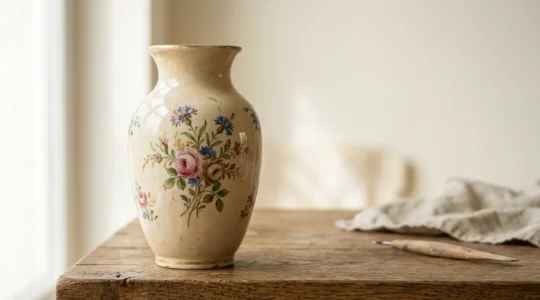
Why Does 19th-Century French Porcelain Feel Different From Modern Reproductions?
Authenticating antique French porcelain is not about memorising marks; it’s about developing a sensory intelligence to read an object’s history through its material properties. The characteristic ‘warmth’ of antique Sèvres is a physical property of its low-fired soft-paste (pâte tendre)…
Read more
Why Do French People Seem Reserved When You’re Just Being Friendly?
The perception of French “reservedness” is often a misinterpretation of a highly structured social system, not a rejection of your friendliness. British social norms prioritise immediate, open friendliness, whereas French culture values a gradual, context-dependent approach to familiarity. Seemingly simple…
Read more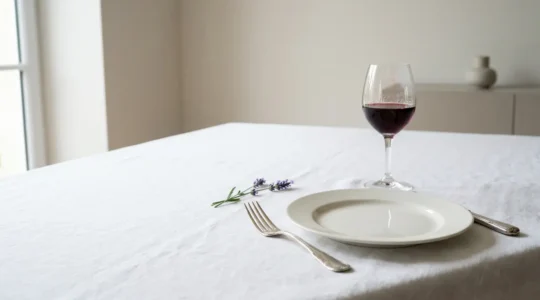
Why Does Your Carefully Set Table Look Cluttered Instead of Elegant?
True French table elegance comes not from what you add, but from mastering the invisible principles of space and social context. Key differences in cutlery and bread placement are not arbitrary rules, but deeply ingrained cultural signals that communicate respect…
Read more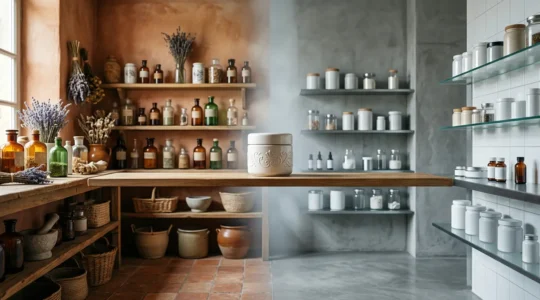
Why Do French Pharmacy Brands Work Differently on British Skin After Crossing the Channel?
The performance drop of French skincare in the UK isn’t your imagination; it’s a predictable result of an “ecosystem mismatch” between the product’s design and its new environment. Environmental factors like hard water and lower humidity in the UK place…
Read more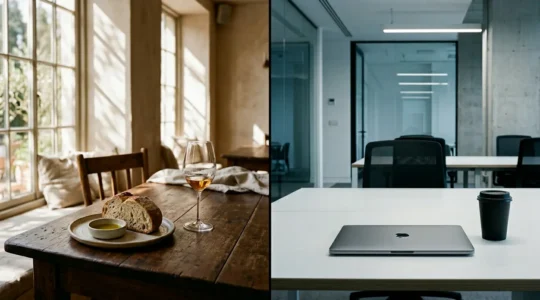
The French Wellbeing Paradox: Less Stressed Than The British, Despite Working Just as Hard?
Contrary to the myth, the French aren’t less stressed because they work less. The real secret lies in their structured approach to daily life—a system of clear boundaries and ‘ritualised decompression’ that protects mental space, even during busy work weeks….
Read more