
The perception of French “reservedness” is often a misinterpretation of a highly structured social system, not a rejection of your friendliness.
- British social norms prioritise immediate, open friendliness, whereas French culture values a gradual, context-dependent approach to familiarity.
- Seemingly simple acts like greetings (la bise), forms of address (tu/vous), and dining etiquette are part of a complex “social choreography” that signals respect and social awareness.
Recommendation: Instead of trying to be more “friendly” in the British sense, focus on learning and respecting the French social script. This demonstrates intelligence and cultural sensitivity, which is the true key to authentic connection.
There is a moment every well-meaning Brit in France experiences. You arrive with a smile, an open demeanour, ready to connect. You might crack a joke with a shopkeeper, try to engage a new colleague in cheerful small talk, or show up to a dinner party eager to lend a hand. And yet, instead of the warm reciprocity you expect, you receive a cool, polite, and distinctly distant response. It can feel like a personal rejection, confirming the old stereotype that French people are simply reserved, or worse, rude.
The common advice—say “Bonjour,” use “vous,” bring a gift—is technically correct but fundamentally incomplete. It gives you the notes but not the music. This misunderstanding stems from a clash of social philosophies. British friendliness often operates like an open-door policy, assuming instant familiarity until proven otherwise. French social life, however, is more like a series of rooms with doors that are opened with specific keys, at the right time, by the right person. The “reservedness” you perceive is not a wall; it’s the carefully constructed architecture of their social world.
But what if the key to unlocking these doors wasn’t about being more effusively friendly, but about understanding the invisible grammar that governs every interaction? This guide is a translation manual for that social grammar. We will move beyond the simple “what” of French etiquette and delve into the “why.” By understanding the underlying logic—the social choreography of greetings, the theatrical performance of a dinner party, and the nuanced code-switching of conversation—you can transform potential moments of awkwardness into demonstrations of cultural fluency. This is how you stop being a tourist in their social landscape and start building genuine, authentic connections.
This article will guide you through the most common points of friction, decoding the unspoken rules that govern French social life. By the end, you’ll understand how to navigate these situations not just without causing offence, but with a new level of confidence and grace.
Summary: Navigating the French Social Maze
- Why Does Getting the Bise Wrong Create Awkwardness for the Entire Encounter?
- How to Know When to Use “Tu” Without Insulting or Distancing Your French Hosts?
- Parisian or Provincial Manners: How Should Your Behaviour Change Outside the Capital?
- The Dinner Party Mistake That Brands British Guests as Impolite in French Homes
- When Should You Reciprocate a French Dinner Invitation and What Should You Bring?
- Why Does Taking 90 Minutes for Lunch Actually Make French Workers More Productive?
- The Place Setting Mistake That Immediately Reveals Your Table as British Rather Than French
- Why Does Your Carefully Set Table Look Cluttered Instead of Elegant?
Why Does Getting the Bise Wrong Create Awkwardness for the Entire Encounter?
For the uninitiated, *la bise*—the sequence of kisses on alternating cheeks—seems like a simple greeting. In reality, it is the opening move in a complex social choreography. Getting it wrong doesn’t just create a moment of physical awkwardness; it signals from the very first second that you are an outsider to the code. The hesitation, the near-miss, the lurching in the wrong direction—these are not minor blunders. They disrupt the seamless flow of social recognition and immediately classify you as someone who doesn’t know the steps.
The “hesitation dance,” as it’s sometimes called, is the most telling sign. When both parties are unsure which cheek to present first (most French people start with the right cheek, meaning you lean left), the ritual collapses. An experienced participant commits to the direction with confidence, guiding their partner. Hesitation is a red flag. Furthermore, the number of kisses is not universal; it’s a finely tuned regional code. What is standard in one area is inappropriate in another. There can be two kisses in Paris, three in Montpellier, and up to four in other regions of France. Getting this wrong is like using the wrong dialect; it marks you as not being from ‘around here’.
The core issue is that *la bise* is not just a kiss; it’s a rapid-fire assessment of social standing, relationship, and context. It is performed between friends, family, and colleagues of a certain standing, but rarely with a complete stranger in a formal setting. By initiating it incorrectly, or with the wrong person, you are attempting to claim a level of familiarity that has not been granted. This is why a clumsy *bise* creates an awkwardness that can linger. It’s not about the kiss itself; it’s a public declaration that you’ve misunderstood the very first line of the social script.
How to Know When to Use “Tu” Without Insulting or Distancing Your French Hosts?
The choice between the informal “tu” and the formal “vous” is perhaps the single most important piece of invisible grammar in the French language. For a British person accustomed to a single “you,” the distinction can seem like a mere grammatical hurdle. This is a profound misunderstanding. The *tutoiement* (using “tu”) and *vouvoiement* (using “vous”) are not about grammar; they are the primary tools for managing social distance and demonstrating respect. Using the wrong one is the verbal equivalent of a clumsy *bise* or a misplaced handshake.
Using “tu” prematurely is like stepping into someone’s personal space uninvited. It presumes an intimacy that has not yet been earned and can be perceived as disrespectful, overly familiar, or even aggressive, especially with older individuals or in a professional context. Conversely, persisting with “vous” after being invited to use “tu” is equally awkward. It creates distance and can be interpreted as coldness or a rejection of the offered friendship. The transition is a delicate social negotiation, a signal that you have crossed a certain threshold of familiarity. As Love Learning Languages notes in their guide, “French Tu vs Vous,” this choice “goes far beyond verb conjugations. It’s a social code that has to be understood to avoid being seen as rude or awkward.”
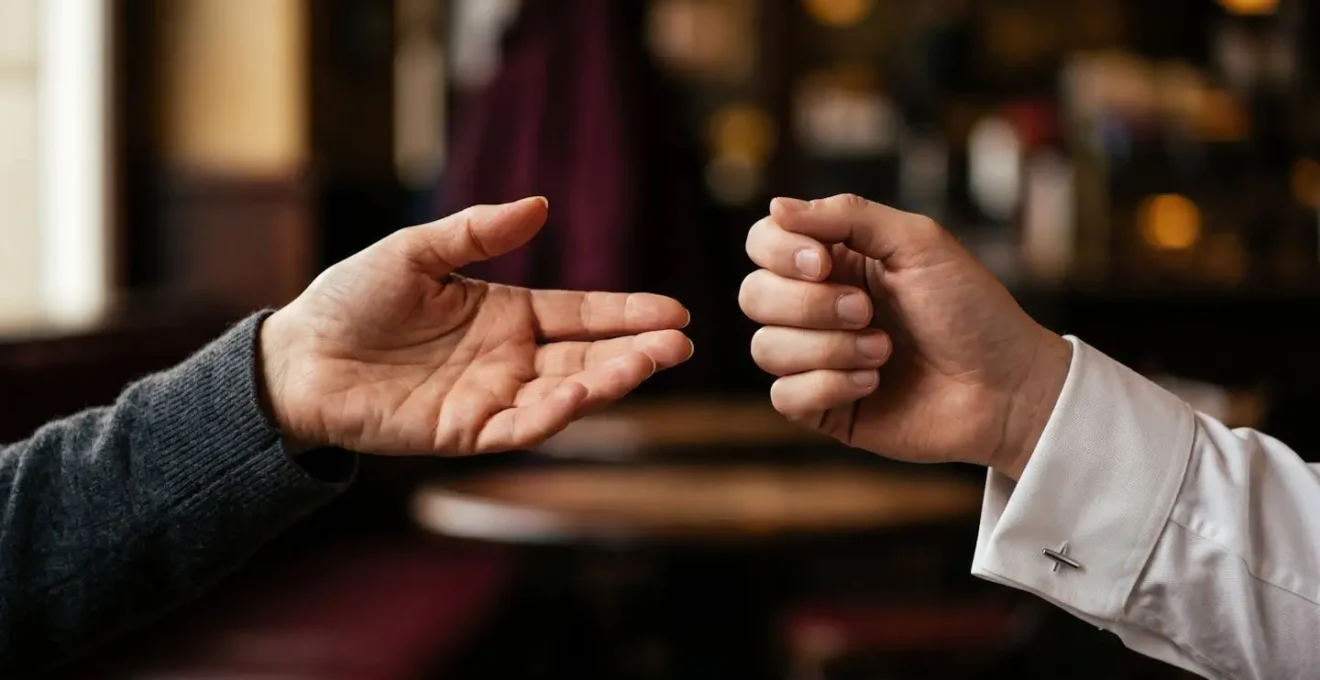
The key is to understand that the system is based on contextual code-switching. Colleagues may rigidly use *vous* all day in the office, only to seamlessly switch to *tu* at the after-work *apéro*. The shift is tied to the environment, not just the people. The power to initiate the switch almost always lies with the person of higher status—the older person, the boss, the client. Listen for the magic phrase: *”On peut se tutoyer?”* (Can we use ‘tu’?). This is your formal invitation. If someone uses *tu* with you, the rule is simple: reciprocate immediately. Hesitation is rejection.
Parisian or Provincial Manners: How Should Your Behaviour Change Outside the Capital?
A common mistake for visitors is to assume that the social etiquette observed in Paris represents all of France. This is akin to believing that London life is representative of the entire UK. The truth is, the fast-paced, often brusque nature of Parisian interaction is a specific adaptation to a high-stress, high-density environment. Many behaviours considered “rude” by foreigners are, in fact, complained about just as vociferously by French people from *la province* (anywhere outside the Paris region).
In Paris, the social contract is built around efficiency. Behaviours like not making small talk with a barista, pushing on the Métro, or a general lack of smiling are often not personal slights but symptoms of a city where everyone is short on time and personal space. As an analysis by The Local France points out, Parisians are perceived as taking themselves more seriously, partly because their lives are more stressful. The professional pressures are different, with many shops now open on Sundays and lunch breaks becoming shorter, mirroring a more Anglo-Saxon work culture.
Outside the capital, the rhythm changes, and so do the expectations. In provincial towns and villages, there is generally more time and space for casual social interactions. Saying “Bonjour” to strangers on a quiet street is more common, a friendly chat with a shopkeeper is more likely, and the overall demeanour is often more relaxed and cheerful. The social choreography is less about efficient navigation and more about community acknowledgement. Your British friendliness, which may have been met with a blank stare in a Parisian bakery, is more likely to be received in the spirit it was intended in a Carpentras market.
Understanding this distinction is key. Don’t let a “Parisian” experience colour your perception of the entire country. Adjust your approach: in Paris, be polite, direct, and efficient. In the provinces, feel more confident to be open and engage in the pleasantries you might be more accustomed to. It’s not about changing who you are, but about adapting your performance to the specific stage you’re on.
The Dinner Party Mistake That Brands British Guests as Impolite in French Homes
Nowhere is the clash between British helpfulness and French etiquette more apparent than at a home dinner party. A British guest, seeing their host rushing between the kitchen and the dining room, will instinctively jump up to help clear plates or offer assistance. In the UK, this is a sign of good manners and consideration. In a French home, it can be a significant faux pas. It implies that the host is overwhelmed, that their planning is flawed, and that they cannot manage their own event. You are not a co-host; you are an esteemed member of the audience.
A French dinner party is not a casual get-together; it is a theatrical performance, with the host as the director, writer, and star. Each course—from the *apéritif* to the *digestif*—is a scene in a carefully orchestrated play. The table is the stage. Your role as a guest is to sit, enjoy, and, most importantly, participate enthusiastically in the intellectual and social life of the table. Getting up, except for the bathroom, breaks the spell. It disrupts the collective experience. This is also why conversation is expected to be more than just superficial small talk; you are part of the cast, and you are expected to contribute to the dialogue on culture, politics, or current events.
Even the physical setting follows a strict, invisible grammar. For instance, in traditional French settings, bread is not served on a side plate. As French cultural etiquette guides note, bread is placed directly on the tablecloth to the upper left of the plate. The tablecloth is part of the dining surface, not just a protective layer. Arriving with a bread plate or asking for one immediately reveals a lack of familiarity with this script. Similarly, a key rule is to arrive around 15 minutes late—the *”quart d’heure de politesse”*—to give your host a final, unstressed moment before the curtain rises.
When Should You Reciprocate a French Dinner Invitation and What Should You Bring?
The social contract of a French dinner party extends beyond the evening itself. It involves a clear, albeit unspoken, understanding of reciprocity and gift-giving. A dinner invitation is not a casual affair; it is a significant gesture of hospitality and an invitation into someone’s private world. Therefore, it comes with an expectation of a return gesture, though the timing and nature of this reciprocation are, like everything else, nuanced.
Reciprocation is mandatory, but not immediate. Inviting your hosts back the following week would seem hasty and could create social pressure. The appropriate response is to extend a return invitation within a reasonable timeframe—perhaps a few weeks or a month or two later. The form of reciprocation should also be of a similar scale; a grand, multi-course dinner should be met with an invitation of similar effort, not a casual pizza night. This maintains the balance of social debt.
When it comes to bringing a gift as a guest, the rules are subtle. It is customary to bring something, even if the host insists you don’t. Good quality chocolates, a beautiful plant, or a thoughtful book are always safe. The most common gift, a bottle of wine, comes with a critical caveat that many foreigners miss. Do not expect to drink the wine you bring. As one etiquette guide explains, the host has meticulously planned the wine pairings for each course of their “theatrical performance.” Your bottle, no matter how expensive, is an unscripted prop. Hand it over as a gift for the host’s cellar, a contribution to their future enjoyment, not as an intervention in their present menu. Offering it with the expectation of it being opened is like telling the director you’ve brought a better script.
This is the essence of French social grace: gestures are valued for their symbolic meaning within an established system. The wine is a token of appreciation for the host’s effort, and the reciprocal invitation is an acknowledgement of the social bond that has been forged. It is a slow, deliberate dance of mutual respect, not a transactional exchange of favours.
Why Does Taking 90 Minutes for Lunch Actually Make French Workers More Productive?
The stereotype of the long, wine-soaked French lunch is one of the most enduring clichés. For the efficiency-minded Anglo-Saxon, a 90-minute or two-hour break in the middle of the workday seems like the pinnacle of unproductivity. A sad sandwich eaten at a desk—*al desko*—is often seen as a badge of honour, a sign of a dedicated worker. The French perspective, however, frames this completely differently. The long lunch is not a break *from* work; it is an essential part of the work itself. It is a social and cognitive reset that, in theory, fuels afternoon productivity.
The underlying philosophy is that a proper break, involving a real meal and social interaction away from the desk, allows for genuine mental detachment. This detachment is crucial for creativity, problem-solving, and preventing burnout. Colleagues connecting over a meal can build stronger team bonds and resolve issues more informally than in a structured meeting. It is also a moment to savour pleasure, a core tenet of French culture, which is seen as a right, not a luxury, even during the workday. The meal is not just fuel; it’s a cultural ritual that reinforces social ties and provides a moment of civilised respite from the pressures of the job.
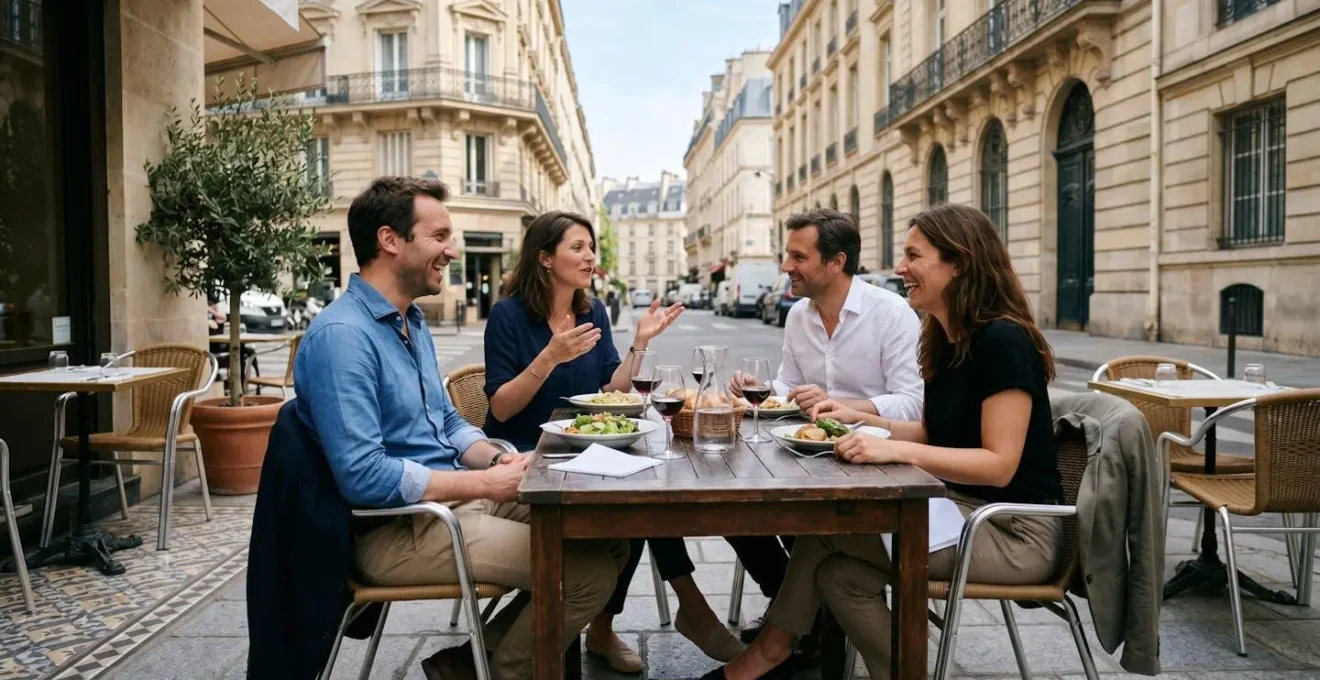
However, it is crucial to note that this ideal is increasingly under threat, especially in major cities. As observations of modern Parisian work culture show, the two-hour lunch is becoming a myth for many. In Paris, the pace of life is accelerating, and expedited services and quick lunch deals are becoming the norm, much like in London or New York. The ideal persists in the cultural imagination and is more likely to be found in the provinces, but the reality for many urban professionals is a much shorter break. The tension between the cultural ideal of the restorative lunch and the modern reality of a globalised work pace is a defining feature of contemporary French life.
The Place Setting Mistake That Immediately Reveals Your Table as British Rather Than French
Setting a table seems universal, but the subtle differences between a British and a French place setting are like a hidden dialect. To the untrained eye, both look elegant. But to a French guest, a British-style table contains a few small but glaring “errors” that instantly signal the host’s origins. These details are part of the invisible grammar of French home life, where tradition and aesthetics are paramount.
The most obvious giveaway is the presence of a bread plate. In a traditional French setting, there is no bread plate. The bread, a vital part of the meal, is placed directly on the tablecloth to the top left of the dinner plate. The second major difference is the orientation of the fork. In the UK, forks are placed tines up. In France, they are placed tines down (*à la française*). This tradition dates back to an era when aristocratic families had their coats of arms engraved on the back of the cutlery handles, and placing them tines down was a way to display this crest.
Other details contribute to the distinctly French aesthetic. Cutlery is often “progressive,” meaning only the utensils for the first two courses are set. Dessert cutlery is brought out later, with the dessert itself, preventing a cluttered look. Glasses for water, red wine, and white wine are arranged in a precise diagonal or triangular line, in order of use. A particularly surprising rule for many Britons is the etiquette of hands. Unlike in the UK, where keeping hands in your lap is considered polite, in France, you must keep your hands on the table at all times (wrists resting on the edge). As Taste of France Magazine explains, “This custom dates back to medieval times when showing empty hands proved you weren’t concealing weapons.” It’s a matter of trust and transparency.
Your French Table Setting Audit: 5 Steps to Elegance
- Points of contact: Identify all elements on your table. List the cutlery, plates (including side plates), and glasses for each setting.
- Collect existing items: Take stock of your typical Anglo-Saxon setting. Note the bread plate and the ‘tines up’ fork placement.
- Confront with the code: Compare your list to French standards. Rule #1: Remove the bread plate. Rule #2: Turn all forks so the tines face down.
- Assess for elegance: Does the table look cluttered? Consider removing dessert cutlery until it’s time for the final course. This ‘ephemeral’ approach is key.
- Plan integration: Commit to the changes. Practice placing the bread directly on your tablecloth. This small act is a significant step towards mastering the ‘invisible grammar’ of French hosting.
Key takeaways
- Context is King: French social rules are not static; they change dramatically based on location (Paris vs. province), setting (work vs. home), and relationships.
- The Meal is a Performance: A French dinner is a carefully staged event. Your role as a guest is to enjoy and participate in the conversation, not to “help” and disrupt the host’s direction.
- Earned Intimacy over Instant Friendliness: The goal is not to be immediately familiar but to demonstrate respect and cultural awareness, which allows intimacy to develop organically over time.
Why Does Your Carefully Set Table Look Cluttered Instead of Elegant?
You’ve bought the finest linen, polished the silverware, and arranged everything with geometric precision. Yet, when you step back, your table feels busy and cluttered, lacking the effortless elegance you see in French homes. The reason often lies in a fundamental difference in philosophy: the Anglo-Saxon approach of “static display” versus the French principle of “ephemeralism.”
A typical formal British or American table is set for the entire meal at once. All the forks, knives, spoons, and glasses are laid out from the beginning, creating a complex and sometimes intimidating grid of silverware. It’s a static tableau, designed to impress with its completeness. The French approach, however, treats the table as a dynamic stage that evolves with the meal. This concept of ephemeralism—where items appear and disappear as needed—is the secret to its visual breathing room and elegance.
The meal follows a strict progression: starter, main, cheese, then dessert. The table setting reflects this. Instead of overwhelming the guest with cutlery, only what is needed for the upcoming course is present. The dessert cutlery is brought out with the dessert; the cheese knife appears with the cheese board. This service *à l’assiette* (plated service) also means that large, family-style serving bowls don’t clutter the centre of the table, leaving space for the true focal points: conversation, candlelight, and flowers. The table is cleared and reset in subtle ways between acts, ensuring the stage is always perfectly set for the next scene. Your carefully set table looks cluttered because you’ve put all the props on stage at once, before the play has even begun.
By shifting your perspective from seeing French etiquette as a set of arbitrary rules to understanding it as a coherent and logical social language, you can navigate any situation with confidence. The goal is not to lose your British identity but to become bilingual in social interaction, able to switch codes with grace and intelligence. This is the path to moving beyond polite observation and into the warmth of genuine French connection.