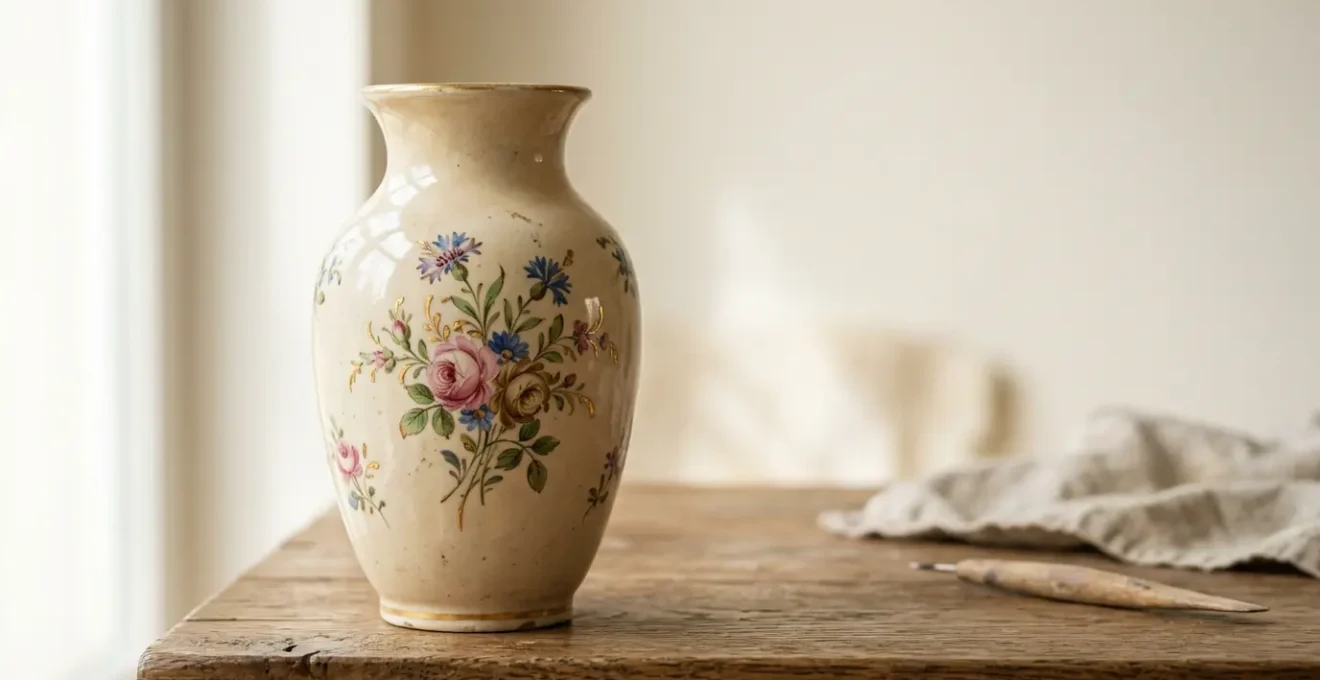
Authenticating antique French porcelain is not about memorising marks; it’s about developing a sensory intelligence to read an object’s history through its material properties.
- The characteristic ‘warmth’ of antique Sèvres is a physical property of its low-fired soft-paste (pâte tendre) composition, a quality absent in high-fired modern porcelain.
- Authentic marks are only one clue; their placement, painting style, and consistency with the piece’s age and wear are far more critical indicators than the mark itself.
Recommendation: Instead of hunting for perfect, mint-condition pieces, train your eye and hand to recognise the subtle signs of age—minor gilding wear, faint crazing—as testaments to an object’s survival and authenticity.
For any aspiring collector of French decorative arts, the experience is a familiar one. You hold a piece of 19th-century Sèvres in one hand and a modern, high-quality reproduction in the other. Logically, they may appear similar—both feature intricate gilding, delicate painting, and a lustrous glaze. Yet, the antique piece feels different. It possesses a subtle warmth, a certain life that the cold, clinical perfection of the new piece lacks. Many collectors attribute this to romantic notions of ‘soul’ or ‘history’, but this distinction is not merely poetic; it is rooted in tangible, measurable differences in material science, manufacturing techniques, and the very philosophy of craftsmanship.
The common advice to “check the maker’s mark” is the starting point for a novice, but it is where most authentication errors are made. In a market where forgeries have become alarmingly sophisticated, relying on a mark alone is a shortcut to costly mistakes. The true path to connoisseurship lies in moving beyond simple identification and cultivating a deeper, more holistic understanding. It requires developing a ‘material intelligence’—the ability to assess an object not just by its signature, but by its weight, its thermal properties, the way it reflects light, and the honest story told by its inevitable signs of age.
This guide bypasses the superficial checklists. Instead, it offers a connoisseur-level framework for understanding what truly defines 19th-century French porcelain. We will explore the scientific reasons for its unique feel, provide a forensic approach to verifying authenticity, and contrast the collecting strategies for the great manufactories like Sèvres and Limoges. Ultimately, you will learn to distinguish the authentic from the replica not just with your eyes, but with your hands and your intellect.
This article provides a structured path to developing your expertise. Each section addresses a critical question a discerning collector faces, moving from material science to connoisseurship and finally to acquisition strategy.
Summary: A Collector’s Guide to 19th-Century French Porcelain
- Why Does Genuine Sèvres Feel Warmer Than Cold Industrial Porcelain?
- How to Verify a Sèvres Mark When Fakes Have Become Extremely Sophisticated?
- Sèvres, Limoges or Haviland: Which French Porcelain Should a New Collector Focus On?
- The Cleaning Method That Ruined a £2,000 Piece of French Porcelain in Minutes
- Original 19th-Century Piece or Quality Reproduction: Which Brings More Romantic Atmosphere?
- Provençal Pottery or Alsatian Textiles: Which French Craft Tradition Offers Better Value?
- Why Does “French Romantic” Decoration Often Look Clichéd When Attempted by Non-French Designers?
- When Do Major Auction Houses Offer Best Selection of French Porcelain for Collectors?
Why Does Genuine Sèvres Feel Warmer Than Cold Industrial Porcelain?
The perception of “warmth” in antique Sèvres porcelain is not a flight of fancy; it is a direct consequence of its material composition. Early French porcelain, particularly the prized soft-paste porcelain (or pâte tendre), has a fundamentally different physical structure from modern hard-paste porcelain. The key lies in the firing temperature. Research in materials science shows that soft-paste porcelain fires at around 1100°C, whereas modern hard-paste requires 1200-1250°C or more. This lower firing temperature creates a body that is slightly more porous and less vitrified.
This subtle porosity affects its thermal conductivity. When you touch it, the material transfers heat from your hand more slowly than the dense, glass-like structure of modern porcelain. The result is a tactile sensation that feels less “cold” and more responsive. Furthermore, the glaze on pâte tendre is distinct. It is fired separately and fuses with the body in a way that creates a deeper, more lustrous surface with a unique ability to scatter light, contributing to its visual warmth and depth.
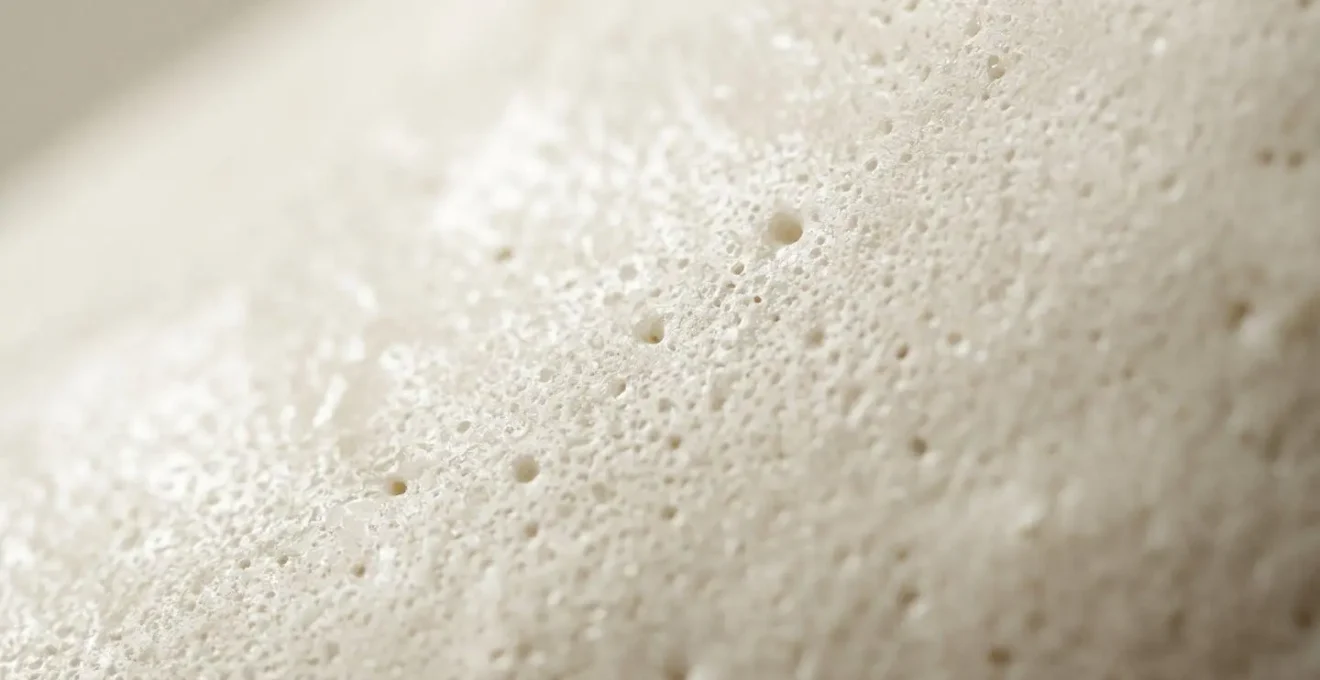
As this detailed view shows, the beauty is in the subtle imperfections and the way light interacts with the surface. Modern hard-paste porcelain, by contrast, is engineered for durability and perfection. Its high-fired, non-porous body is thermally efficient, which is why it feels colder and more inert to the touch. Developing a sensitivity to this tactile difference is a foundational skill for a connoisseur, allowing you to gain an initial, powerful clue about a piece’s authenticity before even looking at a mark.
How to Verify a Sèvres Mark When Fakes Have Become Extremely Sophisticated?
While the mark is often the first thing a collector looks for, it should be the last thing they trust implicitly. As one expert from the French Porcelain Society memorably stated, “The mark is only 10% of the story.” A sophisticated forgery will often feature a perfect-looking mark on a piece that is wrong in every other aspect—weight, colour, or decorative style. The key is to treat mark verification not as a simple matching exercise, but as a forensic investigation where the mark must be consistent with the entire object.
The mark is only 10% of the story. A genuine mark on a piece with anachronistic colors, weight, or decorative style is a major red flag.
– Porcelain authentication expert, French Porcelain Society authentication guidelines
Authentic 19th-century Sèvres marks were hand-painted and possess a human quality. Under a 15x jeweller’s loupe, you should see slight variations in line thickness and paint application. Fakes, often applied with transfers or modern precision tools, can look too perfect. Moreover, the placement and combination of marks are critical. For instance, the presence of a “Made in France” stamp alongside a 19th-century Sèvres mark is an immediate disqualification, as this designation was not used until the 20th century for export purposes. The most reliable authentication comes from a holistic assessment where the mark, material, style, and wear patterns all tell the same, consistent story of a specific time and place.
Your Forensic Checklist for Sèvres Mark Authentication
- Examine Mark Placement: Look for under-glaze date marks. Authentic Sèvres from the period should feature these, while many forgeries apply all marks over the glaze for ease.
- Verify Mark Pairing: Check for the consistent pairing of marks, such as an over-glaze date stamp corresponding correctly with an under-glaze oval. Inconsistencies are a warning sign.
- Scan for Anachronisms: Inspect for any “Made in France” or similar export markings. Period Sèvres was not marked this way before the 20th century.
- Assess Natural Wear: Evaluate the shelf wear on the base. A piece over 150 years old should show natural, gentle wear patterns consistent with its age. A pristine base on an ‘antique’ is highly suspicious.
- Analyse with a Loupe: Use a 15x loupe to analyse the mark’s characteristics. Authentic hand-painted marks often show a slight blur at the edges and variable depth, unlike the sharp, uniform lines of modern reproductions.
Sèvres, Limoges or Haviland: Which French Porcelain Should a New Collector Focus On?
For a new collector, the landscape of French porcelain can seem dominated by three great names: Sèvres, Limoges, and Haviland. Understanding their distinct identities is crucial for building a focused and rewarding collection. It’s a common misconception to see “Limoges” and “Haviland” as direct competitors to Sèvres. In reality, “Limoges” refers to a region with dozens of factories, while “Haviland” is a specific, highly successful American-owned manufacturer based in Limoges. Sèvres, by contrast, was a single, royally-patronised manufactory with a mission of artistic and technical supremacy.
Choosing a focus depends entirely on your goals as a collector. If your aim is peak investment potential and historical significance, Sèvres is unmatched. Its royal provenance and limited output place it in a class of its own, primarily traded at high-end auction houses. If you are drawn to artistic diversity and the Art Nouveau style, the broader category of “Limoges” offers a vast and more accessible market. For those interested in heritage and creating a usable collection, Haviland dinner services represent a practical and sentimental focus, often found at estate sales.
The principle of focused collecting yielding superior returns is well-documented. A 2024 auction of the Merkle Collection provides a powerful example. While the collection was of Meissen, the lesson is universal: a rare Meissen group sold for €171,850, quadrupling its estimate. The entire sale of 55 curated lots fetched €948,450, far exceeding the high estimate of €594,800. This demonstrates that a tightly curated, quality-over-quantity strategy, such as focusing on a specific period of Sèvres, is far more likely to appreciate in value than a scattered accumulation of disparate pieces.
This comparative table helps clarify the strategic choice for a new collector, based on data and market analysis from institutions like The French Porcelain Society.
| Manufactory | Investment Potential | Market Availability | Primary Sourcing Channel | Collector Focus |
|---|---|---|---|---|
| Sèvres | Highest – Royal provenance | Limited – Rare pieces | High-end auctions (Sotheby’s, Christie’s) | Museum-quality, historical significance |
| Limoges | Moderate – Artistic diversity | Wide – Abundant supply | Antique shops, online platforms | Decorative arts, Art Nouveau periods |
| Haviland | Practical – Heritage value | Common – Estate sales | Estate sales, antique markets | Dinner services, family heirlooms |
The Cleaning Method That Ruined a £2,000 Piece of French Porcelain in Minutes
There is no faster way to destroy the value of antique porcelain than improper cleaning. A collector once recounted the horror of watching the delicate overglaze decoration on a £2,000 vase dissolve after a well-intentioned but disastrous cleaning attempt with a common household cleaning agent. The story serves as a stark reminder that these objects are not inert; they are complex assemblies of materials that can be irreversibly damaged by modern chemicals and aggressive methods. As the Museum of Royal Worcester warns in its conservation guidelines, you should “never use a dishwasher for valued ceramics, and avoid using household bleaches or strong cleaning agents.”
The primary dangers are damage to the gilding and overglaze decoration, and the dissolution of old repairs. Gilding on 19th-century porcelain is often unburnished and extremely delicate, easily lifted by abrasive cloths or harsh detergents. Similarly, many of the most vibrant colours were applied in a final, low-temperature firing and are not as durable as the underlying glaze. Submerging a piece is also a significant risk. Many historical restoration adhesives are water-soluble, and immersing a previously repaired item can cause it to literally fall apart in your hands. Likewise, water can penetrate fine cracks in the glaze (crazing), potentially staining the porcelain body from within.
The professional approach prioritises preservation above all. It involves minimal intervention, using the gentlest means possible. The following protocol, adapted from museum conservator guidelines, should be the only method employed for cleaning valuable French porcelain. It emphasizes inspection before action and a “less is more” philosophy.
Museum-Approved Protocol for Cleaning Antique Porcelain
- Inspect Thoroughly First: Before any cleaning, carefully examine the piece under good light for cracks, chips, flaking decoration, or signs of previous repairs. This inspection determines if cleaning is safe at all.
- Prepare a Gentle Solution: For surface dust, dampen a cotton wool swab in warm, de-ionised water containing only a few drops of a neutral, conservation-grade detergent per litre.
- Use a Rolling Motion: Gently roll the damp swab over the porcelain surface. Do not scrub. This rolling action lifts dirt without abrading the delicate glaze or gilding.
- Avoid Submersion at All Costs: Never submerge pieces with crazing, cracks, or known repairs. Water can penetrate these areas and cause catastrophic failure or staining.
- Hand Wash Sound Tableware Separately: For robust, undamaged tableware only, hand wash one item at a time in a plastic bowl (not the sink) filled with warm water and minimal detergent. Line the bowl with a tea towel to prevent chipping.
- Dry Immediately and Gently: After rinsing, dry the piece immediately and completely with a soft, lint-free cloth to prevent water spots from forming on the gilding, which can be permanent.
Original 19th-Century Piece or Quality Reproduction: Which Brings More Romantic Atmosphere?
In the pursuit of a “French Romantic” aesthetic, many are tempted by the flawless perfection of a high-quality reproduction. It offers the desired look without the perceived flaws of age. However, this approach fundamentally misunderstands the source of true romantic atmosphere. The romanticism of an authentic 19th-century piece lies not in its original perfection, but in its story of survival. The subtle signs of age—what the French call the vécu, or “lived-in” quality—are not flaws but testaments to its history.
A quality reproduction can copy a form or a pattern, but it cannot replicate the passage of time. The authentic patina on an antique piece is a complex tapestry woven from a century or more of gentle use, cleaning, and exposure to light. The slight wear on the high points of the gilding, the faint network of crazing in the glaze visible only at a certain angle, the miniscule “flea bite” on a rim—these are the very characteristics that give an object its soul and its unique character. As decorative arts specialists from the British Antique Dealers’ Association note, these are not imperfections but proofs of a journey through time.
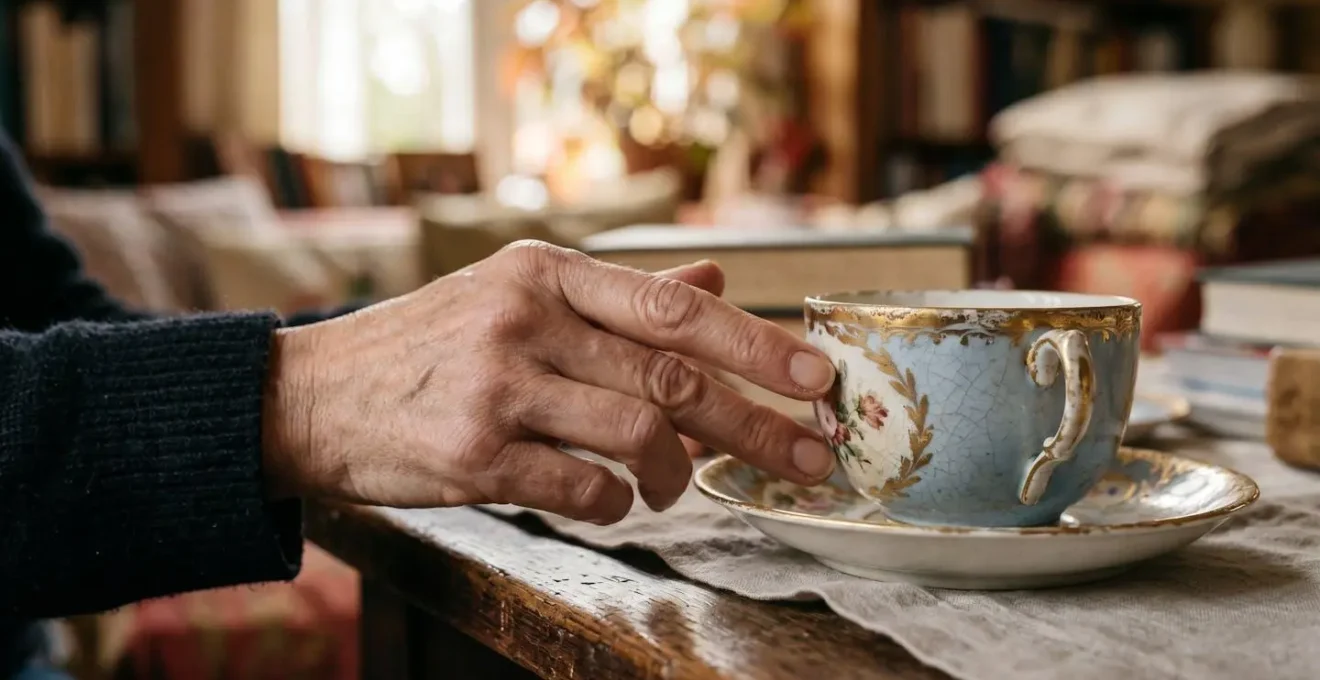
This emotional connection to a piece’s history is what creates a genuinely romantic atmosphere. A room filled with perfect reproductions can feel sterile and staged, like a film set. A room layered with authentic pieces, each with its own quiet history, feels curated, personal, and alive. Choosing an original 19th-century piece is choosing to become the next custodian of its story. You are not just acquiring an object; you are preserving a fragment of history, and it is this sense of connection and continuity that is the very essence of romanticism.
Provençal Pottery or Alsatian Textiles: Which French Craft Tradition Offers Better Value?
While the focus for a porcelain collector remains on the great manufactories, a brief detour into other French craft traditions offers a valuable lesson in assessing “value.” When we ask whether Provençal pottery or Alsatian textiles offer “better value,” we force ourselves to define what value means. Is it financial return, daily utility, decorative impact, or cultural resonance? This framework is essential for any collector to apply to their chosen field, including porcelain.
Provençal pottery, with its earthy glazes and functional forms like pitchers and bowls, offers high utilitarian and decorative value. It is a craft meant to be lived with, integrated into the daily fabric of a home. Alsatian textiles, with their vibrant narrative patterns, offer immense decorative and storytelling value, but have limited practical use. Both have seen moderate growth in the folk art market, representing a different kind of investment from the blue-chip world of Sèvres.
This comparison table breaks down the different facets of value in these two distinct traditions, providing a model for how a collector should think.
| Value Type | Provençal Pottery | Alsatian Textiles |
|---|---|---|
| Financial ROI | Moderate – Rare pieces appreciate | Moderate – Folk art market growing |
| Utilitarian Value | High – Daily use (pitchers, bowls) | Low – Primarily decorative |
| Decorative Value | Strong – Rustic, earthy aesthetic | Strong – Color, pattern, narrative |
| Cultural Heritage | Regional identity, artisan tradition | Deep narrative roots, storytelling |
| Lifestyle Integration | Live-with collection, functional | Wall art, textile warmth, folk narrative |
| Skill Appreciation | Potter’s hand, glaze mastery | Meticulous hand-stitching, pattern work |
Now, let us pivot back to our primary subject. What makes 19th-century French porcelain so compelling as a collector’s field is that, at its best, it encapsulates nearly all these forms of value. A Sèvres cup possesses immense financial and historical value. A Limoges platter offers both decorative beauty and utilitarian function. A Haviland dinner service carries the cultural heritage of family life. By understanding how to deconstruct “value” into its component parts, you can make more deliberate and satisfying choices, ensuring your collection is valuable not just financially, but personally and aesthetically as well.
Key Takeaways
- True connoisseurship is sensory: Learn to feel the ‘warmth’ of soft-paste porcelain and see the story in the ‘vécu’ or authentic wear.
- Authentication is forensic: A mark is only 10% of the story. Its context, placement, and consistency with the object’s age are what matter.
- Collecting is strategic: Choose a focus (Sèvres for investment, Limoges for diversity, Haviland for heritage) to build a collection with greater value and coherence.
Why Does “French Romantic” Decoration Often Look Clichéd When Attempted by Non-French Designers?
The “French Romantic” style is frequently misinterpreted as an accumulation of motifs: fleur-de-lis, rococo scrolls, and an abundance of gilded frills. When non-French designers attempt to replicate the style by simply applying these clichés, the result often feels overwrought, theatrical, and inauthentic. This is because the true essence of French style, romantic or otherwise, is not about the motifs themselves, but about a deeply ingrained cultural principle: the balance of opulence with restraint.
An authentic French interior achieves its romantic atmosphere through the layering of history and the celebration of materiality. It’s about the interplay of textures—the worn patina on a wooden commode, the cool smoothness of a marble mantelpiece, the soft drape of aged linen, and the lustrous gleam of a single, exquisite piece of porcelain. A French design historian once noted, “True French style is about balancing opulence with restraint, and mixing periods with personal history.” It is this restraint that is so often missing from foreign interpretations.
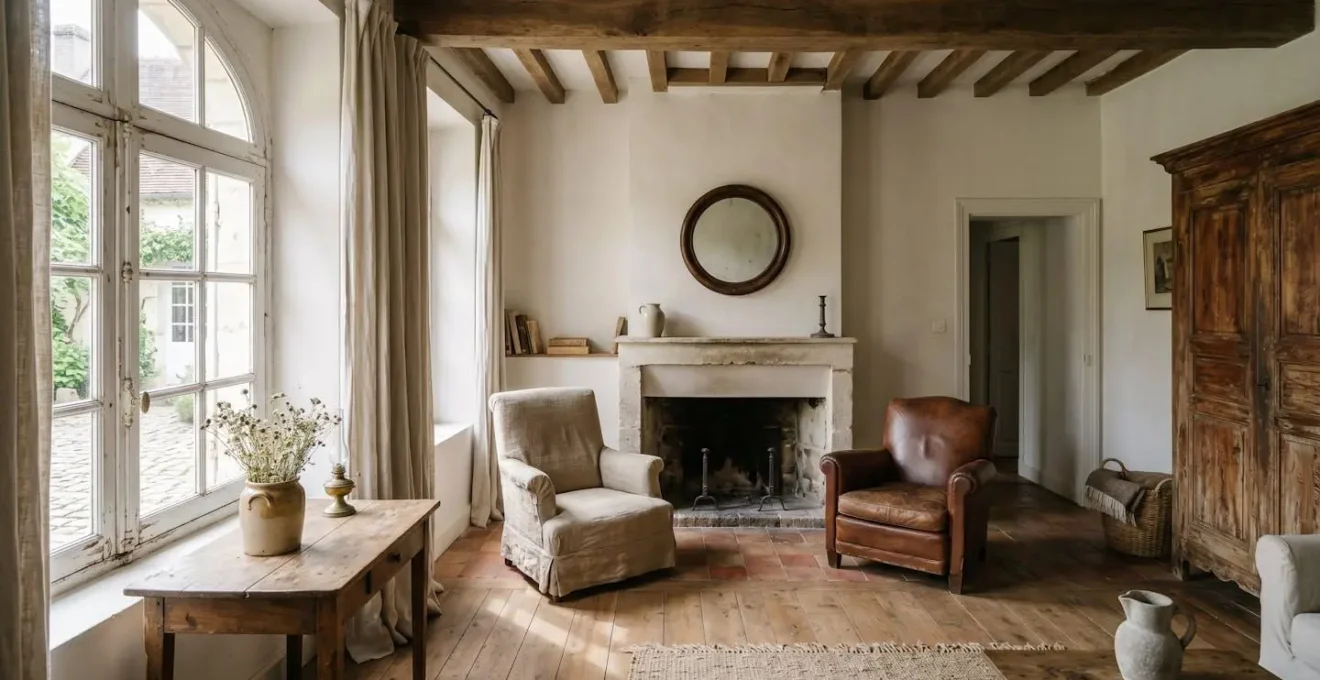
Where a clichéd approach might crowd a room with reproduction furniture, an authentic approach would give a single, fine antique piece room to breathe. It understands that the empty space around an object is just as important as the object itself. The romanticism comes from the quiet confidence of well-made things that have stood the test of time, coexisting harmoniously. A piece of 19th-century Sèvres is not just “decoration” in such a space; it is a point of focus, a concentration of history, art, and craftsmanship whose impact is magnified by the curated simplicity surrounding it.
When Do Major Auction Houses Offer Best Selection of French Porcelain for Collectors?
For the serious collector seeking museum-quality French porcelain, the primary acquisition channel is the major auction house. However, navigating this world requires a strategic understanding of timing and sale types. While porcelain appears in general decorative arts sales throughout the year, the highest concentration of premium pieces is found during the main auction seasons: Spring (March-May) and Fall (October-November).
More important than the season, however, is the type of sale. The most coveted events are the Single-Owner Collection sales. These auctions, dedicated to the curated collection of a single knowledgeable individual, are where the finest pieces with the most impeccable provenance often surface. A lifetime of expert collecting is presented at once, offering a level of quality and coherence rarely seen in general sales. The recent success of the Merkle Collection sale series illustrates this point perfectly. Following a highly successful auction in May 2024, the auction house strategically scheduled the next segment for October 31, 2024, in Paris, with further sales planned for Spring 2025, capitalising on the established auction seasons.
Acquiring at this level is not a passive activity. It requires proactive engagement with the auction house and diligent research. The most successful collectors don’t just bid; they build relationships with specialists, attend pre-sale viewings to handle the pieces, and conduct their own independent research to be fully prepared on sale day.
Expert Strategies for Auction House Acquisition
- Target Single-Owner Sales: Prioritise these sales for superior curation, quality, and provenance. Sign up for alerts from major houses like Christie’s, Sotheby’s, and Bonhams.
- Attend Pre-Sale Viewings: This is non-negotiable. Handle the pieces, request to see them under different lighting, and ask the specialist for condition reports and any information on restoration.
- Conduct Independent Research: Use digital archives, such as those at the Cité de la Céramique in Sèvres or The Met, to compare potential purchases against authenticated masterpiece examples.
- Pursue ‘Bought-In’ Lots: If a desired lot doesn’t sell (‘bought-in’), contact the auction house afterwards. You may be able to negotiate a purchase directly at the reserve price without the pressure of a bidding war.
- Monitor Specialist Sales: Keep a close eye on specialized French decorative arts or porcelain sales, particularly at houses like Bonhams Cornette de Saint Cyr in Paris, during the peak Spring and Fall seasons.