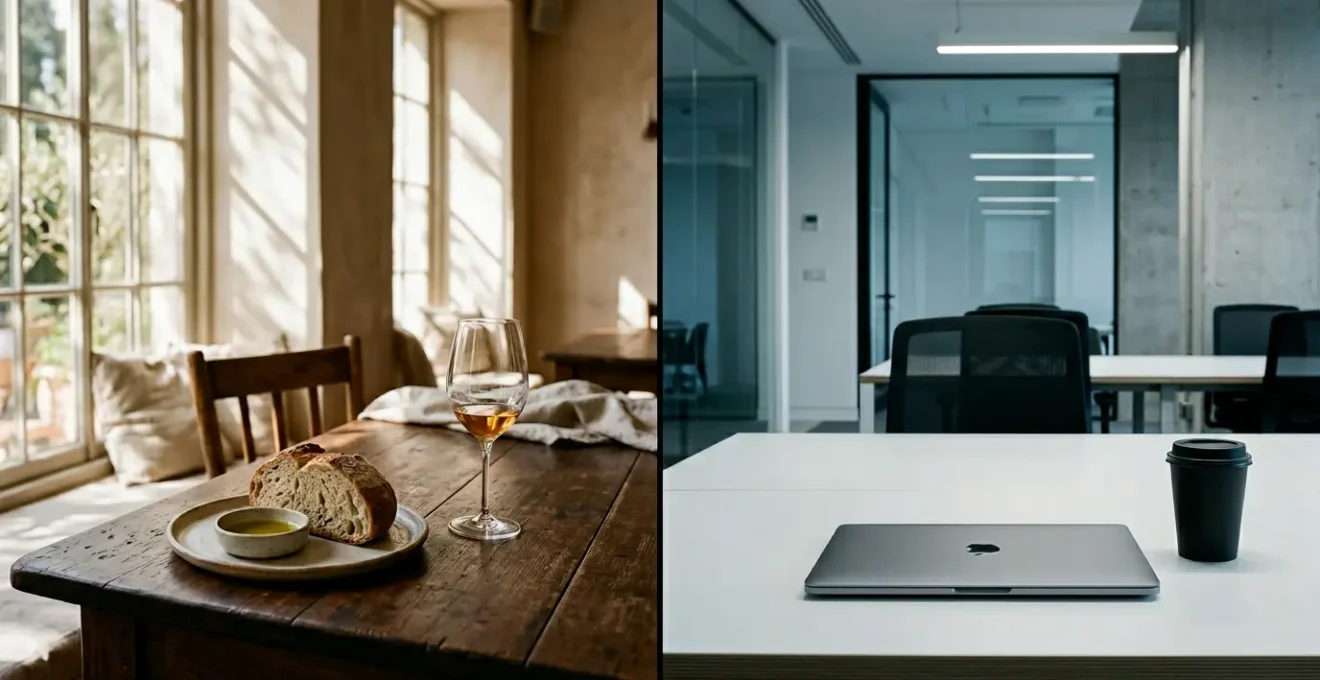
Contrary to the myth, the French aren’t less stressed because they work less. The real secret lies in their structured approach to daily life—a system of clear boundaries and ‘ritualised decompression’ that protects mental space, even during busy work weeks. This guide reveals how to apply these practical philosophies, from the 90-minute lunch to skincare, to build resilience within a demanding British work culture.
The image is a familiar one for many UK professionals: a hastily eaten sandwich at the desk, one eye on the screen, the other on the clock. We strive for a “work-life balance” that often feels like a frantic juggling act. Meanwhile, the perception of our French counterparts is one of serene, two-hour lunches, chic effortlessness, and an enviable sense of calm. It’s easy to dismiss this by pointing to cultural stereotypes or the 35-hour work week, assuming it’s a reality completely unattainable across the Channel.
But what if these assumptions are a red herring? What if the key to their apparent calm isn’t working less, but structuring life differently? The truth is, the French are not magically immune to pressure. In fact, research shows they report similar, if not slightly higher, levels of work-related stress. The difference lies not in the absence of stress, but in a powerful, culturally embedded toolkit of rituals and boundaries designed to manage it. This isn’t about grand, sweeping changes but about a philosophy of “domain separation”—keeping work, social, and private life in their distinct boxes.
This article moves beyond the clichés to decode these systems. We will deconstruct the practical mechanisms behind the long lunch, the minimalist skincare routine, and even the seemingly reserved social etiquette. By understanding the “why” behind these practices, we can extract a practical roadmap for any UK professional looking to cultivate sustainable wellbeing, not as an escape, but as an integrated part of daily life.
This guide offers a deep dive into the specific philosophies that underpin the French art of living well. From work habits to social interactions, we’ll explore the structured rituals that can be adapted to reduce cognitive load and enhance your quality of life, no matter how busy your schedule.
Summary: Decoding the French Art of Sustainable Wellbeing
- Why Does Taking 90 Minutes for Lunch Actually Make French Workers More Productive?
- How to Apply French “Less Is More” Skincare When British Weather Demands More?
- French Pharmacie Cream or British Drugstore Brand: Which Actually Delivers for Sensitive Skin?
- The “French Spa Retreat” Mistake That Leaves You Poorer but Not Healthier
- When Should You Start a French-Style ‘Cure’ Detox for Maximum Benefit?
- The Dinner Party Mistake That Brands British Guests as Impolite in French Homes
- Why Does Taking 90 Minutes for Lunch Actually Make French Workers More Productive?
- Why Do French People Seem Reserved When You’re Just Being Friendly?
Why Does Taking 90 Minutes for Lunch Actually Make French Workers More Productive?
The extended French lunch break is often viewed by outsiders as a quaint indulgence, a relic of a less productive era. For the time-pressed British professional, the idea of taking 90 minutes away from the desk can seem like a fantasy, or worse, a career-limiting move. However, the data points to a counter-intuitive reality: this prolonged break isn’t a drag on performance; it’s a driver of it. This practice is a prime example of ritualised decompression, a structured pause that yields tangible benefits in the afternoon.
The logic is simple but profound. Instead of a short, functional refuelling, the French lunch is a complete context switch. It enforces a hard boundary between the morning’s work and the afternoon’s. This mental and physical separation from the workspace prevents the slow burn of cognitive fatigue. In fact, research conducted in France reveals a direct correlation, suggesting that employees who take proper breaks report up to 35% higher afternoon productivity. This isn’t about laziness; it’s a strategic investment in sustained focus.
Furthermore, the social dimension is a critical, often-overlooked component. Eating with colleagues transforms the break from a solitary task into a moment of connection that builds social capital and eases workplace friction. As food historian Martin Bruegel explains in an interview with NPR, this shared time is a functional tool for team cohesion:
People who eat together are able to talk about issues, and they can work out tensions or different opinions. They create a culture in which having different points of view is possible.
– Martin Bruegel, NPR – Drop that fork! Why eating at your desk is banned in France
This “domain separation” isn’t just about leaving your desk; it’s about entering a different social and mental space. By dedicating a non-negotiable block of time to food and conversation, workers return to their tasks not just fed, but mentally refreshed, socially connected, and better equipped to tackle the rest of the day with renewed energy and clarity.
How to Apply French “Less Is More” Skincare When British Weather Demands More?
For many in the UK, skincare is a constant battle against the elements: damp, wind, and fluctuating temperatures that leave skin feeling reactive and demanding. The French “less is more” philosophy, with its minimalist routines, can seem ill-suited to a climate that seemingly requires an arsenal of protective products. The key, however, is to understand that French skincare isn’t about using fewer products for the sake of it; it’s about a qualitative investment in supporting the skin’s natural barrier function.
This approach, which we can term “preventative wellbeing,” prioritises long-term skin health over short-term fixes. While a harsh British winter might tempt you to pile on heavy creams, the French method would advocate for focusing on gentle cleansing, consistent hydration, and targeted serums that strengthen the skin’s own defences. It’s about making the skin more resilient from within, so it’s less affected by external aggressors. This focus on barrier support and fundamental health is the cornerstone of the philosophy.
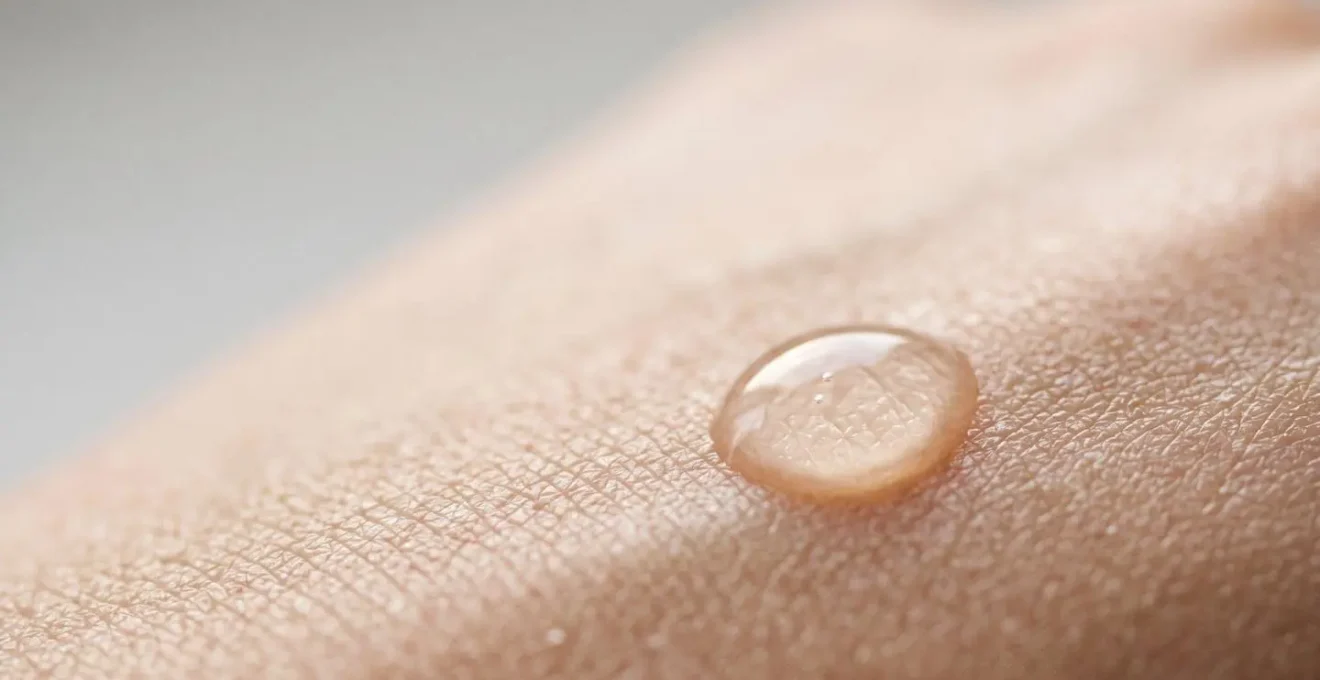
As the image above suggests, the goal is a healthy, luminous skin texture, not a face masked by layers of product. This philosophy is about choosing a few, high-quality, efficacious products and using them consistently. As explained by Lancolia Beauty Experts, the discipline lies in the selection and consistency, not in the number of steps.
French women believe in doing less, but doing it better. Instead of overloading their skin with products, they focus on a few high-quality items that target their specific skin needs.
– Lancolia Beauty Experts, The Best Kept French Skincare Secrets
So, for the British consumer, this means resisting the urge to add another “emergency” product to your basket. Instead, audit your current routine. Are you using a gentle, pH-balanced cleanser? Is your moisturiser focused on barrier-repairing ingredients like ceramides and hyaluronic acid? Are you consistently protecting your skin with SPF, even on cloudy days? Applying the French philosophy means building a resilient foundation, which is the most effective defence against any weather.
French Pharmacie Cream or British Drugstore Brand: Which Actually Delivers for Sensitive Skin?
The allure of the French pharmacy is potent. It promises scientifically-formulated, dermatologist-approved solutions that seem a world away from the cluttered aisles of a typical British drugstore. For those with sensitive skin, the choice can feel overwhelming: is the French prestige justified, or can a local brand deliver the same results? The answer, in true French fashion, is less about the brand name on the bottle and more about the philosophy inside it.
The superiority of French “dermo-cosmetics” isn’t necessarily due to a single magic ingredient, but to a set of guiding principles focused on tolerance, efficacy, and “preventative wellbeing.” Rather than chasing trends, these brands are rooted in a dermatological approach that respects the skin’s biology. They prioritise minimalism, high concentrations of proven actives, and formulas tested for the most sensitive skin types. This means a British brand formulated with the same ethos can be just as effective as a product from a Parisian ‘pharmacie’.
The real difference lies in the criteria you use for selection. A French consumer is taught from a young age to look for these markers of quality and safety. To demystify the process, you can adopt the same critical lens when shopping anywhere. It’s about learning to identify the philosophy, not just the product.
Your Dermo-Cosmetic Audit: 4 French Principles to Check
- Approach Check: Does the product prioritize prevention over correction? Look for language about “protecting,” “balancing,” and “maintaining” skin function, rather than aggressive claims of “erasing” or “reversing.”
- Ingredient Check: Does the formula feature proven, often natural-origin ingredients? Seek out products built around foundational actives like thermal spring water, plant-based oils, hyaluronic acid, or niacinamide, rather than a long list of trendy but unproven extracts.
- Tolerance Check: Is it formulated for sensitive skin? Look for labels like “dermatologically tested,” “hypoallergenic,” “for sensitive skin,” or indications that it’s suitable for post-procedure use. This signals a focus on clinical tolerance.
- Consistency Check: Is this a product you can realistically use every day? The French approach values long-term habits over occasional, intensive treatments. A simple, effective product you’ll stick with is better than a complex, expensive one used sporadically.
Ultimately, the most effective product for your sensitive skin is the one that aligns with these principles of gentle, consistent, and preventative care. By using this checklist, you can find your “French pharmacy” hero, even if it’s sitting on a shelf in Boots or Superdrug.
The “French Spa Retreat” Mistake That Leaves You Poorer but Not Healthier
In the UK, “self-care” is often marketed as an event: a spa day, a wellness retreat, an expensive purchase. It’s a boom-and-bust cycle of stress and release. We imagine the French equivalent to be a luxurious thalassotherapy session on the Brittany coast. While such things exist, this perception fundamentally misunderstands the French approach to wellbeing. The belief that you can “buy” wellness in a single, expensive dose is a mistake that often leaves you with little more than a lighter wallet.
The authentic French philosophy is about small, consistent, and pleasurable daily acts, not grand, occasional gestures. It is the concept of ‘la gourmandise de soi’—a delightful term that translates roughly to “self-indulgence” but implies a daily, guilt-free savouring of small pleasures. As The French NP, a wellness expert, notes, this is not a treat, but a practice.
The French have mastered what they call ‘la gourmandise de soi’—literally ‘self-indulgence’—not as an occasional treat but as an essential practice seamlessly integrated into daily life.
– The French NP, 4 Timeless French Beauty Rituals You Need to Try
This is ritualised decompression in its purest form. It’s not about escaping your life for a weekend; it’s about embedding moments of sensory pleasure and restoration into your existing routine. It’s the 10 minutes spent slowly massaging in a face oil, the pleasure of a single square of dark chocolate after dinner, or the act of brewing and sipping a specific herbal tea before bed. These are not luxuries; they are non-negotiable structures that build resilience.
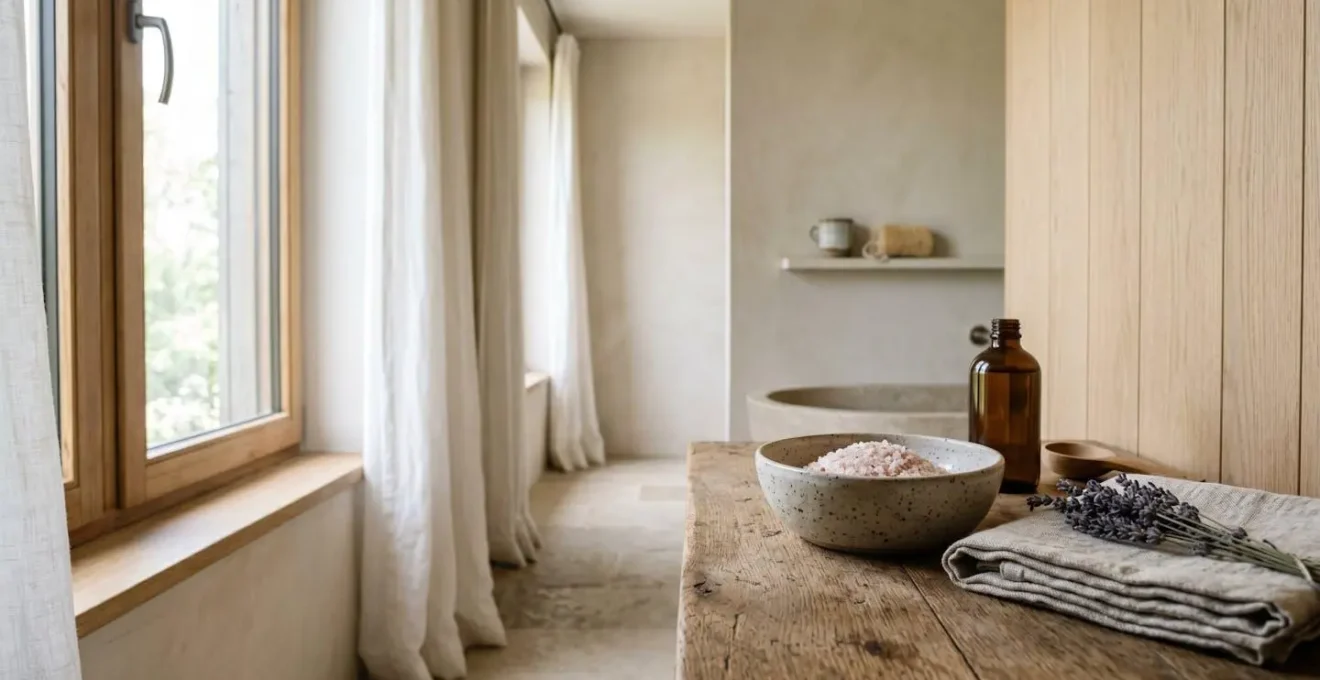
The image above captures this spirit perfectly: a simple, intentional space for a daily ritual. It’s achievable, sustainable, and ultimately, far more effective than an annual spa splurge. The mistake is viewing wellbeing as a destination to be visited. The French teach us that it is the quality of the journey itself. It is the accumulation of these small, qualitative investments that truly builds a buffer against stress, making you richer in spirit, not poorer in pocket.
When Should You Start a French-Style ‘Cure’ Detox for Maximum Benefit?
The word “detox” has been largely co-opted in the UK by the wellness industry to mean punishing juice cleanses or restrictive diets. The French concept of a ‘cure’, however, is something entirely different. It’s not a quick fix or a response to overindulgence. Instead, it’s a gentle, seasonal practice of preventative wellbeing, designed to support the body’s natural functions as it adapts to the changing seasons. It’s less about deprivation and more about strategic support.
A ‘cure’ is typically a 3-week period where you might incorporate specific herbal teas, nutritional supplements, or foods to support a particular organ system. The timing is crucial and is tied to the rhythms of nature. The goal is to anticipate the body’s needs rather than reacting to problems once they arise. For example, a spring ‘cure’ might focus on supporting the liver to gently cleanse after a heavier winter diet, while an autumn ‘cure’ would aim to bolster the immune system before the onset of cold and flu season.
This approach can be easily adapted to a British lifestyle by paying attention to the seasonal shifts. It’s about tuning into your body and the environment. Here are some classic examples of French seasonal ‘cures’:
- Spring ‘Cure’ (March/April): As the days lengthen, this is the time to support detoxification. Incorporating dandelion or rosemary herbal teas and adding artichoke and dark leafy greens to meals helps support liver function.
- Autumn ‘Cure’ (September/October): To prepare the body for winter, the focus is on immunity. This is the time to use supplements like propolis or royal jelly, and to eat plenty of seasonal root vegetables rich in vitamins.
- Hydration ‘Cure’ (Year-Round): A constant, low-level ‘cure’ is simply to maintain excellent hydration with mineral-rich water and herbal infusions to support all organ functions consistently.
- Digital ‘Cure’ (A Modern Adaptation): Recognizing modern stressors, a weekly ‘cure’ might involve a tech-free period, such as no phone notifications after 9 pm, to allow the nervous system to reset from overstimulation.
Starting a ‘cure’ isn’t about waiting until you feel burnt out. It’s about looking at the calendar, noticing the turn of the season, and proactively giving your body the gentle support it needs. It is the ultimate expression of care, foresight, and a deep, respectful partnership with your own physiology.
The Dinner Party Mistake That Brands British Guests as Impolite in French Homes
For a British professional invited to a dinner party in France, the natural instinct is to be friendly, engaging, and to find common ground. Often, that common ground is work. “What do you do?” is a standard, innocuous opener in Anglo-Saxon culture. In a French home, however, persistently steering the conversation towards careers is a classic mistake. It can be perceived not as friendly, but as boring, unimaginative, and even slightly rude.
This isn’t because the French look down on work, but because they practice a rigorous form of domain separation. A dinner party is a “social sanctuary,” a space intentionally walled off from the pressures and identities of the professional world. It is a space for ideas, debate, culture, and personal connection. To bring the office into this sanctuary is to miss the entire point of the gathering. Your job is a fact about you; it is not the totality of you.
The expectation is to engage on a different level. Lively debates on politics or art are common and are not to be taken personally; disagreement is a sign of engagement, not conflict. Compliments should be specific and thoughtful (“This sauce has a wonderful hint of thyme”) rather than a generic “Everything is delicious!” To thrive as a guest, you must be prepared to define yourself beyond your job title. To navigate this successfully, a British guest should keep a few key principles in mind:
- Separate Professional from Personal: Consciously avoid making work the primary topic. If asked what you do, answer briefly and pivot to a more interesting subject: a book you’re reading, a recent trip, a philosophical question.
- Embrace Intellectual Debate: Don’t shy away from complex topics. Engaging in a thoughtful discussion, even if you have a different opinion, is highly valued.
- Offer Specific Compliments: Show you are paying attention. A precise compliment about the food, wine, or a piece of art in the home demonstrates genuine appreciation and respect for your host’s effort.
- Define Yourself Beyond Work: Be ready to talk about your passions, interests, family, and ideas. As the Polyglottist Language Academy points out, this is how identity is constructed differently: “In France, people define themselves by their interests, ideas, families, and relationships—not just their jobs. Work is part of life, but not life itself.”
The mistake is not one of mal-intent but of cultural mistranslation. By understanding the French dinner party as a protected space for the person, not the professional, you can avoid this common pitfall and connect on a much deeper, more rewarding level.
Key takeaways
- Stress Management is Systemic: French wellbeing isn’t about a lack of stress, but about culturally embedded systems (like long lunches and social boundaries) that manage it.
- Prioritise Prevention: From skincare to seasonal ‘cures’, the French approach focuses on consistent, gentle maintenance to prevent problems, rather than relying on intense, reactive fixes.
- Boundaries are a Tool: The strict separation between work, social, and private life (“domain separation”) is a key strategy for reducing cognitive load and preserving mental energy.
Why Does Taking 90 Minutes for Lunch Actually Make French Workers More Productive?
While we’ve already examined the data-backed productivity gains of the extended French lunch, the ritual’s true power as a stress-management tool lies in its psychological and social dimensions. This isn’t just about efficiency; it’s about sustainability. The daily practice of a complete mental disconnect from work acts as a powerful buffer against the cumulative strain of a demanding job, making the entire work model more resilient.
At its core, the 90-minute lunch is a form of mandatory mindfulness. It forces a pause and a shift in sensory focus. Instead of the dull glow of a monitor and the clatter of a keyboard, the senses are engaged by the taste of food, the sound of conversation, and the change of scenery. This act of ritualised disconnection is crucial. It interrupts the cycle of low-level, chronic stress that comes from being “always on” and allows the nervous system to down-regulate, preventing the build-up of cortisol that characterises a modern workday.
Furthermore, the social fabric woven during these lunches is a key source of workplace support. The informal environment allows for a type of communication that is impossible in a structured meeting. As food historian Martin Bruegel noted, it’s a time when colleagues can “work out tensions or different opinions.” This informal conflict resolution is invaluable. A minor disagreement that might fester over email can be quickly smoothed over in a more relaxed, human context. This social lubrication reduces interpersonal friction, a major source of workplace stress.
For the British professional accustomed to a solitary, rushed lunch, the takeaway is not necessarily to block out 90 minutes tomorrow. It is to recognise the value of a genuine disconnect. Even a 30-minute walk outside, with a colleague, phone in pocket, and no work talk allowed, can begin to replicate the psychological benefits. The goal is to honour the boundary, to create a small, daily sanctuary for the mind that is separate from the demands of work. It is this consistent, structured pause that builds the long-term mental fortitude often mistaken for an absence of stress.
Why Do French People Seem Reserved When You’re Just Being Friendly?
For many Britons and Americans, the initial social interactions with French people can be puzzling. The warm, open friendliness and immediate sharing of personal details that are common in Anglo-Saxon cultures are often met with a polite, but distinctly more formal, reserve. This is frequently misinterpreted as coldness, arrogance, or unfriendliness. But this conclusion misses the entire point and is rooted in a fundamental cultural misunderstanding of social boundaries.
The core of this article’s argument is that the French manage stress not because they have less of it, but because they have stronger systems to contain it. The 2024 European Working Conditions Survey found that 23% of French workers felt high work-related stress, slightly above the European average of 22%. They are not zen masters. They are simply masters of domain separation. Their social reserve is not a wall to keep people out; it is the visible perimeter of a well-guarded private life. The over-the-counter friendliness of a stranger can feel like an attempt to bypass these carefully constructed defences.
In French culture, there are clearer circles of intimacy. You have connaissances (acquaintances) and amis (friends), and the transition from one to the other is a slower, more deliberate process. Immediate familiarity can be seen as lacking subtlety and respect for personal space. Work is a professional domain, and colleagues often remain colleagues for a long time before the relationship deepens. As the Polyglottist Language Academy observes, this is deeply tied to identity:
For many Americans, work is central to identity. Being busy is a badge of honor. In France, by contrast, work is just one part of life—and never the most important.
– Polyglottist Language Academy, How the French See Work-Life Balance Differently Than Americans
What appears as reserve is simply the guarding of the “social sanctuary.” It’s a reflection of a culture that believes the self is something to be revealed gradually, in trusted company, not offered up freely to all comers. This isn’t a rejection of you; it’s the protection of them. Understanding this is the final key to decoding the French paradox: their apparent calm is not an absence of pressure, but the hard-won result of a life structured with intention, discipline, and very, very good fences.
To begin integrating these principles, the next logical step is to consciously identify and protect one small ritual in your own day, transforming it from a task into a moment of intentional wellbeing.