Contrary to popular belief, the most famous and perfectly restored French historical sites are often the least authentic.
- True history is found in the unpolished “patina” of time, not in idealized 19th-century reconstructions.
- A site’s soul is defined by living heritage and authentic processes, which are often missing from mass-tourism locations.
Recommendation: Train your eye to read the landscape for clues of genuine history, rather than simply following the tourist signs.
For the discerning history enthusiast, a trip to France can present a strange paradox. You stand before a world-famous monument, a place steeped in centuries of history, yet feel a subtle sense of detachment. The perfectly restored walls, the throngs of visitors, and the polished visitor experience can sometimes feel sterile, lacking the very soul you came to find. This feeling is a common frustration for travelers seeking genuine discovery, especially when faced with the reality that France welcomed over 100 million international visitors in 2024, concentrating crowds at a few key locations.
The standard advice is to get “off the beaten path,” but that’s a vague prescription. What if the real secret isn’t just about going where others don’t, but about learning to *see* differently? The key to unlocking France’s deepest historical layers lies in understanding the crucial difference between a site that has been restored and one that has been preserved. It’s about recognizing the quiet authenticity of a crumbling wall over the loud perfection of a modern fantasy of the past.
This guide offers a new framework for historical exploration. We will delve into why a forgotten castle can feel more meaningful than a national monument, provide the tools to find these hidden gems, and explore the very definition of authenticity. You will learn to distinguish living history from a museum piece, empowering you to become your own expert in discovering the true, unfiltered soul of French heritage.
The following sections provide a complete roadmap for this new approach to historical travel. From practical search techniques to the philosophical differences between heritage types, this guide is designed to transform your next journey to France into a genuine adventure of discovery.
Summary: A New Framework for Discovering France’s Authentic History
- Why Does a Small Town Castle Feel More Historic Than a Restored National Monument?
- How to Find Castles and Historical Sites That Don’t Appear in Standard Guidebooks?
- Medieval Fortress or Renaissance Château: Which French Heritage Type Rewards Exploration More?
- The “Historic” Site That’s Actually a Modern Reconstruction With Nothing Original
- When Are Remote French Historical Sites Actually Open for Visits?
- How to Experience Genuine French Compagnonnage Craftsmanship Rather Than Museum Displays?
- Why Does One Medieval Village Feel Alive While Another Feels Like a Museum Set?
- Why Do “Medieval Villages” Full of Souvenir Shops Feel Less Medieval Than Quiet Hamlets?
Why Does a Small Town Castle Feel More Historic Than a Restored National Monument?
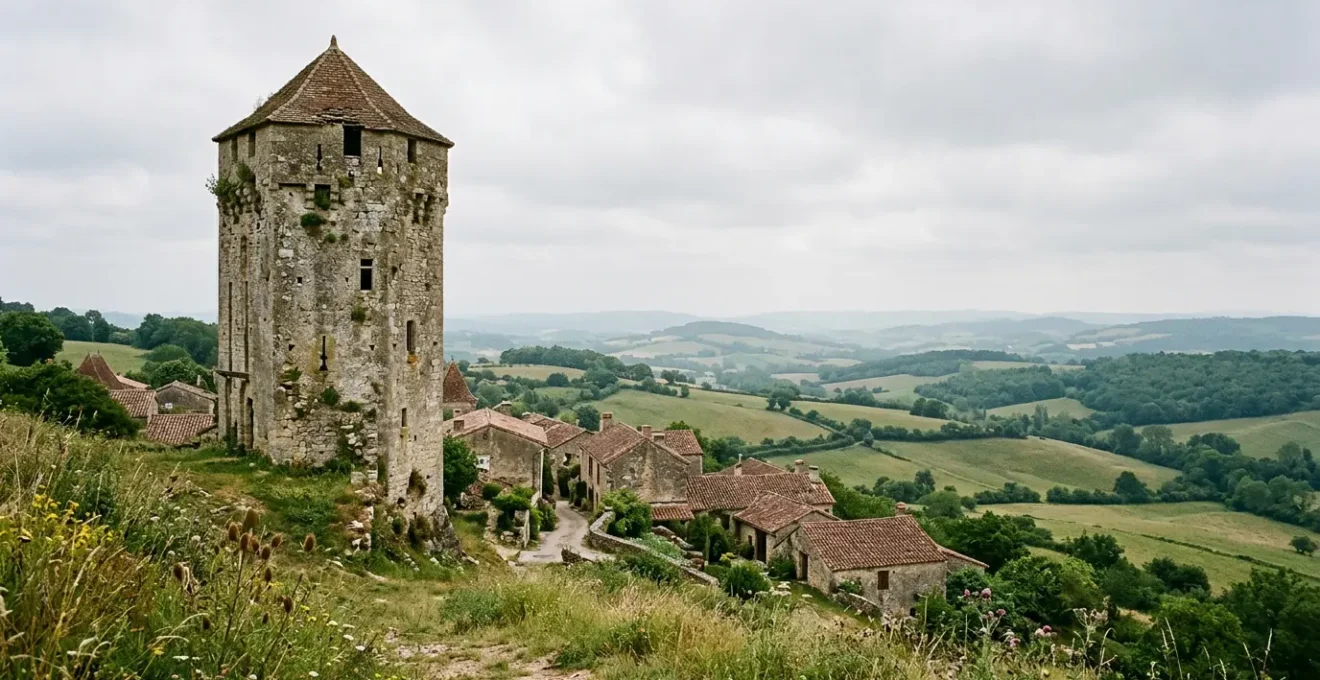
The answer to this question lies in a single, powerful concept: the difference between authenticity and restoration. When you encounter a small, partially ruined castle in a forgotten corner of the French countryside, what you are experiencing is historical patina. The weathered stone, the overgrown ramparts, the visible decay—these are not flaws; they are the unfiltered, tangible evidence of time’s passage. This structure has not been curated for a visitor’s gaze. It simply is. It wears its history openly, allowing your imagination to connect directly with its past without an intermediary.
Conversely, many famous national monuments have undergone extensive, and often idealized, restoration. The most influential figure in this movement was the 19th-century architect Eugène Viollet-le-Duc. His philosophy, which has shaped countless iconic sites, is a crucial lens through which to view French heritage. As he himself wrote in his “Dictionnaire raisonné de l’architecture française”:
Restoring an edifice does not mean maintaining, repairing or remaking it, it means re-establishing it in a complete state that may never have existed at a given moment.
– Eugène Viollet-le-Duc, Dictionnaire raisonné de l’architecture française
This is the “Viollet-le-Duc Effect“: the creation of a romanticized, often factually inaccurate, version of the past. These picture-perfect castles and cathedrals can feel less historic because, in a sense, they are. They are a 19th-century idea of what the Middle Ages should have looked like. The small town castle, in its quiet imperfection, offers no such filter. It presents its story—fragmented, damaged, but honest—and trusts you to read it.
How to Find Castles and Historical Sites That Don’t Appear in Standard Guidebooks?
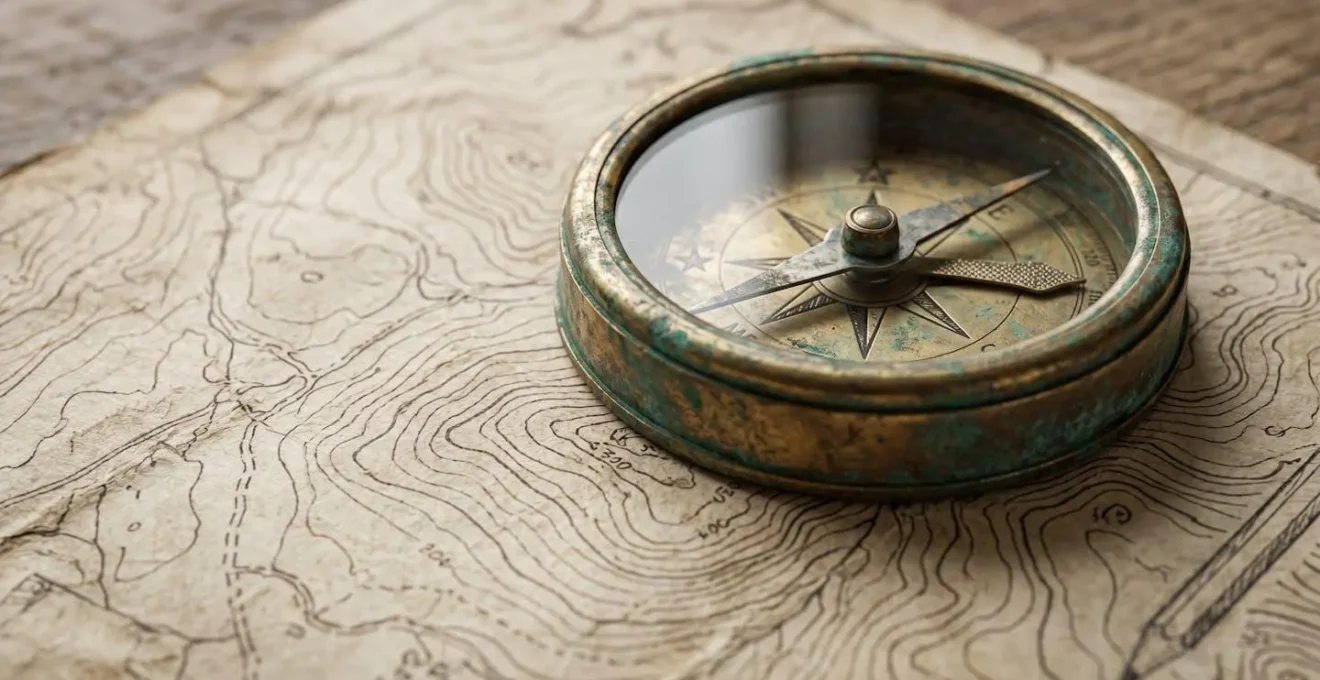
Moving beyond the guidebook circuit requires a shift in mindset from passive tourist to active historical detective. The tools for this new kind of “topographical archaeology” are freely available, allowing you to scan the French landscape for hidden treasures from your own home. It’s about learning to interpret maps, databases, and local resources as a series of clues leading to profound discoveries. Instead of looking for five-star reviews, you’ll be searching for the faint outline of a forgotten ruin or the name of a local preservation society.
This approach transforms travel planning from a chore into an adventure in itself. The thrill of identifying a potential site on a satellite map and then finding it in person, tucked away behind a village or at the end of an overgrown track, is a reward far greater than any pre-packaged experience. It forges a personal connection to the place before you even set foot there. The following checklist provides a concrete methodology for this rewarding process.
Your Action Plan: Unearthing Hidden French Heritage
- Identify Points of Contact: Before your trip, search online for the official website of the ‘Mairie’ (town hall) in your target region. Look for sections on ‘patrimoine’ or contact details for the local ‘association de sauvegarde du patrimoine’ (heritage preservation society). These are your primary sources for unadvertised local sites.
- Collect Raw Data: Go to the Fondation du Patrimoine website. Explore their project database, which lists thousands of privately-owned and lesser-known sites that have received preservation support. This is a directory of places cherished by locals, not marketed to tourists.
- Ensure Site Coherence: Use the IGN Géoportail (geoportail.gouv.fr), France’s national mapping service. Switch between the detailed topographic map and the aerial satellite views. Look for anomalies: unusual mounds, faint rectangular outlines in fields (‘fantômes de murs’), isolated chapels, and paths that lead to nowhere. Cross-reference these with your findings from the Fondation.
- Assess Emotional Resonance: Consult the online archives for the ‘Journées du Patrimoine’ (European Heritage Days). This will show you which exceptional private sites have opened to the public in the past. A site that opens only one weekend a year often holds a special, memorable quality.
- Create Your Integration Plan: Consolidate your findings into a custom Google Map. Pin each potential site, adding notes from your research. This becomes your personal, secret guidebook—a travel plan built on discovery, not just destination.
Medieval Fortress or Renaissance Château: Which French Heritage Type Rewards Exploration More?
The question of whether to prioritize a grim medieval fortress over an elegant Renaissance château is central to the quest for authenticity. While both offer immense historical value, they often reward the explorer in very different ways. The choice depends on what you seek: the raw narrative of power and survival, or the intricate story of art and society. For the seeker of unfiltered history, the medieval fortress often provides a more profound experience.
Fortresses were built for a brutal, singular purpose: defense. Their form follows function to an extreme degree. Because of this, they were often less subject to the whims of fashion and complete remodeling. When they fell into disuse, many were simply abandoned or quarried for stone, leaving behind skeletal remains that speak volumes about medieval warfare and life. Exploring the ruins of a fortress is a visceral experience; you can trace the lines of fire from an arrow slit, feel the defensive strength of a barbican, and imagine the harsh reality of a siege. They are texts of power, not comfort.
Renaissance châteaux, by contrast, were primarily statements of wealth, culture, and social standing. They were designed to impress, entertain, and provide luxurious comfort. While fascinating, they were also constantly updated to reflect changing tastes, with additions and renovations spanning centuries. They are more likely to be fully furnished and perfectly maintained, often feeling more like museums of decorative arts than historical structures. The experience can be one of admiration rather than immersion.
Case Study: Lacoste and the Power of Non-Restoration
The hilltop village of Lacoste in Provence offers a perfect example. Dominated by the ruins of a 16th-century castle, the village is remarkable for what it lacks: restoration. Unlike many neighboring villages polished for tourism, Lacoste has left its 12th-century walls and buildings largely untouched. This deliberate absence of intervention creates an atmosphere of profound authenticity and mystery. Walking its car-free lanes, one feels a direct connection to the past that a more “complete” but heavily restored site struggles to provide.
The “Historic” Site That’s Actually a Modern Reconstruction With Nothing Original
The pursuit of authenticity often leads to a fascinating and complex question: can something be genuinely historic if it’s entirely new? This paradox is at the heart of one of the most remarkable heritage projects in the world, one that fundamentally challenges our definitions. While we are often wary of reconstructions, some projects force us to consider that the truest form of preservation may not be of an object, but of a process.
This is the concept of authenticity of process. It suggests that historical understanding can be gained—and even surpassed—by recreating not just the object, but the methods, materials, and mindset used to create it. This is a form of experimental archaeology, where history is not just studied but re-enacted with academic rigor. It’s a living laboratory that produces tangible insights that dusty archives cannot.
By focusing on the “how” rather than just the “what,” this approach preserves invaluable, often lost, ancestral skills. It creates a direct lineage of knowledge, connecting modern craftspeople with their medieval counterparts in a way that simply looking at a finished building cannot. This type of site may be modern, but it is not a fantasy; it is a meticulously researched, full-scale experiment in bringing the past to life.
Case Study: Guédelon Castle and Experimental Archaeology
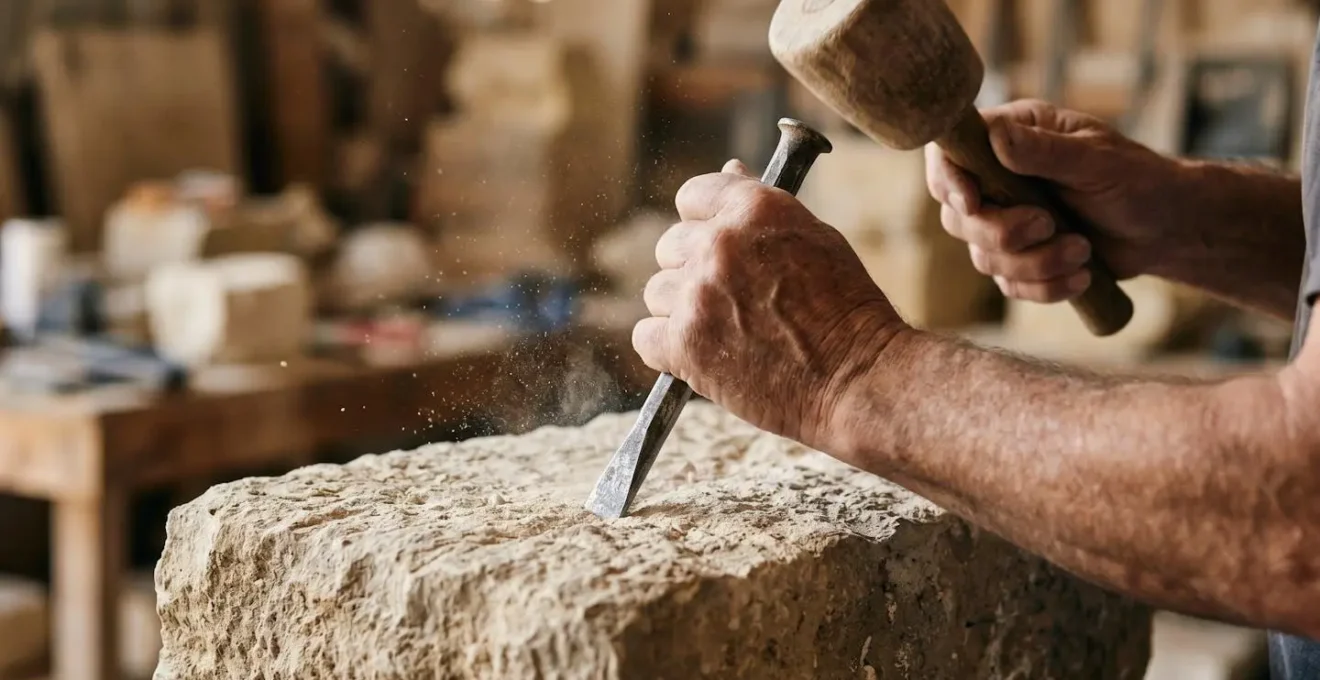
In the heart of Burgundy, a team of master craftspeople, historians, and volunteers has been building a 13th-century castle from scratch since 1997. At Guédelon Castle, everything is done using only the techniques and materials of the period. From the stonemasons shaping blocks by hand to the blacksmiths forging nails and the carpenters raising timbers with rope and pulley, the entire site is a dynamic demonstration of medieval ingenuity. Described as “the world’s biggest archaeological experiment,” Guédelon provided crucial insights to engineers rebuilding Notre-Dame after the 2019 fire. It proves that a modern reconstruction, when rooted in authentic process, can be a vital repository of genuine historical knowledge.
When Are Remote French Historical Sites Actually Open for Visits?
Having successfully identified a remote, non-touristy historical gem, the intrepid explorer faces the final, often most frustrating, hurdle: finding it open. The predictable 9-to-5, seven-days-a-week schedule of major tourist attractions simply does not apply here. The reality of “petit patrimoine” (small-scale heritage) is governed by a completely different logic, one based on passion, not profit.
Many of these sites—small private castles, isolated chapels, local museums—are not commercial enterprises. They are labors of love, maintained and operated by their owners or, more commonly, by small, underfunded volunteer associations. Their primary purpose is preservation, not tourism. Public access is often a secondary consideration, fitted in around the daily lives and availability of the people who care for the place. This can lead to seemingly erratic opening times that can thwart even the most well-researched travel plan.
Understanding this reality is key to avoiding disappointment. The limited hours are not a sign of poor service; they are a direct indicator of authenticity. You are not a customer; you are a guest. The best strategy is to embrace this uncertainty and plan accordingly. Always check the official website of the Mairie (town hall) or the site itself for the most current ‘horaires’ (opening hours). If in doubt, a polite phone call can save a long drive. As a general rule, your best chances are during the peak summer months of July and August, often limited to weekend afternoons.
Many sites are not businesses but are run by passionate, underfunded volunteer groups. Their ‘opening hours’ are often just weekend afternoons in summer, dictated by volunteer availability.
– Tourism observation based on heritage site management patterns
How to Experience Genuine French Compagnonnage Craftsmanship Rather Than Museum Displays?
The soul of French heritage is not only found in stone and mortar, but also in the hands and minds of its artisans. For centuries, a unique system of apprenticeship and knowledge transfer has preserved the highest levels of craftsmanship: the Compagnonnage. This tradition, recognized by UNESCO as an Intangible Cultural Heritage, is a living link to the builders of the great cathedrals. Experiencing this “living heritage” offers an infinitely more profound connection to history than viewing a finished product in a museum.
The Compagnons are organized into guilds and travel across France—and now the world—on a “Tour de France” to perfect their skills under different masters. They are the keepers of ancestral techniques in stone-cutting, carpentry, ironwork, and dozens of other trades. To find them is to find history in action. It requires looking not for finished monuments, but for places where the painstaking work of creation and restoration is happening right now.
This is not about finding a tourist demonstration. It is about respectfully observing master craftspeople at work, recognizing the quiet dedication that has defined their tradition for a millennium. Seeking out these experiences requires a different kind of itinerary, one that follows the trail of active craftsmanship rather than historical battles. Here are three concrete ways to encounter this living tradition:
- Follow the Tour de France: Identify major monuments and cathedrals currently undergoing significant restoration. The scaffolding on a historic building is often a sign that Compagnons are at work. You can observe the distinctive quality of their craftsmanship and sometimes see their unique maker’s marks.
- Visit the Guild Houses: Seek out the official “Maisons des Compagnons” or training centers in cities like Paris, Bordeaux, Tours, and Lyon. These guild houses often have small, public exhibition spaces showcasing the “chefs-d’œuvre” (masterpieces) created by apprentices to prove their skill—objects of breathtaking complexity and beauty.
- Connect with Master Artisans: Look for workshops of artisans holding the title “Meilleur Ouvrier de France” (MOF), a prestigious national award for master craftspeople. Many MOF holders are spiritually and technically linked to the compagnonnage tradition. While not public attractions, many are proud of their heritage and may accept visits by polite appointment.
Key takeaways
- Authenticity lies in the un-restored “patina” of time, not in idealized 19th-century reconstructions.
- Use digital tools like Géoportail and heritage databases to become your own historical detective and find sites beyond the guidebooks.
- A site’s “liveliness” depends on its connection to a functioning community, not its number of souvenir shops.
Why Does One Medieval Village Feel Alive While Another Feels Like a Museum Set?
You have likely felt the difference. You walk into one “perfectly preserved” medieval village and are instantly charmed. You enter another, equally beautiful on the surface, and feel a distinct sense of hollowness, as if you’ve walked onto a film set after the actors have gone home. This feeling is not your imagination; it is the crucial difference between a living community and a “Museum-Village.” The key factor that separates them is almost always the overwhelming pressure of mass tourism.
A Museum-Village is a place where the historical fabric has become a mere backdrop for a tourist economy. The ancient buildings are still there, but their function has been hollowed out. The bakery that served the village for 500 years is now a souvenir shop selling plastic swords. The ground-floor workshop of a weaver is now a crêperie. The town’s residents have been pushed out by rising prices, replaced by seasonal workers. The village no longer exists for itself; it exists solely for the gaze of the visitor.
Mont Saint-Michel is perhaps the most extreme example. An architectural marvel and a place of deep historical and spiritual significance, its character is fundamentally altered by the presence of over 2.5 million visitors per year who throng its single narrow street, which is lined almost exclusively with tourist-focused businesses. The sense of pilgrimage is replaced by the experience of queuing.
In contrast, a village that feels “alive” is one that, despite its beauty and historical interest, still serves its residents. The presence of a functioning post office, a school, a butcher, and locals chatting in the square are all vital signs. It means the village has a purpose beyond tourism. The historical setting is integrated into the rhythm of daily life, not separated from it. It’s this ongoing, authentic utility that gives a place its soul and makes it feel real, vibrant, and truly alive.
Why Do “Medieval Villages” Full of Souvenir Shops Feel Less Medieval Than Quiet Hamlets?
The presence of a souvenir shop in a medieval square can feel like a jarring anachronism, a commercial intrusion that shatters the historical illusion. This feeling is rooted in the conflict between preservation and profit, and it forces us to look critically at what “authenticity” means in a modern context. Often, the most famous and visually stunning “medieval villages” are the ones that feel the least medieval, precisely because their perfection is a product of a complete, and sometimes deceptive, restoration.
The fortified city of Carcassonne is a prime case. Left in ruins, it was saved by a colossal 19th-century restoration project led by none other than Eugène Viollet-le-Duc. The result is breathtakingly cinematic, but its historical accuracy is debated. As one analysis notes, the historic accuracy of his work may not be 100%, creating a fairytale version of a medieval city. When this romanticized backdrop is filled with shops selling mass-produced trinkets, the entire experience can feel like a theme park—impressive, but artificial.
However, the relationship between commerce and authenticity is not always so simple. Some places manage to strike a delicate, and fascinating, balance. They navigate the economic realities of tourism while retaining a core of genuine historical character that distinguishes them from purely commercial sites.
The Paradox of Mirepoix: Storybook Looks, Authentic Soul
The town of Mirepoix, with its stunning medieval square framed by timber-braced buildings, presents a fascinating paradox. It looks so perfectly French that visitors often feel they’ve stumbled into a fantasy. Despite the presence of souvenir shops and a carousel on its main square, the town retains a powerful underlying authenticity. It’s still a functioning market town for the surrounding agricultural region. This case illustrates that authenticity exists on a spectrum; the key is whether the tourism serves the town, or the town serves the tourism.
Ultimately, a quiet hamlet with its unrestored church, a single café, and a sense of lived-in reality will always feel more medieval than a polished tourist hub. The former has no story to sell; it simply continues its own. The latter has packaged its story for consumption, and in the process, has often lost the plot.
Armed with this new perspective, you are no longer a passive tourist. You are an active interpreter of history, capable of reading the subtle clues in the landscape. It’s time to plan your next journey not by the guidebook’s star ratings, but by the search for true historical patina and the quiet, authentic soul of France.