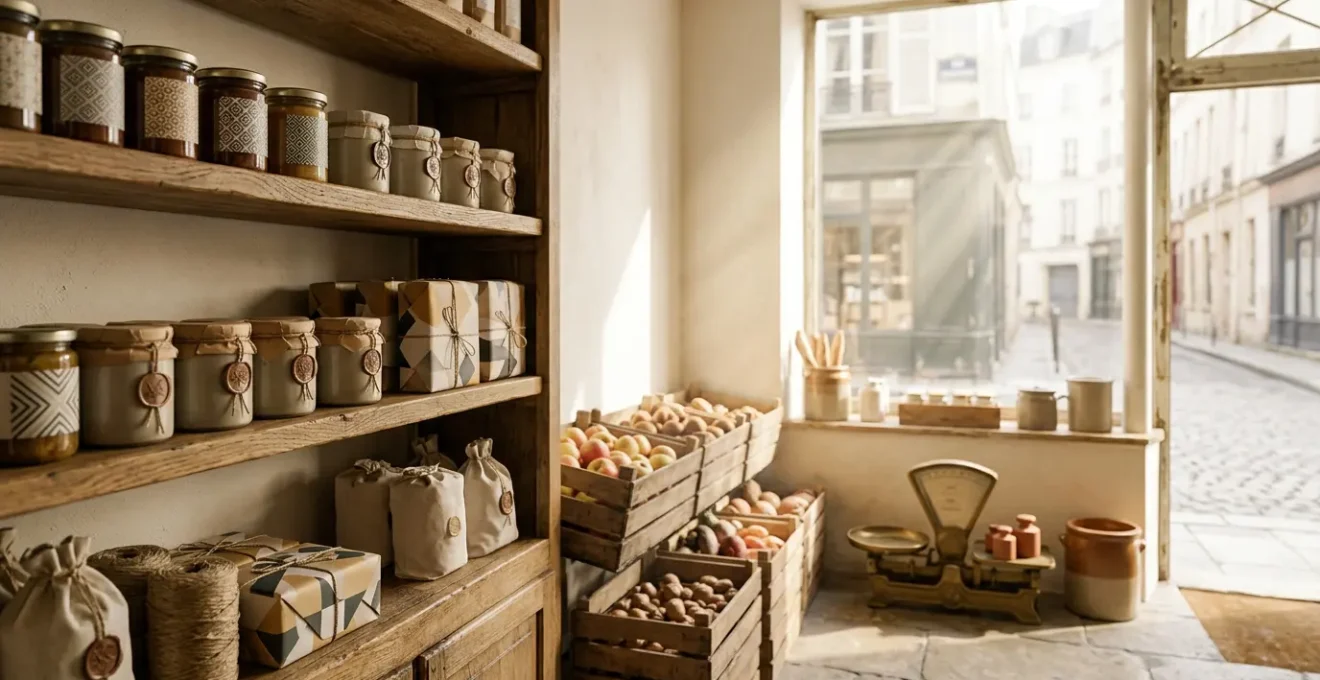
True French regional food isn’t just a label; it’s a direct, unreplicable result of its unique terroir and protected methods, which mass-produced versions simply cannot imitate.
- The taste difference comes from scientific factors like local microbes, specific animal breeds, and their unique diet—not just the recipe.
- Official labels like AOP codify these strict rules, but on-the-ground intelligence is essential to spot fakes and identify genuine producers.
Recommendation: To find authentic products, plan your visits around peak seasons, ask detailed questions, and learn to distinguish true producers from resellers at local markets.
You’ve experienced it before. You buy a wheel of “Camembert” in a Parisian supermarket or a jar of “Herbes de Provence” at a motorway service station, expecting to bring a piece of authentic France home to the UK. Yet, the taste is disappointingly flat, a pale imitation of the vibrant flavours you imagined. This is a common frustration for the discerning food explorer. The usual advice—”look for nice packaging” or “buy it in a pretty village”—misses the point entirely. The authenticity of a French regional product is not a matter of marketing, but a complex tapestry of place, process, and science.
Most guides will tell you to look for labels or visit a market, but they rarely explain the fundamental chasm between an industrial facsimile and a product of true terroir. The secret doesn’t lie in the recipe alone, but in the specific microbial life in the soil, the breed of cow grazing on unique alpine flora, and the legally-binding production methods passed down through generations. These are things that simply cannot be replicated in a factory or approximated for the tourist trade. The difference between a real Provençal ratatouille and a restaurant version isn’t just preference; it’s a fundamental divergence in technique and respect for the ingredients.
But what if the real key was not just to look for a label, but to adopt the mindset of a food cartographer? To learn how to read the landscape, decode the signals, and understand the non-negotiable link between a product and its specific geographical origin. This guide moves beyond the platitudes. It provides the tools to distinguish a genuine *produit du terroir* from its bland, ubiquitous impostor. We will explore the science that makes a product unique, the legal frameworks designed to protect it, and the on-the-ground intelligence needed to find foods you simply cannot taste anywhere else.
This article provides a detailed map for navigating the complex world of French regional foods. The following sections break down the essential knowledge you need, from understanding the science of taste to practical tips for your next trip.
Summary: A Food Explorer’s Guide to Authentic French Terroir
- Why Does Ratatouille Taste Different in Provence Than in UK Restaurants?
- Why Does the Same Recipe Taste Completely Different Depending on Its Region of Origin?
- Why Does AOP Certification Matter More Than Producer Marketing Claims?
- The Market Vendor Clue That Reveals They Buy From Wholesalers Rather Than Make Products
- The “Regional” Product Sold at Every Motorway Stop That No Local Would Actually Eat
- When Should You Visit Brittany to Buy Oysters at Peak Season Rather Than Storage?
- How to Structure a Week in Périgord to Taste Products You Cannot Find Anywhere Else?
- Corsican Charcuterie or Savoyard Cheese: Which Regional Specialty Travels Best to the UK?
Why Does Ratatouille Taste Different in Provence Than in UK Restaurants?
The difference between a vibrant, authentic Provençal ratatouille and the generic vegetable stew often served in UK restaurants comes down to one non-negotiable principle: respect for the individual ingredient. As culinary guides often point out, authentic technique demands a seemingly inefficient process. As one expert from Trafalgar notes, “Authentic Provençal ratatouille requires cooking each vegetable separately to its ideal point before combining them at the end.” This method ensures that the eggplant retains its creamy texture, the zucchini its slight bite, and the peppers their sweetness. Most restaurants, prioritizing speed and efficiency, simply stew all the vegetables together. The result is a homogenous, often watery mush where individual flavours are lost—a dish that shares only a name with its Provençal ancestor.
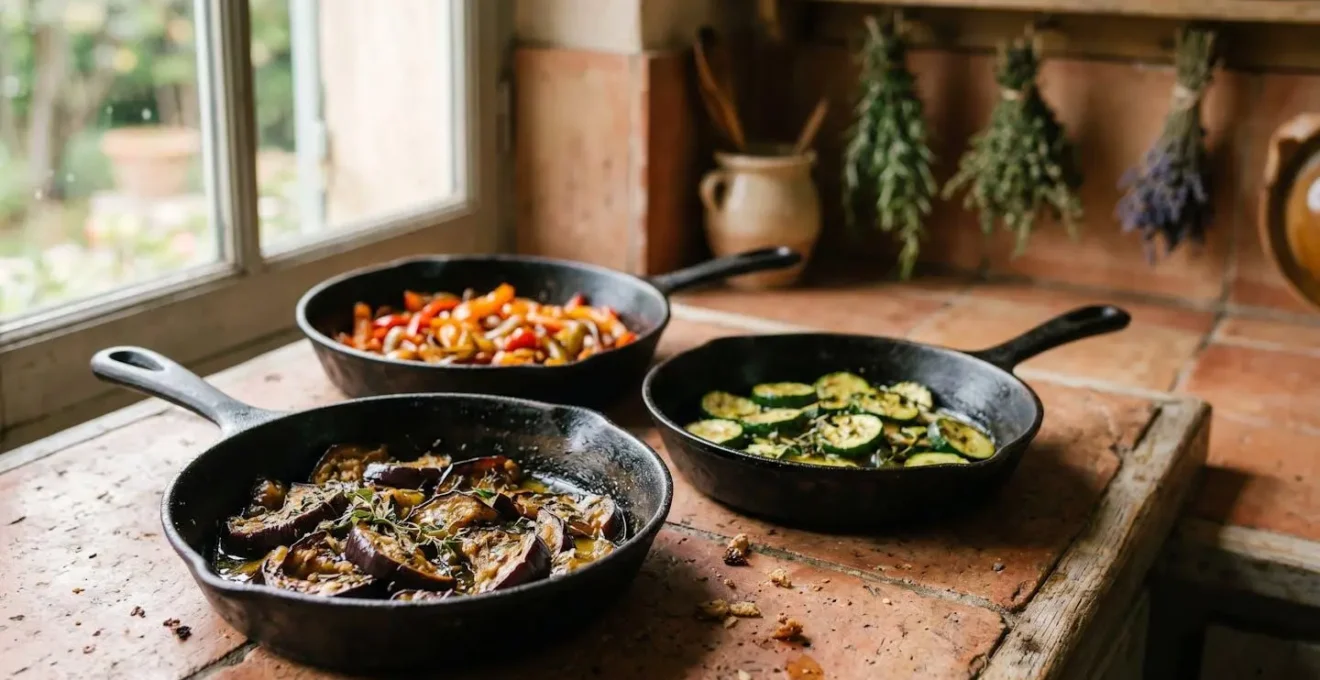
This commitment to a specific, often laborious, method is a hallmark of French regional cooking. It’s not just about a list of ingredients, but about a protected process. The city of Marseille provides a powerful example of this with its most famous dish. To protect it from cheap imitations, a group of chefs drew up the official Bouillabaisse Charter in 1980.
Case Study: The Bouillabaisse Charter
To differentiate true Marseillaise bouillabaisse from any other fish soup, the 1980 charter dictates a strict set of rules. It specifies that a minimum of four types of local rockfish, such as the essential rascasse (scorpionfish), must be used. Crucially, the serving method is also codified: the intensely flavourful broth is served first, accompanied by croutons, rouille, and garlic, while the whole poached fish are presented separately on a platter. This formalisation, detailed in culinary histories like a guide by Sticky Mango Rice, prevents restaurants from passing off a simple fish stew as the real thing, protecting the dish’s identity and connection to its port city origins.
This principle reveals a core truth for the food explorer: authenticity is found in the *how*, not just the *what*. A UK restaurant may use the same vegetables, but by abandoning the foundational technique, they create a fundamentally different dish. The flavour you seek is a direct result of a process born from a specific place and culture.
Why Does the Same Recipe Taste Completely Different Depending on Its Region of Origin?
Beyond preparation methods, the most profound reason for regional taste differences lies in a concept the French call terroir. Often translated simply as “land,” its meaning is far deeper, encompassing a combination of soil, climate, topography, and the human element. More importantly, modern science is now proving what French farmers have known for centuries: terroir is a measurable, microbial reality. The unique taste of a regional cheese or vegetable isn’t just poetic marketing; it’s the direct result of the specific microorganisms in that exact location.
Groundbreaking research provides quantifiable evidence for this. A 2015 study confirms that regionally distinct microbial populations affect crop phenotypes, proving that microbes are a key contributor to regional identity in food. This is not an abstract concept. It has tangible effects you can taste. For example, analysis of cheese from the Aosta Valley has shown that the unique aroma and flavour are imparted by specific chemical compounds from the local flora.
Research has confirmed that volatile organic compounds from Alpine clover (Trifolium alpinum) are transferred to the milk of Valdostana cows and can be detected in the final cheese, imparting a unique aroma and flavour. Furthermore, specific fatty acids and hydrocarbons from the clover serve as reliable chemical biomarkers.
– Wikipedia Terroir scientific analysis, Terroir: Environmental factors affecting crop phenotype
This is why a product’s origin is non-negotiable. You cannot make authentic Comté cheese in Normandy, even if you use the same recipe. The flavour of Comté is derived from Montbéliarde or French Simmental cows grazing on the unique wildflowers and herbs of the Jura Massif pastures. The local microbes in the air and the specific humidity of the regional cellars where it is aged are all irreplaceable components of its final taste profile. Replicating the recipe elsewhere creates a different product entirely, because the foundational terroir is missing.
Why Does AOP Certification Matter More Than Producer Marketing Claims?
Given that terroir is so crucial, how does a consumer know a product is authentic? This is where the French certification system, particularly the Appellation d’Origine Protégée (AOP), becomes an indispensable tool. An AOP label is not a mere marketing sticker; it is a legally binding guarantee that the product adheres to a strict set of rules known as the *cahier des charges* (book of specifications). This document codifies the terroir, ensuring every step of production—from the breed of animal to the aging process—is performed within a specific geographic area according to a traditional method.
This system provides a powerful defence against misleading marketing. A producer can put a picture of a mountain on their cheese label, but unless it has the AOP seal, there is no guarantee it comes from that mountain or was made using any traditional methods. The AOP is the consumer’s assurance of authenticity. As of 2022, France recognised the unique value of this system, with official data showing there were 489 products under AOC/AOP certification, a testament to the nation’s commitment to protecting its culinary heritage.
The Comté AOP Standard: A Tale of Two Cheeses
The *cahier des charges* for Comté AOP, as detailed by food journalists at Great British Chefs, perfectly illustrates this rigidity. The rules dictate that the milk must come only from Montbéliarde or French Simmental cows. These cows must graze in the high pastures of the Jura Massif, with a limited number of cows per hectare. Their feed cannot contain silage, and the use of antibiotics or growth hormones is prohibited. The unpasteurised milk must be turned into cheese within 24 hours at a dairy located less than 25 kilometres from the farm. Finally, the cheese must be aged for at least four months in a regional cellar. A cheese that fails any of these tests cannot be called Comté. This is why an industrially produced cheese with a “Comté-style” label will never taste the same—it is, by law and by terroir, a different product.
For the food cartographer, the AOP label is the first and most reliable landmark. It confirms that the product in your hand is not just an idea or a recipe, but a genuine expression of a specific place, protected by law against imitation. It is the ultimate rebuttal to vague marketing claims.
The Market Vendor Clue That Reveals They Buy From Wholesalers Rather Than Make Products
While AOP labels are your guide in a supermarket, the local French market presents a different challenge. Here, the romance of fresh produce and artisanal goods can sometimes mask a simple reality: many vendors are *revendeurs* (resellers), not *producteurs* (producers). They buy their goods from large wholesale markets like Rungis near Paris and simply resell them. To find true, direct-from-the-farm products, you must learn to spot the difference.
The key is to ask detailed, specific questions. A genuine producer will speak with passion and precision about their land and animals. Ask a goat cheese maker, “Where do your goats graze?” A real producer might describe the specific garrigue landscape their animals roam. A reseller will offer a vague, evasive answer like, “They come from a good supplier in the region.” The product itself also offers clues. Small producers have a limited, seasonal, and often imperfect-looking range. A stall groaning with every vegetable imaginable, including flawless strawberries in February, is an almost certain sign of a reseller sourcing from industrial supply chains.
France’s obsession with origin provides a cultural reflex that you can use to your advantage. As one analysis notes, “France has 46 protected AOP cheeses, which already tells you something: the country formalizes ‘where’ and ‘how’ a product should exist… It is not only about taste. It is about loyalty to place.” This “loyalty to place” is what you are looking for in a producer. Here are some key indicators to watch for:
- Look for branding: Look under the stall. Standardised, branded cardboard boxes often indicate wholesale sourcing.
- Examine uniformity: Perfectly calibrated produce of uniform size and shape suggests industrial origins, not the beautiful irregularity of small-scale farming.
- Assess the range: A cheese vendor with dozens of varieties from all over France is a curator, not a producer. A true farmstead cheesemaker will likely offer only a handful of types made from their own milk.
- Check the language: Look for signs proudly stating “Producteur” or “Vente Directe.”
By training your eye and engaging with vendors, you transform from a passive consumer into an active investigator. You learn to bypass the intermediaries and connect directly with the source, which is the very heart of authentic food exploration.
The “Regional” Product Sold at Every Motorway Stop That No Local Would Actually Eat
Nowhere is the gap between authentic product and tourist facsimile wider than at the French motorway service station, or *aire*. These are spaces designed for transient, international customers, and the “regional specialties” they sell are often engineered for this market. They are products that look the part but have been stripped of any genuine connection to a specific terroir or artisanal process. No local would ever buy them.
A classic example is the ubiquitous jar of “Herbes de Provence.” The packaging often features idyllic lavender fields and may be written in four or five languages—a dead giveaway that its target market is tourists, not locals. While real Thym de Provence (Provence thyme) has a protected PGI status guaranteeing its origin, these motorway mixes are frequently bulked out with cheaper, less flavourful herbs from various countries. The connection to the sun-baked hills of Provence is purely pictorial. The product is designed to be a souvenir, a caricature of a regional product rather than the real thing.
These tourist-trap products rely on ambiguity. They use legally vague terms like *recette de grand-mère* (grandmother’s recipe) or “traditional style” without any verifiable link to a place or certified process. They are placed alongside keychains and postcards, reinforcing their status as merchandise rather than genuine food. To avoid these traps, you need a critical eye and a simple audit process.
Your Action Plan: How to Spot a Tourist-Trap Product
- Check Packaging Language: Is it in four or more languages? This signals a mass-tourist product, not something made for local consumption.
- Examine Product Uniformity: Does every item look identical, as if made by a machine? Artisanal products have natural variations.
- Analyse Imagery: Look for generic graphics like cartoon chefs or the Eiffel Tower instead of specific details about the producer or farm.
- Verify Certifications: Is there an AOP, IGP, or Label Rouge logo? If not, question its authenticity. With nearly 500 AOP products in France, a lack of certification on a “regional” item is a red flag.
- Read the Fine Print: Vague terms like “grandmother’s recipe” or “Provençal style” are marketing ploys. Look for a specific town or region of origin.
By applying this simple checklist, you can quickly filter out the mass-produced fakes and save your money for products with genuine integrity. The motorway stop is a place for fuel and a quick coffee, not for authentic culinary discovery.
When Should You Visit Brittany to Buy Oysters at Peak Season Rather Than Storage?
Moving from general principles to specific regions, the quest for authenticity often becomes a matter of timing. In Brittany, a region synonymous with world-class oysters, the difference between a good oyster and an exceptional one can be a matter of days, or even hours. While many know the old adage of eating oysters only in months with an “r,” the true connoisseur’s secret is far more precise.
The freshest, most vibrant oysters are not simply those bought “in season.” They are the ones harvested in the immediate aftermath of a specific natural event. To taste an oyster at its absolute peak, you must align your visit with the tidal calendar. This is hyper-local knowledge that transforms your experience from merely good to unforgettable.
The best time is not just a season, but a specific day. Advise visiting an oyster farmer’s ‘cabane’ or a market stall in the days immediately following a ‘grande marée’ (spring tide), as this is when they harvest fresh stock and the product is at its absolute peak.
– Visit Dordogne Valley regional food guide, Food Specialities guide for the Dordogne Valley and French regional markets
The *grandes marées* are the highest tides of the month, occurring around the new and full moons. These powerful tides expose the oyster beds more fully, allowing farmers to access and harvest their stock easily. Buying from a producer’s stall in Cancale or a market in Vannes just after one of these tides means you are tasting an oyster that was in the sea very recently. Its flavour will be briny, sharp, and intensely alive—a stark contrast to an oyster that has been sitting in a storage tank for a week. At the stall, don’t be afraid to ask the producer directly: *”Quand est-ce que vous les avez sorties de l’eau?”* (When did you take them out of the water?). A proud producer will be happy to tell you.
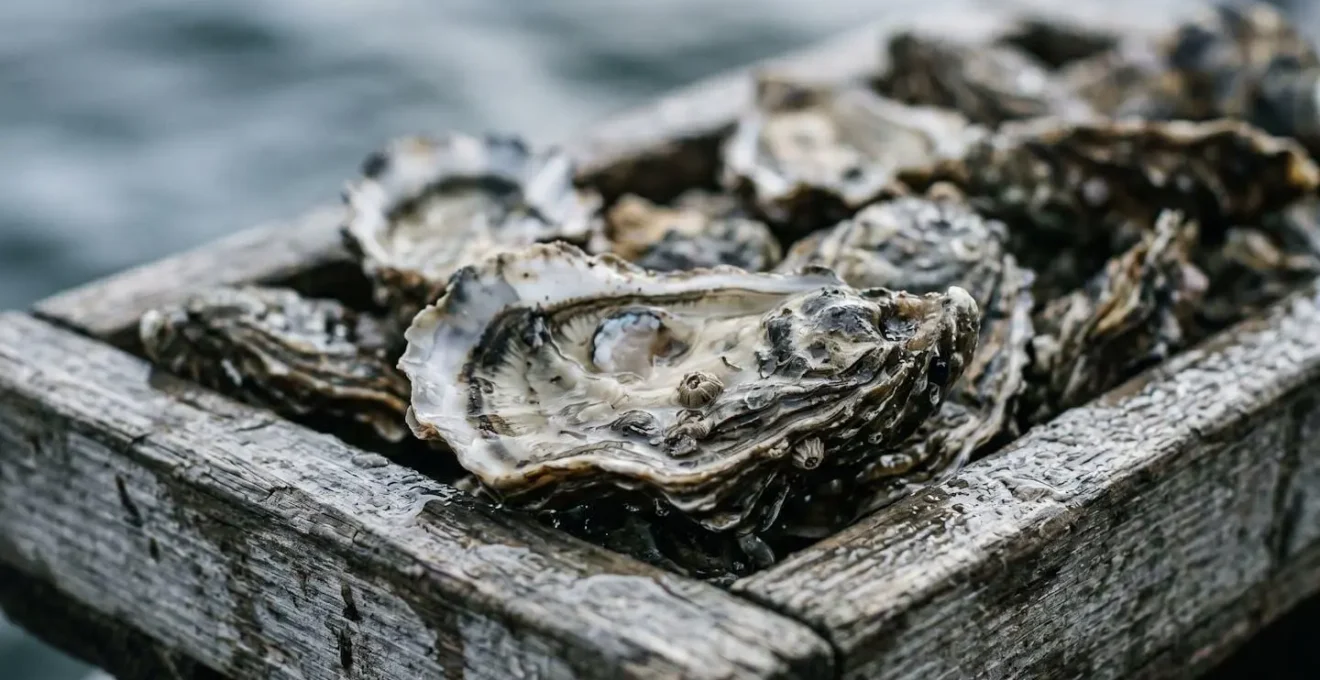
This is the essence of food cartography: understanding not just *where* to go, but *when*. It’s about synchronising your journey with the rhythms of nature and local production, ensuring the experience is as authentic as possible.
How to Structure a Week in Périgord to Taste Products You Cannot Find Anywhere Else?
For a truly deep dive into a region’s gastronomy, a longer, more structured approach is required. The Périgord (Dordogne) region, a heartland of French cuisine famous for foie gras, truffles, and walnuts, is the perfect canvas for planning a week-long culinary expedition. The goal is to find ephemeral, hyper-local products that never even make it to Paris, let alone the UK.
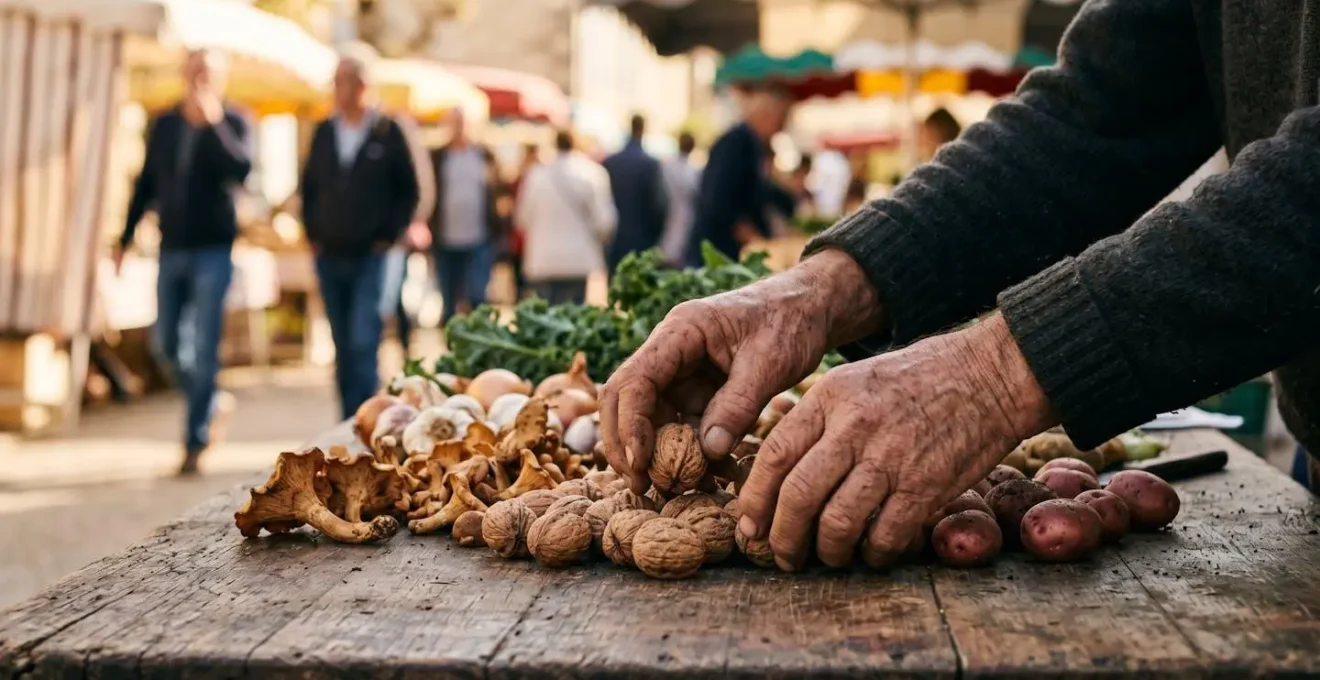
Your first stop should not be a market, but the local *Mairie* (town hall). Here, you can get a schedule for the authentic *marchés des producteurs* (producers’ markets), which are different from general markets that may have resellers. They can also provide maps like the *Route de la Noix du Périgord* (Walnut Route). This initial intelligence-gathering step is crucial. Next, time your trip to coincide with seasonal peaks. For the prized black truffle, this means visiting the famous Périgueux market between December and mid-February. For cep mushrooms, it’s the autumn. The region’s celebrated *marchés au gras* (fat markets for duck and goose products) run from November to March.
The cornerstone of your strategy should be seeking out *vente directe* (direct sales) from small producers. This is how you find things that are truly unique. Plan visits to duck farms for foie gras, walnut oil mills (especially on pressing days for an incredible sensory experience), and small goat cheese dairies that offer farm tours. These visits allow you to meet the producers, understand their process, and buy products at their source. Your targets should be the ephemeral goods that rarely travel: farm-specific *vin de noix* (walnut wine), bundles of fresh seasonal ceps sold by the roadside, or *magret séché* (dried duck breast) made by a family for their local market stall only. These are the true treasures of the Périgord.
This structured approach—combining official information, seasonal timing, and direct engagement with producers—is the most effective way to experience the authentic culinary soul of a region. It requires more effort than simply visiting tourist sites, but the rewards are infinitely more flavourful.
Key Takeaways
- Authenticity is rooted in protected methods and a specific, unreplicable terroir—not just a recipe.
- Official AOP/IGP labels are your most reliable guide, legally codifying a product’s origin and process.
- On-the-ground intelligence—like distinguishing producers from resellers and timing visits to peak seasons—is vital for finding true regional gems.
Corsican Charcuterie or Savoyard Cheese: Which Regional Specialty Travels Best to the UK?
After a successful trip spent hunting down authentic regional delicacies, the final question for the UK-based food explorer is a practical one: what can you legally and safely bring home? The answer has, unfortunately, become more complicated. For decades, British travellers returned from France with bags laden with cheese and saucisson. Today, the reality is starkly different.
Post-Brexit biosecurity regulations have had a significant impact on personal food imports. While you can still bring back items like wine, honey, or olive oil, the rules for products of animal origin are now extremely strict. This directly affects two of France’s most iconic specialties: charcuterie and cheese. According to the UK government, a ban on personal imports of meat and dairy from the EU is in place to protect against diseases like foot and mouth.
This means that, for personal use, bringing back that prized wheel of Reblochon from Savoy or the artisanal *figatellu* sausage from Corsica is no longer permitted. As official UK government biosecurity regulations state, travellers cannot bring meat from pigs, cattle, sheep, or goats, nor can they bring dairy products, into Great Britain from EU countries. This has been a source of great frustration for both travellers and the small French producers who relied on this trade.
We are proud when clients take home some souvenirs, maybe some wine, some cheese — a bit of France in their bags, so to speak. So we don’t understand [the ban], we are quite upset and it is bad news because, in terms of business, it’s not great.
– Parisian cheese shop owner, CNBC
So, which specialty travels best? In this new reality, neither does. The food cartographer’s journey must now focus on products that fall outside these restrictions: high-quality olive oils from Provence, Piment d’Espelette from the Basque Country, aged vinegars, artisanal mustards from Dijon, or unique walnut oil from Périgord. The experience of tasting authentic cheese and charcuterie must, for now, remain a memory of the place itself—a flavour tied inextricably to its terroir, to be enjoyed on French soil.
The ultimate takeaway is to shift your focus. Instead of trying to transport these perishable treasures, embrace the “food cartographer” mindset to savour them at their peak, in their place of origin, making the experience itself the most valuable souvenir of your travels.