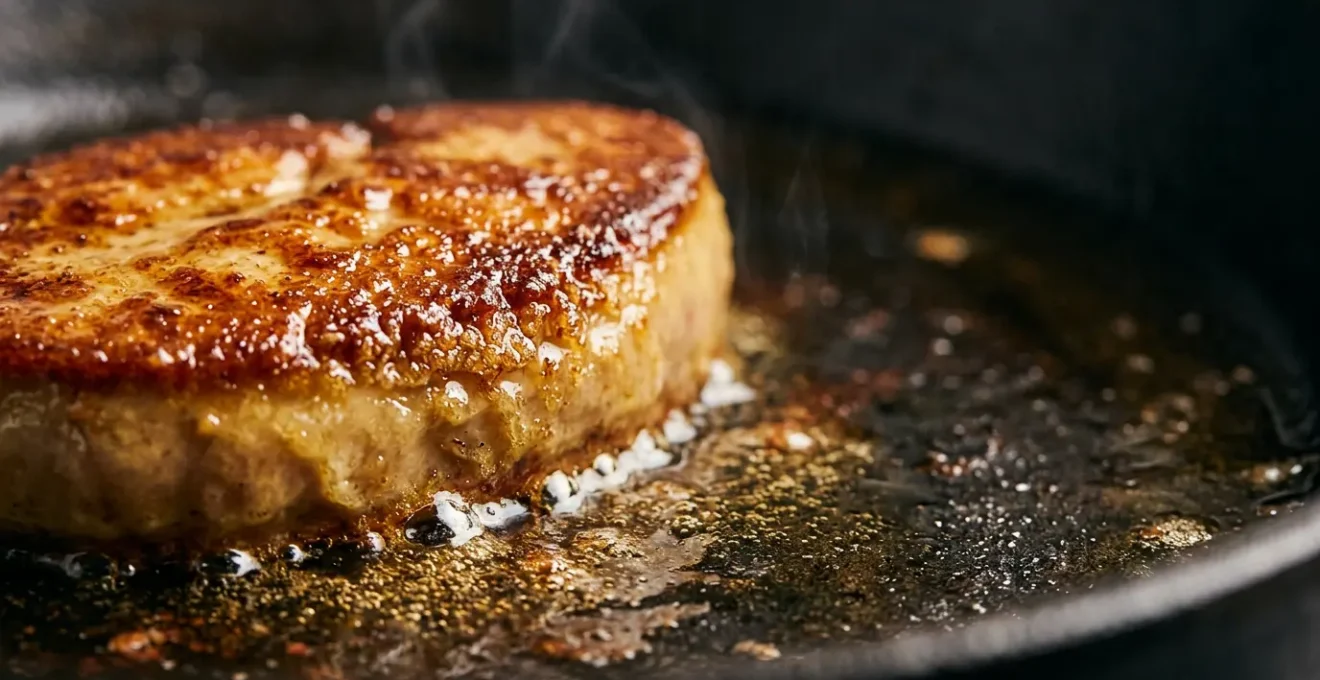
The common belief is that searing foie gras requires just a brutally hot pan. The reality is that success lies not in brute force, but in scientific precision. The frustrating melting you’re experiencing isn’t a cooking failure; it’s a predictable physics event. This guide reveals how to control temperature and timing to create a perfect Maillard crust *before* the delicate lipid cell structure collapses, giving you total control over the outcome.
There is perhaps no greater culinary disappointment than watching a beautiful, expensive lobe of foie gras disintegrate into a pool of liquid gold in your pan. You followed the instructions: a hot pan, a quick sear. Yet, instead of the glorious, crisp-edged, creamy-centred medallion served in fine dining establishments, you’re left with a shrunken, oily remnant. It’s a frustrating experience that can make even a confident home cook question their abilities, especially when the ingredient itself represents such a significant investment.
The conventional wisdom often boils down to simplistic advice like « get the pan hotter » or « be quicker. » While not entirely wrong, this advice misses the fundamental point. The transformation from a firm lobe to a perfect sear or a greasy puddle is not a matter of luck or culinary magic; it is a matter of physics and chemistry. Understanding what is happening at a microscopic level is the true key to unlocking restaurant-quality results. It’s not about the pan, but the plan.
This guide moves beyond generic instructions. We will deconstruct the process, revealing the science behind why foie gras melts and how to prevent it. We’ll explore the critical role of temperature, the art of preparation, and the strategic decisions around plating and pairing that separate a home attempt from a professional execution. By understanding the ‘why’ behind each step, you will gain the confidence to handle this luxurious ingredient not with fear, but with the precision of a seasoned chef.
This article provides a structured path from understanding the problem to mastering the execution. Explore the sections below to build your expertise step by step.
Summary: Mastering the Art and Science of Pan-Seared Foie Gras
- Why Does 30 Seconds Too Long Turn Your Foie Gras Into an Oily Pool?
- How to Temper and Score Foie Gras So It Sears Evenly Without Centre Remaining Cold?
- Pan-Seared or Terrine: Which Foie Gras Preparation Impresses More at Dinner Parties?
- The Bread Choice That Overpowers £60 Worth of Foie Gras With Toast Taste
- When in Your Menu Sequence Should Foie Gras Appear for Maximum Impact?
- Why Does Your Puff Pastry Go Soggy Despite Perfect Oven Temperature?
- Why Do French Tables Look More Elegant With Less on Them?
- Why Does Expensive Foie Gras Often Taste Liver-y When Exceptional Versions Taste Silky?
Why Does 30 Seconds Too Long Turn Your Foie Gras Into an Oily Pool?
The catastrophic melt of foie gras is not a failure of the ingredient, but a misunderstanding of its structure. Foie gras is an emulsion—a delicate matrix of fat held within liver cells. Think of it not as a solid block of butter, but as a microscopic honeycomb filled with liquid fat. Your goal is to brown the exterior (the Maillard reaction) without causing the honeycomb walls to collapse and release all their contents. This collapse is known as rendering.
The critical error is almost always excessive or prolonged heat. A pan that is too hot, or contact that is too long, doesn’t just sear the surface; it sends a shockwave of thermal energy deep into the lobe. The cell walls rupture, the fat liquefies, and what was once a structured, silky ingredient becomes a puddle. Thirty seconds is an eternity when this process begins. The key is to apply just enough heat, for just enough time, to create a crust while gently warming the interior.
This process is a race: you want the Maillard reaction to win before rendering takes over. As culinary experts point out, the consequences of losing this race are dire for the flavour profile.
An overheated pan can also melt the fat very rapidly out of the liver. The result is an unpleasant combination of tastes transferred to the foie gras coming from the burned sugar and the strongly oxidated fats.
– Culinary expert analysis, The Art of Foie Gras – Gilded Fork
The image below illustrates this delicate transition. The goal is to achieve the surface browning seen on the right, while preserving the internal structure seen on the left. It’s a balance of controlled violence against a delicate structure.
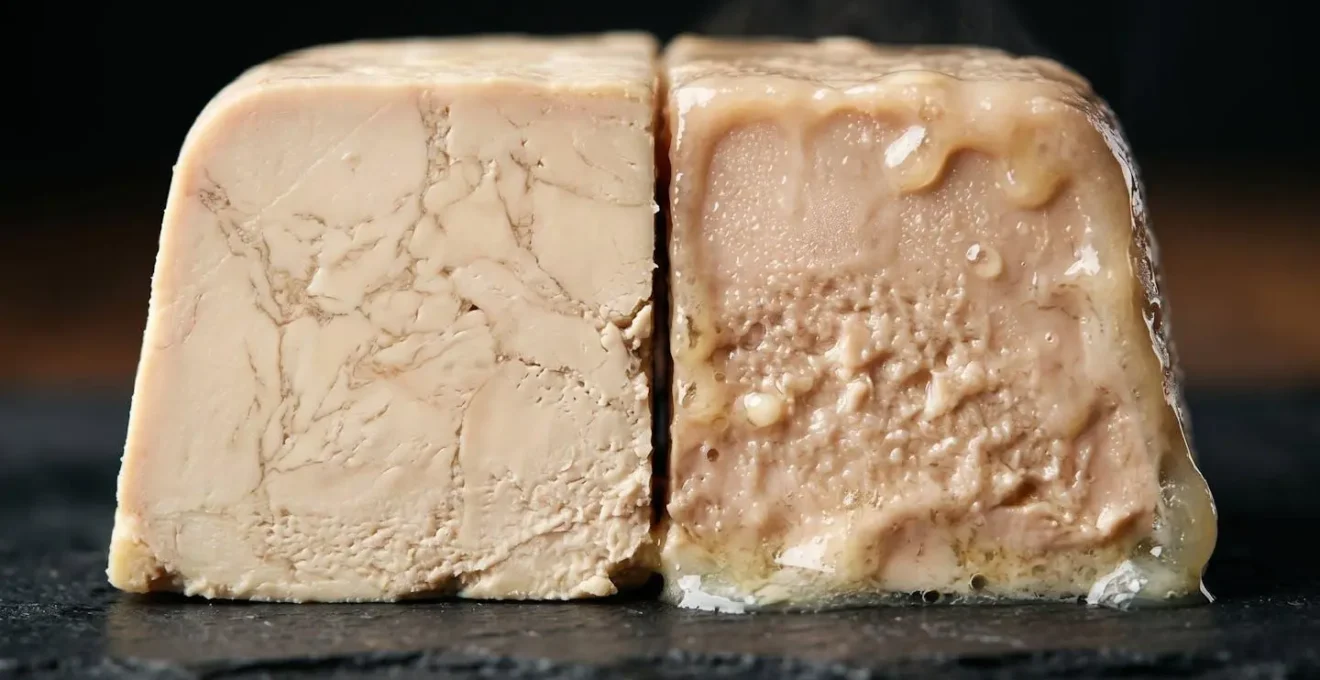
Understanding this balance is the first step toward mastery. You are not just cooking; you are managing a controlled melt, aiming for a perfectly timed result where the surface is crisp and the interior is just warmed through, maintaining its integrity.
How to Temper and Score Foie Gras So It Sears Evenly Without Centre Remaining Cold?
If uncontrolled heat is the primary enemy, then thermal shock is its accomplice. Placing a frigid-cold slice of foie gras into a searing hot pan is a recipe for disaster. The exterior will either burn before the interior has a chance to warm, or it will melt away as you wait for the center to lose its chill. The result is a cold, hard core and a greasy, overcooked outer layer. The solution is a two-part preparation process: tempering and scoring.
Tempering is the crucial, yet often skipped, step of allowing the foie gras to sit at room temperature for about 15-20 minutes before cooking. This simple action removes the deep chill, allowing the heat from the pan to penetrate more evenly and quickly. It dramatically reduces the cooking time needed, which in turn minimises fat loss. A tempered slice cooks uniformly, yielding a warm, creamy center instead of a cold, dense one. Culinary experts often recommend targeting an optimal internal temperature of 50-55°C (122-131°F) for the perfect creamy texture, a target far easier to hit with a tempered piece.
Scoring is the second part of the equation. By cutting a shallow cross-hatch pattern into the surface of the foie gras, you are creating micro-channels. These channels serve two purposes: they help the fat render out in a more controlled manner, and they prevent the slice from curling and buckling as it cooks, ensuring even contact with the pan. This technique, combined with proper tempering, gives you the control needed for a perfect, even sear.
Your Action Plan: The Two-Stage Tempering and Slicing Method
- Initial Tempering: Remove the entire foie gras lobe from the refrigerator. Let it rest at room temperature for 15-20 minutes. This removes the deep chill and makes clean slicing possible without tearing.
- Precision Slicing: Run your knife under very warm water and wipe it clean before each and every slice. This heats the blade, allowing it to glide through the delicate structure like a scalpel, creating perfect, un-smeared cuts.
- Calibrate Thickness: Cut the slices to a generous thickness of 1.5 to 2 inches (3-4 cm). Thicker slices have more structural integrity and are less prone to overcooking or falling apart during the sear.
- Controlled Scoring: Using the hot knife, make shallow (about ⅛ inch deep) cross-hatch cuts on one side of each slice. These micro-channels are your control mechanism for fat rendering.
- Final Rest: Once sliced and scored, place the portions back in the refrigerator for 10 minutes. This firms up the outer fat just enough to ensure it hits the hot pan in a solid state, guaranteeing a better initial crust.
Pan-Seared or Terrine: Which Foie Gras Preparation Impresses More at Dinner Parties?
The choice between serving pan-seared foie gras or a classic terrine is not just a culinary decision; it’s a strategic one that defines the entire experience for both you and your guests. Neither is inherently « better, » but they offer vastly different experiences in terms of host stress, guest perception, and textural pleasure. Understanding these differences allows you to choose the method that best suits the occasion and your desired hosting style.
Pan-seared foie gras is all about high-impact theatre. It is cooked at the last minute, filling the air with an incredible aroma. The sight and sound of the searing process create a sense of drama and immediacy. It presents you, the host, as a confident, skilled cook performing in real-time. However, this comes at a cost: it demands your full, undivided attention at a critical moment of the dinner party, chaining you to the stove while your guests are waiting.
A foie gras terrine, on the other hand, is the epitome of quiet confidence. It is prepared two to three days in advance, its flavours left to meld and deepen. On the night of the party, your work is already done. Serving it is a calm, elegant affair of simply slicing and plating. This method frees you to be fully present with your guests, embodying the effortless grace of a seasoned host. While it lacks the live-action drama of searing, its perfectly smooth texture and profound, developed flavour offer a different kind of luxury.
The following table, based on an in-depth comparison of preparation styles, breaks down the strategic considerations for your next dinner party.
| Criterion | Pan-Seared Foie Gras | Terrine Preparation |
|---|---|---|
| Preparation Time | 30-60 seconds per side (last minute) | Made 2-3 days ahead, fully prepared |
| Host Stress Level | High – requires precise timing and attention | Low – completed in advance, zero last-minute panic |
| Guest Perception | High theatre – live cooking, aroma, drama | Quiet confidence – elegant presentation |
| Host Availability | Limited – must focus on cooking | Full – host can be present with guests |
| Texture Profile | Hot, crispy exterior with warm creamy interior | Cold, smooth, sliceable with uniform texture |
| Serving Style | Individual plated medallions | Chilled slices on bread or toast points |
| Ideal Grade | Grade A (firm, aesthetically perfect) | Grade A or B (imperfections disappear when cooked) |
The Bread Choice That Overpowers £60 Worth of Foie Gras With Toast Taste
After mastering the perfect sear, the next critical error is to serve your magnificent creation on the wrong vessel. Serving a delicate, £60 foie gras on a slice of heavily toasted, aggressively flavoured sourdough is a culinary tragedy. The assertive char, strong sour notes, and abrasive texture of a rustic loaf will completely overwhelm the subtle, buttery nuances of the foie gras. You don’t taste the luxury ingredient; you taste the toast.
The principle here is one of harmony, not competition. The ideal bread is a supporting actor, not a star. Its role is to provide a gentle textural contrast and a neutral or complementary flavour platform. This is why classic pairings are so enduring. A lightly toasted slice of brioche, with its own high butter and egg content, creates a « fat-on-fat » synergy that is sublime. The two textures meld beautifully. Similarly, a slice of pain d’épices (gingerbread) offers a gentle, warming spice that complements the richness without overpowering it.
The goal is a carrier that is warm and yielding, not hard and crumbly. The texture should be soft enough to give way with the foie gras, creating a single, harmonious bite rather than a jarring, scraping sensation on the palate. Choosing the right bread is the final act of respect for a magnificent ingredient.
Case Study: The Science of Textural Pairing
An analysis of classic culinary pairings reveals the science behind the brioche choice. The goal is to match textures. The melting point of foie gras is just above body temperature, meaning it liquefies in the mouth. A hard, crunchy toast creates a textural clash. However, a gently toasted brioche or pain d’épices, which is still soft in the center, provides a perfect platform. Its slight chew and warmth meld with the melting foie gras, creating a seamless, luxurious mouthfeel. The analysis warns specifically against heavily charred sourdough or rye, as their carbonised and sour notes create a flavour conflict that masks the delicate umami of the foie gras.
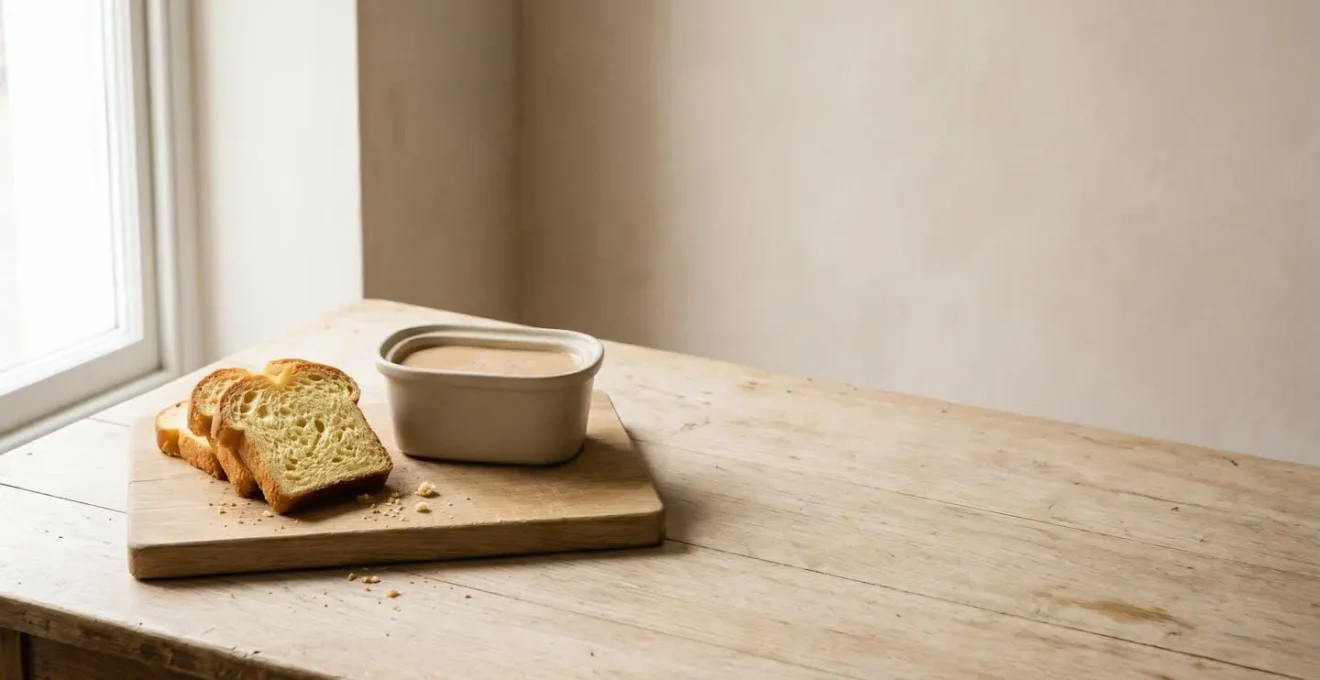
This image captures the essence of the ideal pairing: simplicity, quality ingredients, and a focus on texture and harmony, allowing the foie gras to remain the star.
When in Your Menu Sequence Should Foie Gras Appear for Maximum Impact?
Positioning foie gras in your menu is an act of palate choreography. Because of its intense richness, its placement is not arbitrary; it’s a strategic decision that can either elevate the entire meal or prematurely exhaust your guests’ taste buds. Serving it at the wrong moment can diminish its impact and dull the appreciation for the courses that follow. There are several classic and effective strategies to consider.
The most common and arguably safest placement is as a standalone appetizer or first course. Served after apéritifs, the palate is clean and receptive. In this position, the foie gras makes a bold, powerful statement, immediately setting a luxurious tone for the meal. It’s crucial here to manage portion sizes. A smaller, more intense portion of 2 to 3.5 ounces per person delivers a memorable impact without overwhelming the diner, leaving them eager for what’s to come.
A more advanced technique, suited for a multi-course tasting menu, is to use a tiny portion of seared foie gras as a savoury interlude. Placed after the main course but before the dessert, it acts as a bridge between the savoury and sweet worlds. Often paired with a touch of sweetness like aged balsamic or a fruit reduction, it resets the palate and provides a final, decadent flourish before the meal’s conclusion. This requires confidence but demonstrates a high level of culinary sophistication.
Here are the primary strategic options for menu placement:
- The Palate Opener: Serve seared foie gras as the very first course after drinks. This allows its rich flavour to be the star on an unadulterated palate, before any other richness can fatigue the taste receptors.
- The Traditional Appetizer: Position it as a distinct appetizer course, typically served over simple greens or with classic toast points and a sweet-and-sour accompaniment (like fig jam or balsamic glaze).
- The Main Course Accent: Use a small medallion of foie gras as a decadent garnish on top of a lean protein, such as a filet mignon (the classic Tournedos Rossini) or duck breast. Here, it functions as a rich, flavourful sauce.
- The Pre-Dessert Bridge: For the truly ambitious, a tiny sliver served after the main course with a sweet element acts as a surprising and sophisticated transition to the final dessert course.
Why Does Your Puff Pastry Go Soggy Despite Perfect Oven Temperature?
The frustration of a soggy-bottomed puff pastry shares a common root with the disappointment of melted foie gras: a failure to control moisture and temperature transfer. Many cooks blame the oven temperature, but the true culprit is almost always internal moisture steaming the pastry from within before it has a chance to set and rise. This is a powerful analogy for understanding precision cooking.
Puff pastry is a lamination of countless fine layers of dough and butter. When it hits the oven, the water in the butter turns to steam, pushing the layers apart to create the signature light, airy, and crisp texture. However, if the filling is too wet or cold, a different process occurs. The moisture from the filling turns to steam inside the pastry shell, making the dough layers wet and gummy before they can cook and crisp up. The heat of the oven is fighting a losing battle against an internal steam bath.
Case Study: The ‘False Bottom’ Phenomenon
A professional baking analysis identifies the ‘false bottom’ phenomenon as a primary cause of sogginess. The bottom of the pastry, insulated by the baking sheet, cooks last. Meanwhile, any liquid from the filling pools at the bottom, effectively boiling the pastry base instead of baking it. The solution is twofold: first, pre-cook any wet fillings and allow them to cool completely before assembly. Second, ensure a blast of intense, direct heat from below by using a pre-heated baking stone or an inverted baking sheet. This sets and crisps the bottom layer immediately, creating a barrier against any residual moisture. This principle of blasting a surface with initial high heat to create a seal is directly parallel to the technique required for a perfect foie gras sear.
Just as a dry surface is essential for searing meat, a dry interior is essential for crisp pastry. The parallel is clear: whether you are searing foie gras or baking a pithivier, mastery lies in controlling temperature and moisture, not just applying heat. You must prepare the ingredient (tempering the foie gras, pre-cooking the filling) and manage the heat application (a hot pan for searing, a hot stone for baking) to achieve the desired textural transformation.
Why Do French Tables Look More Elegant With Less on Them?
The elegance of a French table setting lies in a philosophy of « less is more, » a principle that can seem counterintuitive in an age of abundant decoration. While other styles might pile on centerpieces, chargers, and multiple forks, the traditional French approach achieves its chic aesthetic through intentionality and subtraction. Every single item on the table has an immediate purpose for the current course. Anything not required is absent, creating a sense of visual calm and order.
This tradition, with roots in the French art de la table dating back to the 17th century under Louis XIV, was perfected with the adoption of « service à la russe » in the 19th century. In this style, courses are brought to the table sequentially, rather than all at once. This transforms the meal into a performance. The table is set, cleared, and reset for each act—the appetizer, the main, the cheese, the dessert. This dynamic process ensures the table is always perfectly, and minimally, set for what is about to be served. The host’s actions of clearing and placing become part of the elegant choreography of the meal.
The visual elegance comes from two key elements: precise alignment and negative space. Cutlery is perfectly aligned at the bottom, forming a crisp, straight line parallel to the table’s edge. Glasses are arranged in a precise order. This geometric precision, combined with the empty space on the table, signals control, confidence, and above all, respect for the food. The uncluttered surface ensures that when a plate, such as your perfectly seared foie gras, arrives, it is the undisputed star, not just another item in a crowded field.
The Philosophy of Subtraction
Traditional guides on French table setting emphasize that elegance is derived from subtraction. The host’s role is to anticipate what is needed for the immediate course and remove everything else. This creates a dining experience that feels guided and considered. The negative space on the table isn’t empty; it’s filled with anticipation for the next course. This approach elevates the meal from simple consumption to a curated experience, where the table setting itself tells a story of order, elegance, and focus.
Key Takeaways
- It’s Physics, Not Magic: Foie gras melts because of lipid cell collapse. Your goal is to create a crust faster than the internal structure can render.
- Preparation is Paramount: Tempering to room temperature and scoring the surface are non-negotiable steps to prevent thermal shock and ensure an even cook.
- Control Your Environment: Choose your bread and menu placement strategically. The accompaniments and timing are as important as the searing itself to protect and elevate the final product.
Why Does Expensive Foie Gras Often Taste Liver-y When Exceptional Versions Taste Silky?
You can execute every technique perfectly—tempering, scoring, searing—and still be disappointed by the final result if you start with the wrong product. A common complaint is a prominent, sometimes metallic, « liver-y » or « gamey » taste. This is not an inherent characteristic of high-quality foie gras; it is a clear indicator of a lower-grade product or, more specifically, imperfect processing. Exceptional foie gras should be buttery, nutty, and exquisitely silky, with no aggressive organ-meat flavour.
The primary culprit for that undesirable taste is residual blood. Foie gras lobes are interlaced with a network of veins. In the highest echelons of production, the process of « deveining » (déveinage) is a meticulous, time-consuming art. Top producers follow this with a careful soaking process, often in milk or lightly salted water, to purge any remaining impurities. This purification step is what separates a clean, sweet-tasting product from one that carries a gamey undertone.
A ‘liver-y’ or ‘gamey’ taste often comes from residual blood. Top producers have meticulous ‘deveining’ and ‘soaking’ (in milk or salt water) processes to purge these impurities, resulting in a cleaner, sweeter flavour.
– Culinary processing expert, Perfect Pan Seared Foie Gras – Forager Chef
When purchasing, look for Grade A foie gras. This is the highest quality, prized for its large size, firm texture, smooth appearance, and consistent ivory colour with no blemishes or bruising. According to quality standards, Grade A foie gras is characterized by a weight of 1-3 pounds with a firm, pale ivory color. This grade is specifically selected for preparations like searing where the lobe is the star of the show. Grade B and C lobes, which may be smaller or have more imperfections, are better suited for mousses or terrines where their appearance is less critical.
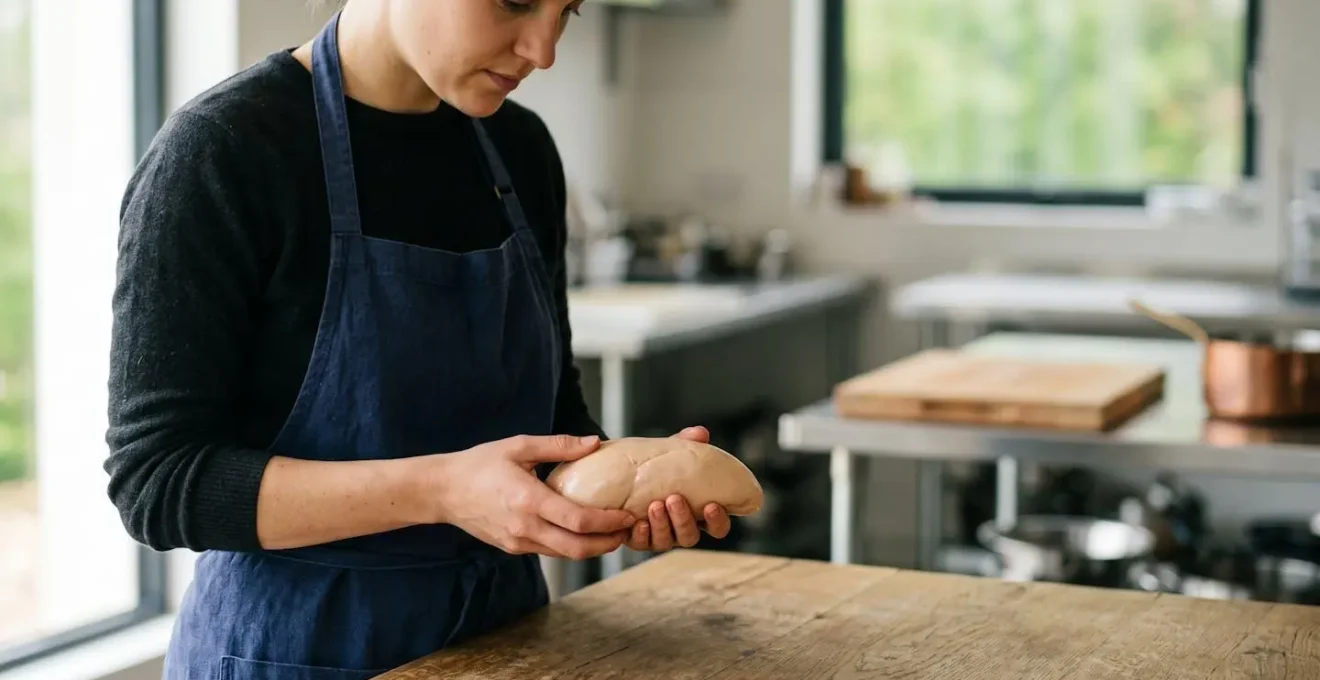
Ultimately, the quality of your raw ingredient sets the ceiling for your final dish. For a flawless pan-seared result, starting with a perfectly processed, meticulously deveined Grade A lobe is the final, and perhaps most important, piece of the puzzle.
Now that you understand the science of the melt, the precision of the preparation, and the importance of quality, you are no longer a hopeful amateur but an informed technician. You have the knowledge to transform a frustrating experience into a repeatable, triumphant success. The next step is to put this theory into practice in your own kitchen.