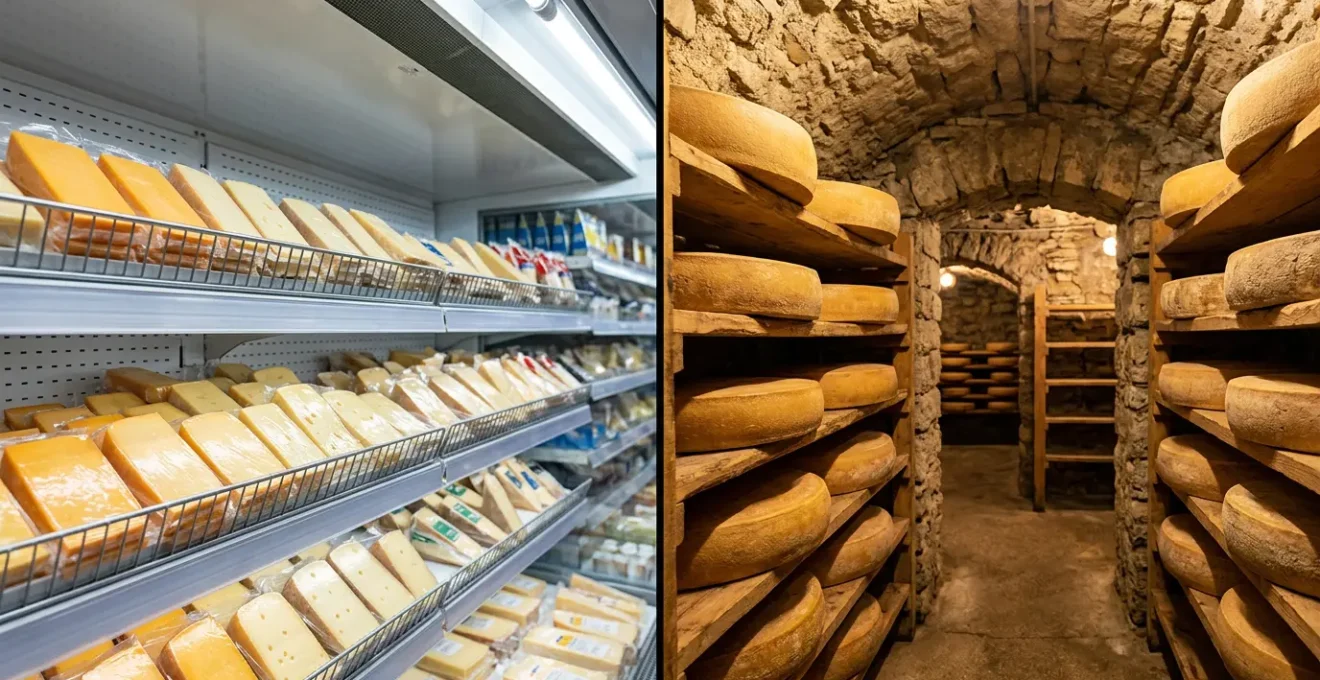
That ‘plastic’ taste from your supermarket Comté isn’t from the wrapper—it’s the taste of a broken promise, a severed chain of quality.
- True Comté flavour is born from a seasonal “chain of custody”: the specific wildflowers cows eat, the use of raw milk, and the masterful art of affinage.
- Supermarket logistics—aggressive cold chains, pre-cutting, and relentless light exposure—sever this chain, suffocating the cheese long before you buy it.
Recommendation: Stop just buying cheese and start sourcing it. The first step is to understand the language of affinage and learn to ask your cheesemonger the right questions.
You remember it vividly. That transcendent wedge of Comté you bought from a small fromagerie in the Jura mountains. It was nutty, slightly sweet, with hints of roasted butter and a crystalline crunch that lingered on the palate. You brought that memory home, only to be met with profound disappointment. The £15 piece you picked up from the brightly lit supermarket counter is a pale imitation: one-dimensional, waxy, and with a faint but unmistakable flavour of plastic. Your frustration is justified. You are not imagining things.
Most will tell you to simply “buy from a better shop,” but this advice is incomplete. It doesn’t arm you with the knowledge to discern the good from the mediocre. The truth is that authentic Comté is the result of an unbroken chain of quality, a seasonal and artisanal custody that begins in a mountain pasture and is supposed to end on your cheeseboard. The plastic taste is the flavour of that chain being broken, often at the final, most critical stage: the point of sale. This is not just cheese; it’s a living product, a concentrated expression of a place and a season.
To truly master this cheese, you must understand the non-negotiable links in that chain. We won’t just tell you where to buy it; we will teach you to see it as an affineur does. We will explore why summer and winter milks create entirely different cheeses, how the affineur acts as the true artist of flavour, and what specific questions you must ask to ensure you are buying a piece of authentic Jura, not a soulless commodity. It’s time to reclaim the experience you know is possible.
This guide will walk you through the essential knowledge needed to navigate the world of Comté. By understanding each step of its creation and preservation, you will be equipped to make informed choices and finally enjoy the cheese’s full potential, just as you did in its homeland.
Summary: Unlocking the Secrets of France’s Favourite Cheese
- Why Does Summer Comté Taste Completely Different From Winter Comté Despite Same Producer?
- How to Choose Comté Age for Cooking Versus Eating Based on Flavour Development?
- Marcel Petite or Fort des Rousses: Which Comté Affineur Produces Your Preferred Style?
- The Storage Mistake That Dries Out Your £15 Comté Within a Week
- When Do Affineurs Release 24-Month Comté and How to Secure Limited Batches?
- Why Does the Affineur Matter More Than the Farmer for How Your Cheese Tastes?
- Why Does AOP Certification Matter More Than Producer Marketing Claims?
- Why Does the “Same” French Cheese Taste Different at Every Shop You Visit?
Why Does Summer Comté Taste Completely Different From Winter Comté Despite Same Producer?
The story of a Comté wheel begins not in a dairy, but in a meadow. The fundamental difference between a summer (été) and winter (hiver) Comté lies entirely in the diet of the Montbéliarde and Simmental cows. This is the essence of terroir—the taste of a place. In summer, the cows graze on lush, biodiverse mountain pastures. A 1996 floristic study of the Comté terroir revealed an astonishing biodiversity, with up to 576 plant species identified across the region’s dairies. This rich diet of fresh grass and wildflowers is full of aromatic compounds.
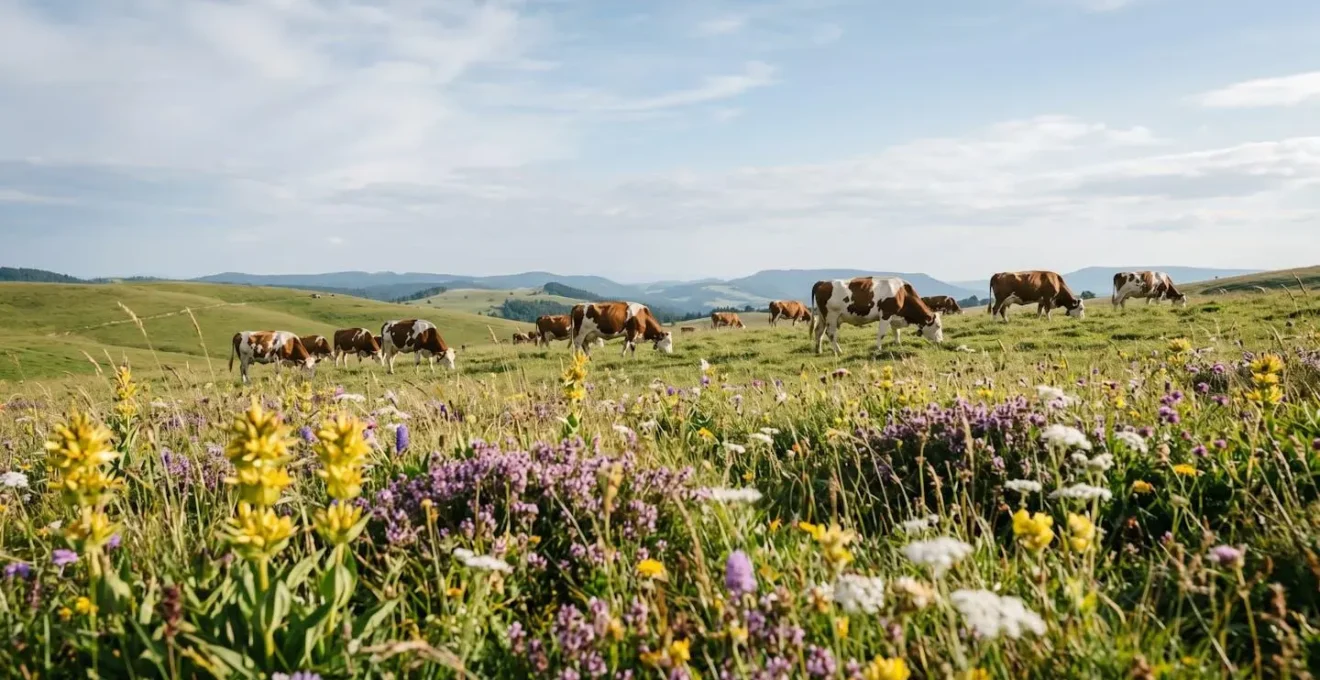
These compounds, especially terpenes, are transferred directly into the milk. As one cheese scientist explains, “Terpenes – Derived from fresh grass and wildflowers, contributing herbal, floral, and nutty notes.” This results in a summer Comté that is distinctly fruity, floral, and complex, with a deeper yellow paste due to the beta-carotene in fresh grass. In contrast, winter Comté is made from the milk of cows fed on locally harvested hay. While still a high-quality feed, it lacks the aromatic diversity of fresh pasture. This leads to a cheese with a paler, ivory-coloured paste and a flavour profile dominated by nutty, milky, and savoury notes. Neither is “better,” but they are profoundly different expressions of the same land.
Understanding this seasonal variance is the first step to becoming a true connoisseur. It allows you to choose a Comté that perfectly matches your desired flavour profile, whether it’s the vibrant complexity of summer or the comforting richness of winter.
How to Choose Comté Age for Cooking Versus Eating Based on Flavour Development?
After terroir, time is the most critical element shaping a Comté’s character. The aging process, or affinage, is a slow, controlled transformation where flavour and texture evolve dramatically. A young Comté is not simply a less flavourful version of an old one; it’s an entirely different cheese with its own distinct purpose. A young wheel, typically aged 4-8 months, is supple, creamy, and mild. Its flavour is dominated by sweet, lactic notes of fresh butter and warm milk. This pliable texture and gentle taste make it the ideal “cooking Comté.” It melts beautifully without becoming oily, lending a rich, savoury depth to classics like fondue, gratins, or a croque-monsieur without overpowering other ingredients.
As Comté continues to age, a process of proteolysis and lipolysis breaks down proteins and fats into more complex flavour compounds. The texture becomes firmer, denser, and more granular. A key sign of this maturation is the appearance of small, crunchy white specks within the paste. These are not salt crystals, but tyrosine crystals—amino acid formations that indicate a well-aged cheese. An “eating Comté,” typically aged 12 to 18 months or more, is where you find this complexity. The flavour profile deepens, revealing notes of toasted nuts, brown butter, caramel, and even subtle hints of fruit or spice. This cheese is meant to be savoured on its own, where its intricate character can be fully appreciated.
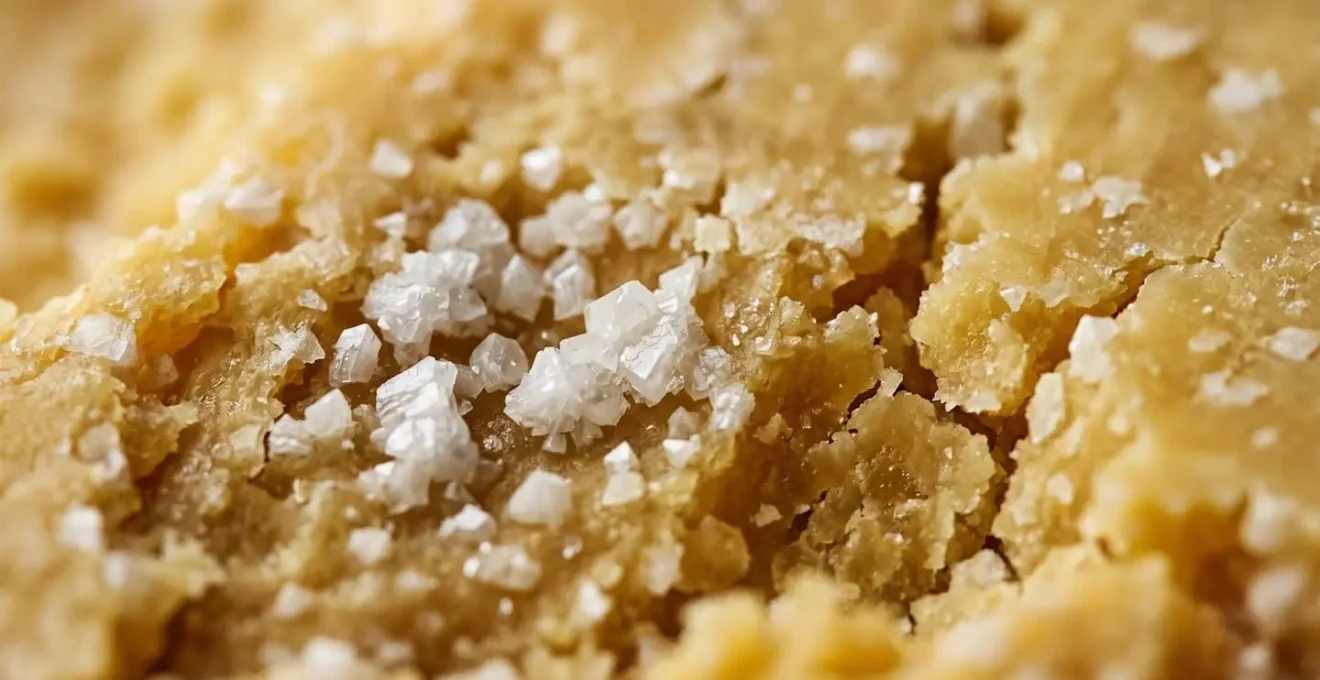
A Comté aged for 24, 36, or even 48 months becomes a powerful, intense experience. The flavours are concentrated and sharp, with pronounced notes of spice, leather, and roasted coffee. The texture is hard, crystalline, and crumbly. These venerable wheels are a delicacy for the dedicated enthusiast, often paired with a Vin Jaune from the Jura region. Using such a cheese for cooking would be a waste of its profound complexity and cost.
The rule is simple: for melting, choose youth and suppleness (under 10 months). For tasting, seek age and complexity (12+ months). By respecting the age, you respect the cheese.
Marcel Petite or Fort des Rousses: Which Comté Affineur Produces Your Preferred Style?
If the farmer provides the canvas, the affineur is the artist who paints the masterpiece. Two of the most revered affineurs in the Jura are Marcel Petite and Arnaud Juraflore (at Fort des Rousses), each with a distinct philosophy that results in a unique style of Comté. Understanding their differences is key to identifying your personal preference and sourcing cheese that consistently delights you. Your choice of affineur is as important as your choice of age or season.
The philosophy of Marcel Petite, who ages his cheeses in the stone walls of the Fort Saint-Antoine, is one of “slow aging.” They believe that a lower temperature allows the cheese to develop nuance and finesse without becoming overly aggressive. As one purveyor notes, their process, which typically lasts 12-24 months, produces a cheese celebrated for its notes of sweet cream, fresh nuts, and grassy undertones. Marcel Petite himself considered the 12-14 month maturation to be the perfect expression of Comté, achieving a dense, creamy texture with a beautifully balanced and sophisticated flavour profile. Their style is often described as elegant, refined, and complexly subtle.
The Marcel Petite Philosophy: Slow Aging at Fort Saint-Antoine
Marcel Petite ages Comté wheels at Fort Saint-Antoine, a former Franco-Prussian fort built into a hill, for 12-24 months. This unique environment produces cheese with notes of sweet cream, fresh nuts, and grassy flavors. The affineur considers the 12-14 month maturation the perfect representation of Comté, with a dense, creamy texture and a balanced, nuanced flavor profile that speaks of finesse.
In contrast, the Arnaud family at Fort des Rousses embraces a different, though equally masterful, approach. Their magnificent fort, a true cathedral of cheese, was once a military installation designed to house thousands of soldiers. Today, it ages over 100,000 wheels under meticulously controlled conditions. As Taste of Home reports, the Arnaud family runs this operation in the heart of the Haut Jura Natural Park. Their Comtés are often described as being more robust and powerful. They excel at producing older wheels, where the aging process coaxes out intense, concentrated flavours of spice, toasted hazelnuts, and deep umami. If you prefer a Comté with a bold, assertive, and lingering character, the style of Fort des Rousses may be your preference.
There is no “better” affineur, only different expressions of greatness. The next time you are at a quality cheesemonger, ask not just for the age of the Comté, but for the name of the affineur. It is the most important question you can ask.
The Storage Mistake That Dries Out Your £15 Comté Within a Week
You have successfully sourced a beautiful piece of 18-month, summer-milk Comté from a top affineur. You bring it home, and within days, it has lost its aroma and developed that familiar, disappointing plastic taste. The culprit is not the cheese; it is your fridge and the way you store it. The single biggest mistake is wrapping it tightly in plastic cling film. This suffocates the cheese, trapping moisture and ammonia, leading to off-flavours and a slimy rind.
More importantly, the “plastic” taste you perceive is rarely from the plastic itself. As cheese scientist Patrick J. Polowsky points out, what you are likely tasting is the result of a chemical reaction. He notes that “many people misattribute a plastic-y taste in cheese to the plastic wrap… What they’re actually tasting is light oxidation!” When the fats in cheese are exposed to light, especially the fluorescent lights of a supermarket display, they begin to break down, creating sharp, unpleasant, and distinctly ‘plasticky’ or stale cardboard-like flavours. A cheese that has sat under bright lights for days is already damaged before you buy it.
Proper storage is about finding a balance: protecting the cheese from drying out and absorbing other fridge odours, while still allowing it to breathe. The domestic refrigerator is a hostile environment—it’s too cold and far too dry. Simply leaving it in its original plastic wrap is a death sentence. To preserve your investment and the affineur’s hard work, a specific protocol is required.
Your Action Plan: The Comté Preservation Protocol
- Good: Unwrap the cheese from its original plastic. Rewrap it snugly in parchment or specialized cheese paper. This allows the cheese to breathe while offering a basic barrier.
- Better: First, wrap the cheese in parchment paper. Then, wrap this package loosely in aluminum foil. The foil blocks all light, preventing oxidation, while the loose wrap allows for minimal air exchange.
- Best: Place the parchment-wrapped cheese inside a plastic container. Add a small, damp paper towel to the container (not touching the cheese) to create a humid micro-climate. Leave the container lid slightly ajar to allow excess ammonia to escape.
By treating your Comté with this level of care, you are honouring the entire chain of quality that brought it to you and ensuring every slice tastes as magnificent as the first.
When Do Affineurs Release 24-Month Comté and How to Secure Limited Batches?
For the dedicated Comté lover, tasting a wheel aged for 24 months or more is a rite of passage. These are not everyday cheeses; they are rare gems, the pinnacle of the affineur’s art. Finding them requires patience, knowledge, and a good relationship with a quality cheesemonger. Out of the vast annual production, only a tiny fraction is deemed suitable for such extended aging. While the French Ministry of Agriculture notes that around 61,000 tonnes were commercialized in 2024, the vast majority of these wheels will never see their second birthday.
Only wheels with a perfect structure and the ideal initial flavour profile—typically rich summer milk cheeses—are selected by the affineur for the long journey. As the French Ministry of Agriculture clarifies, “The average aging duration for a Comté wheel is eight months… but can go up to 12, 15, 18… or even 24 months.” These older wheels represent a significant investment for the affineur in both time and cellar space. They are released not on a fixed schedule, but when the maître de cave (cellar master) deems them to be at their absolute peak. This often happens in the autumn and winter months, as cheeses made from the previous year’s rich summer milk reach their 24-month maturity.
So, how do you secure a piece of this liquid gold? The key is to move beyond passive shopping and become an active sourcer.
- Build a Relationship: Get to know your local independent cheesemonger. Let them know you are specifically interested in extra-aged Comté. They are the gatekeepers and will often set aside pieces for their most passionate customers.
- Ask in Advance: Start asking in late summer or early autumn. “Are you expecting any 24-month or older Comtés for the holiday season?” Good cheesemongers plan their inventory months ahead and will know what’s coming.
- Be Ready to Buy: When a wheel is cut, its quality is at its peak. Be prepared to buy a piece as soon as it arrives. These special wheels are often small batches and sell out quickly.
- Look for Specialist Importers: In the UK, importers like Mons Cheesemongers or The Fine Cheese Co. often bring in special wheels directly from top affineurs. Follow them on social media or subscribe to their newsletters for announcements.
Finding a great 24-month Comté is not about luck; it is about strategic, informed pursuit. It’s the final step in your journey from casual consumer to true connoisseur.
Why Does the Affineur Matter More Than the Farmer for How Your Cheese Tastes?
This may sound like heresy, but it is the fundamental truth of Comté: while a farmer’s work is essential, the affineur’s role is paramount in creating the flavour you love. The farmer and the fruitière (the village dairy where the cheese is first made) create the potential. They produce a young, unformed wheel of cheese—a “blank canvas” of raw milk. It has a basic, milky taste, but none of the complex nutty, fruity, or roasted notes that define a mature Comté. This potential is crucial, but it is just the starting point.
The transformation happens in the affineur’s cellars. It is here, over months or even years of patient care, that the cheese truly becomes Comté. The affineur is not a passive caretaker but an active artist who orchestrates the development of flavour and texture. As esteemed cheese expert Janet Fletcher states, “while the milk’s potential is set at the farm, over 90% of the final flavor complexity is developed during affinage.” This is not an exaggeration. The affineur and their cellar masters control the temperature, humidity, and airflow, cultivating a specific ecosystem of bacteria, yeasts, and molds on the rind that slowly work their way into the cheese’s heart.
The Affineur’s Touch: Flavor Development at Fort des Rousses
At Fort des Rousses, affineurs meticulously calibrate temperature and humidity to cultivate the specific bacteria needed for the richest flavor. The giant 80-pound wheels are regularly salted, washed, and scrubbed, often multiple times a week. They are methodically moved between different cellar rooms, each with slightly different conditions, to guide their maturation. This painstaking process creates the distinctive ‘morge’ (the moist, flavorful rind) and allows the interior paste to develop the signature complex flavours of Comté. This demonstrates how the affineur’s hand shapes the final product far more than any other stage of production.
They turn the massive wheels, rub them with salt, and decide the precise moment a cheese is ready to be sold. Two wheels, made on the same day at the same fruitière from the same milk, will become two completely different cheeses if sent to two different affineurs. One might become a subtle, creamy Marcel Petite Comté, while the other becomes a powerful, spicy Arnaud Comté. This is why knowing your affineur is the ultimate key to unlocking the world of this magnificent cheese.
So, while you must start with great milk from a great terroir, it is the affineur who truly makes the cheese. They are the guardians of flavour, the alchemists of the Jura.
Why Does AOP Certification Matter More Than Producer Marketing Claims?
In a world of slick marketing and buzzwords like “artisanal” and “farmhouse,” the AOP label on a wheel of Comté is your only steadfast guarantee of authenticity. AOP, or Appellation d’Origine Protégée (Protected Designation of Origin), is not a brand; it is a legally binding set of rules, a “cahier des charges,” that governs every single step of the cheese’s production. It is a shield that protects both the consumer from fraud and the producer from imitation.
When you see the green AOP seal and the signature Comté bell on the rind, you are guaranteed a product that adheres to an incredibly strict and ancient tradition. This legal framework dictates:
- The Geography: The milk must come exclusively from the Jura Massif region.
- The Cows: The milk must be from only Montbéliarde or French Simmental breeds, known for the high quality of their milk for cheesemaking.
- The Diet: The cows must be fed on natural pasture and locally grown hay, with no fermented feed or silage allowed. Each cow is guaranteed at least one hectare of pasture.
- The Milk: The cheese must be made daily from raw, unpasteurized milk. This is critical, as raw milk contains the native microflora essential for developing complex flavours.
- The Production: The milk must be transported to a local fruitière within a 25km radius and made into cheese within 24 hours of the first milking. No additives or colourings are permitted.
- The Aging: Every wheel must be aged for a minimum of four months on spruce boards within the designated region.
A producer’s pretty label might tell a story, but the AOP stamp provides a legally enforceable promise. As The Cheese Professor editorial team puts it, “AOP is the legal shield against fraud, ensuring the cow breed, their diet, the raw milk, and the geographical origin are correct.” Without this shield, a cheese could be made from pasteurized milk, from cows of any breed fed on silage, and aged for a few weeks, and still be called “Comté-style.”
It is the baseline, the non-negotiable starting point for quality. It doesn’t guarantee the cheese will be sublime—that’s the job of the affineur and the cheesemonger—but it guarantees it has the potential to be. Never buy a “Comté” without it.
Key takeaways
- Flavour is seasonal: Summer milk Comté is fruity and floral, while Winter milk yields nutty and roasted notes. Know which you’re buying.
- The affineur is the artist: They develop over 90% of the final flavour, making their identity more critical than the farm’s.
- Light is the enemy: The ‘plastic’ taste is light oxidation. Never buy pre-wrapped cheese that has been sitting under bright lights.
Why Does the “Same” French Cheese Taste Different at Every Shop You Visit?
You have now mastered the core concepts: terroir, season, age, and the affineur. You find two shops selling a 15-month, summer milk Comté from Marcel Petite. Yet, the cheese from the dedicated cheesemonger is magnificent, while the one from the high-end grocer is muted and bland. This is the final, crucial link in the chain of quality: the retailer. The journey of affinage does not end when the cheese leaves the affineur’s cellar. As cheese expert Janet Fletcher wisely notes, “A great cheesemonger with a proper cheese cave continues the affinage process, caring for the wheel. A supermarket’s cold chain and plastic wrap kills it.”
A specialist cheesemonger understands they are the final guardian of the cheese. They buy whole or large sections of wheels and store them in conditions that mimic the affineur’s cellar. They cut the cheese to order, minimizing its exposure to air and light. They know their product, can tell you when the wheel was cut, and can offer a taste. In contrast, a supermarket or deli, even a good one, treats cheese as just another SKU. The wheels are often pre-cut into small wedges, tightly wrapped in plastic, and left under harsh fluorescent lights for days. This environment is a trifecta of quality destruction: the plastic suffocates it, the light oxidizes it, and the aggressive cold deadens its flavour.
To navigate this final hurdle and ensure you are always buying cheese at its peak, you must become an active, inquisitive customer. Arm yourself with this list of questions for your cheesemonger. Their ability to answer them is a direct indicator of their quality.
- ‘What is the age of this specific wheel?’ (The difference between 12 and 18 months is immense).
- ‘Who is the affineur for this Comté?’ (This shows you understand that not all Comtés are created equal).
- ‘Is this made from summer or winter milk?’ (This signals your knowledge of terroir and seasonality).
- ‘When did you cut into this wheel?’ (The gold standard is within the last 2-3 days to ensure minimal oxidation).
If they can answer these questions with confidence, you are in the right place. If they look at you blankly, you know that despite the price tag, this is not where you will find the transcendent Comté experience you seek.
Now that you understand the entire chain of quality, it is time to take your rightful place in it. Seek out a true cheesemonger, engage them with these questions, and demand the quality this magnificent cheese deserves. Your palate, and the hardworking artisans of the Jura, will thank you for it.