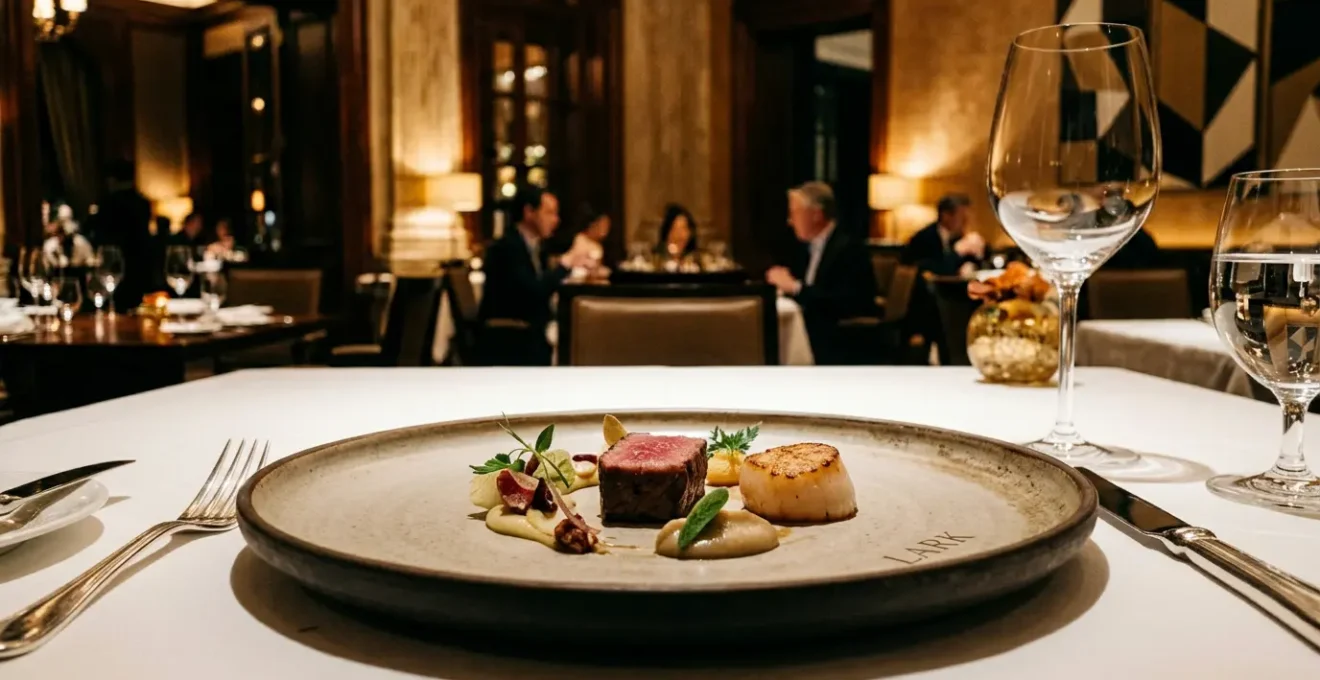
A starred restaurant’s success isn’t just the food; it’s about mastering the ‘game’ of dining that most guests don’t even know they’re playing.
- Disappointment often stems from an ‘expectation gap’ amplified by the star system itself, not poor cooking.
- Strategic choices in booking, timing, and menu selection can radically improve your experience.
Recommendation: Shift from being a passive customer to an informed player by understanding the context and communicating your intentions clearly.
You’ve saved up, booked months in advance, and dressed for the occasion. Yet, as you leave the lauded Michelin-starred restaurant, a nagging feeling of disappointment lingers. The food was technically perfect, the service polished, but the experience lacked the soul-stirring satisfaction you anticipated. This is a common story for many gastronomes. The prevailing wisdom blames inflated expectations or suggests it’s simply a matter of personal taste. But what if the issue is more structural?
The truth is that the world of fine dining operates on a set of unwritten rules and cultural contexts that are rarely explained to the diner. A one-star restaurant in Paris and a three-star in London are playing entirely different games, influenced by everything from real estate costs to the national culinary education system. Understanding this framework is the key to navigating the experience and avoiding the anti-climax. This isn’t about lowering your expectations; it’s about calibrating them with insider knowledge.
This guide moves beyond the generic advice. It deconstructs the mechanics of starred dining to empower you, the discerning diner. We will explore why a humble one-star can feel more satisfying than a famous three-star, how to choose a menu to avoid palate fatigue, and the critical booking mistakes that can ruin an evening before it even begins. By learning the rules of the game, you can stop being a passive spectator and become an active participant in crafting your own unforgettable dining experiences.
This article dissects the nuanced world of starred dining to provide you with a strategic framework for your next gastronomic adventure. The following sections offer a detailed roadmap to enhance your understanding and maximize your enjoyment.
Summary: Why Your Special Occasion Dinner at a Starred Restaurant Sometimes Disappoints
- Why Do Some One-Star Restaurants Feel More Satisfying Than Certain Three-Stars?
- How to Choose Your Menu at a Multi-Course Starred Restaurant for Maximum Satisfaction?
- Paris or Lyon Three-Stars: Which City Offers More Memorable Starred Dining Experiences?
- The Booking Mistake That Guarantees a Rushed Experience at Your Dream French Restaurant
- When Should You Book Starred Restaurants to Experience Peak Seasonal Menu Creativity?
- Why Can You Eat Michelin-Level Technique at Bistronomy Prices in Paris but Not London?
- The Dinner Party Mistake That Brands British Guests as Impolite in French Homes
- Why Does Bistronomy Food Taste Revolutionary in Paris but Pretentious When Copied in London?
Why Do Some One-Star Restaurants Feel More Satisfying Than Certain Three-Stars?
The paradox is familiar to many seasoned diners: a vibrant, soul-satisfying meal at a one-star restaurant can often leave a more lasting impression than a technically flawless but sterile experience at a three-star establishment. The reason is rooted in a psychological phenomenon known as the expectation-satisfaction gap. A three-star rating comes with the immense pressure of perceived perfection. Diners arrive expecting a life-altering event, a standard that is almost impossible to meet consistently. In contrast, a one-star is often seen as a place of burgeoning creativity, where a chef is taking risks and pouring their personality onto the plate.
This isn’t just anecdotal. Intriguing research analyzing 8,871 reviews from 87 Michelin-starred restaurants reveals that overall customer sentiment often decreases after an establishment gains a star, particularly affecting perceptions of service. The weight of the star elevates expectations to a point where any minor imperfection is magnified. As one study notes:
consumers tend to hold higher expectations for Michelin-starred restaurants, and accordingly, customer satisfaction will be negatively affected if one’s expectation is not met
– Chiang and Guo (2021), European Journal of Management and Business Economics
A one-star, therefore, often exists in a sweet spot. It has the technical prowess to earn Michelin’s respect but retains the freedom to be personal, dynamic, and even a little imperfect. It’s a space of passionate creativity rather than pressurised performance. The satisfaction comes not from flawless execution of a grand vision, but from connecting with a chef’s authentic, evolving journey.
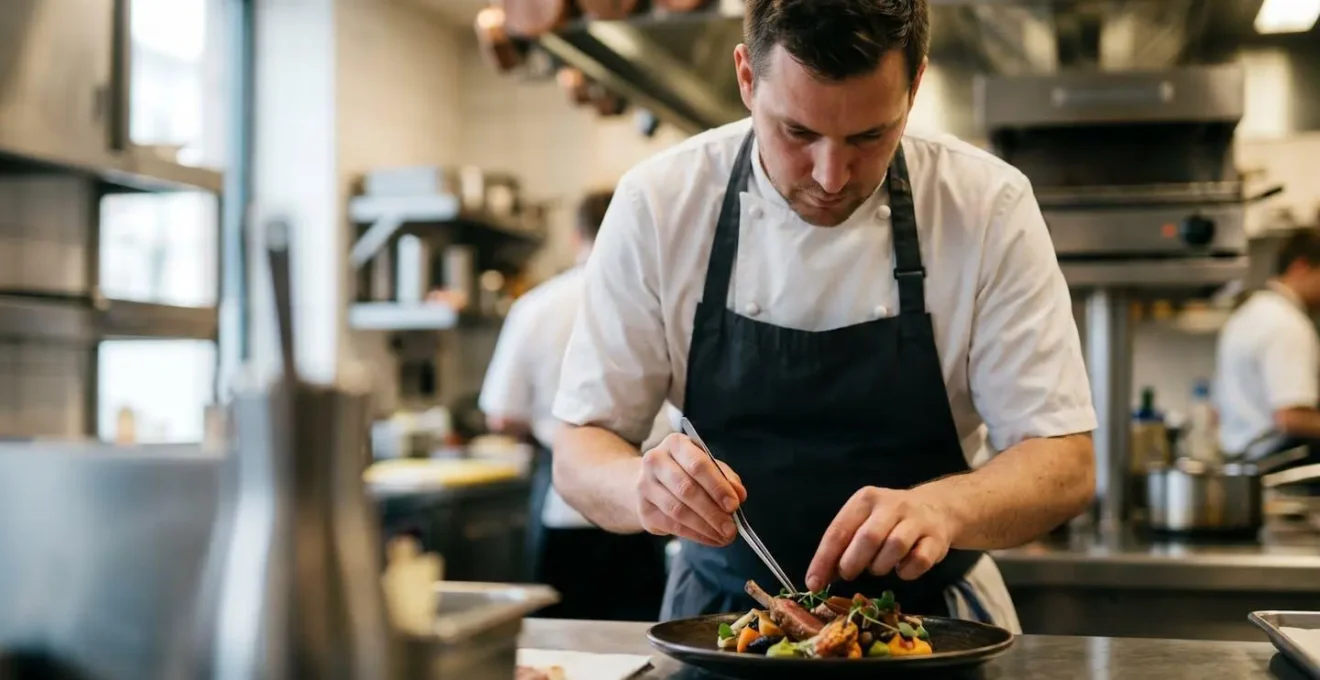
This visual of a chef, deeply focused in a bustling kitchen, captures the essence of the one-star experience. It’s about the energy, the craft, and the human element. When you book a one-star, you are often investing in a chef’s dream in progress, which can be far more emotionally resonant than visiting a museum-like institution that has already been perfected.
How to Choose Your Menu at a Multi-Course Starred Restaurant for Maximum Satisfaction?
You’re seated at a two-star restaurant, faced with two options: the five-course “Découverte” menu or the nine-course “Prestige” tasting journey. The instinct of a true gastronome is to go for the full experience, to not miss a single expression of the chef’s talent. However, this can be a strategic error that leads directly to diminished enjoyment. The culprit? Cognitive depletion and palate fatigue.
Every complex dish you taste requires mental effort. You are processing textures, identifying subtle flavours, and making connections. After a certain point, your brain simply gets tired. This isn’t a failure of your palate; it’s a well-documented psychological effect. A fascinating 2021 study in the Journal of Consumer Psychology demonstrates that cognitive depletion significantly reduces a consumer’s enjoyment of complex-flavoured foods. Essentially, the more decisions and sensory inputs you process, the less pleasure you derive from the next complex thing you encounter. By course seven of a nine-course marathon, you may be physically eating, but your ability to truly appreciate the chef’s artistry is compromised.
So, how do you choose for maximum satisfaction? First, be honest about your own state. Have you had a long, stressful day? Perhaps the shorter, more focused menu is the wiser choice. Second, trust the chef’s signature dishes. Often, the shorter menu is a “greatest hits” compilation, featuring the most confident and well-honed creations. The longer menu might be where the kitchen experiments more, which can be exciting but also less consistent.
The ultimate power move is to communicate with the sommelier or maître d’. Explain your preferences. “We love seafood and game, but are less keen on very rich sauces. Which menu would you recommend for us tonight?” This transforms the choice from a solo gamble into a collaborative effort, ensuring the restaurant guides you to the experience best suited for your enjoyment on that specific evening.
Paris or Lyon Three-Stars: Which City Offers More Memorable Starred Dining Experiences?
For a gastronome, choosing between a top-tier dining experience in Paris or Lyon is a delightful dilemma. Both cities are titans of French cuisine, but they offer fundamentally different philosophies of starred dining. The “better” experience depends entirely on what you seek: the polished perfection of a global capital or the deep-rooted soul of a gastronomic heartland?
Paris is the epicentre of haute couture cuisine. Its three-star restaurants are often grand institutions, housed in palaces or designed by world-famous architects. The experience is a performance of unparalleled luxury and precision. Here, global influences are seamlessly integrated, and the presentation is as much a part of the art as the flavour. A three-star meal in Paris is a statement, a brush with a globalised vision of perfection. It is often intellectual, breathtakingly creative, and designed to impress an international clientele.
Lyon, by contrast, is the keeper of the flame. Named the “World Capital of Gastronomy” in 1934 by the legendary critic Curnonsky, its culinary identity is deeply intertwined with its history and the richness of its surrounding region (Beaujolais, Bresse). While it boasts an impressive 20 Michelin-starred establishments, the spirit is different. Lyonnaise starred dining, even at the highest level, often feels more grounded, more focused on the sanctity of the product. The legacy of Paul Bocuse and the ‘Mères Lyonnaises’ (female chefs who established the city’s culinary reputation) lives on. The experience is less about deconstruction and more about the ultimate elevation of a perfect Bresse chicken or a local pike perch. It is cuisine with a powerful sense of place.
Ultimately, there is no single answer. For a breathtaking, art-gallery-like experience that showcases the pinnacle of modern culinary technique, Paris is unmatched. For a memorable, soulful, and deeply French experience that connects you to the very heart of gastronomy, Lyon provides a more profound sense of terroir and tradition. The most savvy diner doesn’t ask which is better, but which experience they are in the mood for.
The Booking Mistake That Guarantees a Rushed Experience at Your Dream French Restaurant
The single biggest, yet most common, booking mistake is treating the reservation as a mere transaction to secure a seat. In the world of fine dining, the booking process is the first step in a conversation with the restaurant. Getting it wrong, particularly by opting for the early “first seating” at a restaurant that operates two services, is the surest way to guarantee a rushed and impersonal evening. You become a logistical problem to be solved before the next wave of diners arrives.
A strategic booking is about shaping the experience before you even arrive. It signals to the maître d’ what kind of diner you are and what kind of evening you hope to have. By moving from a passive booker to an active strategist, you can significantly increase your chances of a relaxed, memorable meal. The key is to control the variables of time, space, and communication.
This involves more than just picking a date. It requires a conscious plan to position yourself as a valued guest who wishes to savour the full experience, not just occupy a table for 90 minutes. A few small adjustments in your booking approach can have a profound impact on the service and atmosphere you receive.
Your Action Plan: 5 Steps to Booking Like an Insider
- Dodge the First Seating Trap: For restaurants with two seatings, always book the later slot (e.g., 9:00 PM instead of 7:00 PM). Alternatively, choose a midweek evening, which is more likely to have a single, relaxed seating. This removes the pressure on the staff to turn your table.
- Specify Table Preferences: Use the reservation notes to politely request your ideal environment. Phrases like ‘une table au calme, s’il vous plaît‘ (a quiet table, please) or ‘nous préférerions ne pas être à côté de la porte‘ (we’d prefer not to be near the door) show you are a considerate diner.
- Communicate Your Intent: Add a simple, honest message to your booking. “Celebrating a special anniversary, we’d love to take our time and enjoy the full experience” immediately flags you as guests who should not be rushed.
- Book with Appropriate Lead Time: Secure weekend tables at one-star restaurants 2-4 weeks in advance. For two- and three-star establishments, plan several months ahead to get your preferred date and time, giving you maximum leverage.
- Execute a Post-Booking Confirmation: For a truly important occasion, a brief, polite phone call a week prior to your reservation to confirm details and reiterate your special requests builds a personal rapport with the maître d’ and reinforces your status as an anticipated guest.
When Should You Book Starred Restaurants to Experience Peak Seasonal Menu Creativity?
Many diners believe that booking a starred restaurant in the height of summer will guarantee a menu bursting with sun-ripened produce. While partially true, this approach misses the real moments of peak creativity in a top kitchen. True culinary innovation doesn’t happen when an ingredient is at its most abundant, but when seasons overlap, forcing chefs to create new and unexpected pairings.
The Michelin Guide itself places enormous value on consistency. According to the official Michelin Guide methodology, inspectors visit restaurants anonymously throughout the year—for lunch and dinner, on weekends and weekdays—to ensure the quality is unwavering. However, for the diner seeking not just consistency but a spark of genius, targeting specific windows in the culinary calendar is a powerful strategy. The goal is to book during moments of creative tension, not comfortable abundance.
These windows are when a chef is most inspired and challenged, often resulting in the most dynamic and memorable dishes appearing on the menu. Here are the key strategic times to book for peak creativity:
- Target the ‘Shoulder Seasons’: Book for late May/early June. This is when the last of the spring asparagus from Les Landes meets the first fragrant Gariguette strawberries. Or aim for late September/early October, when the end of summer tomatoes and peppers overlaps with the arrival of the first game and wild mushrooms (cèpes). This ingredient crossover is a playground for a creative chef.
- Leverage ‘Product Premieres’: Time your booking to coincide with the arrival of a highly anticipated seasonal product. This could be the third week of September for the launch of the revered Mont d’Or cheese, late November for the first intensely aromatic black truffles (Tuber melanosporum) from Provence, or April for the very first bunches of new-season asparagus. The kitchen’s excitement around these ‘premiere’ ingredients is palpable and infectious.
- Embrace the ‘Post-Holiday Lull’: Consider booking in mid-to-late January. After the festive rush, kitchens are calmer, more focused, and often use this period to test their most ambitious and innovative ideas for the year ahead on a smaller, more appreciative audience of diners.
Conversely, avoiding the absolute peak of a season (like mid-July for tomatoes) can be a savvy move. When an ingredient is everywhere, the creative challenge is diminished. Aim for the beginning or the end of a season to taste the most exciting food.
Why Can You Eat Michelin-Level Technique at Bistronomy Prices in Paris but Not London?
A UK diner visiting Paris is often struck by a wondrous phenomenon: tiny, unassuming neighbourhood restaurants serving food with the technical precision and creative flair of a London Michelin-starred establishment, but at a fraction of the price. This is ‘bistronomy’, and its existence in Paris is not an accident. It is the direct result of a deep-seated structural and cultural ecosystem that simply does not exist in the same way in London.
The first and most crucial factor is the French culinary education system. As an analysis of the culture highlights, France’s state-sponsored culinary education system (CAP Cuisine) and the cultural prestige of the ‘artisan’ chef create a vast and continuous pool of highly skilled chefs. This creates intense competition and a high baseline of technical ability across the entire industry. A young chef leaving a top culinary school might work in a three-star for a few years before opening their own small ‘bistrot’ where they apply those high-level techniques to more humble ingredients.
The second factor is economic. While Paris is an expensive city, its sheer size and the layout of its non-central arrondissements allow for more affordable commercial rents than in prime central London. This lowers the barrier to entry for talented chefs, allowing them to open personal, product-driven restaurants without needing massive investment or the backing of a large restaurant group. They can focus on the food, not the financials of a multi-million-pound fit-out.
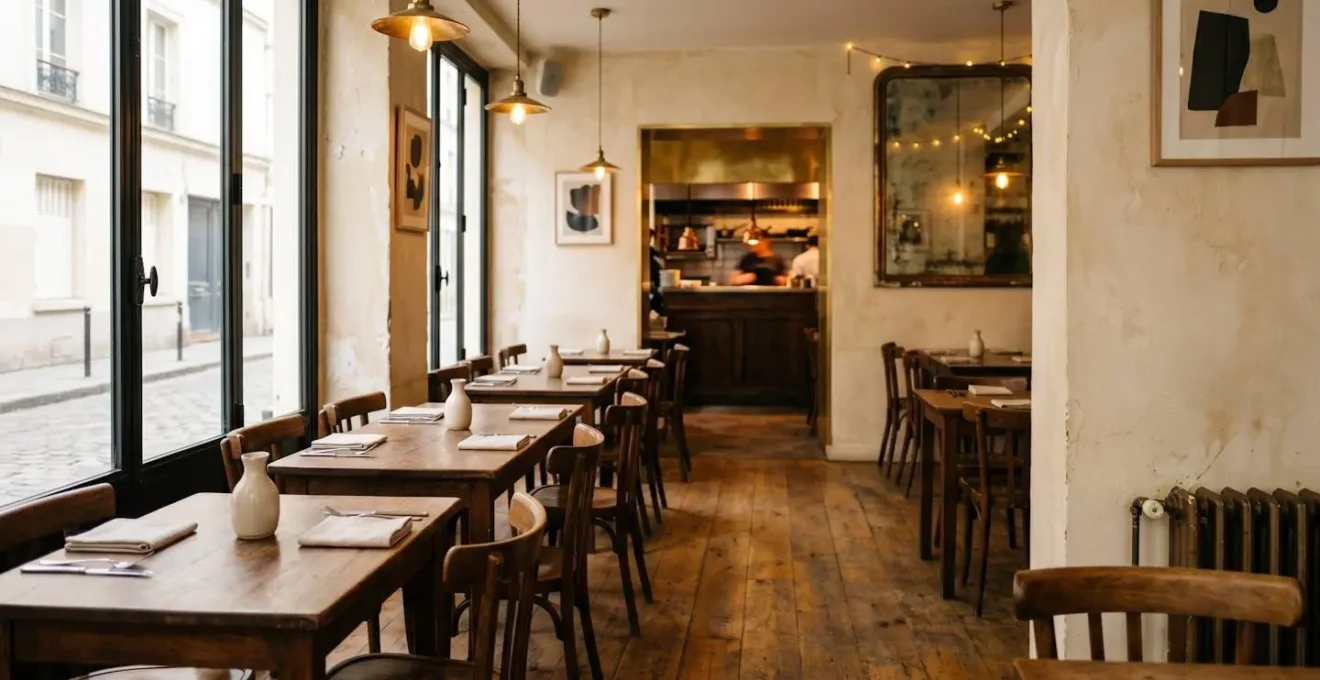
This environment fosters a culture where the quality of what’s on the plate is the primary currency. The ambiance is charming but simple, the wine list is curated but not encyclopedic, and the service is professional but not formal. The entire economic model is built around delivering maximum gastronomic value, rather than a high-end luxury experience. London’s dining scene, with its higher property and labour costs, often forces a choice: either cheap and cheerful mass-market food or expensive, high-investment fine dining. The middle ground of affordable excellence that thrives in Paris is much harder to sustain.
The Dinner Party Mistake That Brands British Guests as Impolite in French Homes
While the focus is often on restaurant dining, understanding the foundational etiquette of a French home provides invaluable insight into the nation’s relationship with food and hospitality. For a British guest invited to a French dinner party, certain well-intentioned gestures, considered polite in the UK, can be interpreted as awkward or even rude in France. Navigating this is key to appreciating the cultural nuances that underpin French gastronomy.
The core difference lies in the perception of the host’s role. In France, the host is the undisputed director of the evening. They have carefully choreographed the menu, the wine pairings, and the rhythm of the event. Well-meaning attempts by a guest to “help” can be seen as an unwelcome intrusion or, worse, a criticism of the host’s capabilities. It’s a subtle but crucial distinction from the more collaborative, “pitch-in” nature of many British social gatherings.
To avoid a social faux pas, it’s essential to be aware of these key differences in etiquette. Here are the critical mistakes to avoid:
- The Sin of Punctuality: In Britain, arriving exactly on time is a mark of respect. In France, it can be disruptive. You should always observe the ‘quart d’heure de politesse‘—the “15 minutes of politeness”—and arrive 10-15 minutes after the stated time. This gives your host a crucial buffer for last-minute preparations without the pressure of an early guest.
- The Unsolicited Wine Contribution: Bringing a bottle of wine to a British dinner party is a standard, welcome gesture. Bringing one to a French dinner party can be a subtle insult. It implies that your choice might be superior to the host’s carefully planned pairings. Safer and more appreciated gifts include high-quality chocolates, a beautiful dessert from a known pâtissier, or perhaps a digestif to be enjoyed after the meal. If you bring flowers, it’s often considered more chic to send them the next day as a thank you.
- The Offer to Clear the Table: The impulse to start gathering plates after a course is deeply ingrained in British politeness. In a more formal French home, this is often a major error. It can interrupt the flow of conversation and implies that the host cannot manage their own event. Unless you are in a very casual setting among close friends and are explicitly invited to help, your role as a guest is to remain seated and continue to be good company.
By understanding these unwritten rules, you show respect not just for your host, but for the deeper cultural framework that values a well-orchestrated, host-led social and dining experience. This perspective can even enrich your restaurant visits, helping you better appreciate the carefully choreographed “dance” of service in a fine dining setting.
Key Takeaways
- The star rating paradox: higher stars can mean higher pressure and less personal creativity, making one-stars often more satisfying.
- You control the experience: strategic choices in booking time, table location, and menu length are more impactful than the star rating itself.
- Context is king: understanding the cultural backdrop—from French culinary education to dinner party etiquette—transforms your perception and enjoyment.
Why Does Bistronomy Food Taste Revolutionary in Paris but Pretentious When Copied in London?
When a London restaurant attempts to replicate the ‘bistronomy’ concept—serving small, complex, technically-driven plates in a casual setting—it can often be perceived as pretentious or overpriced. Yet, in Paris, the same approach feels revolutionary and authentic. This disparity in perception is not about the quality of the cooking, but about the presence of a shared cultural context. Bistronomy’s power in Paris comes from what it is rebelling against.
France, and particularly Paris, is home to the world’s most formidable bastion of classical haute cuisine. As current Michelin Guide statistics show, France has 29 three-star restaurants, with nine in Paris alone. This creates a deeply ingrained, universally understood culinary tradition. Every French person with a passing interest in food knows the codes of this grand tradition, even if they’ve never dined at a three-star establishment. As one analysis of the movement puts it:
Parisian bistronomy is revolutionary precisely because it’s a rebellion against a deeply ingrained, universally understood classical tradition. The chefs are deconstructing rules everyone knows.
– Analysis of French bistronomy movement, Guide Michelin
A bistronomy chef in Paris who serves a deconstructed ‘boeuf bourguignon’ or a foam of ‘sauce béarnaise’ is engaging in a witty, playful dialogue with a shared history. The diner gets the joke. They appreciate the audacity because they know the original rule that is being broken. The revolution is meaningful because the ‘old regime’ is so powerful and well-known.
In London, this shared classical framework is less pronounced. The UK’s modern gastronomic identity is more eclectic, built on a brilliant fusion of global influences rather than a singular, dominant tradition. When a chef in London serves a tiny, deconstructed portion of a dish, it can feel unmoored from context. Without the implicit reference to a grand tradition being subverted, it can come across as an arbitrary act of complication—technique for technique’s sake. It feels pretentious because the audience doesn’t have the same deep-seated cultural reference point to understand it as an act of clever rebellion.
Armed with this insider’s perspective, the next step is to revisit your approach to booking and dining, not as a customer hoping for the best, but as a connoisseur orchestrating the perfect experience.