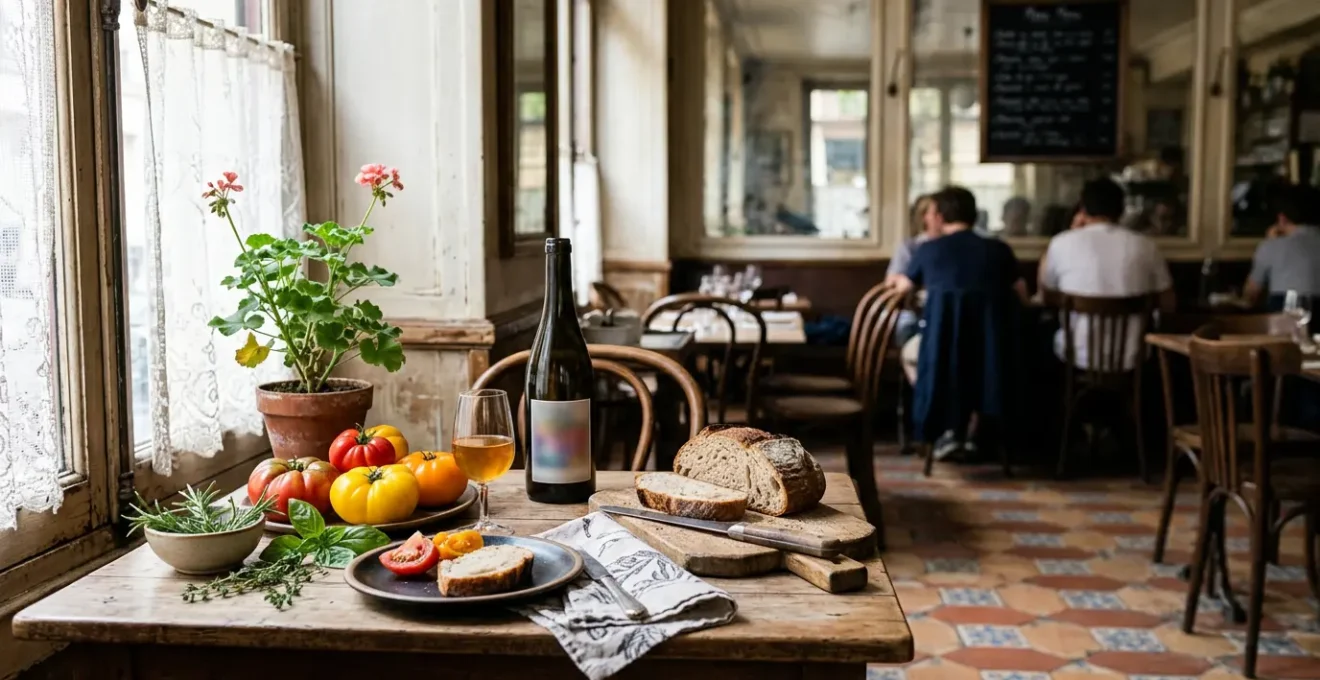
Bistronomy’s magic isn’t a vague French ‘vibe’ but a specific culinary operating system that London often copies in style but not in substance.
- It relies on an ultra-efficient supply chain and radical product proximity that slashes costs and maximizes freshness.
- It’s a philosophy of ‘technique liberation’, applying Michelin-level skills to humble, seasonal ingredients rather than just luxury ones.
Recommendation: To truly experience it, understand its seasonal peaks and booking secrets, and always choose the chef’s full tasting menu to get the purest expression of their vision.
You’ve felt it. That meal in a tiny, bare-walled Parisian spot—the one with mismatched chairs and a chalkboard menu—that somehow outshines dinners you’ve had in lavishly decorated, high-end London restaurants. The food in Paris felt vital, intelligent, and thrillingly direct. Yet, when you try a “Parisian-style neo-bistro” back in the UK, the same minimalist aesthetic and “small plates” format can feel contrived, even pretentious. You’re left wondering: why does the copy fail to capture the soul of the original?
The common answers are unsatisfying platitudes. “It’s just the French ‘je ne sais quoi’,” some will say, waving it away as an indefinable cultural quirk. Others will point to the ingredients, a simplistic argument that ignores the deeper mechanics at play. The truth is far more structural and less mysterious. Bistronomy is not a ‘style’ to be imitated. It is a complete culinary operating system built on a foundation of economic reality, supply chain logistics, and a rebellious philosophical shift.
This is not about copying a look; it’s about understanding a system. The key isn’t in the bare wooden tables or the natural wine list, but in the liberation of technique from luxury and a business model that prioritizes the plate above all else. This article will deconstruct that system for you. As a chef who has lived inside this movement, I will reveal the core pillars that make it work in Paris and explain how you, as an informed diner, can engage with it on a deeper level—from securing a table at its most coveted outposts to applying its core principles in your own kitchen.
This guide breaks down the essential components of the bistronomy movement, from its economic backbone to its philosophical heart. Explore the sections below to gain an insider’s understanding of this culinary revolution.
Summary: Deconstructing the Bistronomy Operating System
- Why Can You Eat Michelin-Level Technique at Bistronomy Prices in Paris but Not London?
- How to Apply Bistronomy Techniques in a Home Kitchen Without Professional Equipment?
- Septime or Clown Bar: Which Bistronomy Pioneer Should You Experience First?
- The Booking Error That Makes 80% of Visitors Miss Paris’s Best Bistronomy Tables
- When Do Parisian Bistronomy Kitchens Showcase Their Most Innovative Seasonal Menus?
- How to Choose Your Menu at a Multi-Course Starred Restaurant for Maximum Satisfaction?
- How to Train Your Palate to Feel Why Sancerre and Goat Cheese Work Together?
- Why Does Your Special Occasion Dinner at a Starred Restaurant Sometimes Disappoint?
Why Can You Eat Michelin-Level Technique at Bistronomy Prices in Paris but Not London?
The answer isn’t magic, it’s maths and logistics. The Parisian bistronomy model is built on two economic pillars that are incredibly difficult to replicate in London: radical supply chain proximity and a philosophy of “plate-first” economics. Firstly, Paris has a unique, hyper-efficient engine room called Rungis International Market. It’s the largest wholesale food market in the world, a city within a city that allows chefs to access an unparalleled diversity of produce with fewer middlemen. When Rungis supplies 50% of seafood and 45% of fruits and vegetables for the entire Paris region, it creates a competitive, cost-effective ecosystem that directly benefits the restaurant.
This structural advantage allows for what we call “plate-first” economics. Instead of spending a huge portion of the budget on rent in a prime location, lavish decor, or a large front-of-house team, bistronomy chefs funnel that money directly onto the plate. They invest in one more talented line cook, a slightly better cut of meat, or that perfect case of spring peas. This philosophy is why a diner can find a stunning three-course bistronomy lunch for around €30 in Paris, a price point almost unimaginable for the same level of creativity and quality in central London.
London’s higher operating costs—from rent to supply chain inefficiencies—force restaurants to either raise prices or compromise on quality. A London “neo-bistro” might mimic the stripped-back aesthetic, but it’s often a stylistic choice rather than a budgetary necessity. In Paris, the minimalism is the *result* of a conscious decision to make the food the star, a financial and philosophical commitment that you can taste in every bite.
How to Apply Bistronomy Techniques in a Home Kitchen Without Professional Equipment?
The soul of bistronomy isn’t found in a sous-vide machine or a Pacojet; it’s a mindset we call “technique liberation.” It means unchaining fine-dining techniques from their traditional association with luxury ingredients and applying them to elevate the humble and the everyday. You don’t need a professional kitchen to adopt this philosophy. It’s about respecting the product and using simple, precise methods to make it sing. This approach is accessible to any passionate home cook.
This philosophy rests on making one perfect, seasonal ingredient the hero of the dish. It’s about celebrating the intricate, natural beauty of produce at its peak.
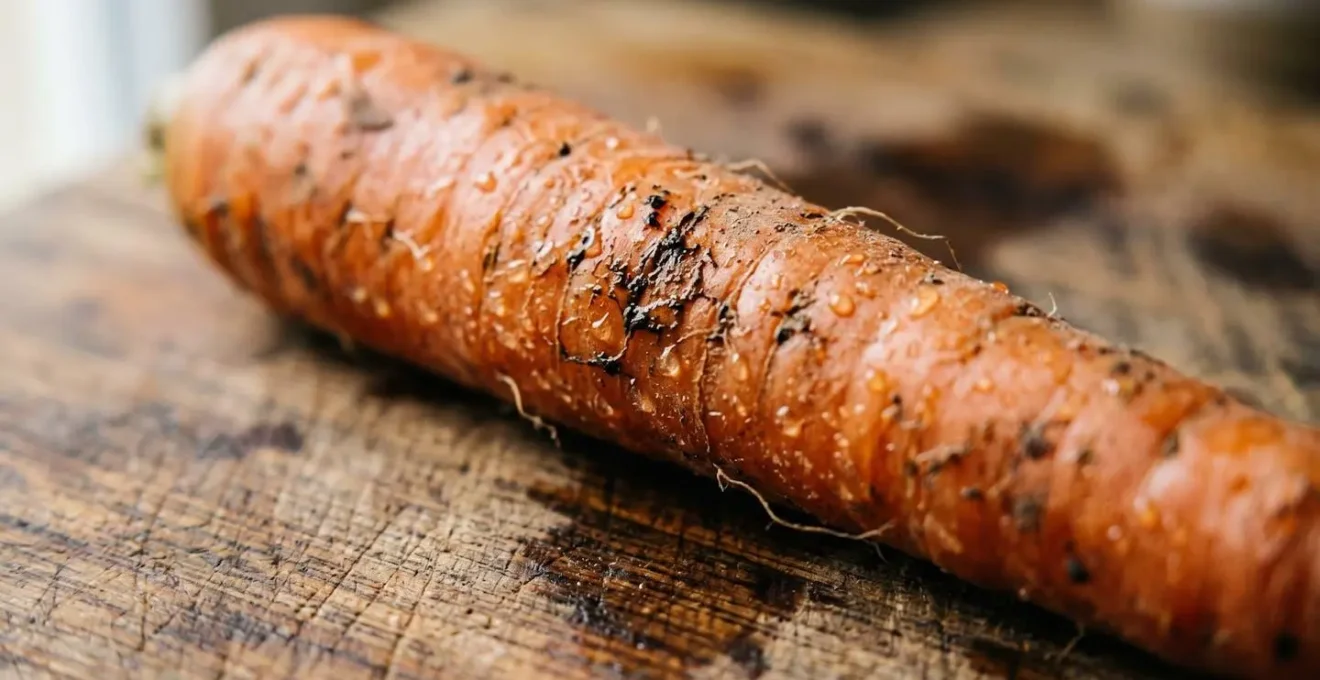
As the image above illustrates, true quality is in the detail—the snap of a fresh asparagus spear, the earthy sweetness of a heritage carrot. Your job is not to transform it, but to reveal it. You can start by mastering three core concepts that are central to any bistronomy kitchen:
- Product-First Philosophy: Source the absolute best single ingredient you can find—whether it’s a perfect tomato, a fresh-caught mackerel, or a beautiful leek. Build the entire dish around it using simple methods. Sometimes the best technique is the least intervention: serve it raw with exceptional olive oil and sea salt, or blanch it for mere seconds to lock in its colour and texture.
- The ‘Minute’ Sauce: Forget long-simmering stocks. We focus on fast, high-impact sauces. This means mastering a perfect vinaigrette with great acid and fat, making a vibrant green herb oil by simply blending herbs with oil, or, most importantly, learning to deglaze your pan with a splash of wine or vinegar after searing meat or fish to create an instant, flavour-packed jus.
- High-Low Pairing: This is where the fun lies. Take a humble, inexpensive ingredient and elevate it with a single, small touch of luxury. Think of a perfectly soft-boiled egg topped with a few salty flakes of bottarga; a simple roasted cauliflower served with a single, exquisite Ortiz anchovy; or beautifully cooked potatoes finished with a knob of cultured, artisanal butter. This contrast is the essence of bistronomy’s cleverness.
Septime or Clown Bar: Which Bistronomy Pioneer Should You Experience First?
Choosing your first “true” bistronomy experience is like choosing your first album from a legendary band—do you start with the raw, anarchic debut or the polished, critically acclaimed masterpiece? In the world of Parisian bistronomy, this choice often comes down to Clown Bar versus Septime. Both are seminal, but they represent two different waves of the movement, each with a distinct soul. Understanding their differences is key to aligning your expectations and finding the experience that’s right for you.
Clown Bar, with its historical circus-themed decor, embodies the gutsy, joyful, and slightly chaotic first wave. The food is about big, unapologetic flavours and a certain “smash-it-on-the-plate” deliciousness. It’s where you’ll find richer, more comforting dishes like their legendary duck pithivier. Septime, on the other hand, represents the second, more intellectual wave. Helmed by Bertrand Grébaut, an alumnus of the hyper-refined L’Arpège, it is minimalist, vegetable-forward, and cerebrally refined. It’s a restaurant that thinks deeply about its global influence and sustainability, earning it a Michelin star and a consistent spot on the World’s 50 Best list.
Neither is “better”—they simply have different missions. Clown Bar wants to give you a joyous, flavour-bomb hug. Septime wants to make you think, to present a pristine, elegant narrative on a plate. The following comparison, based on analysis from fine dining observers, breaks down their philosophies.
| Aspect | Septime | Clown Bar |
|---|---|---|
| Philosophy | Second-wave intellectual: minimalist, vegetable-forward, refined | Anarchic soul: gutsy, joyful, flavor-bomb creativity |
| Setting | Modern workshop-loft aesthetic, stripped-back industrial chic | Historical Belle Époque circus décor, boisterous atmosphere |
| Menu Style | Surprise tasting menu (5-course lunch €85, 7-course dinner €135) | Richer dishes like duck pithiviers, heartier flavor profiles |
| Wine Program | Natural wine focus with biodynamic producers (Ganevat, Mosse) | Natural wine selection with more playful pairings |
| Accolades | 1 Michelin star, World’s 50 Best #40 (2025), Sustainable Award 2017 | Original bistronomy pioneer, beloved by locals |
| Best For | Elegant, cerebral innovation and global influence | Raw, disruptive energy and comforting deliciousness |
The Booking Error That Makes 80% of Visitors Miss Paris’s Best Bistronomy Tables
You’ve done your research, picked your must-visit neo-bistro, and you check the booking websites daily. Nothing. It feels impossible, a closed club for Parisian insiders. The crucial error most visitors make is relying on global booking platforms and not understanding the fiercely independent, direct-to-consumer system that the best places operate on. These chefs built their restaurants to be free from convention, and that includes how they manage their tables.
These restaurants see themselves as small, artisanal workshops, not mass-market service providers. They don’t want to pay commissions to third-party platforms and, more importantly, they want to control their customer relationship directly. This is why you’ll rarely find the most sought-after tables on apps. As one experienced traveller noted on a forum, the best places avoid these platforms because of the high rate of no-shows associated with them. The restaurant’s own website is their sacred ground.
The very best places will rarely be available to book on The Fork, due to the high % of no-shows with online bookings.
– Rick Steves Travel Forum contributor
Case Study: The Septime Booking System
To understand this system, look at Septime. According to detailed diner reports, the restaurant releases its tables online precisely 21 days in advance at 10:00 AM Paris time (CET). These tables are not trickled out; they are released in a single block and are often fully booked within milliseconds. The only way to succeed is to know this specific schedule, be logged in on their direct booking portal at 9:59 AM, and have fast fingers. Randomly checking TheFork or Google Maps at lunchtime is a recipe for failure.
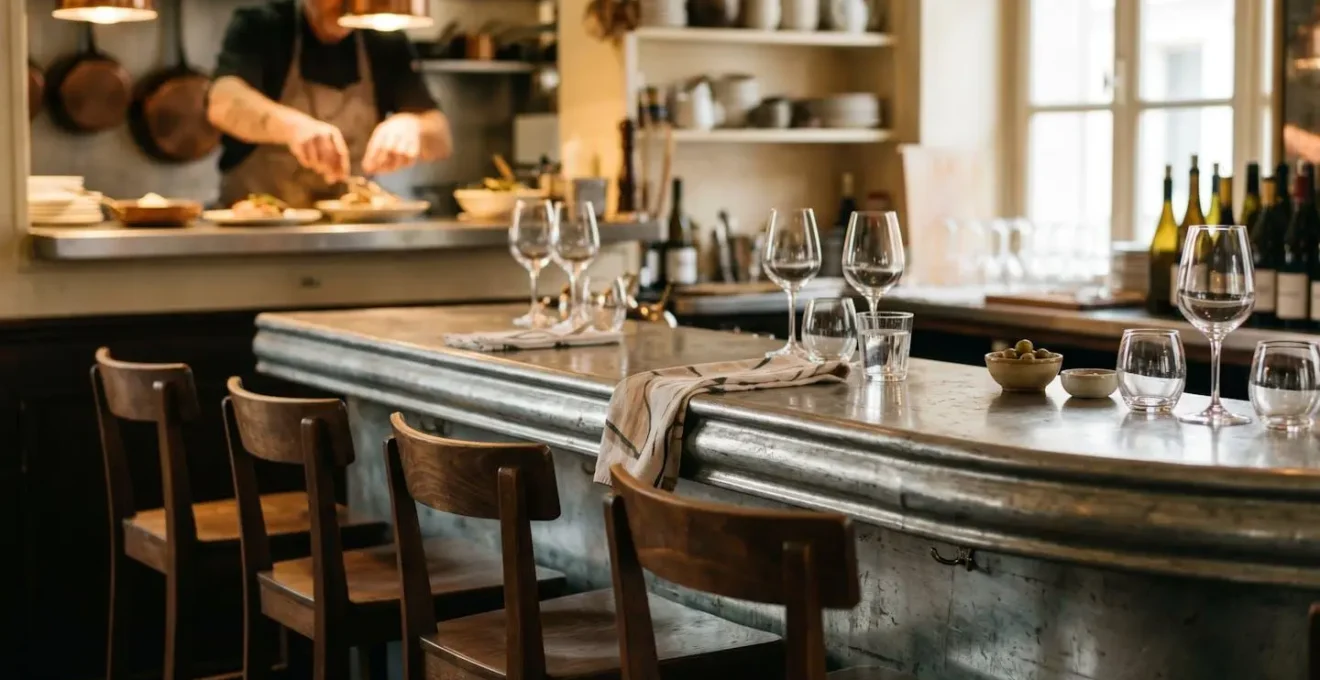
But what if you fail? There is another way, one that embraces the bistro’s casual soul: the bar counter, or ‘comptoir’. Many of these places keep a few seats at the bar for walk-ins. It’s a gamble, but showing up right at opening time can often land you one of the best seats in the house, watching the kitchen work its magic. This approach requires flexibility but rewards you with a spontaneous and authentic experience.
When Do Parisian Bistronomy Kitchens Showcase Their Most Innovative Seasonal Menus?
In a product-first philosophy, the calendar is not marked by holidays, but by harvests. A true bistronomy chef’s creativity is directly tied to what the earth is offering. While every season has its merits, certain periods are when the energy and innovation in Parisian kitchens reach a fever pitch. Timing your visit to coincide with these peaks is the difference between a great meal and an unforgettable one. It’s a crucial part of a movement that has become a vital force in a city where traditional bistros are in decline. The number of classic bistros has startlingly dropped from 50% of all Paris restaurants to just 14% today, making the innovation of bistronomy even more essential.
If you want to experience this creativity at its most vibrant, aim for one of these three key windows:
- Late Spring (April-May): This is arguably the most exciting time. After a long winter of root vegetables, the arrival of the first white asparagus from the Loire, fresh peas, gariguette strawberries, and delicate morel mushrooms unleashes a wave of inspiration. Dishes become lighter, greener, and more vibrant. This is when chefs’ creativity is at its most delicate and poetic.
- La Rentrée (September): August in Paris is a culinary dead zone, with many restaurants closed for the annual holiday. When chefs and their teams return in September, they are re-energized and greeted by the first wave of autumn produce: wild mushrooms (cèpes, girolles), early game, and sweet figs. ‘La Rentrée’ is the unofficial start of the new culinary year, and menus are often at their most ambitious and robust.
- The Winter Cleanse (January-February): After the rich, heavy fare of the holidays, the best chefs pivot to menus defined by purity and light. This period showcases incredible innovation with often-overlooked ingredients. Expect stunning dishes centered around scallops from Normandy, all varieties of citrus, and root vegetables (like crosnes or salsify) prepared with incredible precision and clarity.
Your Planning Checklist for a Peak Bistronomy Trip
- Target Your Season: Decide which culinary window (Spring vibrance, Autumn richness, or Winter purity) excites you most and book your travel accordingly.
- Research Restaurant Closures: Check your target restaurants’ websites or social media for their ‘fermeture annuelle’ (annual closure), which is almost always in August.
- Set Booking Reminders: Once you have your dates, identify the exact booking window for your top choices (e.g., “21 days in advance at 10 AM”) and set calendar alerts.
- Identify Key Ingredients: Research the specific ingredients that will be at their peak during your visit (e.g., ‘morilles’ in April, ‘cèpes’ in September) so you can spot them on menus.
- Plan a Market Visit: Schedule a morning to visit a local food market like Marché d’Aligre or Marché des Enfants Rouges to see, smell, and taste the very products inspiring the chefs.
How to Choose Your Menu at a Multi-Course Starred Restaurant for Maximum Satisfaction?
Navigating the menu at a high-end restaurant, whether it’s a formal three-star temple or a top-tier bistro like Septime, can feel like a test. Do you go à la carte to assert your own preferences, or do you surrender to the tasting menu? From an insider’s perspective, the answer is almost always the same: let the chef drive. A tasting menu (‘menu dégustation’) is not just a collection of dishes; it’s a complete, balanced narrative. It’s the single most coherent expression of the kitchen’s philosophy and current obsessions.
Choosing à la carte is like picking three random chapters from a novel—you’ll get a sense of the author’s style, but you’ll miss the plot, the character development, and the intended emotional arc. To maximize your satisfaction and truly understand the restaurant’s soul, you need a more strategic approach. The goal is to become an active participant in the experience, not a passive consumer.
Here are three strategies we use to get the most out of a special occasion meal:
- Embrace the Chef’s Journey: By default, always choose the tasting menu. It almost always represents better value and, more importantly, it’s a curated experience where each course is designed to build on the last in terms of flavour, texture, and intensity. It’s the truest path to understanding what the chef wants to say.
- Interrogate the Wine Pairing: Don’t just blindly accept the standard wine pairing. Engage the sommelier. Ask questions like, “Which pairing on the list is the most surprising?” or “Can you show me a pairing that best expresses the terroir of this region?” This opens the door to off-menu gems and transforms the pairing from a passive service into an active discovery.
- Prioritize the ‘Plat Signature’: Before you even book, do a little research to identify the chef’s career-defining signature dish. If it’s not on the tasting menu for your visit (due to seasonality, for instance), don’t be afraid to politely ask when booking or upon arrival if a substitution is possible. This dish often holds the key to the restaurant’s very soul.
How to Train Your Palate to Feel Why Sancerre and Goat Cheese Work Together?
The classic pairing of Sancerre and local Crottin de Chavignol goat cheese is a cornerstone of French terroir. We tell people it works, but to truly understand it, you have to *feel* it on your palate. It’s not an intellectual exercise; it’s a physical sensation where chemistry and geology play out in your mouth. This pairing is the perfect lesson in the bistronomy principle of ‘product-first’—it’s not about a chef’s manipulation, but about the inherent connection between two products from the same place.
Training your palate to recognize these connections is a skill. It requires you to slow down, pay attention, and deconstruct what you’re tasting. The key is to taste the components separately before tasting them together. This simple method, which we use to train young sommeliers, can be done at home and will permanently change how you experience food and wine pairing.
Follow this method to move from knowing the pairing works to feeling *why* it works:
- Taste the ‘Same Place’: The first step is conceptual. Understand that the goats in the village of Chavignol are grazing on vegetation that grows on the exact same Kimmeridgian limestone and clay soils as the Sauvignon Blanc grapes used for Sancerre. You are about to taste the same minerality expressed in two different forms: one through the grape, one through the goat’s milk.
- The A-B-C Method: Now, taste them systematically. A) Take a sip of the Sancerre on its own. Close your eyes. Ignore “fruit” and search for texture and minerals. Can you find the zippy, mouth-watering acidity? The wet stone or flinty note? B) Take a bite of the Crottin de Chavignol. Note its chalky texture and the lactic tang. C) Now, take a bite of the cheese, and while it’s still on your palate, take a sip of the wine. This is the magic moment. Feel how the wine’s high acidity instantly cuts through the cheese’s fat, cleansing your palate. At the same time, feel how the flinty minerality in the wine grabs onto the chalky notes of the cheese, amplifying them both.
- Use a Control Pairing: To prove the point to yourself, conduct one final experiment. Taste the same goat cheese with a wine that shouldn’t work—a big, oaky, buttery California Chardonnay, for example. Your palate will register the clash immediately. The oak will smother the delicate cheese, and the wine’s lower acidity will make the combination feel heavy and cloying.
Key Takeaways
- Bistronomy is a system, not a style, built on economic efficiency and a product-first philosophy.
- Its success in Paris is tied to structural advantages like the Rungis market, which are hard to replicate elsewhere.
- The core technique is applying high-end skills to humble ingredients, a mindset any home cook can adopt.
Why Does Your Special Occasion Dinner at a Starred Restaurant Sometimes Disappoint?
It’s a scenario many food lovers have experienced. You save up for a meal at a highly acclaimed, Michelin-starred restaurant for a special occasion. The food is technically perfect, the room is stunning, but you leave feeling… a little cold. The experience felt more like a performance than a celebration. It was impressive, but not joyful. This feeling of disappointment often stems from a fundamental misalignment: many high-end restaurants are built to celebrate the chef, not the guest.
The pacing is rigid, the service can be formal to the point of being stiff, and the overall atmosphere is one of hushed reverence. It’s a system that can make the diner feel like a spectator in a museum rather than a participant in a meal. This is precisely the formality and chef-centric ego that the original bistronomy movement was created to disrupt. As one critic perfectly put it, the beauty of bistronomy is its focus on the diner’s pleasure.
The great thing about bistronomy is that it was invented for you, not to celebrate the chef.
– Fizzyvines bistro culture analysis
Even the best restaurants can fall into this trap as they become more famous. The pressure to maintain standards and maximize efficiency can sometimes squeeze the warmth and spontaneity out of the experience. This “service pacing problem” can make a meal feel rushed and impersonal, a stark contrast to the relaxed, convivial spirit that should define a great dinner.
The Service Pacing Problem at High-End Restaurants
Ironically, even a bistronomy pioneer like Septime is not immune. As it has gained global fame, some diners have reported a service style that feels more efficient than hospitable. In diner accounts, stories emerge of rapid-fire course delivery where plates are cleared before everyone has finished, and the next wine pairing arrives before the previous glass is empty. This energetic efficiency, likely designed to manage multiple seatings, can inadvertently make guests feel like they are on a conveyor belt. It’s a classic example of a system over-correcting for efficiency and, in the process, losing the relaxed Parisian soul that bistronomy was meant to champion.
Now that you can see the system behind the style, you can approach dining—both in Paris and at home—with an insider’s eye. The next step is to use this knowledge to seek out authenticity, appreciate the craft behind a simple dish, and create moments of genuine culinary joy for yourself.