The frustration of missing a Paris art show stems from relying on public information, while the real scene operates on a semi-private ‘operational calendar’.
- The most coveted events (vernissages, private views) are not for tourists, but for a professional network you can strategically enter.
- Timing is everything: visiting during ‘la rentrée’ in September or pre-fair weeks in October unlocks maximum access.
Recommendation: Shift your approach from a passive spectator to an ‘informed outsider’ by using targeted communication and network-bridging tactics to get on gallery press lists months in advance.
There is a unique frustration known to every UK-based contemporary art lover: the belated discovery of a must-see Paris exhibition. You see the stunning installation shots on Instagram or read a glowing review, only to realise the show closed last week. You diligently check gallery websites and follow major art publications, yet you consistently feel one step behind. This cycle of missing out isn’t a personal failing; it’s a symptom of misunderstanding how the Parisian art world truly operates.
The common advice—to follow social media or check listings—only grants you access to the public-facing schedule. It’s useful, but it positions you as a tourist, a consumer of a finished product. The real energy, the networking opportunities, and the advance knowledge exist on a different timeline entirely. This is the ‘operational calendar’ of gallerists, curators, and collectors, a rhythm dictated by art fairs, seasonal programming, and a web of professional relationships.
But what if the key wasn’t just to find better listings, but to fundamentally change your positioning? This guide is built on an insider’s premise: to truly access the Paris art scene, you must stop acting like a tourist and start behaving like a dedicated international visitor. It’s about decoding the scene’s internal logic, understanding its unwritten rules of engagement, and using specific strategies to get on the right lists long before any public announcement is made.
We will explore the cultural rhythms that dictate the scene’s calendar, the practical methods to get on press lists three months in advance, and the networking etiquette that transforms you from an anonymous outsider into a welcome guest. This is your playbook for turning frustration into front-row access.
To navigate this complex but rewarding environment, it’s essential to understand its key components. This article breaks down the strategies and insights you need to plan your visit with the precision of a seasoned professional, ensuring you never miss a major opening again.
Summary: Your Guide to Unlocking the Paris Art Scene
- Why Does the French Art World Essentially Shut Down in August?
- How to Discover Paris Exhibitions 3 Months Before Opening Day?
- Museum Opening or Gallery Vernissage: Which French Art Event Welcomes Outside Visitors?
- The Networking Approach That Gets UK Visitors Into Paris Private Views
- When Should You Visit Paris for Maximum Contemporary Art Activity?
- How to Get Invited to Private Openings in Paris Without Knowing Anyone?
- Why Does Paris Have So Many Small Galleries and How Do They Survive?
- Why Do UK Collectors Pay 40% More for French Artists Bought Through London Galleries?
Why Does the French Art World Essentially Shut Down in August?
The annual August shutdown of the Parisian art scene is a baffling phenomenon for many international visitors. It’s not just a slowdown; it’s a near-complete cultural hibernation. This tradition is deeply rooted in French culture, specifically the concept of ‘les grandes vacances’ (the long holidays), a period when much of the country, especially Paris, empties out. For galleries, remaining open to sparse foot traffic is economically unviable. It’s a time for gallerists, artists, and staff to recharge, plan, and prepare for the most crucial period of the art calendar: ‘la rentrée’.
This shutdown is a strategic pause, not a sign of inactivity. Behind the closed doors, galleries are finalising their autumn programming, coordinating with artists, and preparing for the intense burst of activity that begins in the first week of September. The economic impact of this seasonal rhythm is significant. A barometer of French galleries revealed the sector’s sensitivity to these cycles, confirming that 85% of galleries reported significant changes in business activity tied to seasonal patterns. Understanding this rhythm is the first step to mastering the city’s art calendar.
Attempting to engage with the Paris art world in August is futile. Instead, a savvy visitor uses this period to their advantage. It is the perfect time to research the galleries you want to visit in the autumn and to craft the introductory emails that will get you on their press lists. The silence of August is the prelude to the roar of September, and knowing this allows you to plan your engagement for when it will have the most impact.
Rather than viewing this period as a barrier, see it as a clear signal of when *not* to visit, allowing you to focus your resources on the high-activity seasons.
How to Discover Paris Exhibitions 3 Months Before Opening Day?
The secret to seeing Paris shows is not about finding information; it’s about accessing the industry’s ‘operational calendar’. This internal schedule is distributed to a curated list of press, curators, and collectors months before any public announcement. Your goal is to get on that list. This requires a shift in identity from a passive tourist to an ‘Informed Outsider’—a dedicated international visitor with a professional interest. You are not just visiting Paris; you are visiting Paris *for the art*.
This positioning is your key. When you contact a gallery, you are not asking for a favour but signalling your role within the broader art ecosystem. The correspondence below illustrates the kind of professional planning materials that circulate long before a show is publicised. Your aim is to become a recipient of these communications.
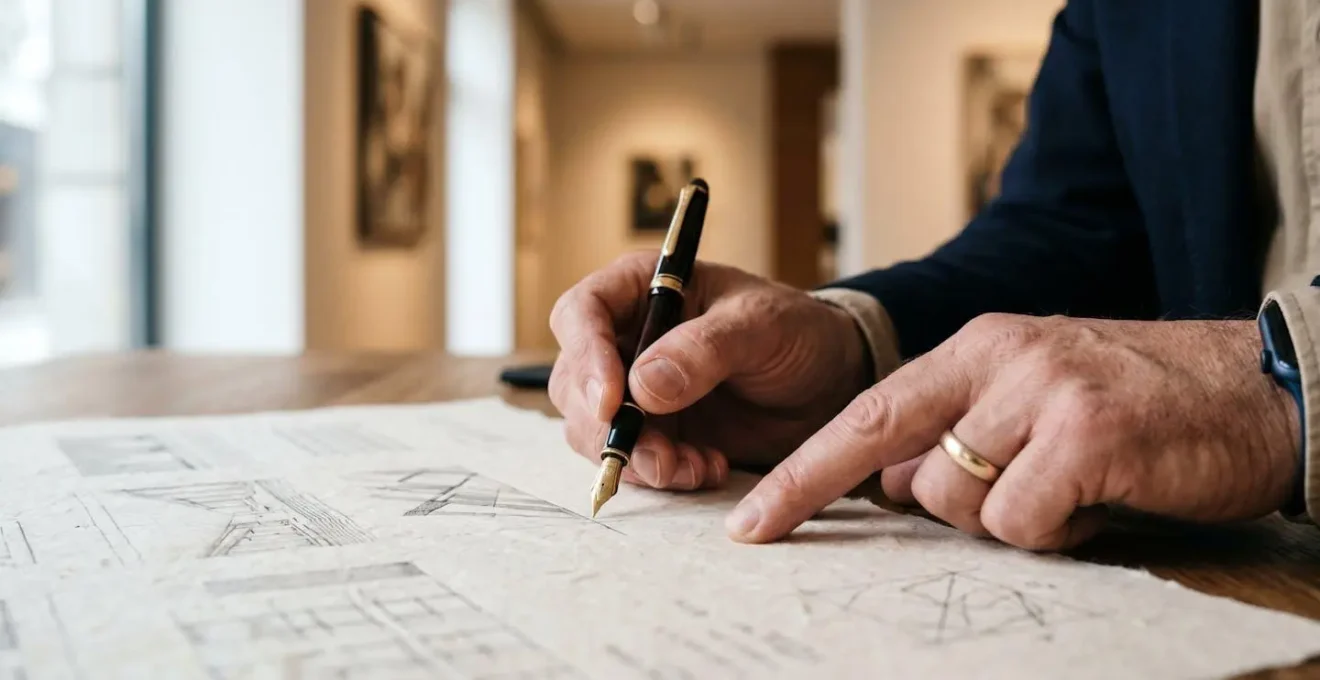
To achieve this, you must be proactive and strategic. Instead of waiting for listings to appear, you create your own information channels. The most effective methods involve a combination of direct outreach, subscribing to niche publications, and pattern analysis. These are not quick fixes, but a systematic approach to building your access over time.
- Email gallery press contacts with professional positioning: Frame yourself as a blogger, freelance writer, or dedicated collector. Request to be added to their press distribution lists, which receive schedules three or more months in advance.
- Subscribe to niche Paris art newsletters: Publications like Paris Art and Slash Paris often publish long-term programs before they hit the mainstream media.
- Decode gallery annual rhythms: Most established galleries run four to six shows per year. By studying their past exhibition patterns, you can predict the timing and even the type of artists they are likely to show before any official release.
- Monitor Paris Gallery Weekend announcements: This curated event offers advance insight into the programming of major galleries like Perrotin and Galerie Templon.
Your Pre-Visit Intelligence Plan: A Checklist
- Points of Contact: List all channels where information is released early (gallery press emails, niche newsletters, art fair participant lists).
- Collect Intelligence: Inventory existing materials. Have you downloaded the past year’s programs for your top 5 target galleries to identify their rhythm?
- Check for Coherence: Does your introductory email align with the gallery’s values? Are you referencing artists they actually represent?
- Assess Memorability: Does your email stand out from a generic tourist query? Have you highlighted your ‘Informed Outsider’ status (e.g., “visiting from the UK specifically to engage with the contemporary scene”)?
- Create an Integration Plan: Set calendar reminders to follow up. Map out which gallery newsletters to subscribe to and which art school graduation shows to monitor.
By building your own information infrastructure, you move from being a reactive spectator to a proactive participant in the Parisian art scene.
Museum Opening or Gallery Vernissage: Which French Art Event Welcomes Outside Visitors?
Not all art openings in Paris are created equal. The word ‘vernissage’ (varnishing) evokes an open, celebratory atmosphere, but its accessibility can range from a public party to a fiercely exclusive, invitation-only affair. Understanding the hierarchy of these events—the ‘Ecosystem Tiers’—is crucial to avoid the awkwardness of being turned away at the door. Your access depends almost entirely on the type of gallery hosting the event.
At the top are the blue-chip galleries (like Gagosian or David Zwirner), whose private views are fortresses for major collectors and museum directors. Here, the guest list is the main event. In the middle are the mid-tier galleries (like Templon or Kamel Mennour), which are semi-private; a polite, well-researched email can often secure an invitation. Finally, the most accessible are the emerging galleries, particularly in neighbourhoods like Belleville, which use their vernissages as a public-facing tool to build community and attract new enthusiasts. A vernissage at one of these is often a genuine open house, typically lasting two to three hours in the evening and almost always free to attend.
In contrast, museum openings are almost always public events, either ticketed or free, and widely advertised. While they lack the intimacy of a gallery vernissage, they are a guaranteed way to see a new show on its opening night. The ‘finissage’ or closing party of an exhibition is another highly accessible event, often more relaxed and social than the opening. The following breakdown, based on insights from sources like a guide to top Paris galleries, clarifies the spectrum of accessibility.
| Event Type | Accessibility Level | Location Examples | Identification Cues | Visitor Welcome |
|---|---|---|---|---|
| Blue-chip gallery vernissage | Highly exclusive | Gagosian, Perrotin, David Zwirner | Personal email invitation only, ‘by invitation’ wording | Insiders and collectors only |
| Mid-tier gallery private view | Semi-private | Galerie Templon, Kamel Mennour | ‘Private View’ language, RSVP requested | Art professionals, be prepared to introduce yourself |
| Emerging gallery vernissage | Open to public | Belleville galleries, Loft19 | ‘Vernissage en présence de l’artiste’, public social media post | All art enthusiasts welcome |
| Finissage/closing party | Most accessible | Any gallery type | ‘Décrochage’ or ‘finissage’ terminology | Relaxed, low-pressure, highly welcoming |
| Museum opening | Fully public | Pompidou, Palais de Tokyo | Ticketed or free admission, public announcement | General public encouraged |
By matching your expectations to the gallery’s status, you can navigate the social landscape with confidence and focus your energy on the events that truly welcome you.
The Networking Approach That Gets UK Visitors Into Paris Private Views
For a UK visitor, breaking into the semi-private world of Paris vernissages is not about having existing connections; it’s about manufacturing them through a smart, professional approach. The key is to leverage your status as an ‘Informed Outsider’ and use it as an asset. You are not just another face in the crowd; you are an international art enthusiast who has made a special effort to be there. This distinction is your primary form of ‘access currency’.
The Paris art scene, which the 2024 Global Art Market Report confirmed as the 4th largest global marketplace, is commercially driven but thrives on genuine relationships. A cold, generic email will be ignored. A thoughtful, specific, and professional one will be noted. When attending, your appearance should reflect this professionalism; a smart-casual ‘uniform’ (e.g., a well-cut blazer, quality shoes) is standard and signals you understand the context. Your networking strategy should be a precise, three-step process designed to build rapport and demonstrate your serious interest.
This approach transforms your visit from a passive viewing into an active engagement, laying the groundwork for future invitations and relationships. Follow these steps methodically:
- Craft an ‘Informed Outsider’ Introduction Email: Before your visit, contact the gallery. Highlight your UK origin as an asset, mention a specific artist they represent that you admire, and explain that your trip to Paris is centred on contemporary art. Politely request to be notified of any upcoming vernissages during your stay. This transforms you from a tourist into a dedicated international visitor.
- Leverage the London-Paris Gallery Bridge: Many Paris galleries have sister locations in London or represent artists who also show in the UK. Visit the London outposts first. Engage with the staff, mention your upcoming Paris trip, and ask if they might facilitate an introduction. Using an existing professional network, even tangentially, provides powerful credibility.
- Execute a Strategic Follow-up Within 48 Hours: If you attend a vernissage, send a personalised thank-you email to the gallerist or staff member you spoke with. Mention a specific artwork or a detail from your conversation. This simple professional courtesy is rare and incredibly effective for building the rapport that leads to future invitations.
It’s a long game, but this strategy is how you build a lasting presence in the Parisian art scene from the outside in.
When Should You Visit Paris for Maximum Contemporary Art Activity?
Timing your visit to Paris is perhaps the single most critical factor for gaining access to the contemporary art scene. Arriving during a quiet period will leave you facing closed doors, while visiting during a peak week can be overwhelming. The goal is to target the “shoulder seasons” of major art events, when galleries are active and gallerists are accessible. This strategic timing, as visualized in the preparatory buzz of a major venue like the Grand Palais, is your greatest advantage.
The Parisian art year has a distinct and predictable rhythm. Understanding it allows you to plan your trip for moments of maximum opportunity. The absolute peak of activity and energy is ‘la rentrée’, the first two weeks of September, when every gallery launches its most ambitious autumn shows after the August lull. It’s a time of celebration and high-profile vernissages. Another key period is the week of the Paris+ par Art Basel fair in mid-October.
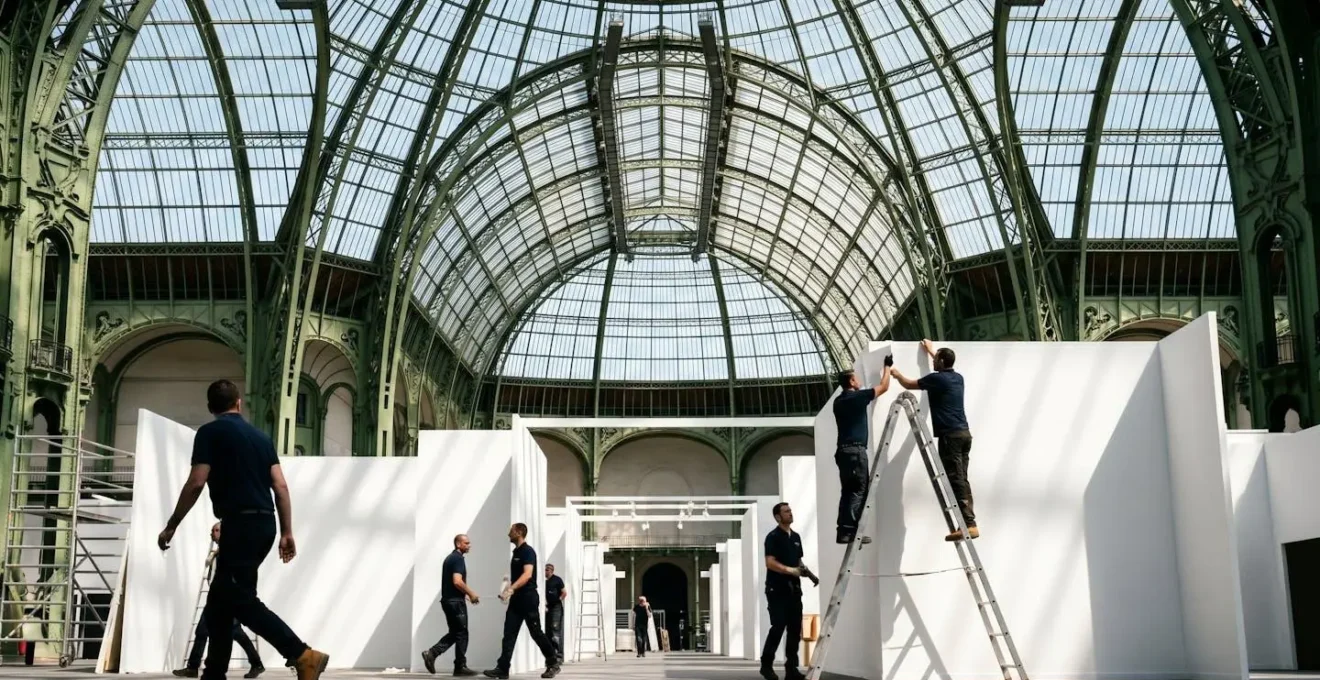
However, the most strategic move is often to visit in the days *before* a major fair opens. Gallerists are on-site, preparing their booths and finalising deals, making them more available for meaningful conversations than during the chaotic public days of the fair. Spring also offers a key window around the Art Paris fair. By aligning your travel with this operational calendar, you ensure that the city’s art infrastructure is fully activated and receptive.
Here is a strategic calendar to plan your visit for maximum access:
- La Rentrée (Early September): Target the first two weeks as galleries launch their fall programming with fresh exhibitions and high energy. This is a prime time for major vernissages.
- Paris+ par Art Basel Week (Mid-October): Book gallery appointments for the days BEFORE the fair officially opens. Gallerists are preparing and are often more available for substantive conversations.
- Strategic Shoulder Periods (Late March/Early April): Visit during the weeks surrounding the Art Paris fair at the Grand Palais, when gallery activity is high but not yet at its peak frenzy.
- Belleville Portes Ouvertes (Late May): Attend the artist studio open days in the Belleville neighbourhood for ground-level access and to see where gallerists often scout for emerging talent.
- Avoid Completely: August 1-31 and the period from late December through the first week of January, when commercial galleries operate with skeleton staff or are closed entirely.
By treating the art calendar like a professional, you can place yourself at the heart of the action, just as the scene comes to life.
How to Get Invited to Private Openings in Paris Without Knowing Anyone?
Gaining access to private views in Paris when you have zero connections feels like an impossible task, but there are legitimate backdoors into this exclusive world. The strategy is to stop thinking about “invitations” as personal favours and start seeing them as benefits of a paid subscription or as the natural outcome of genuine community engagement. You are not trying to crash a party; you are investing in the ecosystem to earn your place within it.
The most direct route is to buy your way in, legitimately. Joining the ‘Amis du Musée’ (Friends of the Museum) societies for institutions like the Centre Pompidou or the Palais de Tokyo is a powerful move. These memberships are effectively an ‘access subscription’. For an annual fee, you receive a curated calendar of private views, curator-led tours, and studio visits that are completely inaccessible to the general public. It’s the single most effective way to bypass the need for a personal network.
Another powerful, ‘upstream’ strategy is to engage with the art scene at its source. Attending the graduation shows (‘diplômes’) at top art schools like the Beaux-Arts de Paris or ENSAD in late spring places you side-by-side with the very gallerists and curators who are scouting the next generation of talent. Conversations in this context are more natural and position you as someone with a deep, foundational interest in art, not just a consumer of big names. These ground-level entry points are where real networks are forged.
Finally, focus on community hubs where ‘access currency’ is built through genuine conversation, not cold emails.
- Join ‘Amis du Musée’ Societies: Memberships to the Friends of the Centre Pompidou or Palais de Tokyo provide a curated calendar of private views, curator-led tours, and studio visits. This is a paid, legitimate backdoor to the scene.
- Attend Art School Graduation Shows: Visit ‘diplômes’ at the Beaux-Arts de Paris or ENSAD. This is where gallerists scout new talent, creating an unparalleled ground-level entry point to the professional network.
- Frequent Artist-Run Spaces and Art Bookshops: Target community hubs where staff are deeply connected and approachable. Genuine conversations here lead to more personal invitations than a hundred cold emails.
- Participate in Paris Gallery Weekend Public Programming: This event includes talks and performances at top galleries, allowing you to engage with the professional community in a structured, public-facing context.
By investing your time and money in the right places, you can build the network you need from the ground up.
Why Does Paris Have So Many Small Galleries and How Do They Survive?
Paris is teeming with small, independent galleries, often clustered in neighbourhoods like Belleville or the deeper corners of the Marais. For an outsider, their existence can seem precarious, especially when the art market narrative is dominated by global mega-galleries. Indeed, the economic reality is harsh; a recent survey revealed that 85% of French galleries are pessimistic about their economic well-being amid falling turnover. So, how do they survive? The answer lies in a diversified economic model and their crucial role as the research and development wing of the entire art ecosystem.
These small galleries are not just miniature versions of their blue-chip counterparts. They operate differently, often functioning as passion projects, ‘feeder galleries’, and community hubs. Many are run by dedicated individuals who may have other sources of income, allowing them to take risks on unproven artists. Their primary function is cultural, not just commercial: they are the first to spot emerging talent, giving artists their first solo shows and building their careers from the ground up.
When an artist they’ve nurtured gets signed by a larger gallery, the small gallery often receives a percentage of future sales or maintains a role in managing the artist’s estate. They survive by cultivating a loyal base of niche collectors who are interested in discovery, not just investment, and by creating a vibrant community value that attracts foot traffic and cultural capital to their neighbourhoods. The following case study of a Belleville gallery illustrates this incubator model perfectly.
Case Study: The Belleville Incubator Model
Suzanne Tarasieve’s Loft19 gallery, which opened in the Belleville neighbourhood in 2008, is a prime example of the small gallery’s survival strategy. Its arrival catalyzed the rapid artistic expansion of the area, which quickly became a hub for young, alternative galleries. Tarasieve’s model was a masterclass in diversification: she balanced underground talents with established artists, cultivating a loyal collector base interested in discovery. Small galleries like hers often act as ‘feeder galleries’, receiving a cut when their artists move to larger venues. After her death, the gallery’s continuation under collaborators proves the sustainability of this community-focused, ecosystem-building model.
Engaging with these smaller spaces is not just about seeing new art; it’s about connecting with the very heart of the Parisian creative engine.
Key Takeaways
- Access to the Paris art scene is less about public listings and more about understanding the semi-private ‘operational calendar’ of galleries.
- Positioning yourself as an ‘Informed Outsider’—a dedicated international visitor—is the most effective strategy for getting on press lists and receiving invitations.
- Strategic timing is crucial: target ‘la rentrée’ in September and the shoulder weeks of major art fairs like Paris+ to find the scene at its most active and accessible.
Why Do UK Collectors Pay 40% More for French Artists Bought Through London Galleries?
It’s a common paradox for UK-based collectors: a piece by a French artist often costs significantly more when purchased from a London gallery than it would directly from their primary gallery in Paris. This price differential, which can often approach 35-45%, isn’t arbitrary. It’s the result of a complex mix of post-Brexit logistics, gallery overheads, and the value-added service that a London gallery provides to its local clientele. While the UK remains a powerhouse, with the UK holding 17% of the global art market share in 2023, the cost of bringing art across the Channel has undeniably increased.
The primary drivers of this markup are twofold. First, there are the hard costs associated with Brexit. Importing art from the EU into the UK now incurs a 5% import VAT, a cost that didn’t exist before. Added to this are international shipping, insurance, and the London gallery’s own higher overheads (particularly rent), all of which are absorbed into the final price. The convenience of acquiring a piece that is already in the country, with all customs formalities handled, comes at a premium.
Second, and more subtly, is the ‘curatorial validation’ markup. When a London gallery represents a French artist, they are providing a layer of service and endorsement for their UK collectors. This includes local support, facilitating studio visits, providing provenance, and staking their own reputation on the artist’s quality. This curatorial confidence, combined with the logistical ease, is what collectors are paying for. The table below breaks down the effective cost difference, showing how multiple small factors accumulate into a significant price gap.
| Cost Component | Buying in Paris | Buying in London | Differential Impact |
|---|---|---|---|
| Base artwork price | €10,000 (example) | £11,000-12,000 | 10-20% gallery markup |
| Import VAT (post-Brexit) | Not applicable (EU buyer) | 5% UK rate (£500-600) | New Brexit cost |
| Re-export to UK for collector | 5% import VAT to UK | Already in UK | Adds £500-600 if buying in Paris |
| International shipping & insurance | €300-500 from Paris | Included in London price | Convenience premium |
| London gallery overhead | N/A | Higher rent (absorbed in price) | 15-20% markup |
| Gallery representation premium | Primary market price | Curatorial validation markup | 10-15% for local support |
| Total effective cost | €10,300-10,800 | £14,000-15,000 (€16,300-17,500) | 35-45% total differential |
Stop scrolling through past events and start planning your next art-focused trip to Paris. Use these strategies to build your personal operational calendar and experience the scene like a professional.