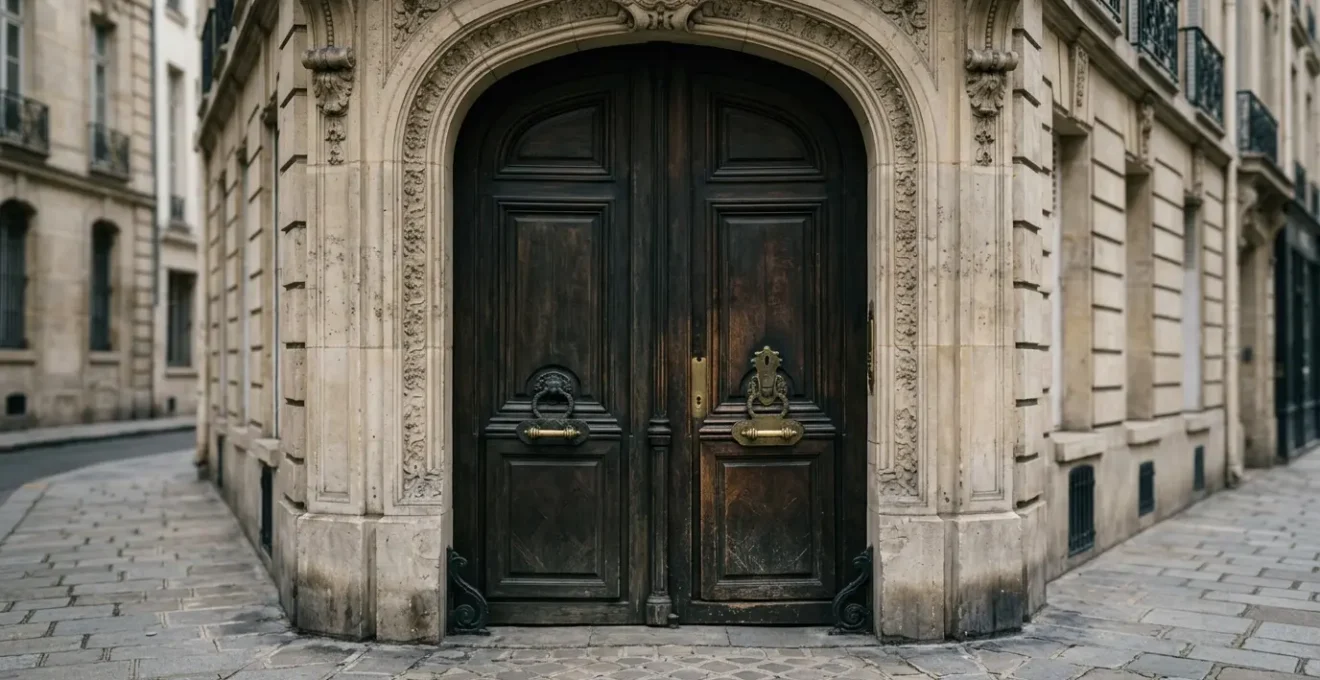
Contrary to popular belief, you don’t need to be an interior designer to access France’s most exclusive showrooms; you need to understand and respect their cultural codes.
- Exclusivity is a deliberate brand strategy, not a logistical hurdle. It protects the designer’s vision and filters for serious clients.
- Access is granted based on “cultural currency”—your demonstrated knowledge, passion, and discretion—not your professional title.
Recommendation: Shift your mindset from ‘shopper’ to ‘collector’. Your approach, language, and research are the keys that will open these hidden doors.
You’ve seen it before. Flipping through an issue of Architectural Digest or a niche French design magazine, you spot a chair, a lamp, a piece of art so perfect it stops you in your tracks. You find the designer’s name, search for their Paris address, and hit a wall: a discreet plaque, no opening hours, and the two most intimidating words in French design: “Sur Rendez-vous” (By Appointment Only). For the UK-based design enthusiast, this can feel like an insurmountable barrier, a private club with unwritten rules of entry. It’s a common frustration that leaves incredible design tantalisingly out of reach.
The conventional advice often circles around attending major events like Paris Design Week or simply wandering the “right” arrondissements like Saint-Germain-des-Prés. While not incorrect, this advice misses the fundamental point. These spaces aren’t just shops waiting for the right event to open their doors. They are private worlds, operating on a different set of principles where commercial transactions are secondary to relationships and artistic dialogue. The frustration isn’t about a lack of information; it’s about a cultural disconnect.
But what if the key to entry wasn’t a trade credential or a VIP pass, but a deep understanding of the *why* behind the closed door? The secret to accessing these spaces lies not in being an industry professional, but in behaving like a true connoisseur. It requires mastering the unspoken contract between the creator and the collector—a language of respect, informed passion, and discretion. This guide is your translator. It will deconstruct the cultural logic of French design exclusivity and provide a clear, actionable roadmap to transform you from an outsider looking in to an appreciated guest invited inside.
This article provides a comprehensive look into the exclusive world of French design. We will explore the reasons behind this culture of privacy, provide concrete templates for making contact, differentiate between types of showrooms, and highlight the behaviours that earn respect—or get you blacklisted.
Summary: Unlocking the World of Private French Design
- Why Do French Designers Hide Their Work in Appointment-Only Spaces?
- How to Email a French Showroom to Get an Appointment When You Don’t Have Trade Credentials?
- Antique Dealer or Contemporary Designer: Which Private Showroom Category Suits Collectors Best?
- The Behaviour That Gets You Blacklisted From Paris Private Showrooms
- When Are Paris Showrooms Most Likely to Welcome Private International Visitors?
- How to Reference French Romanticism in Your Home Without Looking Like a Period Drama Set?
- Why Does Paris Have So Many Small Galleries and How Do They Survive?
- Why Do Tiny Paris Galleries Sometimes Offer More Memorable Art Experiences Than the Louvre?
Why Do French Designers Hide Their Work in Appointment-Only Spaces?
The appointment-only model isn’t an oversight or a snobbish affectation; it is a cornerstone of the luxury design business model. These spaces are not retail stores. They are ateliers, creative laboratories, and presentation stages. As one industry analysis notes, their purpose is fundamentally different. As the Storefront platform explains in a study on the Paris fashion showroom model:
Showrooms are designed for appointments, private previews, order writing, and brand positioning, rather than public retail.
– Storefront Platform Analysis, Paris Fashion Week Showroom Business Model Study
This exclusivity serves two critical functions. First, it ensures strategic invisibility. By avoiding a public-facing retail footprint, designers maintain an aura of discovery and desirability. Their work is something to be sought out, not stumbled upon. This scarcity is a powerful branding tool. Second, it grants them total control over the client experience. In a private appointment, the designer or a highly knowledgeable gallerist can dedicate their full attention to a potential client, explaining the philosophy, materials, and craftsmanship behind each piece. This dialogue is impossible in a busy, open-door setting. It’s a strategy built on the core principle of luxury: maintaining 100% control of distribution and brand narrative is paramount. The closed door is not there to keep people out, but to ensure that those who enter receive the most authentic and complete brand experience.
Ultimately, the private showroom is a filter. It separates casual shoppers from serious collectors, protecting the creator’s most valuable asset: their time and the integrity of their work.
How to Email a French Showroom to Get an Appointment When You Don’t Have Trade Credentials?
Crafting an email to a private showroom is an exercise in cultural diplomacy. Your goal is to reposition yourself from a potential customer to a knowledgeable admirer, signaling that you respect their time and their craft. A generic “I’d like to visit your showroom” will almost certainly be ignored. Your message must convey informed homage and a clear understanding of their world. The tone should be formal, respectful, and concise, demonstrating that you are a person of discernment.

The key is to demonstrate that you have done your research. This is not about flattery; it is about showing genuine engagement. Vague praise is meaningless. Instead, your email should prove your interest is specific and educated. Follow a structured approach to build your case as a worthy visitor.
- Demonstrate Specific Knowledge: Reference a specific piece you admire from their latest collection or mention where you saw their work featured (e.g., a specific magazine or exhibition). This proves your interest is not generic.
- Use Positional Vocabulary: Avoid words like “shopping” or “browse.” Use language that frames you as a “private collector,” a “design enthusiast,” or an “admirer of your work.” State your purpose clearly, such as “considering a specific piece for my collection in the UK.”
- Acknowledge Their Exclusivity: Include a phrase that shows you understand their business model. A simple sentence like, “I understand your space operates by private appointment and would be deeply grateful for the opportunity to visit,” demonstrates cultural awareness and respect.
- Be Logistically Clear: Propose a specific window of time for your visit (e.g., “I will be in Paris from October 5th to 8th”). This makes scheduling easier and shows you are serious.
This approach transforms your request from a simple inquiry into a respectful overture, significantly increasing your chances of receiving a positive reply.
Antique Dealer or Contemporary Designer: Which Private Showroom Category Suits Collectors Best?
Not all private showrooms are created equal. The experience, purchasing process, and value proposition differ vastly between an antique dealer’s private collection and a contemporary designer’s atelier. Understanding this distinction is crucial for aligning your visit with your collecting goals. The former is a treasure hunt for history and established value; the latter is a collaborative process to create a future heirloom. Choosing the right category depends entirely on whether you are looking to acquire a piece of the past or commission a piece of your own vision.
The following table breaks down the fundamental differences in the experience, as shown in a comparative analysis of French markets.
| Aspect | Antique Dealer Showrooms | Contemporary Designer Showrooms |
|---|---|---|
| Primary Goal | Investment & Provenance | Personal Commission & Collaboration |
| Purchase Process | Urgency of unique finds, immediate decision required | Made-to-order with long lead times (8-16 weeks typical) |
| Customization | Limited to restoration choices | Extensive customization of materials, finishes, dimensions |
| Pricing Structure | Market-driven, fluctuating based on rarity | Fixed with tiered material options |
| Expertise Offered | Historical context, period authentication | Contemporary craft techniques, design philosophy |
| Best For | Collectors seeking established value and heritage | Clients wanting bespoke pieces reflecting personal vision |
In some unique locations, these two worlds merge, offering a curated dialogue between past and present. This hybrid model can be incredibly educational for developing a collector’s eye.
Case Study: The Hybrid Showroom Model of L’Isle-sur-la-Sorgue
L’Isle-sur-la-Sorgue in Provence exemplifies the ‘hybrid showroom’ approach with six permanent villages d’antiquaires mixing 18th-19th century antiques alongside contemporary design pieces. Top decorators source here because dealers specialize in creating curated environments where antique French ironwork sits alongside modern lighting, allowing collectors to visualize how periods can dialogue. This model educates the eye on form, material, and historical continuity while offering both immediate acquisition and custom commissioning options within the same visit.
Ultimately, the “best” category is the one that resonates with your personal collecting philosophy—whether you see yourself as a custodian of history or a patron of new creation.
The Behaviour That Gets You Blacklisted From Paris Private Showrooms
Gaining access to a private showroom is only half the battle; conducting yourself with the right etiquette is what earns you respect and the possibility of a return visit. In this world, social grace and cultural understanding are the ultimate currency. Missteps are not easily forgotten, and a bad reputation can travel quickly within Paris’s tight-knit design community. The biggest mistakes stem from a fundamental misunderstanding of the context: treating a private atelier like a public retail store. This signals a lack of discernment and immediately breaks the unspoken contract between the host and the guest.
The gallerist is offering their expertise and time, which are their most valuable assets. In return, the visitor is expected to offer genuine, informed interest and respect for the work and the environment. Violating this trust is the fastest way to ensure you’re never welcomed back. To avoid these pitfalls, be mindful of the cardinal sins that can get you blacklisted.
- Treating it like a shop: Never ask for a discount. It is considered deeply disrespectful to the artist’s valuation of their own work. Furthermore, do not handle objects without explicit permission and never take excessive photos for “inspiration” if you have no intention of purchasing.
- Demonstrating intellectual laziness: Arriving unprepared and being unable to articulate what you appreciate about the work is a major red flag. Engage with the philosophy, the craft, and the materials. Asking thoughtful questions is good; having nothing to say is not.
- Disrespecting time: Arriving late to a scheduled appointment is a profound sign of disrespect. Be punctual, prepared, and decisive. Wasting a gallerist’s time with indecision or a lack of focus signals you are not a serious client.
- Employing vulgarity or name-dropping: French design culture values discretion and passion above overt displays of wealth. Boasting about your connections or budget is considered tasteless and will immediately undermine your credibility. Genuine passion is the only currency that matters.
In short, your conduct should reflect the same level of taste and refinement as the objects you’ve come to admire. It’s about showing you belong in the room, not just that you can afford to be there.
When Are Paris Showrooms Most Likely to Welcome Private International Visitors?
Timing your visit to Paris can dramatically increase your chances of securing an appointment. While a well-crafted email can work anytime, aligning your trip with key events in the design calendar positions you within a professional ecosystem where showrooms are already in a more open and receptive mindset. During these periods, they are actively showcasing new collections and are more prepared to welcome qualified international visitors. The most significant of these is Paris Design Week, a city-wide event where hundreds of showrooms, galleries, and ateliers participate in a coordinated program.
However, simply showing up during a major fair is not a complete strategy. You must still make contact in advance. The advantage is that your request is contextualized within a period of professional exchange, making it seem less random and more serious. Beyond the main events, a “shoulder season” strategy can also be highly effective, allowing for more personal and less frenzied interactions. Planning your visit requires a strategic look at the annual calendar.
- Paris Design Week (September): This is the prime opportunity. According to the official Maison&Objet calendar, the next event will be a 10-day event from September 10-19, 2026. Showrooms are on high alert and showcasing their best work.
- Paris Déco Off (January): Concurrent with the winter edition of Maison&Objet, this event sees major fabric and wallpaper houses transform their showrooms into immersive installations. The atmosphere is festive and generally welcoming.
- Les Journées Particulières & JEMA: Look out for LVMH’s Journées Particulières and the Journées Européennes des Métiers d’Art (usually in spring). These events offer rare, behind-the-scenes access to workshops and ateliers normally closed to everyone.
- Shoulder Seasons (Early June / Late September): Visiting just after the main event frenzy can be a smart move. Gallerists and designers have more time for the in-depth, meaningful conversations that are impossible during the peak rush.
Your Action Plan for Securing a Visit
- Identify Targets: List 5-10 designers or showrooms you genuinely admire.
- Research & Refine: For each target, find one specific piece or recent project to reference in your communication.
- Check the Calendar: Align your proposed visit dates with a strategic period (Design Week, shoulder season).
- Draft Your Email: Using the principles of positional vocabulary and informed homage, write a personalized request for each showroom.
- Follow-up Politely: If you don’t hear back within a week, a single, brief and polite follow-up is acceptable.
For highly specialized crafts, consider visiting regional hubs during their dedicated festivals, which can offer even more intimate access away from the competitive Parisian market.
How to Reference French Romanticism in Your Home Without Looking Like a Period Drama Set?
The allure of French romanticism—with its moody palettes, ornate details, and sense of history—is powerful. However, translating this aesthetic into a contemporary home without creating a pastiche or a theatrical set requires restraint and a modern sensibility. The goal is not to replicate a 19th-century salon, but to evoke its emotional atmosphere. The key is to avoid a total historical look and instead focus on creating a dialogue between the old and the new. This is achieved through a principle of curated contrast: placing a few exceptional historical pieces within a clean, minimalist framework.
Instead of filling a room with antiques, the modern romantic approach champions the “single statement rule.” Choose one truly magnificent piece—an oversized, ornate gilt mirror, a weathered Louis XVI armchair, or a dramatic crystal chandelier—and let it be the room’s anchor. This hero piece should be set against a backdrop of modern simplicity: clean lines, neutral or deeply saturated modern paint colours, and an absence of clutter. This contrast allows the antique’s character and craftsmanship to shine, preventing it from being lost in a sea of historical references.
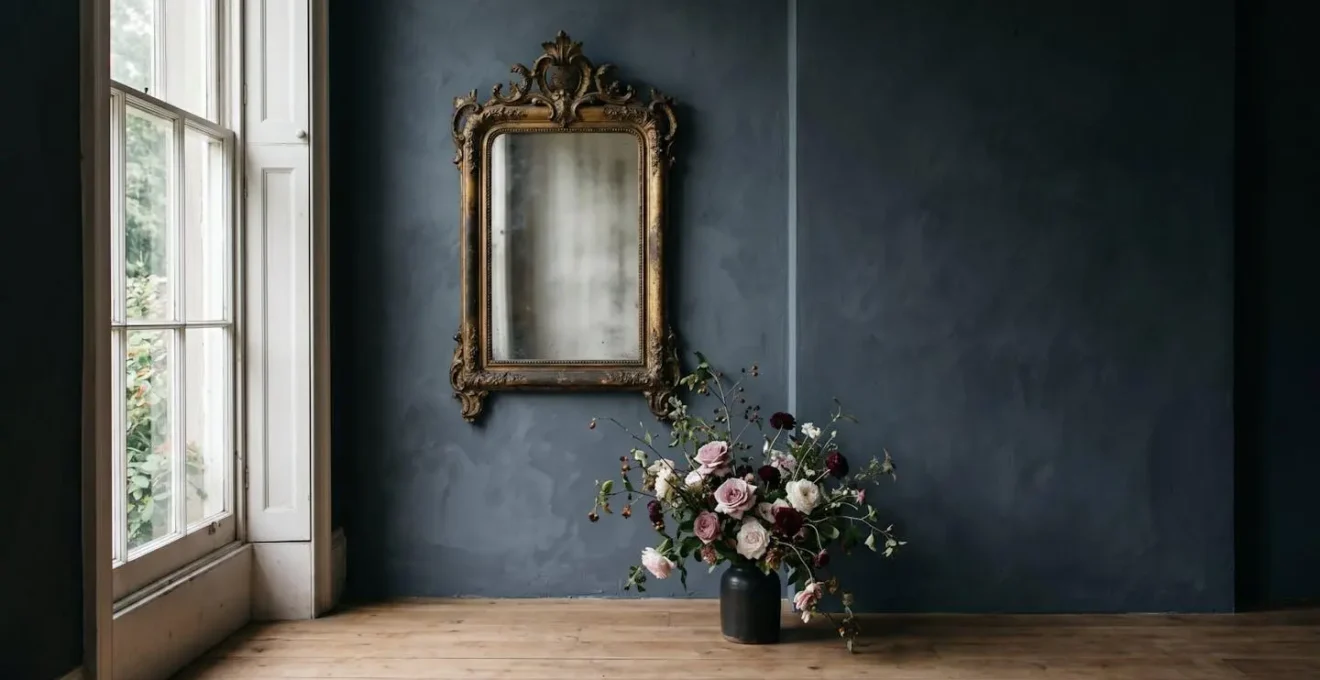
The atmosphere is further enhanced through lighting and texture. Favour soft, diffused natural light that creates long shadows and a contemplative mood. Combine this with the tactile richness of materials like aged velvet, raw linen, and patinated wood. Finally, introduce a touch of the wild and imperfect. A loosely arranged bouquet of foraged branches and garden roses in a simple ceramic vessel feels more authentic and poetic than a perfectly coiffed formal arrangement. It’s this blend of discipline and imperfection that captures the true spirit of modern romanticism.
The result is a space that feels personal, soulful, and layered with history, rather than a museum replica. It tells a story, not just about a historical period, but about you.
Why Does Paris Have So Many Small Galleries and How Do They Survive?
Walking through Paris, particularly in areas like Le Marais or Belleville, it’s impossible not to notice the sheer density of small, independent art galleries. In an era of global mega-galleries and soaring real estate costs, their survival seems almost paradoxical. This resilience is not accidental; it’s the result of a unique ecosystem built on three pillars: cultural policy, strategic real estate adaptation, and symbiotic relationships with other creative industries. These factors allow tiny galleries to thrive by carving out niches that larger institutions cannot fill.
Firstly, the French state has a long tradition of supporting the arts. While direct subsidies are competitive, the existence of cultural support mechanisms creates a more forgiving economic environment. For instance, according to French government cultural policy, relief funds allocated during crises often include specific provisions for the visual arts sector, providing a crucial safety net. This state-level validation of art as a public good fosters a culture where small artistic ventures are seen as valuable, not just commercially viable.
Secondly, Parisian gallerists are masters of real estate opportunism, often finding and adapting spaces that are unsuitable for conventional retail. This strategy is perfectly illustrated by the recent migration of galleries to specific streets, creating new art hubs in the process.
Case Study: The Belleville and Upper Marais Gallery Migration
Streets like Rue Béranger in the Upper Marais exemplify how small galleries survive through strategic adaptation. Several galleries have occupied former fashion showrooms, converting historic merchant spaces with unique architectural features into contemporary art venues. This creates a niche real estate market they can affordably access while positioning themselves in dynamic art districts. Proximity to major fashion week venues, like the Carreau du Temple, generates a valuable cross-pollination between international fashion and art collectors, sustaining operations year-round.
This combination of governmental support, clever real estate strategy, and a synergistic relationship with the powerhouse fashion industry allows Paris’s small galleries to not just survive, but to remain a vital and dynamic part of the city’s cultural identity.
Key Takeaways
- Access to private French design is a matter of cultural fluency, not professional status; it’s about showing respect and informed passion.
- Your approach must shift from ‘shopper’ to ‘collector,’ using specific language and demonstrating prior research to be taken seriously.
- The most memorable experiences often lie in small, intimate galleries where direct dialogue with the creator provides unparalleled context.
Why Do Tiny Paris Galleries Sometimes Offer More Memorable Art Experiences Than the Louvre?
The Louvre is an essential monument to human creativity, a breathtaking repository of history. Yet, for a true art lover, the experience can be overwhelming, impersonal, and surprisingly distant. You view masterpieces from behind velvet ropes, surrounded by a sea of smartphones, with context provided by a crowded wall text. In stark contrast, the experience offered by a tiny, independent gallery in Le Marais can be profoundly more intimate and memorable. The value here is not in the monumental scale, but in the power of proximity and dialogue.
In a small gallery, the barrier between the viewer and the art dissolves. You are not one of thousands but one of a handful of visitors. You can get close enough to see the texture of the paint, the grain of the canvas, the artist’s hand at work. This sensory, tactile connection to the material is something a large museum can rarely offer. But the most significant difference is the human element. As gallerist Laurent Godin notes, the access to expertise is immediate and personal.
In a small gallery, you can have a one-on-one dialogue with the gallerist (or sometimes the artist), providing a depth of context impossible to get from a museum wall text.
– Laurent Godin, Galerie Laurent Godin Owner Interview
This conversation transforms the act of viewing into an active exchange. You can ask about the artist’s intention, the technical process, the story behind a particular series. You are not a passive consumer of culture; you are a participant in a conversation. This direct access to the “why” behind the work creates a deep, personal connection that can last a lifetime.
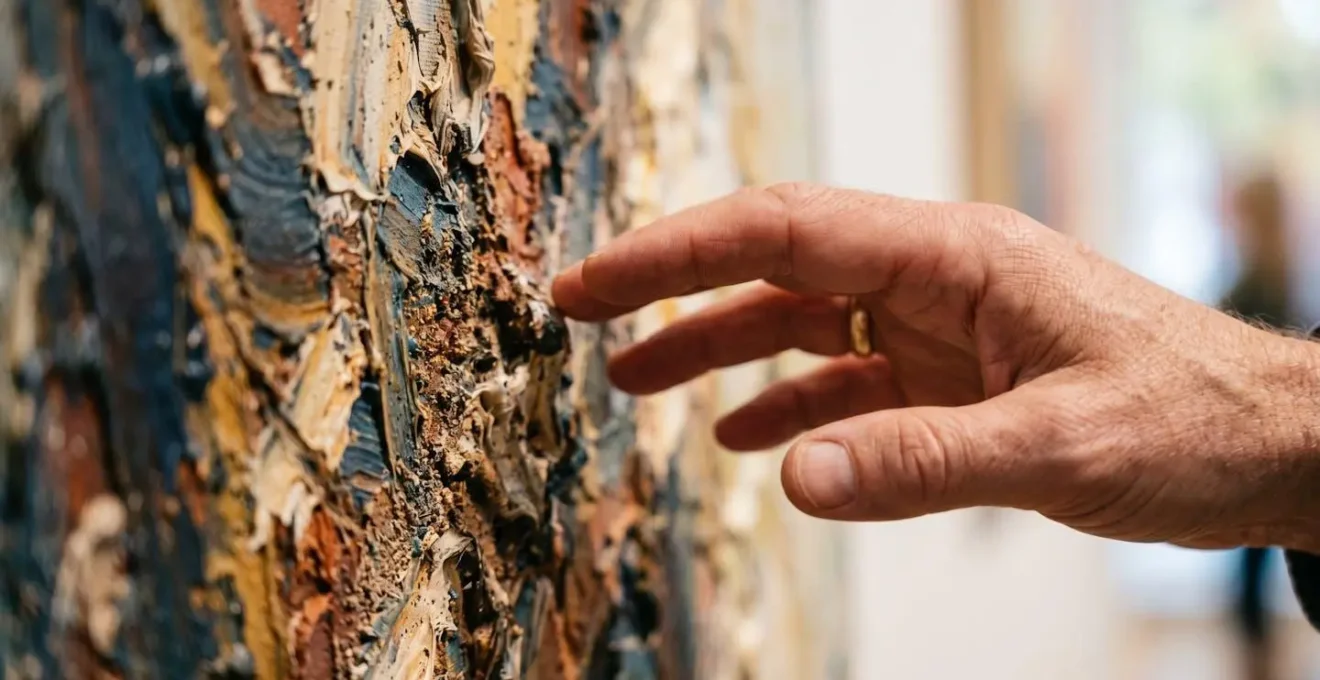
While the Louvre shows you the established history of art, the small gallery invites you to be part of its present. It’s an opportunity to discover an emerging artist before the rest of the world does, to acquire a piece that resonates on a personal level, and to build a relationship with the people who are shaping the future of art. This is not just about seeing art; it’s about experiencing it with an intensity and intimacy that a grand institution can never replicate.
Your journey into the world of private French design begins not with a flight to Paris, but with research. Start exploring the work of designers you admire, prepare your approach with the respect and diligence of a true connoisseur, and get ready to open doors you once thought were permanently closed.