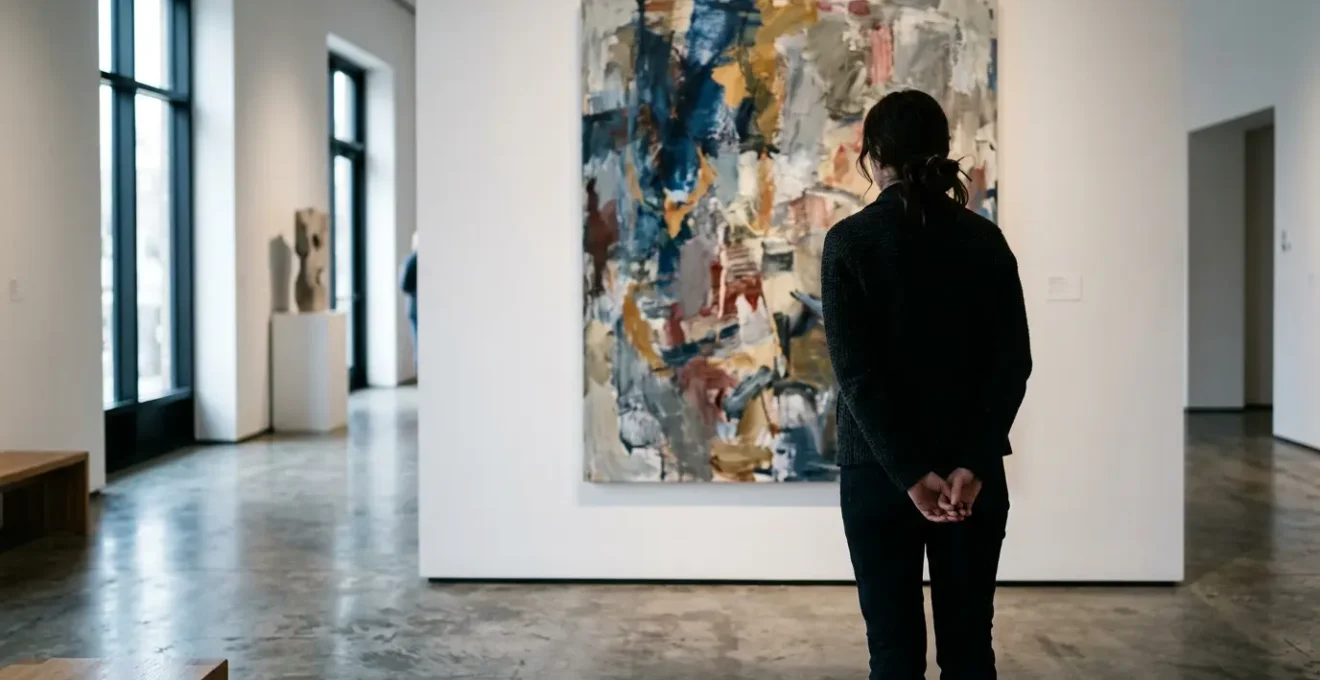
The belief that you need insider connections to access Paris’s best art is a myth; the real key is understanding the city’s unique gallery ecosystem.
- Small galleries are not just shops but talent incubators, surviving by launching artists onto the international stage, making your visit a glimpse into the future of art.
- Overcoming the “gallery door hesitation” is simple with a few etiquette rules, opening up hundreds of free, intimate art spaces.
Recommendation: Instead of just wandering, use digital tools to find galleries matching your specific taste, then subscribe to their newsletters—it’s the single most effective step to start receiving invitations to private openings.
For any UK art enthusiast, a trip to Paris feels incomplete without visiting the Louvre. You brace for the queues, navigate the crowds, and catch a fleeting glimpse of the Mona Lisa from across a sea of smartphones. The experience is monumental, yet often impersonal. But what if the most profound, memorable art encounters in Paris aren’t found in its grand museums at all? What if they’re hidden in plain sight, behind the discreet doors of the city’s countless small galleries?
The common advice is to simply “get off the beaten path,” but this vague suggestion misses the point. The true magic of the Parisian gallery scene isn’t just its intimacy; it’s the vibrant, complex ecosystem that powers it. These small spaces are not passive showrooms. They are dynamic hubs of discovery, commerce, and community where artists’ careers are born and the future of the art market takes shape. For a visitor, this means you’re not just looking at art; you’re stepping into a living story.
This guide abandons the generic advice. We’ll delve into the “why” and “how” of this world. You will learn why Paris has so many galleries and the economic models that allow them to thrive. We will show you how to find spaces dedicated to your niche interests, how to navigate the unwritten rules of gallery etiquette, and when to visit to see the freshest work. By understanding the system, you transform from a tourist into an informed participant, ready to unlock art experiences that are personal, meaningful, and far more memorable than any crowded museum hall.
This article will guide you through the essential knowledge needed to navigate the Parisian gallery scene like an insider. From understanding its structure to mastering the social codes, here is your roadmap to discovering the city’s true artistic heart.
Summary: An Insider’s Guide to Paris’s Intimate Art Scene
- Why Does Paris Have So Many Small Galleries and How Do They Survive?
- How to Find Paris Galleries Showing Only Art Nouveau or Only Contemporary Photography?
- Marais or Saint-Germain: Which Paris Gallery District Suits Your Art Taste Better?
- The Gallery Door Hesitation That Prevents You Seeing Some of Paris’s Best Art
- When Do Paris Galleries Launch New Shows and How to Time Visits for Fresh Work?
- How to Find Museums With Masterpieces but No Queues in Paris?
- How to Get Invited to Private Openings in Paris Without Knowing Anyone?
- Why Do UK Collectors Pay 40% More for French Artists Bought Through London Galleries?
Why Does Paris Have So Many Small Galleries and How Do They Survive?
The sheer density of art galleries in Paris can be baffling. The city is home to more than 1,000 galleries, a figure that seems to defy modern retail logic. Unlike the blockbuster model of major museums, these small spaces operate on a completely different economic and cultural principle. They are not just stores for art; they are the foundational layer of the entire art ecosystem, acting as talent incubators, research labs, and launchpads for artistic careers. Their survival depends less on foot traffic and local sales, and more on a sophisticated, long-term strategy of building an artist’s value on the global stage.
A Parisian *galeriste* (gallery owner) often invests in an emerging artist for years, providing them with studio support, critical feedback, and their first solo shows. The goal isn’t immediate profit. The real return on investment comes when the artist gains international recognition and is featured in prestigious art fairs like Art Basel or Frieze London. The gallery, having nurtured this talent from the beginning, sees its reputation—and the value of its inventory—skyrocket. This hybrid model, combining local presence with international fair participation, is the engine that keeps the Parisian scene so vibrant and diverse.
Case Study: The High Art Gallery Model
High Art gallery is a prime example of this survival strategy. Starting as a small project space in the up-and-coming Belleville district, it focused on giving early solo shows to then-unknown artists like Rachel Rose and Max Hooper Schneider. By championing their work and strategically placing them in the international conversation, the gallery cultivated their careers. These artists went on to have major exhibitions at institutions like the Whitney Museum. This success, built over years, cemented High Art’s status as a key player, demonstrating how a small Parisian gallery can thrive by creating value through curatorial foresight and international exposure, rather than relying solely on walk-in sales.
For you, the visitor, this means that when you step into a small gallery, you are often witnessing the very beginning of an important artistic journey. It’s a chance to see raw, challenging work before it’s validated by the museum world, offering a direct connection to the city’s creative pulse.
How to Find Paris Galleries Showing Only Art Nouveau or Only Contemporary Photography?
With such a vast number of galleries, finding the ones that align with your specific tastes—be it the sinuous lines of Art Nouveau, the stark reality of contemporary photography, or anything in between—can feel like searching for a needle in a haystack. Aimless wandering might lead to happy accidents, but a targeted approach yields far more rewarding experiences. Fortunately, the digital age has provided powerful tools to cut through the noise and curate your own art tour with precision.
Forget generic tourist maps. The key is to use the same platforms that collectors, curators, and critics use. Websites like Artsy and Artnet are not just online marketplaces; they are comprehensive databases of exhibitions. They allow you to filter shows in Paris by medium (painting, sculpture, photography), movement (Impressionism, Surrealism, Contemporary), and neighbourhood. These platforms provide up-to-date information on what’s currently showing, complete with images and curatorial statements, so you can pre-qualify a visit.
For an even more vetted list, consulting the official directory of the Comité Professionnel des Galeries d’Art (CPGA) is an insider’s move. This professional body categorises its members by specialty, ensuring you’re looking at established, reputable dealers. Finally, don’t underestimate the power of social media. Following galleries and using specific hashtags like #parisgalleries or #contemporaryphotographyparis on Instagram will not only reveal current shows but also expose you to emerging spaces that might not yet be on the major platforms. This combination of digital tools empowers you to move from a passive tourist to an active, informed art seeker.
Your Action Plan: Finding Your Niche Gallery
- Filter with Precision: Use Artsy.net’s filters for Paris to narrow down current shows by medium (e.g., “Photography”) and artistic movement to create a shortlist of relevant exhibitions.
- Consult the Professionals: Visit the website of the Comité Professionnel des Galeries d’Art (CPGA) and browse their member directory, which is often categorised by specialty like “Modern Art” or “Decorative Arts.”
- Check Gallery Directories: Explore Artnet’s gallery network, which allows you to search for Parisian dealers specialising in everything from Old Masters to cutting-edge contemporary artists.
- Follow the Digital Trail: Use Instagram to follow galleries you’ve identified and search for location-specific hashtags (e.g., #maraisgallery, #artnouveauparis) to discover real-time posts about current and upcoming shows.
- Map Your Route: Once you have a list of 3-5 galleries, map their locations to plan an efficient and enjoyable walking tour within a specific district.
Marais or Saint-Germain: Which Paris Gallery District Suits Your Art Taste Better?
Paris’s gallery scene is geographically concentrated into a few key districts, each with its own distinct personality. While you can find art all over the city, the two undisputed heavyweights are Le Marais and Saint-Germain-des-Prés. Choosing where to focus your time depends entirely on your artistic inclinations, as the character of each neighbourhood is deeply intertwined with the type of art you’ll find there.
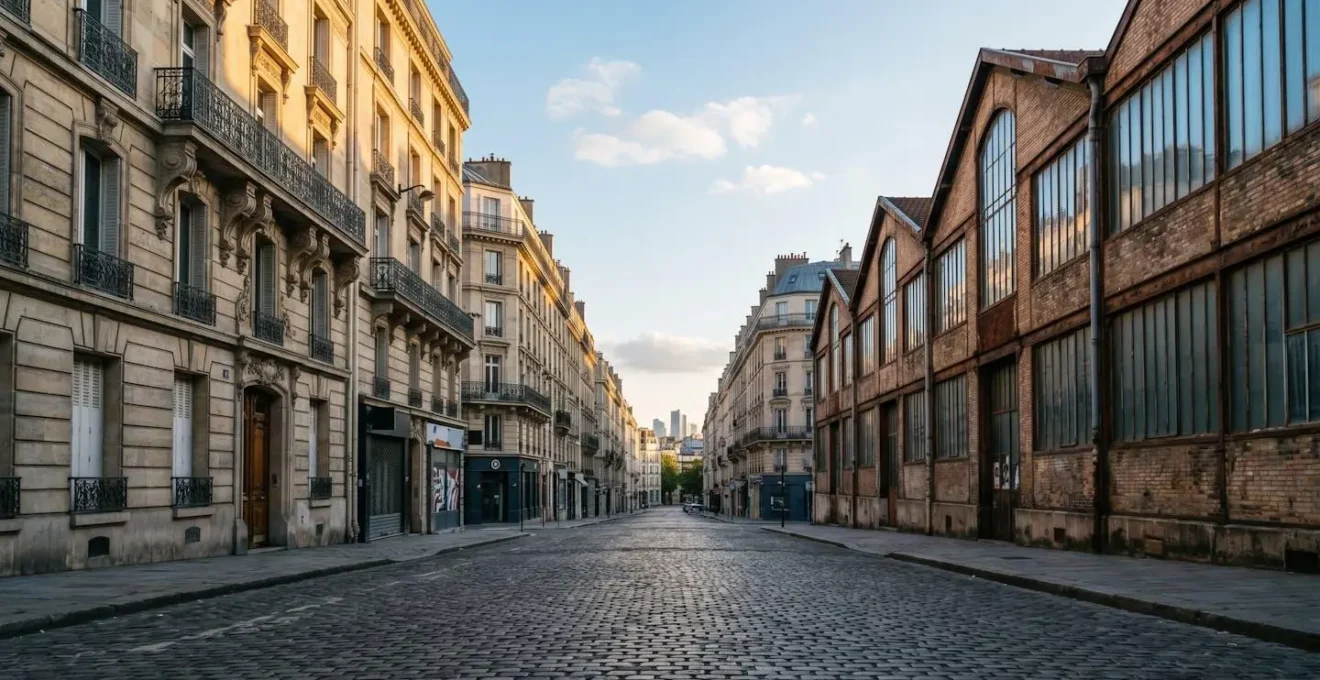
As the image above suggests, the very architecture tells a story. Saint-Germain-des-Prés, on the Left Bank, is the historic heart of the Parisian art world. Its elegant 17th and 18th-century buildings, once frequented by existentialist philosophers, now house galleries specialising in modern masters, post-war art, design, and tribal arts. A walk here feels like a journey through art history; you’ll find names like Picasso and Giacometti in refined, intimate settings. It’s the district for those who appreciate established legacies and the quiet confidence of blue-chip art.
Le Marais, on the Right Bank, offers a starkly different energy. It is the epicentre of contemporary art in Paris. The shift to this district was driven by a practical need for space. As a Wikipedia analysis of its history notes, the availability of larger, post-industrial buildings was a key factor. A gallerist explained the move:
Le Marais became the contemporary hub [due to] post-industrial spaces, proximity to Centre Pompidou.
– Wikipedia Historical Analysis, The Marais – Historical Evolution
Here, you’ll find large, white-cube galleries in converted workshops and grand *hôtels particuliers*, showcasing the most challenging and innovative work from both French and international artists. The atmosphere is edgier, the work is fresh, and the scene is constantly evolving. If your passion is for the art of today and tomorrow, Le Marais is your destination.
The Gallery Door Hesitation That Prevents You Seeing Some of Paris’s Best Art
You’ve found the perfect gallery, the address is in hand, and you’re standing right outside. But the door is closed, the interior looks quiet, and there’s an intimidating air of exclusivity. This is the “Cultural Threshold,” a moment of hesitation that stops many art lovers in their tracks. The fear of intruding, of not “belonging,” or of being pressured to buy is powerful, but it’s based on a fundamental misunderstanding of what a gallery is. The single most important thing to know is this: commercial art galleries are public spaces, and you are welcome to enter freely.
Unlike a private club, a gallery’s purpose is to show art to the public. It is, in essence, a free, temporary museum for a specific artist or exhibition. The gallerist and their staff are there to share information, not to pressure you. The quiet atmosphere isn’t a sign of exclusion; it’s designed to create a contemplative environment for appreciating the art. Overcoming this hesitation is the key that unlocks hundreds of incredible art experiences across the city. All it takes is a shift in mindset and an understanding of a few simple, unwritten rules of etiquette.
The most crucial rule in any French establishment applies here: always greet the staff with a simple “Bonjour” upon entering and “Merci, au revoir” when leaving. This small act of courtesy instantly changes the dynamic from an intrusion to a respectful visit. From there, the etiquette is much like that of a museum. Here are the essential points to remember:
- You are a visitor, not a customer. It is perfectly normal and expected to browse without any intention to purchase. The primary goal is to look and experience the art.
- Keep your distance. Never touch the artwork. Natural oils from your hands can cause irreversible damage over time. A safe distance of about an arm’s length is a good rule of thumb.
- Ask before you snap. While many galleries are fine with you taking personal photos (without flash), some have restrictions. Always look for a sign or politely ask an attendant first.
- Speak softly. Maintain a quiet, conversational tone, just as you would in a library or museum, to respect the experience of other visitors.
When Do Paris Galleries Launch New Shows and How to Time Visits for Fresh Work?
Walking into a gallery is one thing; walking into a gallery buzzing with the energy of a brand-new exhibition is another entirely. Timing your visit can dramatically elevate the experience from a quiet viewing to a dynamic social and artistic event. The Parisian gallery world operates on a distinct rhythm, with specific days for openings and key periods in the calendar when the entire city comes alive with art.
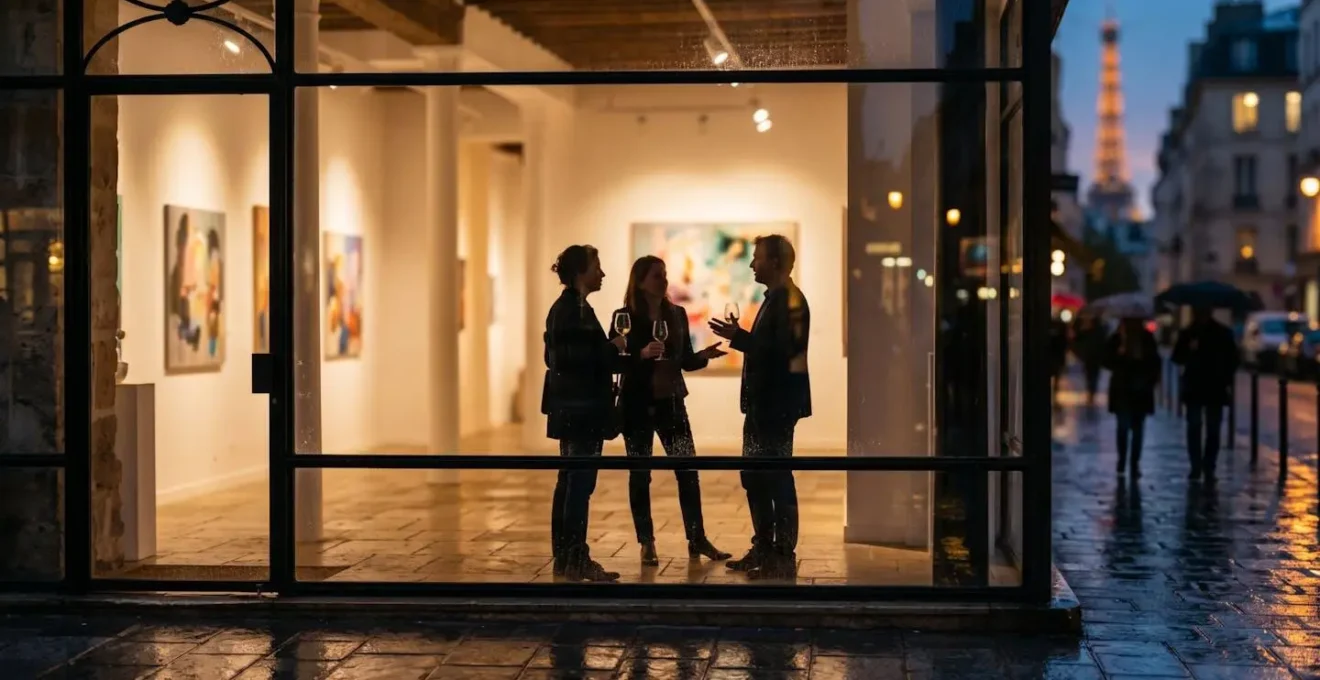
The most important term to know is *vernissage*, which literally means “varnishing.” Historically, it was the day before an exhibition’s official opening when artists would put the final touches of varnish on their paintings. Today, it refers to the private or public opening reception for a new show. In Paris, vernissages traditionally happen on Thursday evenings, though Tuesdays and Saturdays are also common. These are fantastic opportunities to see fresh work, meet the artist, and mingle with collectors and critics over a glass of wine. The atmosphere is social, celebratory, and offers a wonderful window into the local art community.
Beyond the weekly rhythm, the Paris art calendar is punctuated by several key city-wide events. The most significant for gallery hopping is Paris Gallery Weekend. Held annually in the spring, this event sees a huge number of venues coordinate their openings and host special events. The 2025 edition, for example, is slated to include more than 74 participating galleries. Another major period is “La Rentrée” in September, when galleries launch their most ambitious shows of the year after the August lull. Finally, timing a visit to coincide with major art fairs like Paris+ par Art Basel in October is a smart move. Even if you don’t attend the fair itself, galleries across the city will have their best exhibitions on display to attract the influx of international collectors.
How to Find Museums With Masterpieces but No Queues in Paris?
Even with the allure of the gallery scene, the desire to see iconic masterpieces in a museum setting is understandable. The problem isn’t the art at the Louvre or Musée d’Orsay; it’s the overwhelming crowds that can detract from the experience. The solution isn’t to give up on museums, but to seek out the city’s “specialist sanctuaries”—smaller, often single-artist museums that offer world-class art without the queues.
These institutions provide an intimacy and depth of focus that the larger museums simply cannot match. Instead of a sprawling collection spanning centuries, they offer a deep dive into the universe of a single artist, often within the very walls where they lived and worked. This creates a powerful, almost spiritual connection to the art and its creator. You’re not just viewing a painting; you’re stepping into the artist’s world, seeing their masterpieces in the context they were conceived.
These quiet havens are scattered throughout Paris and provide a perfect, tranquil complement to the buzz of the contemporary gallery scene. They are home to some of art history’s most beloved works, presented in a serene and personal atmosphere. Here are a few essential destinations:
- Musée de l’Orangerie: While famous, its two oval rooms housing Monet’s magnificent *Water Lilies* are designed for quiet contemplation. The experience of being completely surrounded by his brushstrokes is unparalleled and far more serene than the fight to see them at the d’Orsay.
- Musée Rodin: Seeing masterpieces like *The Thinker* and *The Kiss* within the artist’s former home and, most importantly, scattered throughout a beautiful, peaceful sculpture garden is a profoundly moving experience. You can encounter his works under an open sky, far from any crowd.
- Musée Gustave Moreau: A true hidden gem, this museum is the artist’s actual family home and studio, preserved as he left it. Climbing the spectacular spiral staircase to his workshops, filled with thousands of his symbolist paintings and drawings, feels like a personal discovery.
- Musée Bourdelle and Musée Zadkine: For lovers of sculpture, these two museums, dedicated to Antoine Bourdelle (a student of Rodin) and Ossip Zadkine respectively, offer immersive experiences in the artists’ preserved studios, filled with powerful works in an intimate setting.
How to Get Invited to Private Openings in Paris Without Knowing Anyone?
Attending a *vernissage* is one of the most exciting ways to experience the Paris art scene, but the idea of getting an invitation can seem daunting if you don’t have connections. The truth is that you don’t need to be a major collector or art world insider to get on the guest list. Galleries are businesses, but they are also communities. They want to connect with genuine enthusiasts who appreciate their artists’ work. By transforming yourself from a passive visitor into an engaged and known supporter, you can begin to receive these coveted invitations.
This process is about building a light-touch relationship, and it’s simpler than you might think. It’s a “digital handshake” that signals your interest and appreciation. Gallerists are far more likely to add someone to their private list who shows genuine, informed curiosity than someone who simply walks in and out. The key is to be memorable in a subtle and respectful way. A few strategic, thoughtful actions can open doors that seem firmly closed.
The goal is to demonstrate that you are more than just a tourist. You are an enthusiast who is paying attention. By following a few simple steps, you can position yourself as a valuable member of the gallery’s community, making you a natural choice for an invitation to their next private event.
Your Action Plan: Getting on the Guest List
- Subscribe to Newsletters: This is the single most important step. Visit the websites of galleries you admire and sign up for their mailing lists. This is the primary channel for announcing all events, both public and private.
- Attend Public Events First: Go to the public openings or “finissages” (closing parties). Be present and observant. This shows you are making an effort to be part of their community.
- Engage Thoughtfully Online: Follow your favourite galleries on social media. When they post about an exhibition you’ve seen, leave a specific, appreciative comment. Instead of “Great work!”, try “The use of texture in the second piece was incredible.” This shows you’re paying close attention.
- Send a Follow-Up Email: After a particularly moving visit, find the gallery’s contact email and send a brief, polite message. Mention a specific work that impressed you and thank them for the exhibition. This small gesture is incredibly powerful and memorable.
- Ask Smart Questions: If you attend a talk or a public opening and get a chance to speak with the gallerist or artist, ask a genuine question about the work or the curatorial process. Your curiosity is your best currency.
Key Takeaways
- The survival of Paris’s small galleries hinges on a global strategy of talent incubation and art fair participation, not just local sales.
- Simple etiquette, starting with a ‘Bonjour’, is all that’s required to overcome the hesitation of entering a gallery and unlock countless free art experiences.
- For UK collectors, post-Brexit complexities and London overheads mean that acquiring French art directly from a Paris gallery can be significantly more cost-effective.
Why Do UK Collectors Pay 40% More for French Artists Bought Through London Galleries?
For a UK-based collector, the appeal of buying art in London is obvious: it’s convenient and familiar. However, that convenience comes at a significant premium, especially when acquiring work by French artists. While a figure like 40% is illustrative, it reflects a real-world price differential driven by a confluence of economic factors, market structures, and, crucially, post-Brexit realities. Understanding this dynamic is not just an academic exercise; it’s a compelling financial argument for buying directly from the source in Paris.
France’s position in the global art market is stronger than ever. The 2024 Global Art Market Report by Artprice confirms that while the global market faced challenges, France became the leading European art market in 2024, ranking fourth globally with 7% of turnover and second worldwide in transaction volume. This robust domestic market provides a stable and competitive pricing environment. When a French artist’s work is sold through a London gallery, multiple layers of cost are added on top of the initial price.
The most significant of these costs are the direct results of purchasing art outside the EU. The same 2024 report highlights that post-Brexit customs complexities, including import taxes, shipping insurance, and administrative fees, create a substantial financial barrier. Beyond this, London galleries face much higher overheads—from prime real estate costs to the hefty fees for participating in prestigious fairs like Frieze London. These expenses are inevitably passed on to the collector. By acquiring the work directly from the artist’s representing gallery in Paris, a UK collector bypasses many of these intermediary costs, securing the piece at a price much closer to its primary market value.
So, the next time you’re in Paris, step beyond the museum queues. Armed with this knowledge, you can navigate the city’s art scene with confidence, connect with art on a deeper level, and perhaps even make a smarter acquisition. Your next unforgettable art encounter is waiting behind a discreet gallery door.