
The secret to Parisian elegance in the UK isn’t copying outfits; it’s translating the underlying style codes for a British context.
- The “Parisian uniform” is a myth; true style comes from a philosophy of investing in quality foundation pieces and understanding cost-per-wear.
- Fabrics and accessories that look chic in Paris can look out of place in London because style is contextual—it’s influenced by architecture, light, and weather.
Recommendation: Instead of buying a checklist of French items, focus on building a versatile capsule wardrobe and learning to adapt it using texture, tailoring, and accessory restraint.
You’ve followed the guides meticulously. The Breton top is in your wardrobe, the trench coat is on its hook, and you’ve even invested in a pair of classic ballet flats. You assemble the outfit, look in the mirror, and something feels… off. Instead of embodying that elusive Parisian chic, you feel like you’re wearing a costume, a tourist’s uniform for a city you don’t live in. This frustration is common for many style-conscious British women who admire the apparent effortlessness of French capital style but find that direct imitation falls flat.
The internet is saturated with checklists promising the “five pieces you need to look French.” But this approach misses the fundamental point. It treats a nuanced cultural aesthetic like a simple recipe. The truth is, the elegance we associate with Parisian women isn’t just about *what* they wear, but *why* and *how* they wear it. It’s a system of unwritten rules, a philosophy of dressing deeply intertwined with their environment, lifestyle, and even their economic mindset. Simply importing the clothes without understanding the cultural software that runs them is destined to fail.
But what if the key wasn’t imitation, but translation? What if, instead of copying outfits, you could learn to decode the principles behind them and adapt them authentically for your own life in London, Manchester, or Edinburgh? This guide moves beyond the clichéd uniform. We will dissect the foundational philosophies that separate Parisian elegance from a British interpretation, exploring everything from spending habits and brand choices to the critical role of context. We will show you how to build a wardrobe that feels just as right in Marylebone as it does in the Marais, enabling you to capture the *spirit* of Parisian style, not just its superficial appearance.
Summary: Decoding and Adapting French Capital Style
- Why Do Parisians Spend Less on Clothes but Look More Expensive Than Londoners?
- How to Create a Wardrobe That Looks Appropriate in Both Marylebone and the Marais?
- Cos or Sandro: Which Accessible Brand Better Captures Parisian Elegance for UK Buyers?
- The Accessory Habit That Instantly Reveals Your Attempt at Parisian Style as British
- When Do Parisians Switch Wardrobes and Why Does Timing Affect How Chic You Look?
- How to Apply French “Less Is More” Skincare When British Weather Demands More?
- How to Wear French Linen to Work Without Looking Like You Slept in Your Clothes?
- Why Does French Linen Look Effortlessly Chic in Paris but Rumpled and Messy in London?
Why Do Parisians Spend Less on Clothes but Look More Expensive Than Londoners?
The paradox of Parisian style often begins with economics. While it appears luxurious, it’s built on a philosophy of strategic investment rather than conspicuous consumption. The secret isn’t necessarily spending less overall, but allocating funds differently. The core principle is a mastery of the cost-per-wear concept. A higher initial investment in a perfectly tailored blazer, a timeless leather bag, or a pair of quality boots is justified because these items will be worn for years, bringing their effective daily cost down significantly. As fashion researchers note, ” higher-quality clothing should last longer, making a higher purchase price worthwhile in the long run.”
This contrasts with a more trend-driven cycle often seen in other fashion capitals, where wardrobes are refreshed more frequently with lower-quality, fast-fashion items. However, this doesn’t mean Parisians exclusively buy high-end labels. The look is achieved through a savvy high-low mix. That expensive blazer might be thrown over a simple top from a high-street store or paired with vintage denim. The key is that the investment pieces—those with structure, quality fabric, and timeless design—do the heavy lifting, elevating the entire outfit.
Interestingly, data reveals a more complex picture than the “buy less, buy better” mantra suggests. For instance, a 2024 survey found that French women bought an average of 32 clothing items, with the average price of a new item at a modest €15.60. This indicates a high volume of purchases, but it’s the combination of these affordable basics with a few select, high-quality, durable pieces that creates the expensive-looking aesthetic. It’s not about a wardrobe full of designer clothes, but a few key items that provide a foundation of quality and style.
How to Create a Wardrobe That Looks Appropriate in Both Marylebone and the Marais?
The ability to look appropriate in different cultural contexts is not about having two separate wardrobes; it’s about owning a versatile foundation and understanding the art of “style translation.” The core of this is a capsule of high-quality, neutral, and impeccably cut basics. These pieces act as a blank canvas. The magic—and the cultural coding—happens with what stylists call the “third piece”: the jacket, the scarf, the bag, or the shoes that you add to your base of, say, jeans and a shirt.
For example, a core outfit of straight-leg dark denim and a white silk shirt can be “translated” for different cities. In the Marais, you might add a slightly worn-in vintage leather jacket, a patterned silk scarf, and understated leather loafers. The vibe is relaxed, artistic, and carries a sense of personal history. For a day in Marylebone, the same base could be transformed with a sharply tailored navy blazer, a structured and minimalist handbag, and polished block heels. The message becomes more polished, professional, and contemporary. The core clothes are the same, but the cultural dialect is completely different.
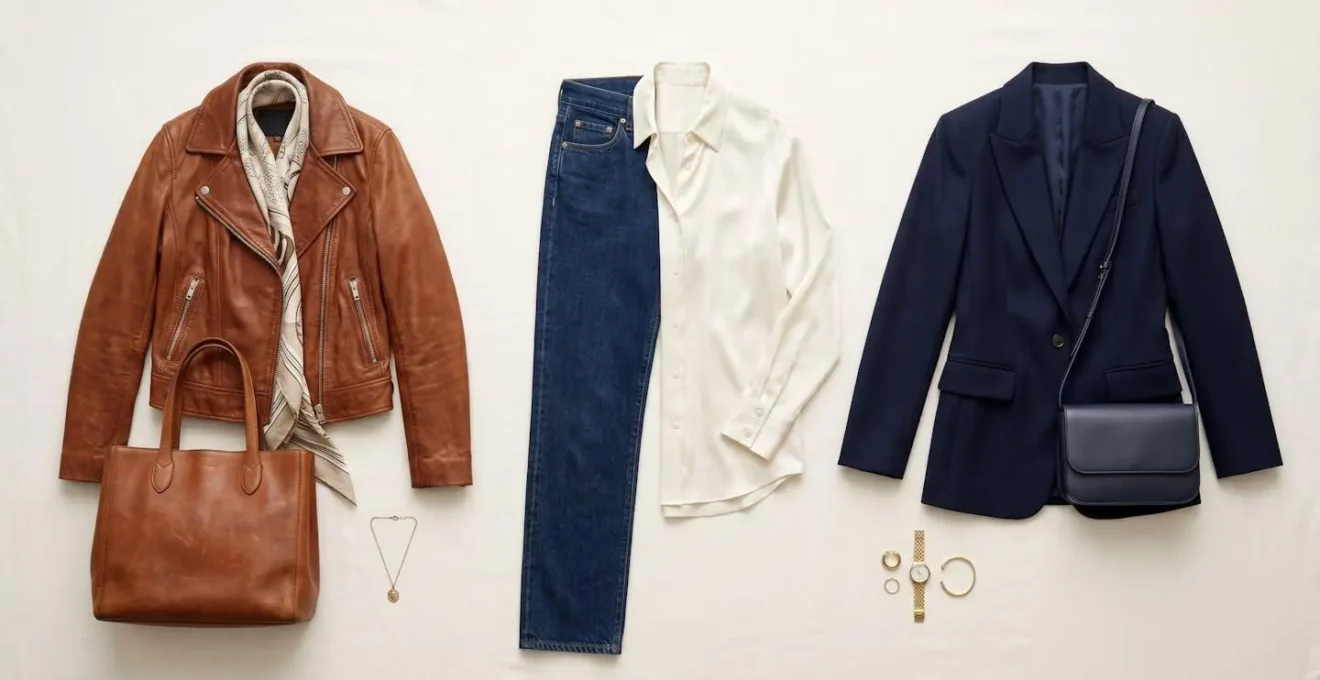
Building this “chameleon” wardrobe requires focusing on silhouette, fabric, and fit over trends or logos. These are pieces that have their own integrity but don’t scream for attention, allowing the accessories and layering choices to define the final look. Below is a foundational list of ten items that form an excellent basis for this cross-cultural elegance, providing a versatile vocabulary for you to create your own style sentences, wherever you are.
- White button-down shirt: Starch-crisp, great fit, workwear-ready with trousers or relaxed with denim.
- Fluid navy blazer: An architectural silhouette that transitions from office to evening.
- Straight-leg dark denim: Classic blue wash, ankle-length, with minimal distressing.
- Ecru silk shirt or blouse: A touch of neutral luxury that works under blazers or stands alone.
- Tailored wool trousers: A sharp cut in a neutral tone like navy, charcoal, or camel.
- Quality leather loafers: A timeless silhouette in versatile black or cognac.
- Cashmere or merino sweater: Fitted or slightly oversized, in a neutral palette.
- Trench coat: A classic construction in beige or navy, hitting at the knee.
- Leather crossbody bag: Structured, with minimal hardware and a discreet or brandless design.
- Ballet flats or low block heels: Comfortable and classic, suitable for multiple settings.
Cos or Sandro: Which Accessible Brand Better Captures Parisian Elegance for UK Buyers?
For UK buyers seeking to inject a dose of Parisian style without the high-fashion price tag, the choice between accessible luxury brands can be confusing. Two popular contenders, Cos and Sandro, seem to occupy similar territory but are rooted in vastly different design philosophies. Understanding this difference is key to making the right choice for your wardrobe. Cos, with its Swedish roots, is a temple of Scandinavian minimalism. Its aesthetic is defined by clean lines, architectural and often oversized silhouettes, and a commitment to modern, understated design.
Sandro, on the other hand, is quintessentially Parisian. While still contemporary, its DNA is less about pure minimalism and more about a specific kind of nonchalant chic. As one fashion analysis puts it, ” COS focuses on modern and minimalist designs… Unlike COS… Sandro takes a more structured approach with precise cuts, refined details, and a strong Parisian flair.” This flair often comes from playing with contradictions: masculine and feminine, sharp and soft, classic and rock-and-roll.
Case Study: Sandro’s Brand Philosophy
Founded by Evelyne Chétrite, Sandro embodies a philosophy of being ‘casual but always chic’ and ‘sophisticated but cool.’ The brand successfully carved out a niche between high fashion and mass-market retail, focusing on the contemporary Parisian woman. According to an exploration of its brand story, its identity is built on masculine-feminine contrasts and unexpected twists. Signature pieces like boxy tweed jackets with frayed hems or belted blazers that blur sharp and soft lines are perfect examples of this ‘cool and chic Parisian spirit’.
So, which to choose? If your goal is a clean, modern, and versatile foundation, Cos provides excellent building blocks. Its minimalist pieces are the perfect “canvas” for a cross-cultural wardrobe. However, if you are looking to capture that specific, slightly edgier, and more detailed Parisian character, Sandro is the more direct route. Its pieces often come with the “twist” already built-in, offering a shortcut to the aesthetic. The ideal wardrobe likely contains elements of both: the minimalist foundation from a brand like Cos, punctuated by character pieces from a brand like Sandro.
The Accessory Habit That Instantly Reveals Your Attempt at Parisian Style as British
Accessories are the fastest way to betray your efforts at emulating Parisian style. Where other cultures might embrace a “more is more” approach, the French philosophy is rooted in restraint and personality. It’s not about wearing the latest “It” bag or stacking trendy jewellery; it’s about a few, carefully chosen pieces that feel personal and timeless. The most common mistake is over-accessorising. A hat, a statement necklace, a logo-heavy bag, and trendy shoes worn all at once is the antithesis of the Parisian approach. The goal is to have one, or at most two, focal points.
This philosophy of restraint is famously encapsulated by Coco Chanel’s timeless advice:
Before you leave the house, look in the mirror and take one thing off.
– Coco Chanel, on the philosophy of accessory restraint
This principle forces an edit, ensuring that each piece has a purpose and room to breathe. Another dead giveaway is a reliance on overtly trendy or logo-saturated items. The seasonal It-bag, plastered with a brand’s monogram, is rarely the choice of a chic Parisian. They are more likely to opt for a discreet, high-quality leather bag with minimal hardware, or a vintage find that has developed a unique patina over time. The value is in the quality and design, not the logo. Similarly, they tend to favour personal jewellery—a family signet ring, a delicate gold bangle worn daily, a vintage locket—over loud, seasonal costume pieces. To help you self-audit, here are the key accessory habits to avoid.
Your Action Plan: The Four Accessory Habits to Avoid
- Accessory Stacking: Avoid wearing too many statement items simultaneously (e.g., a statement hat, a large necklace, and a logo bag). The Parisian method favours a maximum of one strong statement piece per outfit.
- Logo-Heavy It Bags: Steer clear of the season’s most-hyped, logo-covered designer bag. Instead, opt for discreet, logo-free luxury bags or classic vintage pieces with a rich patina.
- Trendy Costume Jewellery: Resist the urge to buy into seasonal, fashionable costume jewellery. The French approach is to invest in fewer, more personal pieces like a family ring or a single, timeless gold bangle worn every day.
- Neglecting Signature Scent: Remember the ‘invisible accessory.’ A distinctive personal perfume is considered the final touch that completes the Parisian aesthetic, moving beyond purely visible elements.
When Do Parisians Switch Wardrobes and Why Does Timing Affect How Chic You Look?
One of the most subtle yet powerful codes of Parisian style is the approach to seasonal dressing. While in the UK, the first hint of sun might trigger an immediate switch to summer dresses and sandals, the Parisian approach is more measured and pragmatic. They don’t dress for the calendar; they dress for the actual weather and, more importantly, for the light. This leads to a mastery of `mi-saison` (mid-season) dressing, a period that can last for months in a city known for its unpredictable climate.
This means you’ll rarely see a Parisian in flimsy sandals and a sundress in April, even if it’s a sunny day. The light is still too cool, and the evenings are chilly. Instead, they excel at layering and texture. A typical `mi-saison` outfit might involve a fine-knit cashmere sweater, a silk scarf, a trench coat, and leather boots. Each layer is light but offers warmth, and the interplay of different textures—soft cashmere, smooth silk, structured cotton—creates visual interest. This philosophy is about being prepared and comfortable, which is the foundation of looking truly at ease and therefore, chic.
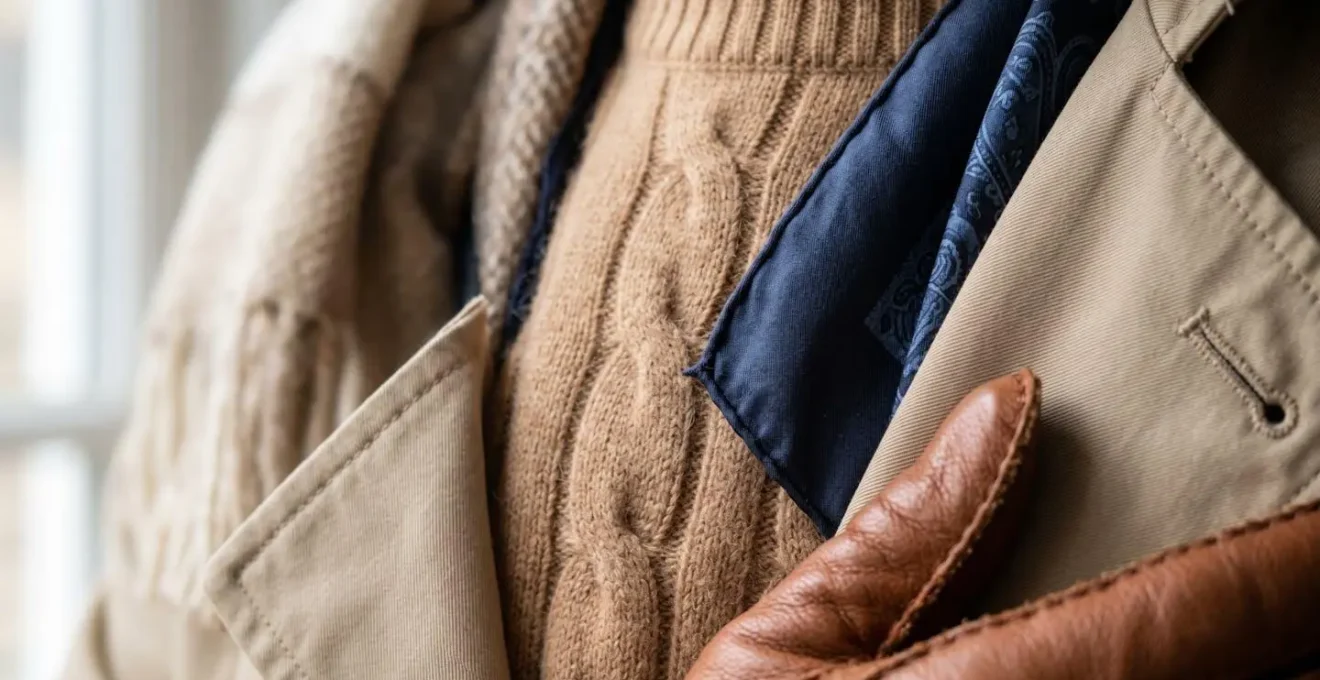
This mindset is less about following rules and more about personal comfort and expression. As Sandro founder Evelyne Chétrite explains, this is a core part of the French style identity:
French women do not really care too much, unfazed by what is dictated as appropriate for a certain time of day. They search more to express their own individuality than to strictly follow the trends. French dress to feel good, not to show off.
– Evelyne Chétrite, in an interview with Grazia Daily
For the UK woman, adopting this means resisting the urge to jump into a full seasonal wardrobe too early. Instead, focus on mastering the art of layering. Invest in high-quality transitional pieces like trench coats, lightweight knitwear, and silk scarves. This allows you to adapt to the notoriously changeable British weather with elegance and practicality, ensuring you never look like you’ve dressed for a different climate.
How to Apply French “Less Is More” Skincare When British Weather Demands More?
The “less is more” philosophy extends beyond the wardrobe to beauty, but it’s often misinterpreted. The French approach to skincare isn’t necessarily about using fewer products; it’s about a different priority: less makeup, more care. The goal is to achieve healthy, glowing skin that doesn’t need to be covered up. This means the focus is on a consistent and dedicated routine of cleansing, toning, treating with serums, and, most importantly, moisturising and protecting with SPF. The final look is natural and fresh, not heavily made-up.
But how does this translate to the UK, where damp, cold, and windy weather can be much harsher on the skin than in Paris? The key is in the “more care” part of the equation. A UK-based adaptation of this philosophy doesn’t mean abandoning your richer moisturisers or protective balms. In fact, it means leaning into them. The principle remains the same: prioritise skin health. If the British weather demands a more robust barrier cream or a hydrating facial oil to combat windburn and central heating, that is perfectly aligned with the French ethos of giving your skin what it needs.
The “less” part applies to the cosmetic layers on top. Instead of a heavy, full-coverage foundation, the French approach would favour a tinted moisturiser or a light-coverage base, allowing the healthy skin to show through. The focus is on a few key features—perhaps a defined brow, a touch of mascara, and a signature lipstick—rather than a full face of contoured makeup. By adapting the “care” part of the routine to be more protective for the British climate while sticking to the “less makeup” rule, you can achieve that healthy, effortless glow authentically.
How to Wear French Linen to Work Without Looking Like You Slept in Your Clothes?
Linen is a cornerstone of the French summer wardrobe, but its relaxed, rumpled nature can be difficult to translate into a more formal British work environment. The key to wearing linen without looking unkempt is to create a deliberate and sharp contrast. It’s about ‘framing’ the relaxed nature of the linen with elements of polish and structure. If you wear a relaxed linen shirt, for example, you must ensure the rest of the outfit is impeccably sharp. Pair it with crisply tailored wool trousers, polished leather heels, and a structured handbag. The juxtaposition of the relaxed fabric with the formal items reads as an intentional, confident style choice, not as carelessness.
The quality of the linen itself also plays a crucial role. Cheap, thin linen tends to wrinkle into a messy, chaotic pattern. High-quality, heavier linen, however, creases in a more ‘noble’ way. Its weight allows it to drape beautifully, and the creases it forms are larger and more sculptural, appearing as part of the fabric’s natural character rather than a sign of neglect. Investing in a few key pieces of heavy-weight linen will make a world of difference in how it’s perceived.
Finally, your grooming acts as the ultimate frame. Even if your linen trousers are perfectly rumpled, your look will be pulled-together if your hair is neatly styled, your shoes are polished, and you’re wearing a sharp lipstick. The most effective strategies rely on this principle of balance:
- Material Contrast: Pair a relaxed linen piece with a sharp, structured one. For example, wide-leg linen trousers with a fitted silk blouse and a blazer.
- Prioritize Heavy Linen: Invest in high-quality, heavier linen that drapes and creases intentionally rather than wrinkling messily.
- The Impeccable Frame Rule: Balance the rumpled nature of linen with perfect accessories—polished shoes, a structured bag, and pristine hair and makeup.
- Strategic Steaming: Use a hand steamer to relax the harsh creases from transport or storage. This maintains the fabric’s natural texture without the overly-pressed look of an iron, preserving the effortless vibe.
Key Takeaways
- True Parisian style is about translation, not imitation. Adapt the principles to your own context.
- Invest in timeless, high-quality foundation pieces. The cost-per-wear is lower, and they elevate your entire wardrobe.
- Context is king. What looks chic in one environment (light, architecture, weather) may not work in another.
Why Does French Linen Look Effortlessly Chic in Paris but Rumpled and Messy in London?
The reason a simple linen shirt can look like a piece of art in Paris and a crumpled mess in London has very little to do with the shirt itself and everything to do with context. Parisian style is not created in a vacuum; it is in constant dialogue with its environment. The city’s unique architectural palette and quality of light are silent partners in every outfit. The warm, honey-coloured glow of the sun reflecting off Haussmannian cream stone buildings is incredibly forgiving to fabrics like linen. It picks up the natural texture, making the creases look intentional and beautiful—part of a relaxed, sun-drenched aesthetic.
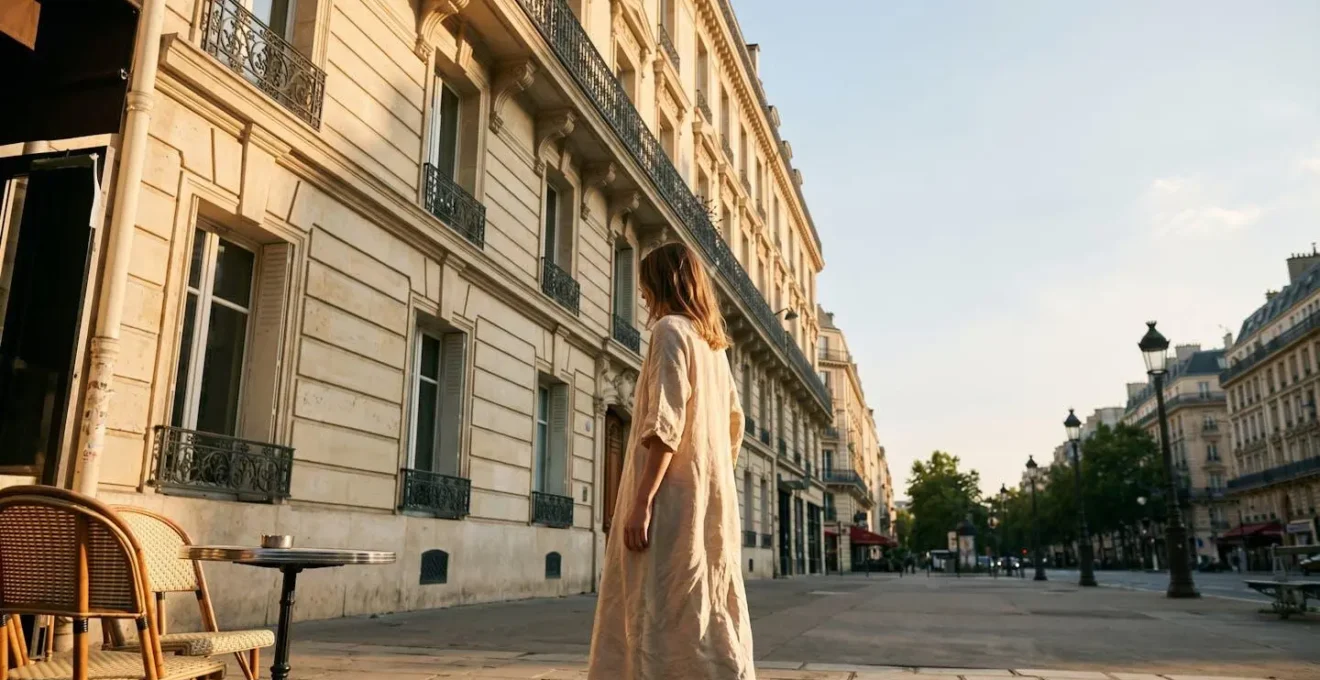
This effect is almost impossible to replicate under the cool, often grey and diffused light of a London sky. The same creases on the same shirt can suddenly look stark, untidy, and simply rumpled. The cool light doesn’t flatter the texture in the same way; instead, it highlights the disorder. Furthermore, the surrounding environment of brick, glass, and steel in many parts of a UK city provides a harsher, more graphic backdrop that makes the organic softness of wrinkled linen feel out of place. In Paris, the fabric is harmonising with the romantic, slightly aged patina of the city itself.
This is the ultimate lesson in contextual appropriateness. It confirms that you can’t simply lift an outfit from one culture and drop it into another without considering the environmental factors. It’s why a wicker basket bag, charming on a Parisian market street, can look twee and performative on the London Underground. The success of an outfit is a holistic equation where fabric, light, architecture, and cultural mood all play a part. True style comes from understanding this equation and solving it for your own location, not just copying the answer from someone else’s test paper.
Ultimately, chasing an authentic Parisian look by copying outfits is a chase you’ll never win. The real path to that coveted elegance lies in a change of mindset. Stop trying to be French and instead, learn to think like the French about clothes: as a long-term investment, a tool for self-expression, and something that must work in harmony with your life and your environment. By translating these principles for the British context, you will develop a style that is not only chic and timeless but, most importantly, authentically your own.