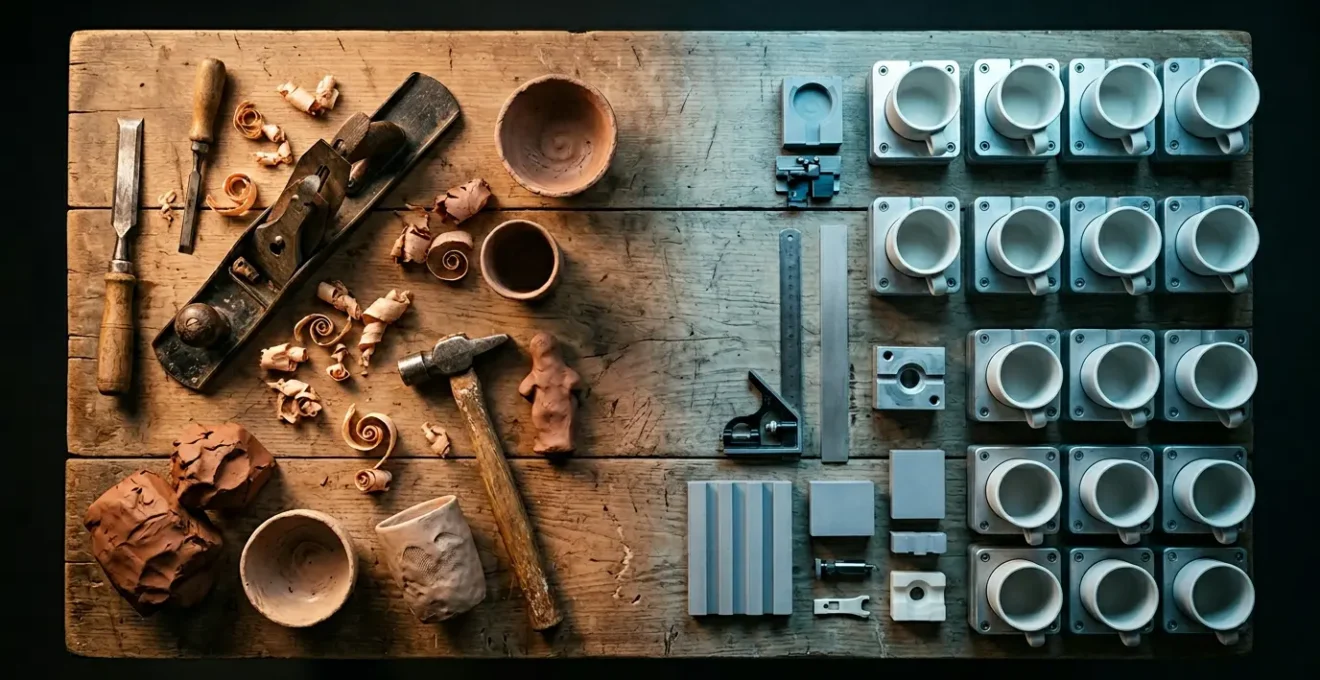
The “Made in France” label is not a guarantee of authenticity, but often a legal loophole for industrial production that misleads discerning buyers.
- True artisans leave behind specific clues—process variations, specific pricing logic, detailed stories—while mass-produced fakes hide behind perfect uniformity and vague marketing.
- Legally protected terms like “Made in France” and marketing phrases like “couture style” are frequently misused and require critical investigation, not passive acceptance.
Recommendation: To acquire genuine pieces, you must shift from being a passive buyer to an active investigator, using the forensic techniques in this guide to protect your investment and appreciate true craftsmanship.
You’ve been there. You purchase a beautiful “artisanal” souvenir from a charming French boutique, only to get it home to the UK and realise it feels suspiciously lightweight, perfectly identical to the one your friend bought, and ultimately, soulless. This disappointment is a common experience for collectors and gift-buyers who value authenticity. The market is flooded with items that leverage the romantic image of French craftsmanship without delivering the actual quality. You’re told to “look for the label” or “buy from small shops,” but this advice fails in the face of sophisticated marketing and legal gray areas.
The core of the problem is that consumers and factories are playing two different games. You are searching for a story, for the touch of a human hand, for a unique object. They are optimising a supply chain, exploiting legal definitions, and maximising profit. As a crafts authenticator, I step into workshops across France, and I see the vast chasm between a master artisan toiling over a single piece and a factory line assembling components shipped from abroad. The truth is, the “Made in France” label can be legally applied to products that have only had their final, minimal transformation on French soil.
But what if the key wasn’t to trust the label, but to learn how to read the object itself? What if you could develop the forensic mindset of an authenticator? This guide is designed to do just that. We will not be repeating the tired platitudes. Instead, we will dissect the legal loopholes that allow factories to masquerade as artisans. We will provide concrete checklists to identify real working studios, both in-person and online. We will teach you to spot the subtle red flags in pricing, production, and presentation that scream “impostor.” Ultimately, you will learn to see beyond the marketing and recognise the undeniable signature of true French craftsmanship.
This article provides a complete framework for the discerning buyer. By following the sections below, you will learn to navigate the complex world of French crafts and make purchases with confidence, ensuring that what you bring home is a genuine piece of cultural heritage, not just a well-marketed product.
Summary: The Forensic Guide to Buying Authentic French Crafts
- Why Can French Factories Legally Call Mass-Produced Items “Artisanal”?
- How to Find Real Working Artisan Studios Rather Than Tourist Shop Fronts?
- Provençal Pottery or Alsatian Textiles: Which French Craft Tradition Offers Better Value?
- The 3 Red Flags That Expose “Artisan” Products as Mass-Produced Imports
- When Should You Buy Limoges Porcelain to Get Factory-Direct Pieces at Best Prices?
- How to Verify a “Made in France” Claim Before Completing Your Online Purchase?
- The Authentication Detail That Exposes 30% of Online “Authentic” French Luxury as Fake
- Why Does “Couture” on a Label Mean Almost Nothing Outside 15 Specific Paris Ateliers?
Why Can French Factories Legally Call Mass-Produced Items “Artisanal”?
The central point of confusion for buyers lies in the gap between the romantic idea of “Made in France” and its stark legal definition. Consumers are not wrong to seek it out; there is a proven desire for authentic, locally-made goods. In fact, a significant number of consumers are willing to pay a premium for this perceived quality. A 2018 survey revealed that over 75% of French consumers are prepared to pay more for a product bearing the “Made in France” label. This immense market pressure creates a powerful incentive for manufacturers to use the label, even when their process is far from what a consumer would consider “artisanal.”
The loophole they exploit is found within the French Customs Code itself. The term is not primarily a guarantee of traditional craftsmanship but a marker of customs origin. To understand this, we must look at the exact legal language. As the French Customs Code (DGDDI) clarifies:
According to Article 39 of the Customs Code, a product is ‘Made in France’ if it has ‘undergone its last economically justified substantial transformation, carried out in a company equipped for this purpose, resulting in the manufacture of a new product or one that corresponds to an important stage of manufacture’ in France.
– French Customs Code (DGDDI), Wikipedia: Made in France
The key phrase is “last economically justified substantial transformation.” This means a company can import components from all over the world, perform the final assembly, packaging, or finishing in France, and legally label the product “Made in France.” A t-shirt woven in Bangladesh can have a label sewn on in a French workshop and qualify. A knife with a blade forged in Asia can be fitted to a handle in Thiers and be called French. The term “artisanal” itself is even less protected, often used as a marketing descriptor with no legal weight, allowing industrial products to be sold with a veneer of hand-craftsmanship.
How to Find Real Working Artisan Studios Rather Than Tourist Shop Fronts?
Once you understand that labels can be misleading, the next logical step is to bypass them and go straight to the source: the artisan’s studio. However, even this can be a trap. In high-traffic tourist areas, many “studios” are little more than retail showrooms—sterile environments designed for transactions, not creation. A true workshop is a place of production, and it engages all the senses. It has a distinct character that cannot be faked.
When you step into a space that claims to be a workshop, pause and perform a sensory check. A genuine potter’s studio has the cool, earthy smell of damp clay. A leatherworker’s space is pungent with the scent of tanned hides and wax. A woodworker’s atelier is filled with the fragrance of sawdust and finishing oils. These smells are the byproducts of active work. Similarly, listen for the sounds: the rhythmic thump of a mallet, the whir of a potter’s wheel, the scrape of a tool on wood. A silent workshop is often just a shop.
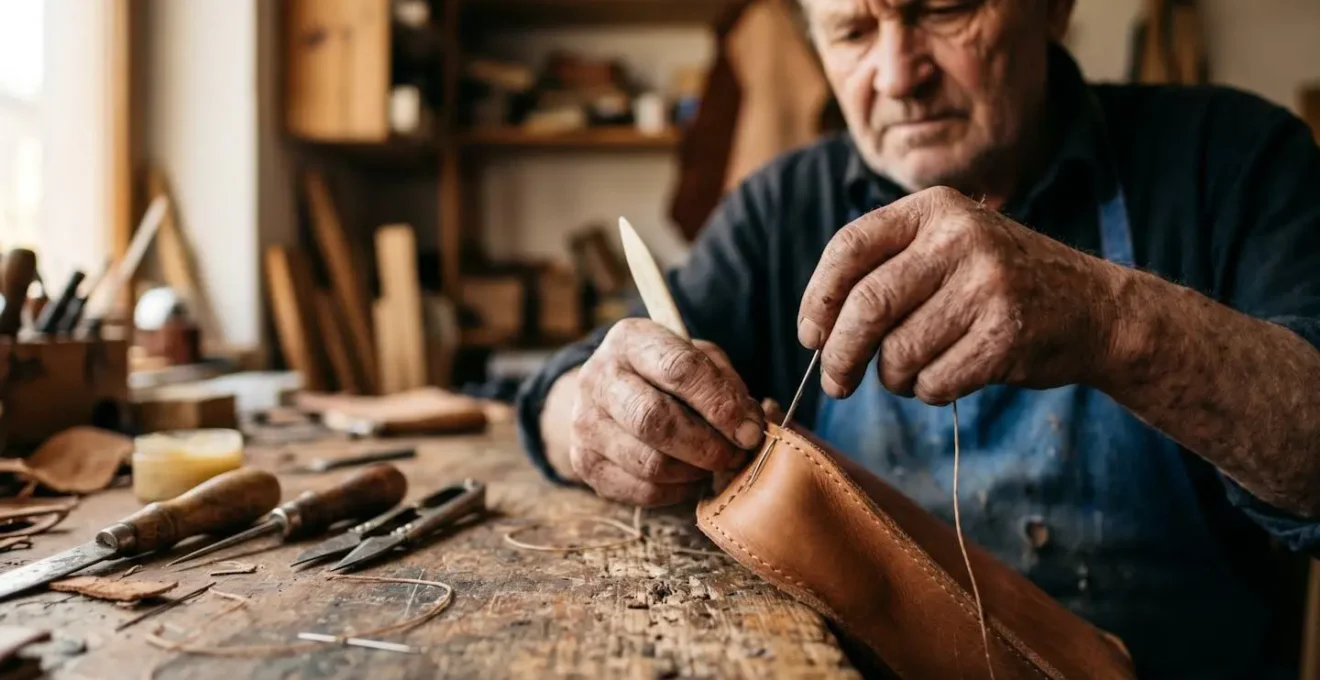
The visual evidence is just as critical. Look for the beautiful mess of creation. Are there bags of raw clay, bolts of uncut fabric, or planks of wood? Do you see projects in various stages of completion? Tools should be worn from use, not polished for display. The ultimate proof, of course, is the artisan themselves. A real studio is defined by the presence of a craftsperson actively engaged in their work. If the only person present is a sales assistant surrounded by finished goods, you are likely in a retail store, not a place of making.
Your Action Plan: The Workshop Authenticity Checklist
- Look for sensory evidence: Authentic workshops have distinctive smells (wood, leather, paint) and sounds of working tools, not sterile retail environments.
- Check for signs of active process: Look for raw materials, works-in-progress, and functional workspace clutter that indicate a real production studio.
- Verify the artisan is present and working: Genuine studios feature the craftsperson actively engaged in their craft, not just sales staff.
- Research official networks: Consult the EPV (Entreprises du Patrimoine Vivant) directory, a government-vetted list of authentic artisans established in 2005.
- Perform digital tracking: Examine the artisan’s Instagram feed for long-term behind-the-scenes process content, not just polished product photography.
Provençal Pottery or Alsatian Textiles: Which French Craft Tradition Offers Better Value?
When assessing authenticity, comparing two distinct and respected traditions can be highly instructive. It teaches you to look beyond simple aesthetics and evaluate a craft based on a matrix of factors that determine its true value and vulnerability to imitation. Let’s compare Provençal pottery with Alsatian textiles. This isn’t about declaring one “better,” but about understanding the different dimensions of value in craftsmanship. The following analysis, based on a framework used by French craft experts and available in resources like guides to quality artisanal products, breaks down the components of value.
| Evaluation Criteria | Provençal Pottery | Alsatian Textiles |
|---|---|---|
| Material Locality | Variable (local vs. imported clay) | High (French linen tradition) |
| Skill Complexity (apprenticeship years) | 3-5 years minimum | 4-7 years for weaving mastery |
| Time per Piece | 2-8 hours (wheel-thrown) | 10-40 hours (handwoven) |
| Ease of Industrial Replication | High (mold casting available) | Medium-Low (complex weaving patterns) |
| Dependence on Local Terroir | Medium (if using local clay sources) | High (regional linen cultivation) |
| Typical Price Range (authentic pieces) | €45-€180 | €85-€350 |
This table reveals crucial insights for an authenticator. While both are venerable crafts, Provençal pottery is more susceptible to industrial replication. The use of molds can mimic handmade forms, and clay can be easily imported. A potter’s skill is immense, but the industrial world has developed effective shortcuts. Conversely, the complex patterns of traditional Alsatian weaving are harder to replicate cheaply, and the craft is deeply tied to the local linen tradition (terroir). The significantly longer time per piece and higher skill ceiling for weaving mastery are reflected in the higher price point.
Therefore, when assessing “value,” an Alsatian handwoven textile often represents more concentrated man-hours and a higher barrier to imitation than a piece of pottery, which helps justify its higher price. This doesn’t devalue the pottery, but it requires the buyer to be more diligent in verifying that they are paying for a wheel-thrown piece from a true artisan, not a mass-produced item from a mold.
The 3 Red Flags That Expose “Artisan” Products as Mass-Produced Imports
The market for counterfeit and misleading goods is enormous, and it’s easy to be deceived. You are not alone in this; a 2018 study found that 37% of French consumers had unknowingly purchased counterfeit products. The key to protecting yourself is to stop looking for what makes a product “good” and start hunting for the specific red flags that expose it as a fake. As an authenticator, I rely on three critical tests that industrial producers consistently fail.
Red Flag 1: The Clone Army Effect. True handmade items are siblings, not clones. Take two “identical” ceramic bowls from a display. A true artisan’s work will show minor variations in weight, glaze thickness, or the height of the rim. These are not flaws; they are the fingerprints of the handmade process. Now, pick up two items from a factory. They will be perfectly uniform in every dimension. This perfection is the hallmark of an industrial mold. When you see a stack of items so identical they seem to have been produced by a clone army, you are almost certainly looking at a mass-produced product, no matter what the sign says.
Red Flag 2: The Pricing Paradox. Genuine artisans price their work based on real-world inputs: hours of labour and cost of materials. This results in specific, seemingly random prices like €48, €53, or €67. This reflects the reality of their process. Mass-produced goods, however, are priced for psychological appeal and retail simplicity. They use uniform, rounded prices like €49.99 or €50.00. The paradox is that the “imperfect” pricing of an artisan is a sign of authentic valuation, while the “perfect” retail price is often a red flag for industrial production. Learn to value the specificity of an artisan’s price tag.
Red Flag 3: The Story Gap. This is a simple but incredibly effective verbal test. Approach the seller and ask two direct questions: “Who is the artist who made this?” and “Can you tell me a bit about how it’s made?” A real artisan, or someone who works directly with them, will light up. They will proudly give you the artist’s name, their story, and passionately detail the creation process. A reseller of imported goods will be unable to bridge this “story gap.” They will offer vague, generic answers (“it’s made by local artisans”), deflect the question, or simply have no information. This gap is a clear signal that they are disconnected from the product’s origin.
When Should You Buy Limoges Porcelain to Get Factory-Direct Pieces at Best Prices?
Even when dealing with a world-renowned and authentic tradition like Limoges porcelain, there are insider strategies to acquire genuine pieces at the best possible value. The key is to understand the production and sales cycles of the historic factories themselves, rather than just shopping in city-centre boutiques. Many of the great Maisons produce pieces with tiny, almost imperceptible imperfections—a minuscule bubble in the glaze, a slight variation in pattern alignment—that prevent them from being sold as “first quality” in high-end stores. These are known as “seconds” or “déclassé,” and they offer incredible value.
The challenge is gaining access to them. You won’t find them in a luxury retail environment. Instead, you must go to the source at the right time. The factories themselves often hold special sales events to clear this stock. A prime example is the strategy employed by one of the most historic producers.
Case Study: Royal Limoges Biannual Factory Sales Strategy
Royal Limoges, the oldest working Limoges porcelain factory, dating from 1797, demonstrates the insider sales cycle by holding factory sales under a marquee twice yearly. Factory outlets offer pieces with slight, often unnoticeable defects at significant discounts compared to city center boutique prices. The savings differential is described as “enough to take your breath away” by regular customers. Timing purchases around these late spring and early autumn sales events provides access to authentic Limoges porcelain at factory-direct pricing.
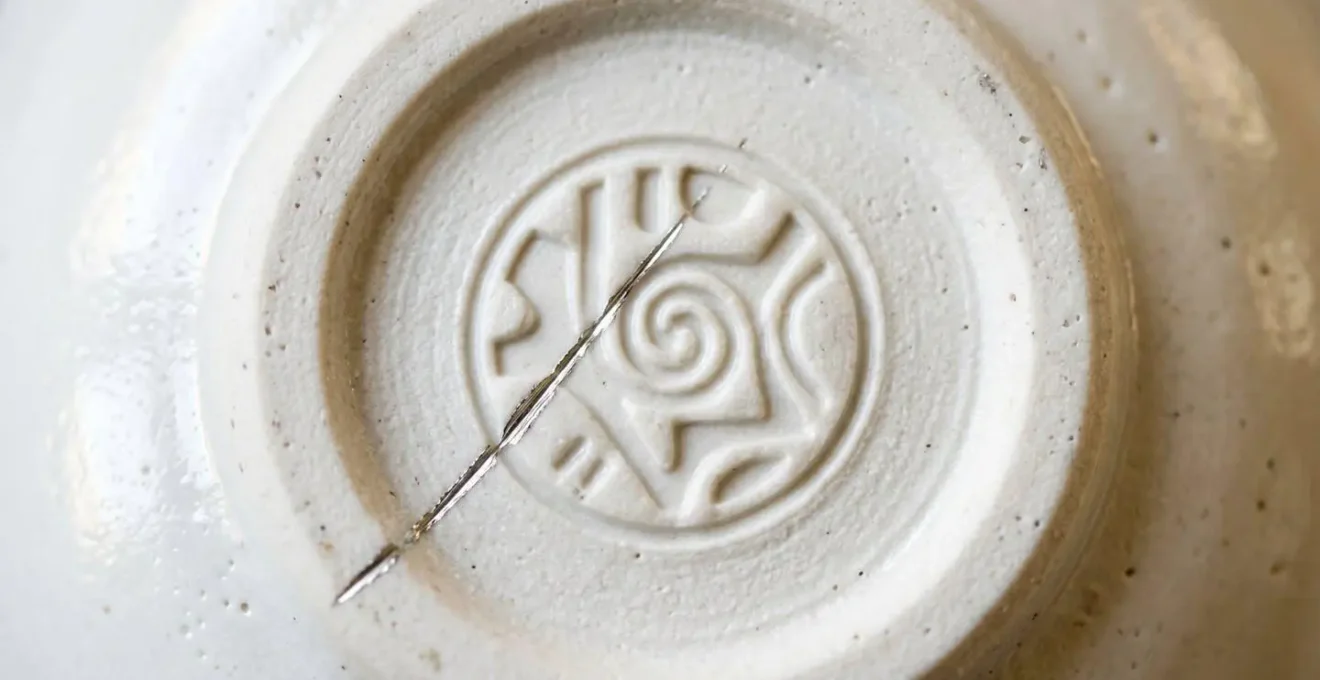
To identify these “seconds,” you need to know what to look for on the piece itself. The authentication mark is not just the brand’s stamp, but how that stamp is treated. A common practice for many Limoges factories is to physically score or scratch a line through the backstamp to indicate it is not a first-quality piece. For the untrained eye, this scratch might seem like damage. For the authenticator, it is a crucial piece of information: it confirms the piece’s origin at the factory while explaining its lower price.
Therefore, the best time to buy is during these factory sales, typically in late spring and early autumn. For a UK buyer planning a trip, aligning your visit with these events can result in acquiring a large, authentic collection for the price of a few boutique pieces. The “flaw” is often a story in itself, a mark of authenticity that separates it from flawless, mass-market ceramics.
How to Verify a “Made in France” Claim Before Completing Your Online Purchase?
For the UK-based buyer, the biggest challenge is authenticating products from a distance. The internet is flooded with dropshippers and deceptive marketers who use stock photos of France to sell mass-produced goods from Asia. As you can’t physically touch the product or visit the workshop, you must become a digital detective. Your goal is to find evidence of a real, breathing craftsperson behind the polished e-commerce facade. A sterile, product-only website is a major red flag.
Start with the product images themselves. They are your first and most powerful clue. Do a reverse image search on Google Images. If the exact same photo of that “unique, handmade” French soap appears on dozens of other generic online stores or, more tellingly, on a marketplace like AliExpress, you have your answer. You’ve found a dropshipped item. A true artisan’s product photos will be unique to their own site or a small, curated selection of partners.
Next, move from the product to the producer. Investigate their social media presence, particularly Instagram. A legitimate artisan’s feed tells a story over time. You should see their face, their hands at work, photos of their (often messy) studio, and the evolution of a piece from raw material to finished product. It’s a digital workshop. A fake “artisan” brand’s feed is a sterile catalogue: just endless polished product shots, perhaps interspersed with generic stock photos of lavender fields or the Eiffel Tower. The absence of a human element is damning.
Finally, engage directly. This is the digital equivalent of the “Story Gap” test. Send an email with a specific, technical question about the product. Don’t ask “Is this handmade?” Ask something an expert would know, like “What type of wood is the handle on this knife, and how is the wood treated for durability?” or “Is this pottery fired at a high or low temperature, and is the glaze lead-free?” A passionate artisan will be thrilled to provide a detailed, proud answer. A dropshipper’s customer service agent will give a vague, corporate response, or simply won’t know the answer.
Your Action Plan: Digital Verification Protocol for Online Claims
- Master the Reverse Image Search: Drag product photos into Google Images. If the same ‘unique French artisan’ product appears on AliExpress, it’s a dropshipped item.
- Perform the ‘Digital Workshop’ Social Media Check: Authentic artisans show their face, hands at work, and messy studio on social media. Fake stores have sterile product-only feeds.
- Use the ‘Specific Question’ Test: Email asking a detailed technical question. Passionate artisans give proud, specific answers; resellers give vague corporate responses.
- Analyze pricing logic: A €10 t-shirt cannot be made in France. Real French production costs result in higher but justified pricing.
- Check for transparency: Legitimate sellers specify the city of manufacturing and share artisan stories, not just vague ‘Made in France’ claims.
Key takeaways
- Legal labels like “Made in France” or “artisanal” are starting points for investigation, not conclusions of authenticity.
- Authenticity is proven by process, not just product: look for variations, workshop evidence, and detailed artisan stories.
- Price itself isn’t the only indicator; the *structure* of the price (e.g., €53 vs. €49.99) is a powerful clue to its origin.
The Authentication Detail That Exposes 30% of Online “Authentic” French Luxury as Fake
When you enter the world of high-end French luxury goods—leather bags, accessories, and designer items—the stakes get higher, and so does the sophistication of the counterfeiters. The problem is rampant; in 2021 alone, French customs authorities seized 9.1 million counterfeit products, a huge increase from previous years. Online, it is estimated that a significant portion of items sold as “authentic” on secondary markets are, in fact, fakes. To the untrained eye, they look perfect. But to an authenticator, they are full of tells. The secret is to ignore the overall look and focus on three specific, minuscule details that counterfeiters struggle to replicate: the stitching, the hardware, and the weight.
First, examine the stitching. High-end leather goods from true French artisans are often sewn by hand using a technique called the saddle stitch. This involves two needles passing through the same hole in opposite directions, creating a distinct, slightly angled stitch that is incredibly durable. If one stitch breaks, the others hold. Mass-produced fakes use a sewing machine, which creates a lockstitch. The lockstitch is perfectly straight and uniform, but if a thread breaks, the entire seam can unravel. Zoom in on product photos. The angled, robust look of a saddle stitch is a hallmark of quality that is nearly impossible to replicate at industrial scale.
Second, investigate the zipper’s secret identity. Authentic luxury goods do not use generic hardware. They use zippers from a small number of high-end manufacturers, like Riri or Lampo. These brands are the “Intel Inside” of the luxury world. Their zippers are known for their smooth action and durability. Counterfeiters almost always cut corners here, using cheap, unbranded zippers that feel gritty or lightweight. Before buying, zoom in on the zipper pull in the product photos online. If you can see the brand mark of a quality manufacturer, it’s a huge vote of confidence for the entire piece.
Third, consider the weight of quality. This is something you can even ask a seller about. Authentic luxury hardware—clasps, buckles, feet—is typically made from solid brass. Brass is heavy, has a satisfying density in the hand, and develops a beautiful patina over time. Counterfeits use cheap zinc alloys, which are then plated to look like brass or gold. This hardware feels suspiciously light and flimsy. The plating will eventually chip or flake, revealing the cheap gray metal underneath. The solid, reassuring weight of quality metal is a non-visual clue that is very difficult for fakes to get right.
Why Does “Couture” on a Label Mean Almost Nothing Outside 15 Specific Paris Ateliers?
The final and perhaps most abused term in the French lexicon of quality is “couture.” It is a word thrown around on everything from department store dresses to scented candles, meant to evoke an image of ultimate Parisian luxury and craftsmanship. However, this widespread use is a complete dilution of its true, legally protected meaning. The term “haute couture” (high dressmaking) is not a style; it is a legally controlled designation, and its use is strictly limited to a handful of houses that meet a rigorous set of criteria.
The governing body, the Chambre Syndicale de la Haute Couture, is clear and uncompromising on this point. This is not a matter of opinion, but of French law. As they state:
The term haute couture is protected by French law and defined by the Paris Chamber of Commerce. Only those companies mentioned on the list drawn up each year by a commission domiciled at the Ministry for Industry are entitled to avail themselves of the label haute couture.
– Chambre Syndicale de la Haute Couture, Wikipedia: Haute Couture
To qualify, a fashion house must maintain an atelier in Paris with at least 20 full-time technical staff, present a collection of at least 50 original designs to the public twice a year, and create custom, made-to-order garments for private clients with multiple fittings. The list of official members is tiny, typically around 15 houses like Chanel, Dior, and Schiaparelli. Anything else, from a designer’s ready-to-wear line to a mass-market brand using the phrase “couture style,” has absolutely no legal or qualitative connection to this pinnacle of craftsmanship.
To an authenticator, understanding this hierarchy is crucial for cutting through marketing noise. It allows you to see clearly where a garment sits in the pyramid of French fashion.
| Category | Legal Status | Requirements | Accessibility |
|---|---|---|---|
| Haute Couture | Legally Protected (French Law) | Paris atelier with 20+ staff; 50+ original designs twice yearly; made-to-order for private clients | ~14 official houses; ~2,000-4,000 global clients |
| Créateur (Designer-Artisan) | Unregulated but Authentic Craft | Independent designer; often handmade; innovative small-batch production | Accessible; the authentic alternative to mass production |
| Prêt-à-Porter (Ready-to-Wear) | Unregulated | Designer collections; industrially manufactured in standard sizes | Widely available in boutiques |
| ‘Couture Style’ | No Legal Meaning | No requirements; pure marketing phrase | Meaningless descriptor used by any brand |
This table makes it clear. For the discerning buyer, the real value and authenticity outside the inaccessible world of Haute Couture often lie with the “Créateur”—the independent designer-artisans who are the true modern practitioners of French craft. The term “couture” on any other label is simply marketing language, a ghost of a standard it does not meet.
Equipped with this authenticator’s mindset, your next purchase will not be a mere transaction, but the rightful acquisition of a piece of genuine French heritage. You now possess the tools to look beyond the label, decode the object itself, and invest with confidence in the artists who are the true guardians of their craft.