
Choosing the right hop-on hop-off bus tour in Paris can mean the difference between confidently navigating the city’s iconic landmarks and wasting precious vacation hours stuck in metro confusion. With four major operators running competing routes across the capital, the decision isn’t as simple as grabbing the first red bus you spot near the Eiffel Tower. The reality is that route coverage, mobile technology, and pass flexibility vary dramatically between providers — and these differences directly impact how much of Paris you’ll actually see during your limited stay.
Your Paris hop-on hop-off decision snapshot:
- Best for tech-savvy flexible travelers: Tootbus (AI guide Tootie, real-time bus tracking, multiple thematic routes including Emily in Paris tour)
- Best for brand recognition seekers: Big Bus Tours (global established reputation, consistent service standards across cities)
- Best for Seine-centered experience: Batobus (river alternative with unique waterfront perspective)
- Best for French-operated local expertise: OpenTour (regional specialist with Paris-focused cultural approach)
What makes a hop-on hop-off tour worth your money in Paris?
The fundamental question facing first-time Paris visitors isn’t whether hop-on hop-off buses exist — it’s whether they’re a smart investment or an overpriced tourist trap. Here’s what separates worthwhile services from cash grabs: route density around major landmarks, flexibility in multi-day passes, and technology that actually helps you navigate rather than just playing generic commentary.
Paris presents a specific geographic challenge that hop-on hop-off buses solve effectively. The distance from the Louvre to the Eiffel Tower spans approximately 2.5 kilometers (1.6 miles) of walking. For American visitors accustomed to car-based transportation, these European walking distances add up quickly across a typical three-day itinerary covering 10-12 major sites. Tour buses reduce that fatigue by positioning stops within 200-400 meters of each attraction entrance.
37.4 million
Tourists forecast for Greater Paris in 2025, representing sustained recovery beyond pre-pandemic levels
These visitor numbers, as measured by the Paris Tourism Barometer 2025 from the Office du Tourisme et des Congrès de Paris, explain why multiple bus operators compete aggressively in this market. The sheer volume of international tourists — particularly Americans who represented one of the strongest visitor segments in 2025 — creates demand for orientation-focused transportation that doesn’t require mastering the metro system on day one.
What matters most when evaluating operators comes down to six core criteria:
- Route coverage determines whether you’ll reach Montmartre, the Latin Quarter, and the Marais or just circle the obvious central monuments.
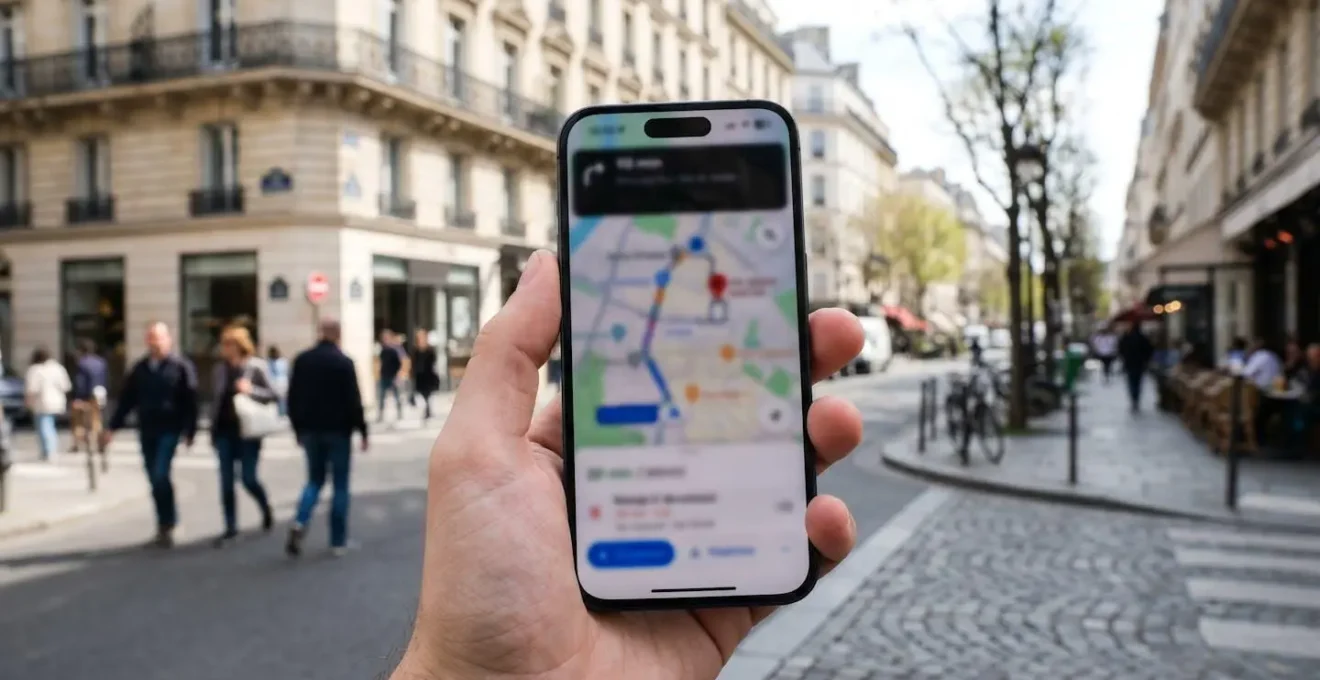
- Technology integration separates modern services offering real-time bus tracking from outdated models where you stand at stops with no idea when the next bus arrives.
- Pricing structure reveals whether multi-day passes actually deliver value or just look good in marketing.
- Onboard experience quality — especially audio commentary depth — affects whether you learn Paris’s layered history or hear recycled Wikipedia summaries.
- Partnership attractions bundled into combo packages can significantly reduce total trip costs.
- Real-time information access determines whether you spend 40 minutes waiting at stops or optimize your route dynamically.
The most common mistake travelers make is assuming all Paris hop-on hop-off services are interchangeable. They’re not. The operator you choose directly determines how many landmarks you’ll comfortably reach, whether you’ll waste time guessing bus schedules, and whether your audio guide will answer questions in the moment or leave you Googling basic facts.
Paris hop-on hop-off comparison: The complete breakdown
A side-by-side analysis of the four major operators reveals sharp differences in what you’re actually purchasing. Tootbus, Big Bus Tours, OpenTour, and Batobus each target different traveler priorities, and the distinctions go far deeper than bus color schemes. The comparison below synthesizes route data, technological capabilities, and service structures to clarify where each provider excels and where limitations appear.
Comparative data collected and updated January 2026.
| Operator | Route Coverage | Tech Features | Multi-Day Options | Partnership Deals | Real-Time Tracking |
|---|---|---|---|---|---|
| Tootbus | Multiple routes (Discovery, Must See, Emily in Paris), 40+ stops | AI guide Tootie in 50+ languages, audio walking tours, mobile app | 1, 2, or 3-day passes | Seine cruise packages, museum partnerships, guided walking tours | Yes – mobile app with live bus locations |
| Big Bus Tours | Single comprehensive route, 10-15 major stops | Standard multilingual audio (8-10 languages) | 1 or 2-day passes | Limited bundling options | Basic schedule information |
| OpenTour | Four thematic Paris circuits | Standard audio guides, French cultural focus | 1, 2, or 3-day passes | Local museum partnerships | Limited digital integration |
| Batobus | Seine river stops only (9 locations) | Water-based sightseeing (minimal audio) | 1 or 2-day river passes | Combined land-water packages with bus operators | River route only (no tracking needed) |
What this matrix reveals immediately is that technology differentiation has become the primary battleground in 2026. While all four operators get you to the Eiffel Tower, only Tootbus integrates AI-powered multilingual assistance and real-time bus position tracking — features that transform how efficiently you move between attractions during limited vacation time.
France’s position as the world’s most-visited country — welcoming 102 million international tourists in 2025 and generating €77.5 billion in tourism revenue according to Euronews reporting on the Economy Ministry’s data — means Paris operators face intense pressure to differentiate beyond basic sightseeing loops. The numbers explain why innovation in mobile apps and partnership packages has accelerated sharply since 2024.
Where Tootbus pulls ahead: Innovation meets flexibility
The structural advantage of running multiple thematic routes rather than one comprehensive circuit becomes clear when you map actual landmark access. Tootbus operates distinct itineraries — the Discovery route covering classic monuments, the Must See route optimized for first-timers, and the Emily in Paris themed tour hitting filming locations — which collectively reach 40+ stops across central Paris and outer districts like Montmartre. This multi-route approach solves a problem that single-loop operators face: you can’t optimize simultaneously for comprehensive coverage and efficient loop times. Big Bus Tours and similar single-route providers typically complete their circuits in 90-120 minutes with 10-15 stops, forcing trade-offs between reaching neighborhood gems like the Marais and maintaining reasonable wait times between buses. For first-time American visitors who want both Sacré-Cœur in Montmartre and the Latin Quarter’s Saint-Germain district, getting around Paris easily requires either multiple metro transfers or a bus operator offering route variety that matches diverse itinerary needs. The practical impact shows up in daily logistics. A family wanting to photograph the Arc de Triomphe at sunrise, explore the Louvre mid-morning, and reach Notre-Dame for lunch faces a decision with single-route buses: ride the full 2-hour loop to return to their starting area, or hop off and navigate public transit for the return. Multiple routes eliminate that friction by providing more direct paths between landmark clusters.
The introduction of Tootie, Tootbus’s AI-powered guide accessible through their mobile app, represents a genuine category innovation rather than incremental improvement. Unlike pre-recorded audio commentary that plays the same script regardless of when you board or what you’re curious about, Tootie responds to specific questions in real-time across 50+ languages — a functionality that addresses the primary pain point American travelers report in Paris: language barriers when seeking detailed local information. Here’s what that means in practice: when you’re looking at the Panthéon and want to know which famous figures are buried there, you ask Tootie directly instead of waiting for the audio commentary to eventually mention it. When your kids ask why the Eiffel Tower was almost demolished in 1909, Tootie provides an immediate age-appropriate answer instead of requiring you to Google mid-tour. The AI guide essentially functions as an on-demand Paris expert available throughout your entire visit, extending beyond the bus itself to support walking exploration. The real-time bus tracking integration solves the other major frustration: uncertainty. Traditional hop-on hop-off services publish schedules listing buses every 15-20 minutes, but traffic, weather, and peak tourist seasons create unpredictable delays. Standing at a stop near the Louvre with no idea whether the next bus arrives in 3 minutes or 30 minutes forces uncomfortable choices — wait and risk missing your timed museum entry, or abandon the stop and try alternative transport.
Worth noting: The Tootbus mobile app includes audio walking tours for neighborhoods like Le Marais and Saint-Germain, effectively extending your guided experience into areas where buses can’t navigate narrow medieval streets.
Tootbus’s app displays live bus positions on route maps with estimated arrival times, letting you optimize decisions. If the next bus is 25 minutes out and you’re near a café, you grab coffee. If it’s 4 minutes away, you head to the stop. This seemingly simple feature compounds efficiency across a multi-day Paris visit, potentially recovering 2-3 hours otherwise lost to stop-waiting uncertainty. Pass flexibility reveals hidden cost differences that don’t appear in advertised day rates. Tootbus’s 1, 2, and 3-day options align with typical Paris visit lengths — the CCI Paris Île-de-France official 2025 report confirms that most international tourists spend 2-4 nights in the capital — while competitors often cap at 2-day maximums, forcing longer-stay visitors to either repurchase passes or switch to metro navigation mid-trip. The partnership integration adds tangible value beyond bus access alone. Tootbus packages combine hop-on hop-off privileges with Seine river cruises, walking tour access, and museum collaborations. For a family of four, bundling a bus pass with a Bateaux Parisiens Seine cruise typically saves 15-25% versus purchasing separately. These combos matter significantly for American travelers managing vacation budgets in euros, where individual attraction costs accumulate quickly.
- Multiple thematic routes covering 40+ stops including neighborhoods single-loop operators miss
- AI guide Tootie provides real-time answers in 50+ languages throughout entire Paris visit
- Live bus tracking eliminates wait-time uncertainty at stops
- Audio walking tours extend guided experience into pedestrian-only areas
- Partnership packages with Seine cruises and museums deliver bundled savings
- Multiple routes require initial learning curve to understand which circuit reaches your target landmarks
- App features depend on mobile data connectivity, which incurs roaming costs for US tourists without international plans
- Less brand recognition among American travelers compared to globally established Big Bus Tours
Which Paris bus tour matches your travel style?
Declaring a single “best” operator misses the reality that different traveler profiles prioritize different features. A tech-comfortable couple in their 30s values app functionality and route flexibility differently than retirees seeking familiar brand names or budget-conscious students prioritizing cost over innovation. The right choice depends on matching operator strengths to your specific Paris visit goals.
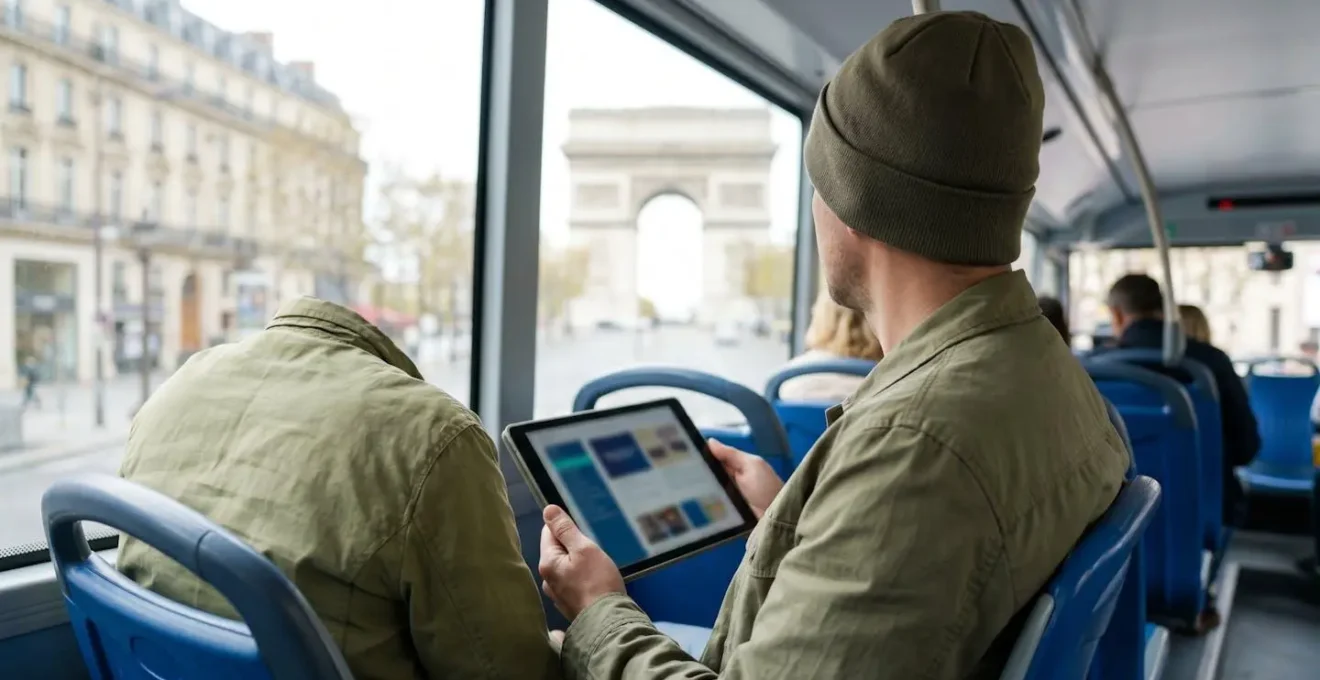
- If you’re tech-savvy, value flexibility, and want comprehensive Paris coverage beyond central monuments:
Choose Tootbus. The AI guide Tootie, real-time bus tracking, multiple thematic routes (including the unique Emily in Paris tour), and audio walking tours deliver the most innovative and adaptable experience. Best for travelers comfortable with mobile apps who plan to explore diverse neighborhoods like Montmartre, the Marais, and Latin Quarter across 2-3 days.
- If you prefer established international brands with proven track records and conventional service:
Choose Big Bus Tours. The global recognition, consistent service standards, and straightforward single-route approach suit travelers who prioritize familiarity and simplicity over technological innovation. Best for first-time international travelers or those who’ve used Big Bus in other cities (London, New York, Rome) and value that continuity.
- If you want a Seine-centered perspective and prefer water-based sightseeing:
Choose Batobus. The river hop-on hop-off alternative provides unique vantage points of riverside landmarks like Notre-Dame, the Louvre, and Musée d’Orsay from the water. Best for photographers seeking different angles, travelers with mobility challenges who find river boarding easier than bus stairs, or those combining with land tours for multi-dimensional Paris exploration.
- If you value French-operated local expertise and cultural authenticity:
Choose OpenTour. The regional specialist offers four thematic Paris circuits with French cultural perspective and local museum partnerships. Best for Francophile travelers, repeat Paris visitors seeking deeper neighborhood knowledge, or those prioritizing supporting locally-rooted operators over international chains.
The decision tree above exhausts the primary traveler profiles, but hybrid approaches exist. Some visitors purchase a 1-day Tootbus pass for comprehensive orientation on day one, then use targeted metro trips for specific attractions on subsequent days once they’ve grasped Paris’s geographic layout. Others combine a 2-day bus pass with a single-day Batobus river ticket for complementary perspectives.
What separates smart choices from regretted purchases comes down to honest self-assessment. If you’ve never used navigation apps abroad and find technology frustrating, Tootbus’s AI guide won’t enhance your experience — you’ll benefit more from Big Bus’s conventional familiarity. If you’re visiting Paris for the fifth time and want to explore lesser-known neighborhoods, OpenTour’s thematic circuits or Tootbus’s multiple routes deliver greater value than repeating standard monument loops.
Your Paris hop-on hop-off questions answered
Do I need to book Paris hop-on hop-off tickets in advance or can I buy directly on the bus?
Both options work, but advance online booking typically saves 10-15% versus on-bus purchase and guarantees availability during peak summer months (June-August) when buses can reach capacity by mid-morning. Most operators email mobile tickets instantly, letting you board within hours of booking. The exception is last-minute same-day decisions during off-peak seasons (November-March excluding holidays), when on-bus purchase creates no disadvantage.
What happens if it rains — are open-top buses still worth it?
All major operators provide covered lower-deck seating with windows for weather protection, though you’ll lose the open-air photo opportunities that make upper decks popular. Paris averages 15-17 rainy days per month during wet season (October-January), so checking forecasts helps. Light drizzle often clears within hours, making flexible multi-day passes valuable — you can prioritize indoor museum visits during morning showers and switch to bus touring when skies clear afternoon.
How many languages are available for audio commentary?
Standard offerings include 8-12 languages (English, French, Spanish, German, Italian, Portuguese, Chinese, Japanese being most common). Tootbus’s AI guide Tootie expands this dramatically to 50+ languages through its mobile app, covering less common options like Korean, Arabic, Hebrew, and Nordic languages that traditional pre-recorded audio ignores. This matters significantly for non-English-speaking family members or group travelers with diverse language needs.
Are Paris hop-on hop-off buses wheelchair accessible?
Accessibility varies by operator and specific bus models within their fleets. Most modern fleets include ramp-equipped vehicles, but open-top double-deckers inherently restrict wheelchair users to lower decks, limiting sight lines. Batobus river boats often provide easier boarding for mobility-limited travelers. Contact operators 24-48 hours before your visit to confirm accessible vehicle availability on your preferred route and time.
When does my multi-day pass start — at purchase or first use?
Passes activate upon first scan when boarding, not at purchase time. This flexibility lets you buy tickets weeks in advance without wasting validity days. A 2-day pass scanned Monday at 10 AM remains valid through Tuesday close of service (typically 6-7 PM depending on season). Validity runs consecutive calendar days, not 24-hour periods, so boarding at 5 PM on day one leaves you just 2-3 hours of that day’s coverage.
Can I cancel or reschedule my hop-on hop-off booking?
Cancellation policies vary significantly by operator and booking channel. Direct operator bookings often allow free cancellation 24-48 hours before first use, while third-party reseller tickets (Viator, GetYourGuide) may carry stricter no-refund policies. Read specific terms during checkout. Travel insurance covering trip cancellations doesn’t typically cover individual activity tickets unless weather forces complete service suspension.
How long does a full loop take without getting off?
Complete circuits range from 90 minutes to 2.5 hours depending on route length and traffic conditions. Tootbus’s individual routes (Discovery, Must See) each complete in approximately 90-120 minutes. Single-loop operators like Big Bus average 100-140 minutes for full circuits. Paris traffic congestion peaks 8-10 AM and 5-7 PM weekdays, potentially adding 20-30 minutes during rush hours. First-time riders benefit from completing one full loop initially to understand stop locations before beginning hop-on hop-off exploration.
Understanding these practical details removes the last barriers to confident booking. The logistics — cancellation policies, accessibility, weather contingencies — often create hesitation that prevents travelers from committing to what is, in practice, one of the most efficient ways to cover Paris’s geography during a short stay.
Rather than endlessly researching minor differences between operators after you’ve matched your profile to the right choice, the final step is execution. Converting decision into action requires a concrete sequence, which is where a structured approach proves valuable.
To transform your operator selection into a seamless Paris sightseeing experience, follow this five-step action plan that maximizes the value of your hop-on hop-off investment from booking through final day of use.
- Match your operator to your travel style using the decision tree above before booking
- Download the operator’s mobile app and offline maps before leaving your hotel
- Ride one complete loop on day one to learn stop locations and bus frequency
- Target morning departures before 10 AM for better upper-deck seating availability
- Check weather forecasts and plan covered-deck time during predicted rain windows
The hop-on hop-off decision ultimately comes down to whether route flexibility, technological innovation, and comprehensive coverage outweigh brand familiarity and conventional simplicity for your specific Paris goals. Whichever operator you choose, the key to maximizing value lies in treating the bus as an orientation tool for day one, then using that geographic knowledge to optimize your hop-on hop-off strategy across remaining days — letting you spend more time inside the Louvre or atop the Eiffel Tower, and less time confused at metro stations wondering which line reaches Montmartre.