The high price of French chocolate is often a poor indicator of its taste and quality; true value lies in understanding craft, not marketing.
- Famous brands are often ‘assemblers’ using pre-made chocolate, while unknown ‘makers’ control the process from bean to bar for superior flavour.
- Labels like ‘artisanal’ and ‘Master Chocolatier’ are legally unprotected marketing terms in France, unlike verifiable credentials like ‘MOF’.
Recommendation: Instead of relying on price, learn to train your palate to recognise the markers of genuine quality—the key to unlocking exceptional chocolate at any cost.
Stepping into a Parisian chocolaterie is an exercise in sensory overload. Gleaming counters display confections like tiny jewels, and the air is thick with the scent of roasted cacao. For a UK chocolate appreciator, the choice is dizzying, and the instinct is often to equate a high price tag with superior quality. We assume that a £50 box from a famous house on the Rue Saint-Honoré must, by definition, be exponentially better than a £10 bar from a small, unknown producer. It’s a common belief, reinforced by opulent packaging and generations of branding.
This assumption, however, is the most common mistake a discerning buyer can make. The world of French chocolate operates on a set of rules and a language that has little to do with price. Many will advise you to look for a high cocoa percentage or a famous brand name, but these are merely surface-level indicators. The genuine story of quality is far more complex, involving everything from the bean’s origin to the legal loopholes in labelling that allow industrial products to be called “artisanal”.
But what if the key to finding the best French chocolate wasn’t about spending more, but about understanding more? This guide goes beyond the price tag to deconstruct the myths. We will reveal why an unknown maker can outperform a celebrated brand, how to train your palate to become your most reliable guide, and how to read the true story behind the labels. By the end, you’ll be equipped not just to buy French chocolate, but to truly appreciate it as a connoisseur.
To navigate this complex world of flavour and craft, this article will break down the essential knowledge you need, from decoding production methods to understanding the credentials that truly matter.
Summary: A Connoisseur’s Guide to French Chocolate Beyond the Price Tag
- Why Does Single-Origin Chocolate From Unknown Makers Often Outperform Famous Names?
- How to Train Your Palate to Identify Genuinely Artisanal French Chocolate?
- Parisian Bonbons or Basque Dark Chocolate: Which French Style Suits Your Palate?
- The Storage Mistake That Ruins £100 Worth of French Chocolate Before You Even Taste It
- When Should You Buy French Christmas Chocolates for Peak Freshness Versus Cleared Stock?
- Why Can French Factories Legally Call Mass-Produced Items “Artisanal”?
- Why Does AOP Certification Matter More Than Producer Marketing Claims?
- Why Do “Master Chocolatier” Labels Mean Nothing When Every High Street Shop Uses Them?
Why Does Single-Origin Chocolate From Unknown Makers Often Outperform Famous Names?
The core difference between a £50 box from a famous Parisian house and a £10 bar from a small workshop often comes down to a single distinction: are they an “assembler” or a “maker”? As noted by Taste France Magazine, many celebrated brands are essentially assemblers. They buy bulk, pre-made chocolate, known as couverture, from industrial giants like Valrhona. Their skill lies in melting this couverture and using it to create beautiful bonbons with intricate fillings. The chocolate itself, however, is not their creation.
In contrast, a growing number of lesser-known artisans are true bean-to-bar makers. They control the entire process, from sourcing specific cacao beans from a single farm or region (single-origin) to roasting, grinding (conching), and tempering them. This obsessive control allows them to express the unique flavour profile of the bean’s terroir—much like a winemaker expresses the character of a specific vineyard. The focus shifts from the filling to the inherent quality and flavour notes of the chocolate itself.
This distinction has a direct impact on both cost and quality. A maker’s final price reflects their investment in high-quality, ethically sourced beans and the labour-intensive craft of production. A case study of an artisan chocolatier showed production costs of at least $1.95 for a single one-ounce bar, before any other expenses. Famous assemblers, while benefiting from bulk purchasing, build significant costs for marketing, flagship store rents, and corporate overhead into their pricing. You are often paying for the brand’s prestige, not necessarily for a superior chocolate base. The result is that a meticulously crafted single-origin bar can offer a far more complex and rewarding tasting experience than a much pricier, but ultimately generic, bonbon from a big name.
How to Train Your Palate to Identify Genuinely Artisanal French Chocolate?
Price is an unreliable guide, and labels can be misleading. Your most powerful tool for identifying genuine quality is your own palate. Training it is less about being a “supertaster” and more about learning a systematic approach to tasting. The goal is to move beyond simple “sweet” or “bitter” and start identifying the nuanced spectrum of flavours and textures that define high-quality, bean-to-bar chocolate. A genuinely great chocolate will have a clear “snap” when broken, a glossy sheen (the sign of good tempering), and an aroma that is complex, not just sugary.
When you taste, let a small piece melt on your tongue. Industrial chocolate often has a waxy texture or melts too quickly due to additives and lower cocoa butter content. Artisanal chocolate will melt smoothly and luxuriously, coating your mouth. As it melts, pay attention to the evolution of flavours. Does it start with a fruity or floral note? Does it evolve into a richer, nuttier, or spicier middle? Does it have a long, pleasant finish, or does it disappear instantly? These are the hallmarks of terroir expression and skilled production. Professional tools developed from over 7,000 sensory tests can help you put names to these flavours, but the practice itself is simple observation.
This paragraph introduces the complex sensory experience of tasting chocolate. To truly understand this, it is helpful to visualize the texture and sheen of a well-tempered product. The illustration below highlights these key visual cues.
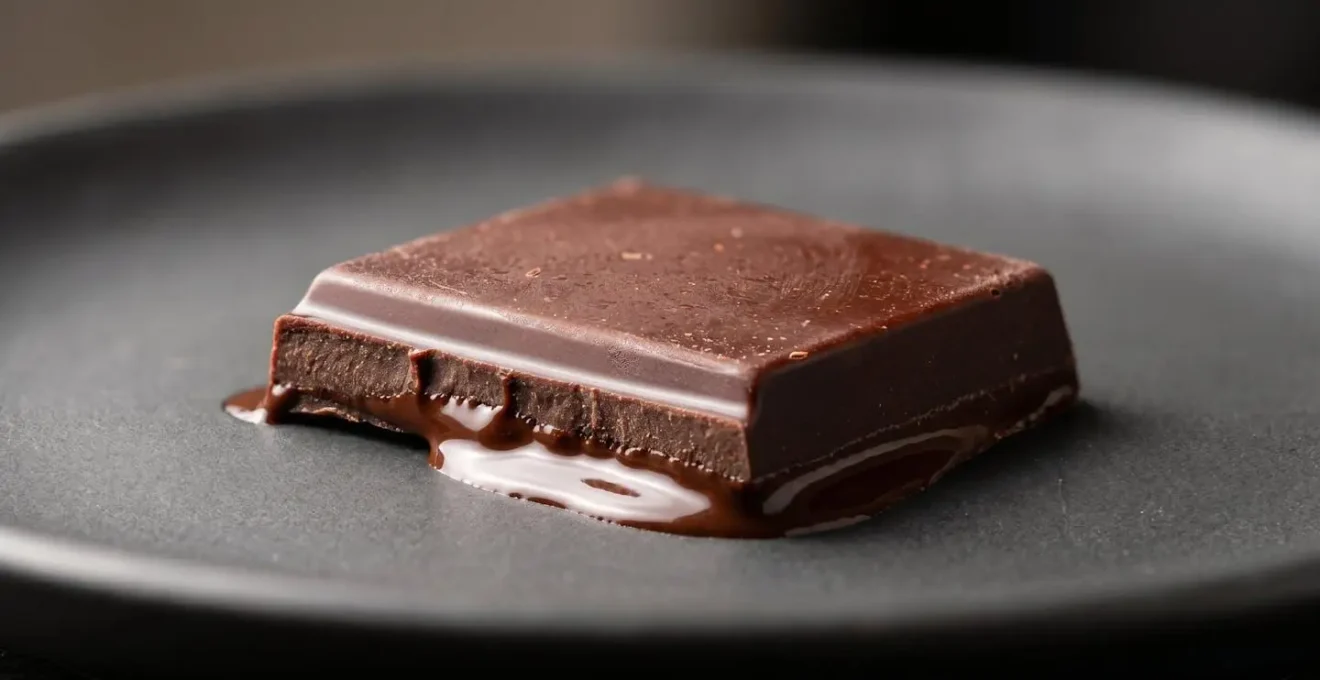
As this image shows, the smooth, reflective surface and the way the chocolate begins to melt are primary indicators of quality. This visual perfection is a direct result of the chocolatier’s mastery over the tempering process, which ensures a satisfying texture and clean flavour release.
Your 5-Step Professional Chocolate Tasting Protocol
- Visual Inspection: Examine the chocolate’s colour and gloss. A high-quality bar should be free of “bloom” (a white or greyish coating) and have a consistent, even surface. When you break it, listen for a sharp, clean snap.
- Aroma Analysis: Before tasting, bring the chocolate close to your nose. You can even warm a small piece between your fingers to release its volatile compounds. Note the primary aromas—are they fruity, earthy, nutty, or floral?
- Textural Assessment: Place a small piece on your tongue. Resist the urge to chew immediately. Let it melt. Is the texture creamy and smooth, or is it gritty or waxy? Note how quickly or slowly it dissolves.
- Flavour Evolution: As it melts, identify the journey of flavours. Use a flavour wheel for guidance if needed. Notice the beginning notes, the main body of flavour in the middle, and the final notes of the finish. A great chocolate tells a story.
- Comparative Tasting: The best way to learn is by comparison. Taste two or three different chocolates in sequence, cleansing your palate with a plain water cracker and a sip of water between each to prevent flavour overlap and highlight their differences.
Parisian Bonbons or Basque Dark Chocolate: Which French Style Suits Your Palate?
French chocolate is not a monolith. Two dominant philosophies define the landscape, each offering a vastly different experience that caters to different tastes. Understanding which style you prefer is key to spending your money wisely. On one hand, you have the quintessential Parisian style, characterized by the delicate, multi-layered bonbon or ganache. This is a school of intellectual artistry, where the chocolatier’s genius is expressed through their skill in creating fillings, infusions, and complex textural contrasts. The chocolate couverture often serves as a vessel for other flavours—caramel, fruit purées, spices, or floral essences. This style is for those who love the intricate world of haute pâtisserie and Michelin-star desserts.
On the other hand, there is the raw, rustic power of the Basque style. Historically, the Basque Country was an early entry point for cacao into France from Spain. This tradition is less about the chocolatier’s additions and more about celebrating the primal character of the bean itself. Basque chocolatiers are often bean-to-bar purists, creating dark, intense chocolates that showcase the specific terroir of a single-origin harvest. The experience is more akin to tasting a fine wine or a single-origin espresso; it’s about single-note clarity, intensity, and a direct connection to the raw ingredient. This style appeals to wine lovers, black coffee drinkers, and anyone who wants to taste the pure, unadulterated soul of the cacao.
Neither style is inherently “better”—they simply serve different purposes. The following table breaks down their core philosophies, helping you identify which approach is more likely to satisfy your personal taste, a distinction highlighted in a recent analysis of French chocolate traditions.
| Characteristic | Parisian Bonbons/Ganaches | Basque Dark Chocolate |
|---|---|---|
| Philosophy | Intellectual artistry—chocolatier’s skill in creating fillings, textures, delicate infusions | Primal power—raw, rustic, intense character of the bean itself |
| Historical Origin | Paris as global center of luxury patisserie; complex, multi-layered creations | Basque Country as early entry point for cacao from Spain; traditional purity focus |
| Production Focus | Couverture-based assembly; emphasis on fillings and flavor combinations | Bean-to-bar process; emphasis on terroir and single-origin expression |
| Best For | Fans of intricate pastry, Michelin-star desserts, complex cocktails | Wine lovers who appreciate terroir, bold espresso drinkers |
| Flavor Experience | Delicate, multi-textured, refined sweetness with infusions | Intense, single-note clarity, expressing specific harvest terroir |
The Storage Mistake That Ruins £100 Worth of French Chocolate Before You Even Taste It
You’ve invested in a beautiful selection of French chocolates, carefully chosen based on the maker and your palate. Yet, you can destroy all that craft and complexity with one simple mistake: improper storage. The single greatest enemy of fine chocolate is not heat itself, but temperature fluctuation. This phenomenon, known as thermal shock, is what causes the dreaded “bloom” that ruins both the texture and flavour of your prized confections. Many people make the mistake of refrigerating chocolate to protect it from a warm room, but this is often the very act that destroys it.
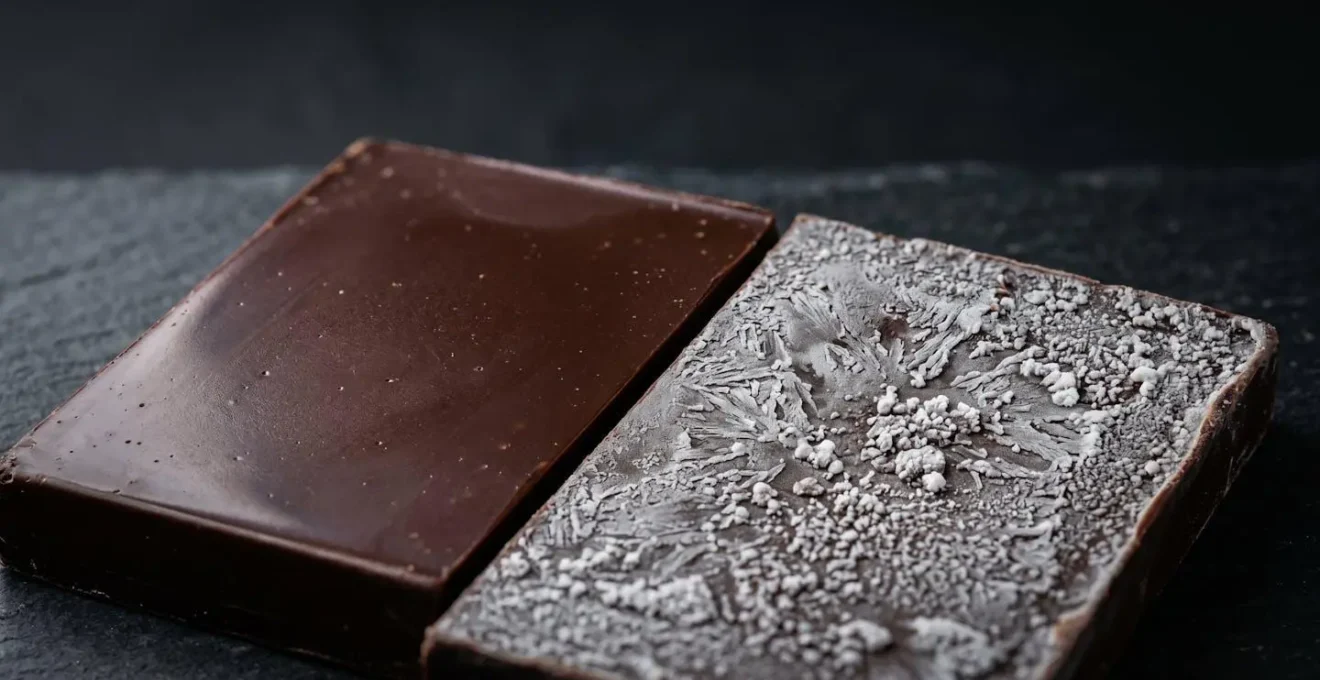
When chocolate is chilled and then brought back to room temperature, two things can happen. The first is sugar bloom, where condensation forms on the surface, dissolving some of the sugar. When the water evaporates, the sugar recrystallises into a gritty, white, dusty layer. The second, and more common, is fat bloom. The cocoa butter—the expensive, flavour-carrying fat in chocolate—is a crystalline fat. Temperature changes cause these crystals to become unstable, separate, and migrate to the surface, forming a greasy, greyish-white coating. The chocolate loses its signature snap and glossy finish, and the texture becomes soft, crumbly, or waxy in the mouth.
The visual difference is stark, as the illustration below shows. A bloomed chocolate not only looks unappetizing but its flavour is also compromised, tasting dull and flat because the fat-soluble flavour compounds are no longer properly suspended.
The ideal storage condition for chocolate is a cool, dark, and dry place with a stable temperature, ideally between 16-18°C (60-65°F). A wine fridge is perfect, but a cool pantry or cellar works well. Avoid the refrigerator at all costs. If you absolutely must, seal the chocolate in an airtight container before chilling and allow it to return to room temperature for several hours *while still inside the container* to prevent condensation. Protecting your investment is as simple as respecting its delicate chemistry.
When Should You Buy French Christmas Chocolates for Peak Freshness Versus Cleared Stock?
The concept of freshness in chocolate is often misunderstood. While a solid bar of dark chocolate can last for a year or more if stored properly, the delicate, fresh cream-based ganaches found in Parisian-style bonbons have a much shorter shelf life, often just two to three weeks. This is critical knowledge, especially when buying chocolates for a specific event like Christmas. Purchasing these delicate items too early means you will be serving them long past their peak, when their flavours have faded and their textures have degraded.
A strategic purchasing timeline is essential. Solid bars, pralines (which are made with nuts and sugar), and other non-ganache items can be bought as early as November. They are stable and will not lose quality if stored correctly. However, for fresh ganaches intended for Christmas Day, the purchasing window is much narrower. Buying them in the first week of December is too early. The optimal ‘sweet spot’ is between December 15th and 20th. This ensures they are at their absolute peak of freshness for Christmas festivities. When buying from an artisan, don’t be afraid to ask for the ‘date de fabrication’ (production date) to be certain.
After December 25th, an opportunity arises for bargain hunters. Chocolatiers will be clearing out their Christmas stock at a discount. This is a great time to buy for personal consumption, but vigilance is key. Always check the production date, not just the ‘best before’ date. You are buying an item that is already at or past its peak, so it should be consumed quickly. Understanding this timeline allows you to enjoy French chocolate as the maker intended: either at its freshest for a premium price, or as a savvy purchase for immediate enjoyment.
Why Can French Factories Legally Call Mass-Produced Items “Artisanal”?
In the UK, the term “artisanal” evokes images of a lone craftsperson toiling over a small batch. In France, the word has a specific legal meaning that has almost nothing to do with production methods. This loophole is one of the most confusing aspects for consumers. A product can be legally labelled ‘artisanal’ not because it’s handmade, but because the company is registered with the French ‘Chambre de Métiers et de l’Artisanat’ (Chamber of Trades and Crafts). This registration is based on criteria like company size and the owner possessing a professional qualification.
This creates a paradoxical situation. A factory with 200 employees can legally use the term ‘artisanal’ on its machine-made, mass-produced chocolates, simply by having a qualified ‘maître artisan’ (master craftsman) on its staff. Conversely, a passionate, self-taught solo chocolatier producing incredible bean-to-bar chocolate in their small workshop may not be able to use the term if they lack the formal diploma required for registration. The label, therefore, certifies a company’s legal status, not the quality or method of its production. It’s a bureaucratic designation, not a seal of craft.
This legal ambiguity is exploited by large-scale producers to create a perception of quality that their industrial processes may not justify. It’s a powerful marketing tool that blurs the line between true craft and commercial manufacturing.
Case Study: The ‘Artisanal’ Halo of Mass-Market Brands
Brands like Lindt and Godiva, which are recognised globally and available in UK supermarkets, are masters of this positioning. Through premium packaging, high-street boutiques, and higher price points than standard confectionery, they cultivate an ‘artisanal’ or ‘fine chocolate’ image. Consumers are conditioned to see them as a luxury item. However, these companies produce chocolate on a massive industrial scale. The reason some products with similar origins can be marketed as ‘artisanal’ in France is entirely down to business registration, as an industry analysis points out. A large company with the correct legal registration can apply the ‘artisanal’ label to an industrially produced item, misleading consumers who associate the word with small-scale, hands-on craftsmanship.
Why Does AOP Certification Matter More Than Producer Marketing Claims?
In a world of misleading marketing, how can a consumer find a reliable indicator of quality and origin? While labels like “artisanal” or “Grand Cru” are often just marketing fluff, some certifications carry real legal weight. The most significant in the French system is the AOP (Appellation d’Origine Protégée), or Protected Designation of Origin. This is the same system that protects the integrity of Champagne, Roquefort cheese, and other iconic French products.
An AOP label is not a marketing claim; it is a legally binding guarantee. For a product to receive AOP status, it must be produced, processed, and prepared in a specific geographical area using a recognised and traditional know-how. It links a product directly to its terroir and a strict set of production rules (‘cahier des charges’). While there are currently no AOPs for French chocolate itself (as cacao is not grown in France), the ingredients used *within* chocolate confections can be AOP-certified. For example, you might find a bonbon made with ‘Beurre Charentes-Poitou AOP’ (butter) or ‘Noix de Grenoble AOP’ (walnuts).
Seeing an AOP ingredient listed is a powerful signal. It tells you the chocolatier is committed to sourcing ingredients with verifiable quality and a guaranteed sense of place. They are choosing to invest in superior raw materials rather than just relying on their own brand name. As the premium chocolate market continues to grow, with projections of an 8% CAGR driven by demands for quality, such verifiable credentials become increasingly important differentiators. It’s a mark of transparency that cuts through the noise of empty marketing slogans and shows a genuine respect for terroir and craft.
Key Takeaways
- True quality often lies with small ‘bean-to-bar’ makers, not just famous ‘assembler’ brands who use pre-made chocolate.
- Labels like ‘Artisanal’ and ‘Master Chocolatier’ are often legally meaningless marketing terms; look for verifiable credentials like ‘MOF’ instead.
- Your palate is your best tool. Learn to taste systematically to identify flavour complexity, smooth texture, and a clean finish.
- Proper storage is non-negotiable. Avoid temperature fluctuations and the refrigerator to prevent ‘bloom’ from ruining texture and taste.
Why Do “Master Chocolatier” Labels Mean Nothing When Every High Street Shop Uses Them?
You’ve seen it everywhere, from supermarket brands to high-end boutiques: the title ‘Maître Chocolatier’ or ‘Master Chocolatier’. It’s designed to evoke an image of ultimate authority and skill. The truth is, in France and most of the world, this title is completely unprotected and legally meaningless. Anyone, from a globally recognised craftsman to a person melting chocolate buttons in their kitchen, can call themselves a ‘Master Chocolatier’. It requires no training, no examination, and no peer review. It is a pure marketing term.
So, what should you look for? Thankfully, a clear hierarchy of credentials exists, and understanding it is the final key to unlocking the world of French chocolate. At the absolute pinnacle is the MOF (Meilleur Ouvrier de France). This is not a company award but a state-recognised title of supreme craftsmanship, identified by the prestigious blue, white, and red collar worn on the chef’s jacket. The competition to become a MOF Chocolatier is brutal, held only every few years, with an incredibly low pass rate. It is an unimpeachable guarantee of technical and artistic excellence.
Below the MOF, other reliable indicators include winning a medal at the International Chocolate Awards, which involves rigorous blind tasting by expert panels, or membership in a respected professional association like ‘Relais Desserts’, which has a strict quality charter. Even the ‘Maître Artisan’ title, while flawed, at least guarantees a legal registration and a professional qualification, which is more than ‘Master Chocolatier’ offers. Distinguishing between these validated credentials and empty marketing is the ultimate test of a true connoisseur.
The following hierarchy, based on an analysis of industry credentials, provides a clear framework for evaluating a chocolatier’s true standing.
| Rank | Title/Credential | Legal Status | Reliability as Quality Indicator |
|---|---|---|---|
| 1 | MOF (Meilleur Ouvrier de France) Chocolatier | Legally protected, state-recognized title | Unimpeachable—brutal multi-year competition, extremely low pass rate, verifiable excellence |
| 2 | International Chocolate Awards Winner | Independent industry recognition | High—requires blind tasting by expert panel, objective evaluation criteria |
| 3 | Member of Respected Association (e.g., Relais Desserts) | Private organization membership | Moderate-High—requires adherence to quality charter and peer validation |
| 4 | Maître Artisan | Legal status via Chambre de Métiers | Moderate—guarantees registration status but NOT production process quality |
| 5 | ‘Maître Chocolatier’ / ‘Master Chocolatier’ | Not legally protected; pure marketing term | None—anyone can self-apply this label without verification or standards |
Armed with this knowledge, you can now step into any chocolaterie not as a tourist guided by price, but as a connoisseur guided by craft. Your next chocolate purchase should be an adventure in discovery, applying these principles to find the hidden gems that deliver true value and an unforgettable tasting experience.