Contrary to popular belief, a UNESCO listing is not a simple guarantee of an authentic cultural experience; it’s often a catalyst for commercialisation that can transform living heritage into a staged performance.
- Authenticity lies in observing the ’living’ aspects of a tradition—the active community, the functioning workshops, the unscripted daily life—not just the polished facade presented to visitors.
- Discerning travellers can identify genuine heritage by looking for specific “authenticity signals,” such as shops serving locals, un-staged community festivals, and artisans focused on process over souvenirs.
Recommendation: Shift your travel focus from collecting experiences to understanding context. Use the frameworks in this guide to evaluate where culture is lived, not just displayed.
For the culturally curious traveller, the UNESCO Intangible Cultural Heritage label seems like a perfect compass, pointing towards the authentic heart of France. It promises an encounter with living history, from the craftsmanship of the Compagnons du Devoir to the festive spirit of a regional festival. Yet, a paradox lies at the core of this recognition. The very spotlight that aims to protect these traditions can accelerate their transformation into polished, profitable tourist performances, hollowing out the very soul the visitor came to find.
The common advice is to “go off the beaten path,” but this is often too vague to be useful when entire villages become attractions. The real challenge isn’t finding the listed tradition, but discerning its vitality. It requires moving beyond the surface and learning to read the subtle signals that separate a vibrant, living culture from a carefully curated museum set. The quest is not just for the perfect photo of a medieval village, but for the faint sounds of a blacksmith’s hammer or the smell of a local boulangerie at dawn—signs that the heritage is still breathing.
But what if the key wasn’t about where you go, but *how* you look? This guide is not another list of UNESCO sites. It is a framework for the discerning visitor, a lesson in seeing the difference between authenticity and its imitation. We will explore the economic forces that drive commercialisation and provide you with practical tools to identify genuine craftsmanship, participate respectfully in local life, and recognise a living community when you see one. Your mission, should you choose to accept it, is to become a traveller who protects heritage by engaging with it thoughtfully, ensuring these traditions thrive for generations to come, not just for show.
This article provides a detailed framework for understanding and navigating the complexities of cultural tourism in France. By exploring the mechanisms of commercialisation and offering concrete checklists, it equips you to find experiences that are genuinely rooted in living heritage.
Summary: Finding the Soul of French Heritage Beyond the Label
- Why Does UNESCO Listing Sometimes Accelerate a Tradition’s Commercialisation?
- How to Experience Genuine French Compagnonnage Craftsmanship Rather Than Museum Displays?
- Provençal Santons or Alsatian Christmas Markets: Which Tradition Offers More Authentic Participation?
- The Tourist Behaviour That Makes Traditional Craftspeople Stop Welcoming Visitors
- When Are French Harvest Festivals Authentic Community Celebrations Versus Tourist Shows?
- How to Use a French Cooking Class to Actually Learn About French Culture?
- Why Does One Medieval Village Feel Alive While Another Feels Like a Museum Set?
- Why Do “Medieval Villages” Full of Souvenir Shops Feel Less Medieval Than Quiet Hamlets?
Why Does UNESCO Listing Sometimes Accelerate a Tradition’s Commercialisation?
The moment a tradition is inscribed on UNESCO’s Intangible Cultural Heritage list, it is catapulted onto the global stage. While the intention is preservation, the immediate effect is often a surge in visibility and tourist demand. This influx creates powerful economic incentives to scale, standardise, and package the tradition for mass consumption. What was once a local community practice can quickly become a product, its narrative simplified to be more easily sold. This isn’t necessarily a malicious process, but a pragmatic response to newfound economic opportunity.
This phenomenon is driven by what academics call the “new spirit of capitalism” converging with the “creative economy.” Heritage becomes a brand, and authenticity a marketable asset. As one academic analysis of UNESCO’s global influence notes, a designation often triggers a competitive rush. In their study on the global competition for intangible heritage, researchers point out a crucial intersection:
The beginning of this recognition coincided with the expansion of the creative economy and the development of the new spirit of capitalism.
– Academic researchers on UNESCO heritage policies, Heritage & Society
The result is a delicate balancing act. The community of practitioners—be they artisans, festival organisers, or chefs—must navigate the pressure to meet tourist expectations while staying true to the tradition’s original purpose and form. A baguette’s UNESCO recognition, for instance, isn’t just about celebrating bread; it’s about the artisanal know-how and culture surrounding its daily creation. When the focus shifts from the process to simply selling a “UNESCO-stamped” product to queues of tourists, the living part of the heritage is at risk of being sidelined.
Ultimately, the UNESCO label acts as a powerful amplifier. It can amplify preservation efforts and community pride, but it can just as easily amplify the market forces that lead to commodification. For the traveller, understanding this dynamic is the first step toward looking past the label and seeking the substance behind it.
How to Experience Genuine French Compagnonnage Craftsmanship Rather Than Museum Displays?
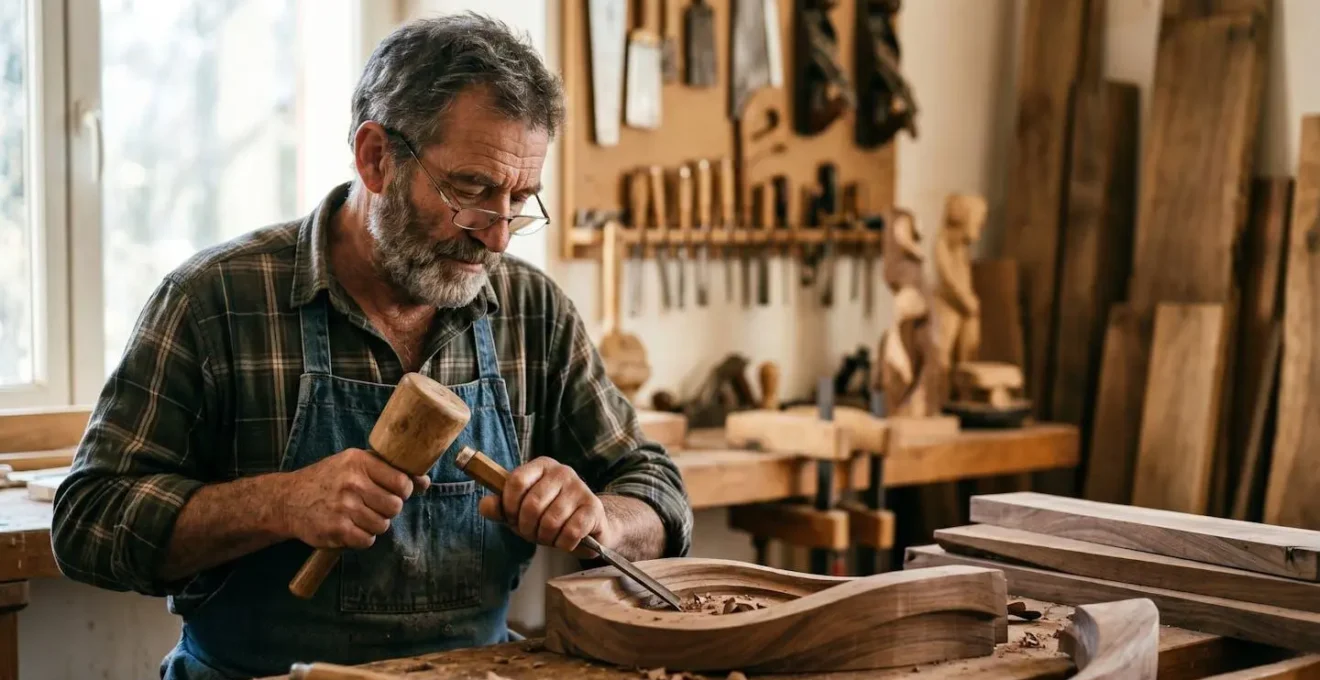
The Compagnonnage, a mentorship network for artisans dating back to the Middle Ages, is the epitome of living heritage. It’s not about artefacts in a museum but about the transmission of rare know-how from master to apprentice. To experience its spirit, you must seek out the living workshops, not the static displays. The key is to look for signs of active, ongoing creation—the organised chaos of a workspace, the smell of wood shavings or hot metal, and the presence of artisans deeply engaged in their craft.
A crucial tool for the discerning visitor is the EPV (Entreprise du Patrimoine Vivant) label. Created by the French government in 2005, this “Living Heritage Company” designation is awarded to firms with exceptional, often traditional, craftsmanship. Unlike a simple product certification, the EPV label recognises a dynamic process. It signifies a company’s commitment to mastering traditional techniques, its investment in training apprentices, and its deep-rooted presence in its region. These are not souvenir factories; they are workshops where long-term commissions are fulfilled and skills are passed down.
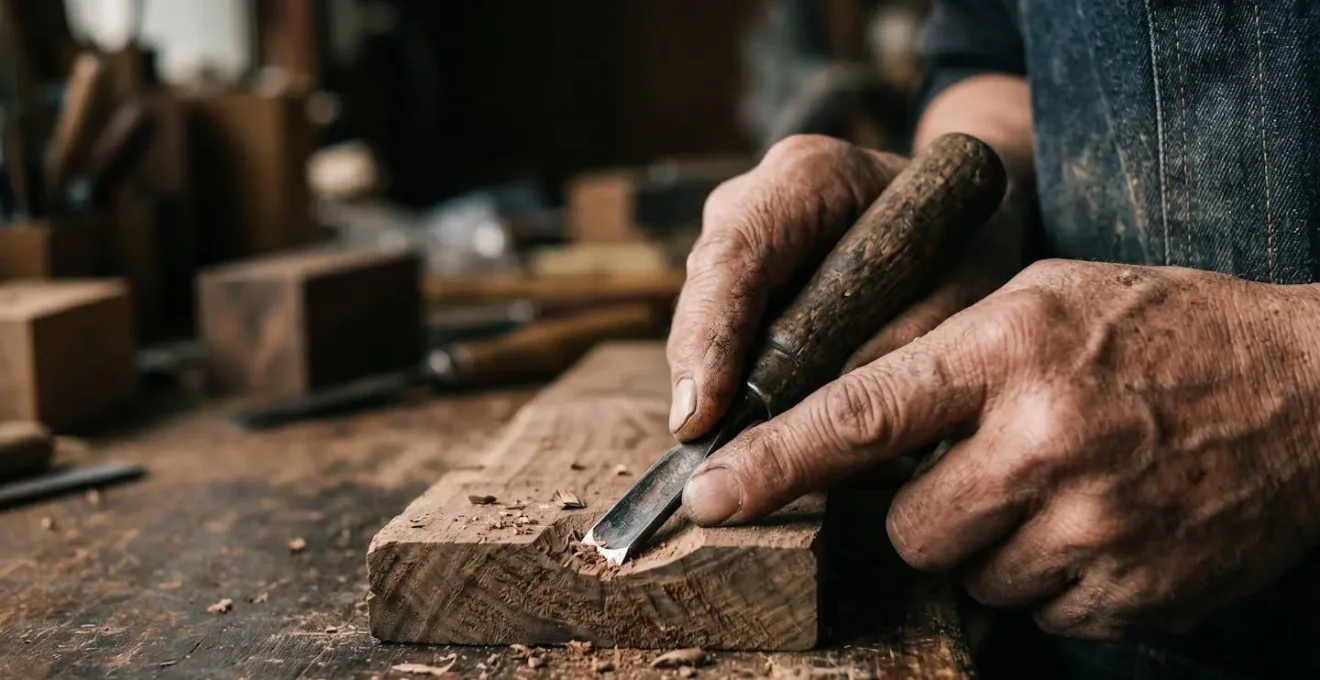
When you find an EPV-certified workshop, you’re not just a customer; you are a witness to a living tradition. Observe the environment: does it look like a functional workspace or a pristine showroom? The most authentic spaces are often messy, filled with tools, works-in-progress, and the hum of activity. This is the difference between a place that *sells* heritage and a place that *lives* it. For a young person entering the Compagnonnage, the goal is to learn a trade while “developing character by experiencing community life and traveling”—a purpose far deeper than commerce.
To find these workshops, look for the following indicators:
- The EPV Label: Check the official directory for companies recognised for outstanding craftsmanship.
- Active Apprentices: The presence of younger artisans learning from masters is a key sign of living transmission.
- Long-Term Commissions: Workshops focused on bespoke projects rather than pre-made items for tourists are more likely to be authentic.
- A ’Working’ Atmosphere: Look for the beautiful mess of creation—tools in use, dust, and projects at various stages of completion.
Provençal Santons or Alsatian Christmas Markets: Which Tradition Offers More Authentic Participation?
The question is not a simple choice between two beloved French traditions, but an exercise in applying a framework of authenticity. Both the creation of Provençal *santon* figurines and the magic of Alsatian Christmas markets are steeped in history. Yet, their modern manifestations can range from deeply authentic community events to overwhelming commercial spectacles. The key to authentic participation lies not in the tradition itself, but in the scale, purpose, and integrity of the specific event or artisan you choose to engage with.
A small, family-run *santon* workshop in a quiet Provençal village, where the artisan explains the meaning of each character, offers a profound connection to culture. Conversely, a stall selling mass-produced “santons” at a large, tourist-focused market offers none. Similarly, an Alsatian Christmas market like that of Strasbourg, which according to local tourism documentation is the oldest in France (1570) and now the largest with over 300 stalls, presents a vastly different experience from a smaller, community-centric market in a village like Kaysersberg, which prioritises quality over quantity.
True participation comes from engaging with an event on its own terms, where the primary purpose is community gathering and cultural preservation, not just revenue generation. The following table breaks down the indicators of authenticity, helping you to assess any cultural event you encounter.
| Authenticity Criterion | Authentic Event (e.g., Kaysersberg) | Tourist-Focused Event (e.g., Large-city markets) |
|---|---|---|
| Visitor Ratio | Controlled attendance (~200,000 annually), quality over quantity approach | Record-breaking crowds, tour bus dominated |
| Vendor Origin | Rigorous selection excluding mass-produced/imported products, local artisans only | Mix of local and resellers with generic souvenirs |
| Primary Purpose | Community gathering with cultural programming, preservation of traditions | Commercial revenue generation, tourist entertainment |
| Product Authenticity | Handcrafted unique pieces, true reflections of French craftsmanship | Mass-produced items marketed as handmade |
| Promotion Strategy | Local Mairie website, word-of-mouth, regional tourism | International platforms, global tour packages |
Ultimately, authentic participation is an active choice. It means seeking out the event where you feel like a guest within a community celebration, rather than a consumer in a theme park. It’s about buying a unique, handcrafted item directly from the person who made it and hearing their story, whether it’s a *santon* maker in Provence or a woodcarver in Alsace.
The Tourist Behaviour That Makes Traditional Craftspeople Stop Welcoming Visitors
The relationship between an artisan and a visitor is a fragile one. While many craftspeople are proud to share their *savoir-faire*, they are not museum curators. Their workshop is their livelihood, and their time is their most valuable resource. Certain tourist behaviours, often unintentional, can erode this relationship, transforming a welcoming space into a closed-off one. The core issue is a misunderstanding of the context: treating a living workshop as a free public gallery or, worse, a backdrop for social media content.
When visitors enter a space without acknowledgement, handle delicate works without permission, or treat the artisan as an exhibit to be photographed, it creates a sense of being used rather than appreciated. The most damaging behaviour, however, is often the disregard for the economy of time. Every minute an artisan spends with a non-buying visitor who is merely “browsing” is a minute they are not earning a living. When this happens repeatedly, the incentive to remain open and engaging disappears. As a specialist analysis on artisan tourism highlights, today’s travellers seek genuine connection, but this requires a reciprocal exchange of respect. A visit must be more than a transaction; it must be an interaction.
To foster a positive encounter and ensure artisans continue to welcome discerning travellers, a simple code of conduct is essential. It’s about shifting your mindset from a consumer to a respectful guest. As experts in artisan-based tourism point out, high-value travelers want to experience the social practices that define a culture, and this requires conscious, respectful engagement. The goal is to show genuine interest in the craft, not just the price tag.
Follow these guidelines to be a welcome visitor:
- Always greet the artisan: A simple, polite ’Bonjour’ upon entering is fundamental.
- Ask before touching: Never handle materials, tools, or finished pieces without explicit permission.
- Request permission to photograph: This applies to the artisan, their work, and their space.
- Inquire about the process, not just the price: Ask about the technique, the challenges, or the story behind a piece.
- Respect their time: Be mindful that you are in a place of business. A small purchase or a clear, educated interest is a sign of respect.
- Avoid treating the workshop like a museum: It’s a functional space, not a public attraction.
When Are French Harvest Festivals Authentic Community Celebrations Versus Tourist Shows?
France’s calendar is punctuated by hundreds of festivals celebrating its rich agricultural heritage. From grape harvests (*vendanges*) in Bordeaux to lavender festivals in Provence, these events offer a window into the soul of a region. However, like all traditions in the age of tourism, they exist on a spectrum from genuine community gathering to slickly produced tourist show. The discerning traveller’s task is to identify the signs that distinguish one from the other.
An authentic harvest festival is, first and foremost, for the community. It is an expression of collective belonging, a moment for locals to celebrate the fruits of their labour and the turning of the seasons. Tourists may be welcome, but they are guests, not the primary audience. The event’s rhythm will feel organic and perhaps a little chaotic, not perfectly scheduled for tour bus arrivals. You’ll see multi-generational families, local associations running stalls, and activities that reflect genuine regional customs.
A prime example of this is Brittany’s Fest Noz, a UNESCO-recognised tradition of late-night community gatherings with dancing and traditional music. As a case study in authenticity, the Fest Noz is not a performance for an audience; it is a participatory event where the lines between performer and spectator blur. The joy comes from joining in. These events reveal how customs vary across France, yet all share a sense of collective identity that is ideal for travellers seeking an experience without relying on tourist-specific infrastructure.
In contrast, a festival designed as a tourist show often features:
- Costumed “performers” re-enacting traditions rather than locals celebrating them.
- Heavy commercial branding and sponsorship.
- Stalls selling generic souvenirs instead of local produce or crafts.
- A schedule and layout optimised for crowd control and spending, rather than social interaction.
The key is to look for the event’s primary purpose. Is it a party thrown by the community for itself, which you are privileged to witness? Or is it a spectacle created specifically to attract and entertain you?
How to Use a French Cooking Class to Actually Learn About French Culture?
A French cooking class can be one of two things: a sterile lesson in technique, or a deep dive into the heart of French culture. The difference lies in choosing a class that values context and conviviality as much as recipes. French cuisine is not just about mastering a perfect sauce; it’s about understanding the importance of seasonal produce, the stories behind family dishes, and the central role of the shared meal in daily life.
To transform a simple class into a cultural immersion, you must look beyond the professional kitchens of culinary institutes. Seek out experiences described as *’chez l’habitant’* (in a local’s home). These classes often begin not in the kitchen, but at the local market. This is where the real learning starts: discovering how to select the best produce, learning what is truly in season, and observing the social ritual of interacting with vendors—an observational approach equally essential for identifying authentic island cuisine beyond tourist areas. This connection to the *terroir* and the local economy is fundamental to French cooking.
During the class, don’t be afraid to ask “cultural why” questions. Go beyond “how much flour?” and ask, “Why is this dish traditionally served on this holiday?” or “What’s the story behind your family’s version of this recipe?” This turns the instructor from a simple teacher into a cultural guide. The most authentic classes focus on *’cuisine du quotidien’* (everyday cooking), providing insight into real French life, not just the haute cuisine of Michelin-starred restaurants.
Finally, the most crucial element is the *dégustation*—the shared meal at the end. A class that rushes this part misses the point entirely. The unhurried pleasure of sitting down together to enjoy the food you’ve prepared is the essence of French conviviality. It is here, around the table, that stories are shared, connections are made, and a cooking lesson becomes a genuine cultural exchange.
- Choose classes that include a trip to the local market.
- Prioritise classes held in a private home over professional kitchens.
- Select courses on everyday cooking to understand real French life.
- Ensure the experience culminates in a shared, unhurried meal.
- Ask questions about the stories and traditions behind the food.
Why Does One Medieval Village Feel Alive While Another Feels Like a Museum Set?
You arrive in a village listed among “Les Plus Beaux Villages de France.” The ancient stone houses are perfectly preserved, the cobblestone streets immaculate. Yet, something feels off. By 3 PM, the day-trippers are gone, and an unnerving silence descends. The windows remain dark, the streets empty. You are in a museum set, a beautiful shell devoid of life. In contrast, another village, perhaps not even on a famous list, hums with a quiet energy. You hear the chime of a school bell, the murmur of conversation from a café, and see lights flick on in homes at dusk. This is a living community.
The difference lies in the presence of authentic daily life. A living village is not just a collection of historic buildings; it is a functioning social organism. It has a heart that beats with the rhythm of its residents’ lives, not the schedule of tour buses. The key to discovering these places is to train your senses to look for the subtle but unmistakable “authenticity signals” that a village is a home, not just a destination.
This means looking beyond the souvenir shops and ice cream parlours that cater exclusively to tourists. A living village has what can be called ’commercial symbiosis’: businesses that serve both locals and visitors. The presence of a butcher (*boucherie*), a real bakery (*boulangerie*) with a morning queue, a pharmacy, or a post office are all strong indicators of a resident population. Listen for the sounds of life: children playing in a schoolyard, a dog barking, the distant sound of a television. These are the sounds a museum set can never replicate.
To help you distinguish a living community from a historical theme park, use this checklist to assess the vitality of any French village you visit.
Your Action Plan: The Living Village Authenticity Checklist
- Functional Infrastructure: Check for a working Mairie (town hall) with posted notices for residents, and a school with the sounds of children.
- Local Commerce: Identify shops that serve locals (boulangerie, pharmacy, butcher) versus those catering only to tourists (souvenir shops).
- Resident Presence: Observe for residents’ cars with local license plates and apply the ’Time of Day Test’—visit early in the morning or in the evening to see signs of daily routines.
- Sounds of Life: Listen for everyday noises like local conversations, a dog barking, or home repairs, which are absent in a purely tourist-oriented space.
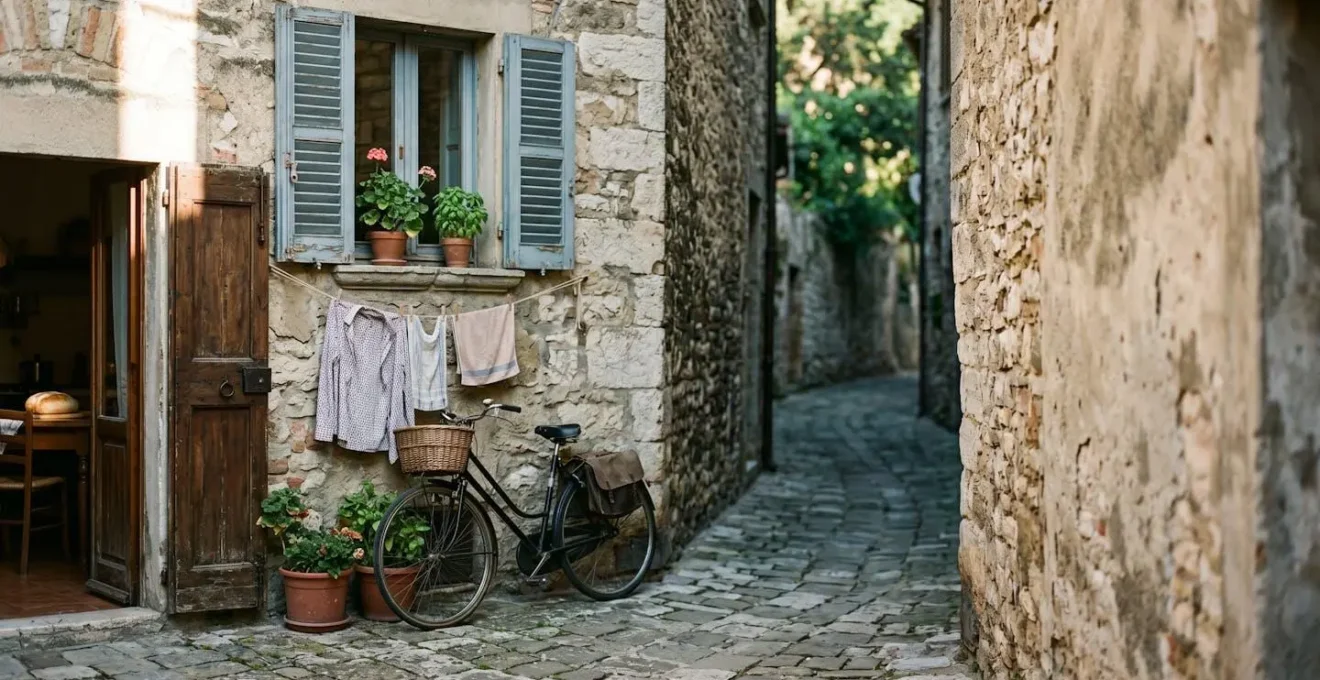
- Residential Clues: Look for personal touches that indicate habitation, such as laundry drying, potted herbs on windowsills, or lights in homes after dark.
Key Takeaways
- The UNESCO label often boosts tourism, which can lead to the ’performance’ of culture rather than its preservation.
- Authenticity is found in the ’living’ details: active workshops, community-led events, and villages with real daily life, not just tourist services.
- Your behaviour as a visitor matters; showing genuine interest in the process and respecting an artisan’s time fosters positive cultural exchange.
Why Do “Medieval Villages” Full of Souvenir Shops Feel Less Medieval Than Quiet Hamlets?
The feeling is a common one for discerning travellers. You stand in the heart of a perfectly preserved medieval village in Alsace, surrounded by half-timbered houses, yet the atmosphere feels profoundly inauthentic. Every other storefront sells the same mass-produced trinkets, and the air is thick with the chatter of tour groups rather than the sounds of daily life. The experience creates a jarring sense of cultural dissonance—a mental conflict between the ancient physical environment and the modern, commercialised activity within it.
This dissonance explains why a quiet, unlisted hamlet with a working farm, a single-family-run *auberge*, and a few elderly residents chatting on a bench can feel more genuinely “medieval” than a famous, picture-perfect village. Authenticity is not an aesthetic; it is an atmosphere created by continuity and function. When a village’s economy shifts entirely to serving tourists, its original function as a living community is lost. The shops no longer serve residents, the streets are no longer pathways for daily life, and the buildings become backdrops.
Case Study: Overtourism and Historical Dissonance in Alsace
A 2024 analysis by travel blogger Kate McCulley of Adventurous Kate highlights a critical overtourism problem in Alsace’s famous medieval villages during the Christmas market season. In small towns like Riquewihr (population: 1,000), weekend crowds became so dense that the narrow alleys felt unsafe. She notes that despite their small size, these villages attract a massive tourist influx, leading her to warn, “Know that smaller town does not mean smaller crowds.” This commercial pressure transforms authentic medieval spaces into what feel like theme parks, creating what she terms “historical dissonance”: the brain registers a conflict between the ancient stone walls and the sight of modern, mass-produced plastic items sold in every shop. The experience, as described in her guide to Alsace Christmas markets, shows how even the most beautiful settings can lose their soul to commodification.
The problem is often one of scale. A small number of visitors can be absorbed into a community without altering its fabric. However, when the number of tourists vastly exceeds the number of residents, the village inevitably reorients itself around them. The medieval character becomes a brand to be marketed, and the village’s soul is traded for commercial viability.
This is why the quiet hamlet, with its lack of commercial polish and its visible signs of ongoing, everyday life, resonates more deeply. It hasn’t yet experienced the cultural dissonance that comes from performing its own history. Its authenticity is effortless because it is simply being itself.
Armed with this framework, your next trip to France can become a more profound exploration. The goal is no longer just to see the sights, but to understand the context, engage respectfully, and connect with the living pulse of French culture. Plan your journey not by what you will see, but by how you will look for the signs of life that lie just beneath the surface.