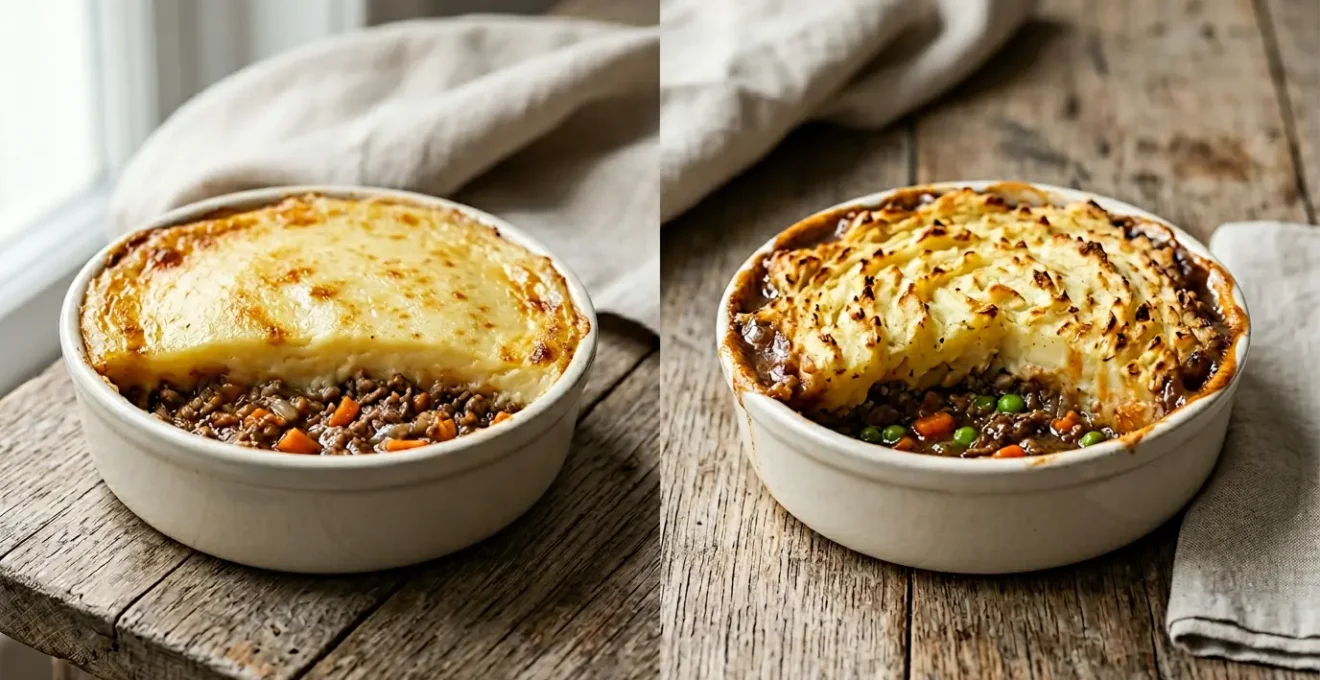
The deep satisfaction of a true Hachis Parmentier has almost nothing to do with its ingredients and everything to do with a French culinary philosophy your Shepherd’s Pie is missing.
- Authenticity is not about beef vs. lamb; it’s about achieving superior textural integrity through non-negotiable techniques.
- The soul of the dish lies in a silky, lump-free potato purée made with a ricer, and moist, hand-chopped meat, never a pre-ground mince.
Recommendation: Stop thinking of it as a recipe and start mastering the core techniques of textural contrast and flavour transformation to elevate this comfort dish from merely good to unforgettable.
There is a quiet frustration familiar to many British home cooks. You follow a recipe for “French Shepherd’s Pie” or Hachis Parmentier to the letter. You use good quality beef, you take care with your mashed potatoes, and yet, when you pull it from the oven, it lacks the profound, soul-warming satisfaction of the version you remember from a Parisian bistro. It looks the same, smells similar, but something is fundamentally missing. You sense a gap between your hearty, comforting cottage pie and the elegant, deeply flavourful French classic, but you can’t quite put your finger on it.
The common assumption is that the difference is minor—perhaps a specific herb, a dash of wine, or simply the romanticism of eating it in France. Many articles will tell you the main distinction is that Shepherd’s Pie uses lamb while Hachis Parmentier uses beef, lumping it in with its closer cousin, Cottage Pie. But this surface-level comparison is precisely why your dish falls short. The secret doesn’t lie in a single ingredient but in a completely different culinary mindset, one focused on the meticulous control of texture and the transformation of humble ingredients.
The truth is, Hachis Parmentier is not a recipe; it’s a testament to French technique. It’s a philosophy of cooking built on precision. This is not about simply topping meat with potatoes. It is about creating a dish of deliberate and exquisite contrasts: an ethereally smooth, buttery purée against rich, moist, hand-chopped meat, all sealed beneath a crisp, golden, shatteringly delicate crust. This guide will deconstruct the core technical pillars that separate the two dishes, moving beyond the ingredient list to reveal the philosophy that makes all the difference.
To truly understand this culinary icon, we will explore its historical identity, master the non-negotiable techniques for its potato and meat fillings, and reveal the common missteps that prevent British home cooks from achieving authentic French results. Here is the path to mastering this beloved classic.
Summary: Unlocking the Culinary DNA of Hachis Parmentier
- Why Is Hachis Parmentier Not Just “French Shepherd’s Pie” Despite Looking Identical?
- How to Achieve the Silky Purée Texture That Separates Hachis From Ordinary Mash?
- Maris Piper or Desiree: Which British Potato Approximates Charlotte Best for Hachis?
- The Grill Timing Mistake That Dries Out Your Hachis Parmentier Top
- When Does Leftover Roast Become Perfect for Hachis Rather Than Just Recycled?
- The Ingredient Substitution That Ruins 80% of British Attempts at French Cuisine
- Corsican Charcuterie or Savoyard Cheese: Which Regional Specialty Travels Best to the UK?
- Why Does Your Coq au Vin Never Taste Like the One You Had in That Burgundy Farmhouse?
Why Is Hachis Parmentier Not Just “French Shepherd’s Pie” Despite Looking Identical?
To call Hachis Parmentier a “French Shepherd’s Pie” is to fundamentally misunderstand its identity. The similarity is purely cosmetic. While Shepherd’s Pie (and its beef-based cousin, Cottage Pie) is a rustic, home-spun dish born from farmhouse thrift, Hachis Parmentier has a specific and celebrated origin tied to a national hero. The dish is named for Antoine-Augustin Parmentier, the 18th-century pharmacist and agronomist who championed the potato as a vital food source in France. Before his efforts, potatoes were viewed with suspicion, considered fit only for livestock.
Parmentier’s relentless campaign, which included hosting dinners for luminaries like Benjamin Franklin where every course featured potatoes, eventually won over the public and the establishment. It was in 1772 that the Paris Faculty of Medicine finally declared potatoes edible, a turning point that forever linked Parmentier’s name to the tuber. Hachis Parmentier was created as an homage to him, elevating the humble potato by combining it with ‘hachis’ (from the verb ‘hacher’, meaning to chop), creating a dish with a distinct culinary DNA.
This heritage informs the French approach. It is not just about using up leftovers; it is about celebrating the potato by creating the most perfect version of it. This philosophical difference is the foundation of the dish. While a lumpy, rustic mash might be charming in a Cottage Pie, for Hachis Parmentier, it’s a technical failure. The dish’s very name demands respect for the potato, which translates into a pursuit of perfect texture and form that simply isn’t part of the British dish’s tradition.
How to Achieve the Silky Purée Texture That Separates Hachis From Ordinary Mash?
The single greatest textural giveaway of an inauthentic Hachis Parmentier is the potato topping. A proper French purée is not merely mashed; it is an emulsion of potato, butter, and milk that is exceptionally smooth, silky, and light. This is where the concept of textural integrity becomes paramount. The goal is to break down the cooked potato into fine particles without rupturing the starch cells, an action which releases excess starch and creates a gluey, heavy paste.
This is why a traditional potato masher, which crushes and tears the potato cells, is forbidden in classic French technique for a fine purée. A food processor is even worse. The only tool that guarantees the correct texture is a potato ricer or a food mill. These tools work by forcing the cooked potato through small holes, gently separating the flesh into light, fluffy strands without damaging the starch structure. This allows for the subsequent incorporation of warm milk and, most importantly, copious amounts of high-quality unsalted butter, creating a stable and luxurious emulsion.
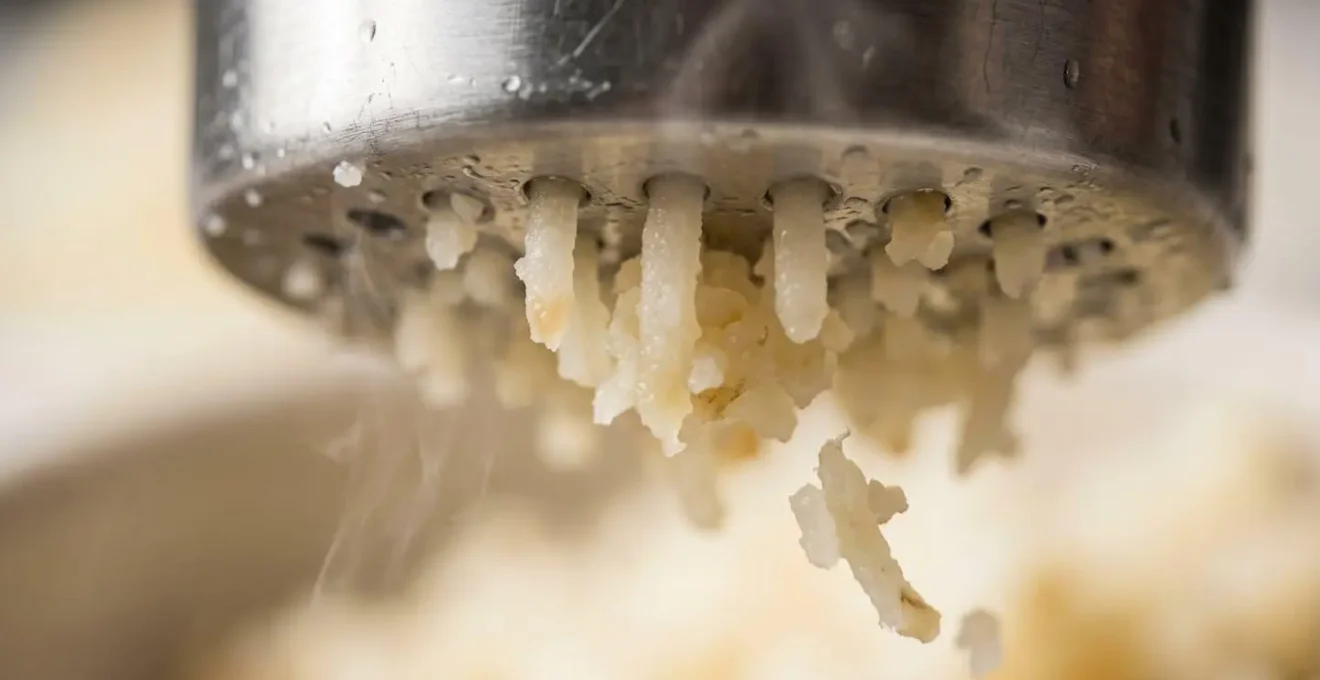
As the experts at America’s Test Kitchen discovered in their extensive testing, the choice of tool is not a matter of preference but of science. Their findings confirm the French wisdom:
We’ve found that the vigorous action of a food processor guarantees glueyness—and although a potato masher is fine for producing a rustic chunky texture, it yields a mash that’s far from fluffy.
– America’s Test Kitchen, Which Mashing Method is Best?
This silky purée is not just a topping; it’s a structural element designed to provide a soft, cloud-like contrast to the rich meat below. Achieving it requires abandoning the British ‘mash’ mindset and embracing the French ‘purée’ technique. It is the first and most critical step towards authenticity.
Maris Piper or Desiree: Which British Potato Approximates Charlotte Best for Hachis?
Understanding the ‘why’ of the purée technique naturally leads to the ‘what’: the potato itself. French chefs typically favour a semi-waxy variety like the Charlotte for Hachis Parmentier. These potatoes have a medium starch and dry matter content, allowing them to hold their shape and deliver a creamy texture without becoming overly fluffy or crumbly. For the UK home cook, this presents a challenge: how do you replicate this quality with readily available British varieties?
The most common high-quality potato in the UK is the Maris Piper, celebrated for its exceptionally fluffy texture, which is perfect for roast potatoes and classic mash. However, its very high dry matter content can be a slight disadvantage for a French-style purée. While an excellent choice, it can sometimes produce a result that is more crumbly than creamy. According to potato experts, Maris Pipers have a high dry matter content which is precisely what gives them their signature fluffiness, a quality that needs to be managed with sufficient butter and milk to achieve the desired silkiness.
A arguably better, though sometimes harder to find, alternative is the Desiree. This red-skinned potato has a slightly lower dry matter content than the Maris Piper, resulting in a creamier, smoother texture when riced. It strikes the perfect balance, offering enough flouriness to create a light purée but enough waxiness to ensure a rich, creamy mouthfeel that is remarkably close to the French ideal. While King Edwards are a decent all-rounder, they can lean towards being too floury, risking a dry purée. The choice you make here directly impacts the final textural integrity of the dish.
To make the choice clearer, this table breaks down how common British potato varieties stack up against the French gold standard for the specific purpose of a Hachis Parmentier purée. This analysis from Great British Chefs provides a clear guide for your next shopping trip.
| Variety | Dry Matter | Texture | Best For Hachis | Notes |
|---|---|---|---|---|
| Desiree | Medium-High | Creamy, holds shape | ★★★★★ | Best balance of creaminess and structure, closest to Charlotte |
| Maris Piper | Very High | Fluffy, light | ★★★★☆ | Slightly too crumbly, but excellent for traditional mash |
| King Edward | High | Floury, fluffy | ★★★☆☆ | Good all-rounder but can be too dry for French style |
| Charlotte (French) | Medium | Semi-waxy, firm | ★★★★★ | Gold standard for authentic Hachis Parmentier |
The Grill Timing Mistake That Dries Out Your Hachis Parmentier Top
The final textural element that elevates Hachis Parmentier is the finish, known in French as the ‘gratin’. A common mistake is to think of this as simply browning the top. Many home cooks assemble the dish cold and place it under a hot grill for an extended period. This approach is a recipe for disaster: the direct, fierce heat of the grill dries out the surface of the potato purée long before the interior is properly heated, resulting in a crusty, cracked top and a lukewarm centre.
The authentic French technique is a two-stage process designed to create the perfect contrast: a uniformly hot, bubbling interior sealed beneath a thin, crisp, golden-brown crust. The key is to separate the heating from the browning. First, the assembled dish must be thoroughly heated in a moderate oven (around 180°C). This gentle heating ensures the meat and potato are piping hot throughout without drying out the surface. Only when the dish is fully heated, often indicated by small bubbles of juice appearing at the edges, is it ready for the final, crucial step.
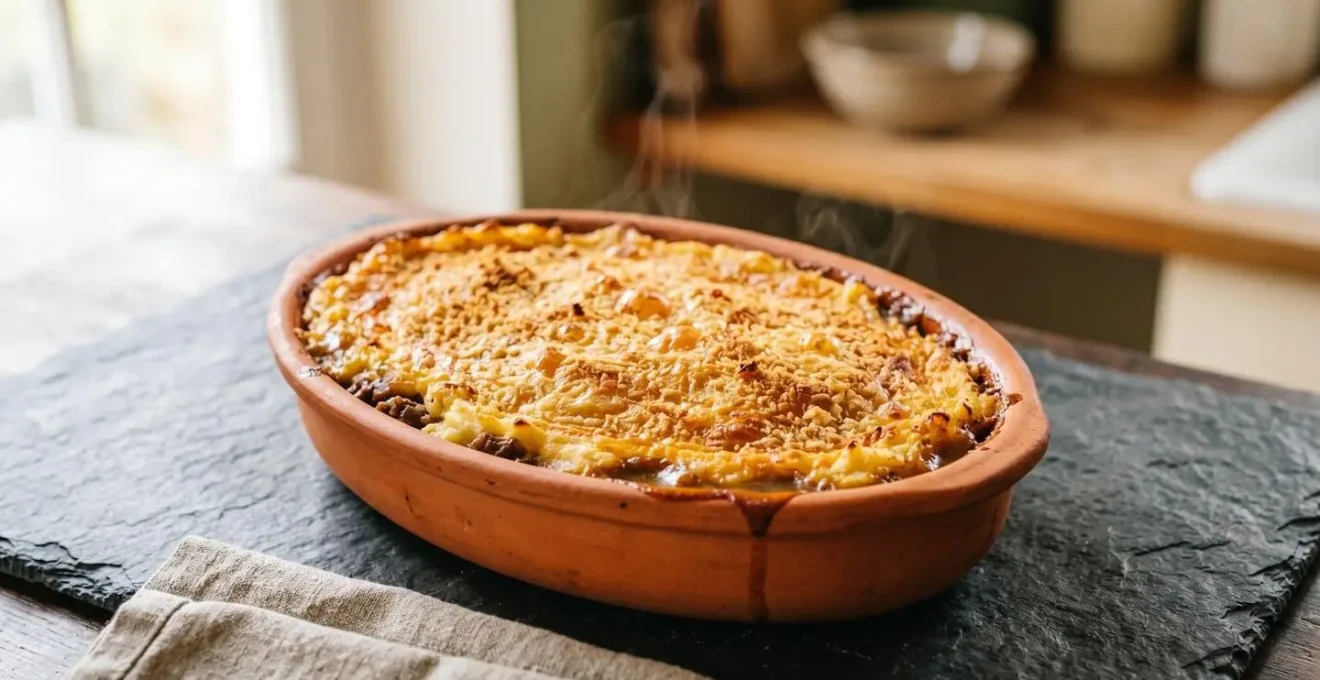
This final step is a quick, intense blast of heat under a very hot grill. For an even more refined crust, the French often scatter fine, dry breadcrumbs (‘chapelure’) and dot the surface with small knobs of butter before grilling. This creates an exceptionally crisp and flavourful topping. The dish is placed on a high rack and grilled for just a few minutes—often no more than 3 to 5 minutes—under constant supervision. The goal is not to cook, but to ‘gratiner’: to form that perfect, delicate, golden crust. This precise timing is the difference between a sublime finish and a dry, disappointing top.
Your Action Plan: The Professional Gratinating Technique
- Pre-heat the Hachis fully in the oven at 180°C until bubbles appear at the edges (15-20 minutes).
- Scatter fine breadcrumbs (chapelure) evenly across the potato surface and dot with small pieces of butter.
- Switch oven to high grill setting (220-240°C) and position dish on upper rack.
- Monitor continuously – grill for only 3-5 minutes until a golden brown crust forms.
- Look for visual cues: small juice bubbles at the edges indicate the interior is hot and ready for service.
When Does Leftover Roast Become Perfect for Hachis Rather Than Just Recycled?
The concept of using leftovers is central to both Cottage Pie and Hachis Parmentier, but the French philosophy of ‘flavour alchemy’ transforms this from an act of mere frugality into one of culinary enhancement. While a British Cottage Pie often uses freshly bought beef mince, the most sublime Hachis Parmentier is almost always made from the remains of a previous day’s slow-cooked meat dish, like a ‘pot-au-feu’ or ‘boeuf bourguignon’.
The key difference lies in the quality of the leftover meat and its preparation. The perfect source material is a cut of meat that has been braised or slow-cooked for hours, such as beef shin, shoulder, or brisket. This process breaks down the tough connective tissue and collagen into gelatin, infusing the meat with incredible moisture and a rich, unctuous mouthfeel. This is a quality that can never be replicated with lean, quick-cooked minced beef, which often becomes dry and grainy when baked a second time. The leftover meat is not a second-best option; it is the *premium* ingredient.
Case Study: Transforming Leftovers into a Prime Ingredient
As detailed in an analysis by Pardon Your French, the rustic version of Hachis Parmentier, which is still widely popular, leverages leftover Beef Bourguignon or Flemish Beef Carbonnade. The crucial technique that elevates it beyond simply ‘recycling’ is that the meat is never put through a mincer. Instead, it is meticulously hand-chopped or shredded. This preserves the texture and succulent quality of the slow-cooked meat, ensuring the filling is moist and flavourful rather than a uniform paste. This technical choice—hand-chopping pre-cooked, gelatinous meat—is what transforms a simple leftover into a prime ingredient, embodying the principle of creating a superior dish through technique, not convenience.
Therefore, a leftover roast becomes perfect for Hachis not when it’s simply available, but when it possesses the deep flavour and gelatinous richness from slow cooking. By choosing to hand-chop this superior meat, you are not recycling; you are completing the second stage of a deliberately planned culinary journey.
The Ingredient Substitution That Ruins 80% of British Attempts at French Cuisine
The pursuit of authenticity in French cooking, whether for Hachis Parmentier or any other classic, often fails at the point of substitution. Driven by a desire for convenience or misguided health concerns, many home cooks unknowingly remove the very soul of a dish. French cuisine is built on a foundation of flavour principles, and compromising on these core components is not a shortcut, but a guarantee of a bland and unsatisfying result. There are certain substitutions that are considered cardinal sins from which a dish can never recover.
The most common and damaging substitution is the fear of fat. Replacing full-fat cream with low-fat milk, or rich, unsalted butter with margarine or a low-fat spread, is a fatal error. Fat is not just a flavour carrier in French cooking; it is a structural element. It provides mouthfeel, richness, and the ability to form stable emulsions, like in our potato purée. Removing it is like removing the foundations of a house. Similarly, the use of a powdered stock cube in place of a proper, gelatinous meat or vegetable stock (‘fond’) is another critical failure. A stock cube provides saltiness, whereas a true ‘fond’ provides body, depth, and a silky texture that coats the palate.
Finally, the treatment of aromatics is a frequent pitfall. Tossing raw, roughly chopped onions into the meat is a world away from the French technique of sweating a finely diced ‘mirepoix’ (a mix of onion, carrot, and celery) slowly in butter until soft, sweet, and translucent. This foundational step doesn’t just add flavour; it builds a deep, complex base upon which the rest of the dish is constructed.
Your Action Plan: Auditing Your French Cooking for Authenticity
- Fat & Dairy Check: Are you using unsalted butter (not margarine) and full-fat milk or cream? Anything less compromises the fundamental flavour and texture base.
- Stock Inventory: Are you using a liquid, gelatinous stock (homemade or high-quality store-bought ‘fond’)? If you’re relying on a salty powder, you’re missing the crucial element of mouthfeel.
- Aromatic Technique Review: Did you slowly sweat finely chopped aromatics (like mirepoix) in butter until sweet and translucent? Or did you just quickly fry raw onions?
- Meat Preparation Analysis: For Hachis, is your meat hand-chopped or shredded from a slow-cooked cut? Or is it a lean, pre-ground mince? The former provides moisture and texture; the latter risks dryness.
- Final Finish Scrutiny: Did you use the two-stage heating and grilling method? Or did you just blast the cold dish under the grill, drying out the top?
Corsican Charcuterie or Savoyard Cheese: Which Regional Specialty Travels Best to the UK?
While some ingredients like butter and stock are non-negotiable, French cuisine also celebrates regional specificity. This can be confusing for the international cook. When is it essential to source the exact regional product, and when is a high-quality local alternative acceptable? The answer often lies in the science of food preservation and an ingredient’s stability, which dictates how well it survives a journey from a French market to a UK kitchen.
Generally, products with low water activity and traditional preservation methods travel best. This is why hard, aged cheeses and dry-cured charcuterie are excellent candidates for importing. A hard, aged Comté from the Jura or a nutty Beaufort from the Savoie region will arrive in the UK in near-perfect condition, as their low moisture content makes them stable. Similarly, a whole ‘saucisson sec’ (dry-cured sausage) or a Corsican ‘Coppa’ travels exceptionally well, its flavour protected by the curing process. These are ingredients worth seeking out from a specialist importer, as their unique terroir-driven flavours are difficult to replicate.
Conversely, high-moisture products are poor travellers. A soft, creamy Reblochon cheese, essential for a true Tartiflette, is highly sensitive to temperature and pressure changes. It can easily spoil or have its texture ruined in transit. The same applies to fresh sausages, delicate herbs, or specific types of cream. In these cases, it is far better to seek out the best possible local equivalent—a high-quality British creamy cheese, for instance—than to use a poorly-travelled, compromised French original. The principle is to prioritize the quality and integrity of the ingredient over a name on a label.
The table below provides a general guide to the travel stability of different types of French regional products, helping you decide where to spend your effort and money when sourcing authentic ingredients.
| Product Type | Water Activity | Travel Stability | Recommended Examples | Storage Tips |
|---|---|---|---|---|
| Hard Aged Cheese | Low | ★★★★★ | Comté, Beaufort, Salers | Vacuum-sealed, refrigerated transport |
| Dry Cured Sausage | Low | ★★★★★ | Saucisson sec, Lonzu, Coppa | Whole pieces travel better than sliced |
| Soft Cheese | High | ★★☆☆☆ | Reblochon, Camembert | Temperature/pressure sensitive, poor travellers |
| AOP/AOC Products | Varies | ★★★★☆ | Protected designation products | Traditional preservation methods make them robust |
Key Takeaways
- The superiority of Hachis Parmentier lies in technique, not ingredients. Focus on mastering the purée, meat preparation, and gratinating process.
- A potato ricer is non-negotiable for an authentic, silky purée. For UK cooks, Desiree potatoes offer the best balance of creaminess and structure.
- Authentic Hachis uses hand-chopped, slow-cooked meat for moisture and texture, not quick-cooking beef mince.
Why Does Your Coq au Vin Never Taste Like the One You Had in That Burgundy Farmhouse?
The principles we’ve deconstructed for Hachis Parmentier—the focus on technique, textural integrity, and flavour transformation—are not isolated. They form the bedrock of all French home cooking. This is perfectly illustrated by another classic dish that often disappoints in home kitchens: Coq au Vin. You can use the most expensive Burgundy wine, but if you miss the core techniques, your dish will never capture the deep, rustic soul of the original.
The first clue is in the name: ‘Coq’ means rooster. Historically, the dish was designed to make a tough, old bird with immense flavour tender and delicious. As traditional culinary wisdom holds, an old bird has tougher, more flavourful meat and connective tissue that breaks down over a long braise, creating a rich, silky sauce. Using a young, tender supermarket chicken is a fundamental error. The closest and best alternative for a home cook is to use bone-in, skin-on chicken thighs, as the dark meat has more of that essential connective tissue than lean breast meat.
Beyond the bird, two other technical secrets are often omitted from modern recipes. The first is the two-day rule. Marinating the chicken in wine for 24 hours before cooking is not an optional step; it’s essential for the wine to penetrate and flavour the meat. Even more importantly, after cooking, the dish’s flavour deepens profoundly if it is refrigerated overnight and reheated the next day. This allows the complex flavours to meld and mature. Finally, many recipes miss the ‘haute cuisine’ finish: a splash of good Cognac or, more authentically, Marc de Bourgogne, added at the end. This flash of spirit cuts through the richness and adds a layer of aromatic complexity that elevates the dish from a simple stew to a true classic.
Just as with Hachis Parmentier, the difference is not in a secret ingredient, but in a series of deliberate, non-negotiable techniques that honour the dish’s history and purpose. It proves that mastering French cooking is about learning a philosophy, not just memorizing recipes.
By shifting your focus from the recipe to the technique—from the ‘what’ to the ‘why’ and ‘how’—you can finally close the gap between your home cooking and the unforgettable dishes of France. Begin by applying these principles of texture, transformation, and technique to your next Hachis Parmentier and taste the difference for yourself.