The rich, complex flavour of a true Provençal daube comes from mastering time and temperature, not from a secret ingredient.
- Slow cooking (24h vs 4h) isn’t just about time; it’s about the chemical magic of converting tough collagen into luscious gelatin.
- The right wine and a specific herb layering technique create ‘terroir resonance’, making the stew taste authentically of Provence.
Recommendation: Always start your daube the day before you plan to serve it. The overnight rest is not optional; it is a critical ingredient for flavour development.
You followed the recipe to the letter. You bought a decent cut of beef, the right vegetables, a bottle of red wine, and a fragrant bundle of herbs. You simmered it for hours, filling your kitchen with promising aromas. Yet, when you sit down to eat, something is missing. The daube is pleasant, but it’s flat. It lacks the profound, soul-warming depth you remember from a small bistro in the Luberon or that you’ve read about in books. It tastes like a simple beef stew, not the legendary *daube provençale*.
This is a common frustration for home cooks in the UK and beyond. The instinct is to blame the ingredients—perhaps the beef wasn’t right, or the wine wasn’t expensive enough. Most advice tells you to simply “use good quality ingredients” or “cook it low and slow.” But this advice misses the point. The truth, as any Provençal grandmother will tell you, is that the magic of a daube is not found in the shopping list, but in the patient, deliberate application of technique. It’s about understanding the unseen chemistry happening in the pot.
This article will not give you another simple recipe. Instead, it will reveal the fundamental principles—the *why* behind the *how*. We will explore the science of slow cooking, the art of layering flavours, and the crucial role of timing and rest. Forget what you think you know about simply combining ingredients. We are going to explore how to transform them into something truly sublime, unlocking the authentic taste of Provence in your own kitchen.
To guide you on this culinary journey, we will delve into the core techniques that separate a passable stew from an unforgettable one. This guide is structured to answer the most pressing questions and reveal the secrets behind each step.
Summary: Unlocking the true soul of a Provençal daube
- Why Does a 24-Hour Daube Taste Better Than a 4-Hour Version With Identical Ingredients?
- How to Layer Herbs and Aromatics in Provençal Stews for Depth Not Confusion?
- Daube or Bouillabaisse: Which Provençal Classic Is More Forgiving for Beginners?
- The Wine Choice That Makes Your Provençal Stew Taste More Italian Than French
- When Should You Start a Daube to Serve It at Sunday Lunch in Perfect Condition?
- When Should You Start a Daube to Have It Ready for Saturday Dinner?
- Why Do French Locals Pair Wines You’ve Never Heard of With Their Regional Dishes?
- Why Do “Regional Specialities” Sold in Paris Bear Little Resemblance to the Real Thing?
Why Does a 24-Hour Daube Taste Better Than a 4-Hour Version With Identical Ingredients?
The single greatest secret to a daube’s luxurious, mouth-coating texture is not the meat itself, but what happens to it over time. The difference between a 4-hour stew and a 24-hour one lies in the patient transformation of collagen into gelatin. Tougher, cheaper cuts of beef like chuck or shoulder are rich in connective tissue, or collagen. A quick cooking process will leave this tissue chewy and tough.
However, when held at a low, steady temperature for many hours, a kind of magic occurs. According to meat science, collagen starts dissolving into gelatin at 160-180°F (71-82°C), but this process needs extended time to complete. This is the “low and slow” principle in action. This newly created gelatin coats the meat fibres, making them feel succulent and tender, and enriches the sauce with a silken, glossy body that you can never achieve with a quick broth or a cornflour-thickened gravy.
The 24-hour process includes a crucial resting period. After the initial long cook, allowing the daube to cool completely and rest overnight in the refrigerator lets these flavours meld and deepen. The gelatin sets, and upon gentle reheating, the entire stew becomes more cohesive and profoundly flavourful. The 4-hour stew is just cooked meat in sauce; the 24-hour daube is a fully integrated masterpiece.
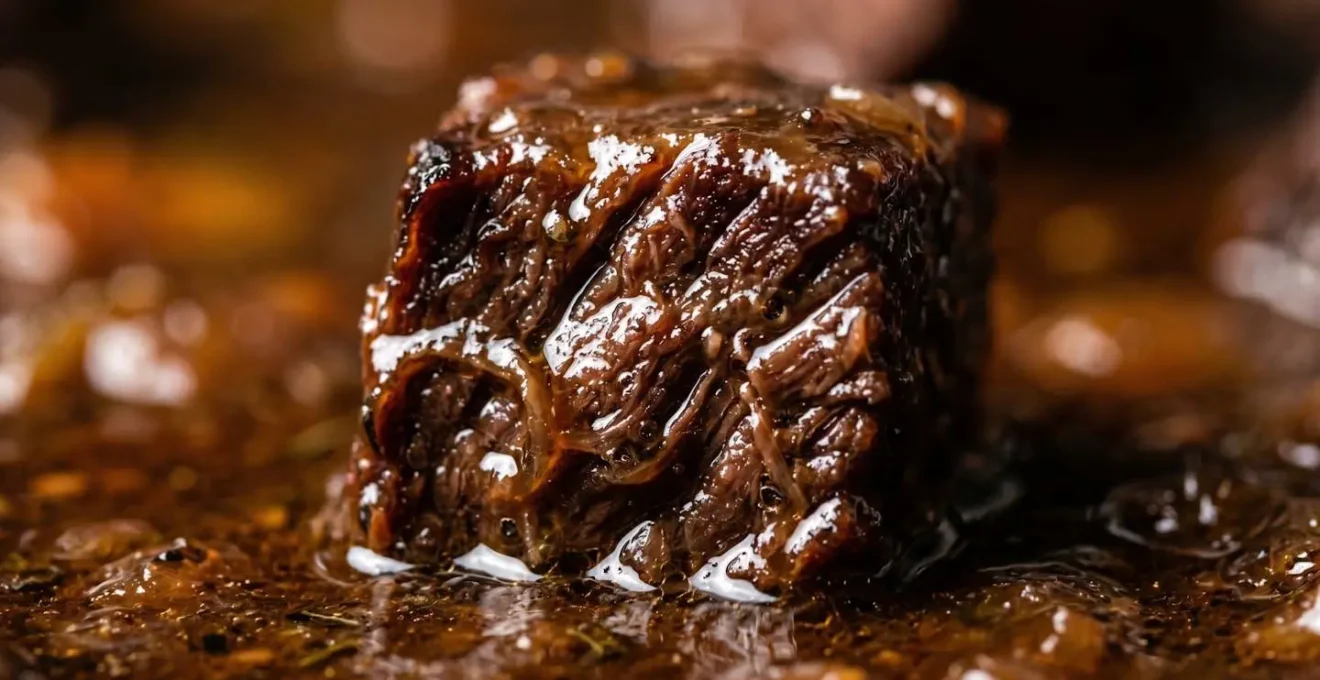
As you can see in the texture of a perfectly finished stew, the sauce clings to the meat with a visible sheen. This isn’t fat; it’s the result of that complete collagen-to-gelatin conversion, creating a rich matrix that carries flavour to every corner of the dish. This is the texture that recipes can’t teach; only patience can create it.
How to Layer Herbs and Aromatics in Provençal Stews for Depth Not Confusion?
A common mistake is to throw all the herbs and aromatics into the pot at once. This creates a muddled, one-dimensional flavour. A true Provençal daube builds its aromatic complexity in distinct stages, a technique we call flavour layering. Each addition has a purpose and a correct time, ensuring clarity and depth, not a confusing herbal mess.
The key is to understand how different flavour compounds are extracted. As food science research demonstrates, many volatile aroma molecules are primarily non-polar and therefore soluble in oil, not water. This is why the first stage is so crucial. This technique, known as “blooming,” involves heating hardy, oil-soluble herbs in fat to extract their deepest, most resilient flavours and build the stew’s foundation.
Simply tossing a sprig of thyme into a simmering liquid will only release its water-soluble notes. Sizzling it in oil at the beginning of the process unlocks a completely different, more resinous and profound character. The final stage is just as important, adding a “sparkle” of fresh, volatile herbs at the very end to lift the deep, earthy flavours with a bright top note. This three-part harmony is the essence of Provençal aromatic wisdom.
Your action plan: The three-stage herb infusion
- Foundation Stage (Start): Sauté hardy, oil-soluble herbs like thyme, rosemary, and bay leaf in hot oil or beef fat right after searing the meat. This ‘blooms’ the herbs, building a deep, resinous base for the entire stew.
- Heart Stage (Middle): After browning the foundation aromatics, introduce the mirepoix (onions, carrots, celery) and alliums (garlic). Cook them down to develop savoury sweetness, which will form the body of the stew’s flavour profile.
- Sparkle Stage (Finish): Add delicate, volatile herbs like fresh parsley or basil in the final minutes of reheating or even off-heat just before serving. Their bright, fresh notes provide a necessary contrast and lift to the rich, deep flavours.
Daube or Bouillabaisse: Which Provençal Classic Is More Forgiving for Beginners?
For a home cook eager to tackle a Provençal classic, the choice between Daube and Bouillabaisse can be daunting. Both are iconic, but they represent two completely different philosophies of cooking. While Bouillabaisse is a thrilling, high-wire act of precise timing and rare ingredients, a Daube is a gentle, patient teacher. For a beginner, the Daube is unquestionably the more forgiving and rewarding starting point.
The core difference lies in their relationship with time. A Bouillabaisse is brutally time-sensitive. The various types of delicate Mediterranean fish must be added in a specific sequence and are perfectly cooked for a minute or two at most. A moment’s distraction and the fish turns to mush; the dish is ruined. A Daube, on the other hand, actively benefits from what might be considered “overcooking” in other contexts. Its low-and-slow nature makes it almost impossible to ruin. An extra hour in the oven only deepens the flavour and tenderness. If it tastes bland, you can fix it by reducing the sauce or adding a touch of vinegar. A mushy fish in a Bouillabaisse cannot be saved.
This forgiving nature extends to sourcing ingredients. Finding the specific, essential rockfish like *rascasse* for an authentic Bouillabaisse is a major challenge outside of coastal France. In contrast, the ingredients for a Daube—beef chuck, onions, carrots, and a basic red wine—are readily available and affordable in any UK supermarket.
The following table, based on an analysis of slow-cooking principles, breaks down the key differences for a beginner.
| Factor | Daube | Bouillabaisse |
|---|---|---|
| Time Forgiveness | Highly forgiving—almost impossible to overcook at low temps; improves with age | Brutally time-sensitive—fish overcooks in 60 seconds at final assembly |
| Fixability | Highly fixable—bland versions rescued by reducing sauce, adding vinegar or salt | Low fixability—overcooked, mushy fish cannot be salvaged |
| Ingredient Sourcing | Easy—beef chuck, onions, carrots, basic red wine widely available | Difficult—requires multiple varieties of Mediterranean rockfish (rascasse), expensive and rare outside coastal France |
| Technique Complexity | Simple—sear, simmer, rest | Moderate—simple broth and rouille, but precise timing required for multiple fish types |
The Wine Choice That Makes Your Provençal Stew Taste More Italian Than French
The instruction to “use a good red wine” is the most common and least helpful piece of advice for making a daube. The choice of wine is not about quality alone, but about terroir resonance. The stew must taste of the land it comes from. Using the wrong type of red wine, even a very good one, can pull the entire dish away from Provence and land it squarely in Italy or elsewhere.
As experts at Westgarth Wines note, authenticity comes from a shared landscape:
Provençal reds from Grenache, Syrah, and Mourvèdre have characteristic earthy, herbal ‘garrigue’ notes—wild herbs from the hillsides—that complement the stew. Using a wine with different terroir characteristics can pull the dish’s profile in an unexpected direction.
– Westgarth Wines, Five Fabulous Grenache Pairings
The term *garrigue* refers to the aromatic scrubland of Provence, rich with wild thyme, rosemary, and lavender. The local grapes absorb these characteristics from the soil and air. When you use a wine made from these grapes, its inherent herbal notes echo and amplify the herbs you’ve added to the pot. This creates a deep, harmonious flavour profile. In contrast, using a classic Italian wine like a Sangiovese (the base for Chianti) introduces completely different notes. An in-depth analysis of wine profiles highlights this difference clearly: Sangiovese brings high acidity and dominant flavours of sour cherry and tomato leaf. While perfect for an Italian *Stracotto*, these notes clash with the earthy, herbal profile of a Provençal daube, fundamentally altering its identity.
You don’t need an expensive Châteauneuf-du-Pape. A simple Côtes du Rhône or a basic Grenache-Syrah-Mourvèdre (GSM) blend from the south of France will provide the correct terroir notes to make your daube taste authentic. It is about choosing the right *character*, not the right price tag.
When Should You Start a Daube to Serve It at Sunday Lunch in Perfect Condition?
Serving a perfect daube is not about a frantic morning of cooking; it’s about orchestration. The “patience principle” dictates that the dish must be cooked and then rested. To serve it at its absolute peak for a 1 PM Sunday lunch, you must think backwards from the moment you want to eat. The bulk of the work should be done on Saturday, leaving Sunday for the simple, calm final steps.
The key is embracing the overnight rest. This is not a shortcut; it’s a non-negotiable step where flavour maturation and texture development happen. On Saturday, you complete all the “active” cooking: searing the meat until it has a deep brown crust (pat it dry first!), building your aromatic base, and the long, slow simmer. By Saturday evening, the cooking is done. The daube then cools, and the magic happens overnight in the fridge.
Sunday morning becomes a relaxed affair. The fat will have solidified into a convenient layer on top, making it effortless to skim off. This single step dramatically improves the final texture, preventing it from being greasy. The final hour is just a gentle reheat, allowing you to focus on preparing a simple accompaniment like fresh pasta, creamy polenta, or a crusty baguette. This timeline removes all stress and guarantees the daube is served in its most glorious state.
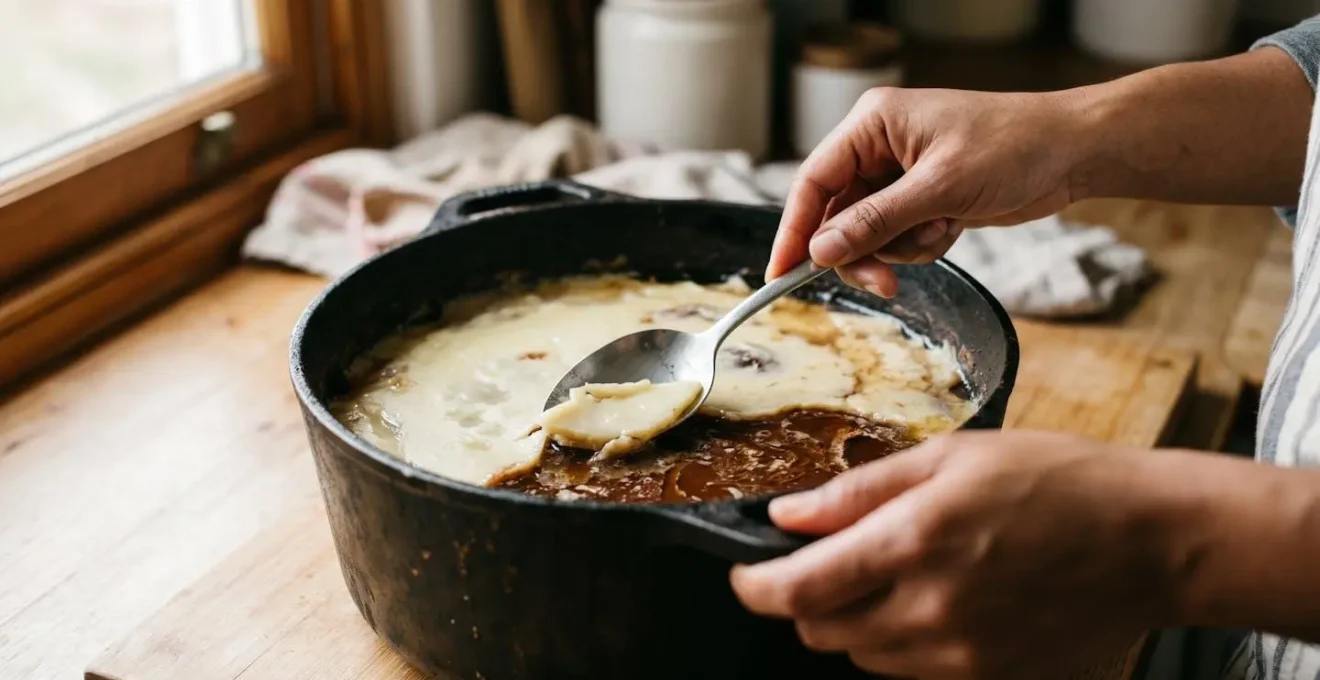
Here is the professional’s reverse timeline for a perfect Sunday daube:
- Saturday Morning (10 AM): Begin all active cooking. Sear the meat thoroughly, sauté the aromatics, add the liquids and herbs, and bring the pot to a gentle simmer.
- Saturday Afternoon (2-4 PM): Complete the 4-6 hours of low-and-slow cooking. Remove from the heat once the meat is perfectly fork-tender.
- Saturday Evening (6 PM): Allow the daube to cool to room temperature. Refrigerate it, uncovered for the first hour to cool faster, then covered overnight.
- Sunday Morning (11 AM): Gently skim the solidified cap of fat from the cold surface. Begin to gently reheat the stew on a very low heat for at least one hour. This is the time to make any final seasoning adjustments.
- Sunday Lunch (1 PM): Serve the perfectly rested and flavourful daube.
When Should You Start a Daube to Have It Ready for Saturday Dinner?
Just as with a Sunday lunch, a spectacular daube for a Saturday dinner party requires planning that begins the day before. The goal is to arrive at Saturday evening feeling calm and in control, with the main course already perfected and simply needing to be reheated. For an 8 PM Saturday service, your timeline should kick off on Friday evening.
This schedule leverages the same core principle: cook, rest, reheat. The long simmer happens on Friday night. You can let it bubble away gently while you relax, and then simply turn it off before bed. The crucial overnight rest allows the flavours to meld and deepen significantly. Waking up on Saturday morning to a pot of nearly-finished daube, its rich aroma subtly scenting the kitchen, is one of cooking’s great pleasures.
Saturday is then freed up for preparing side dishes, setting the table, and actually enjoying your day. The most technically important step on Saturday is skimming the solidified fat, which is much easier when the stew is cold. The final gentle reheat just before guests arrive is all that’s left, ensuring a relaxed host and a perfectly matured main course.
A practical timeline for an 8 PM Saturday service looks like this:
- Friday Evening (7 PM): Start all active preparation and cooking. This includes searing the beef, building the aromatic base with herbs and vegetables, adding the wine and stock, and bringing it all to a very gentle simmer.
- Friday Night (11 PM – 1 AM): After 4-6 hours of cooking, the stew is done. Turn off the heat and allow it to cool at room temperature for a couple of hours before refrigerating overnight.
- Saturday Morning: The fat will have solidified on the surface. This is the ideal time to easily skim it off with a spoon.
- Saturday Afternoon (6-7 PM): Remove the daube from the fridge. Gently reheat it over a low flame for about one hour before you plan to serve. This is also the time to cook your accompaniment.
- Saturday Dinner (8 PM): Serve the daube, garnishing with a sprinkle of fresh parsley for a final touch of “sparkle.”
Why Do French Locals Pair Wines You’ve Never Heard of With Their Regional Dishes?
When travelling in Provence, you may notice locals pairing their daube with wines from appellations or producers that are completely unknown outside the region. This isn’t wine snobbery; it is the ultimate expression of the “what grows together, goes together” principle. These un-famous local wines often possess a more authentic terroir resonance with the local cuisine than many well-known, expensive export bottles.
As the Provence WineZine explains, this connection is deeply rooted in the land itself:
The local grapes have co-evolved with the local cuisine, soil, and climate. The herbal notes in a Coteaux d’Aix-en-Provence red are a natural echo of the same herbs growing in the hills and used in the daube.
– Provence WineZine, Provençal Pairings: Wine with Food
Large international appellations often tailor their wines for a global palate and the points-based rating system, which can sometimes mute the very regional characteristics that make them a perfect food pairing. In contrast, wines from a local *cave coopérative* or a small IGP designation are made for the local table. They are not designed to impress a critic in New York, but to be enjoyed with a slice of saucisson or a bowl of daube in a village square in Provence. A study of food and wine pairings shows these wines often provide the same essential *garrigue* character—earthy notes of wild thyme and lavender—as their famous neighbours, but at a fraction of the cost.
For the UK home cook, this is liberating. It means you should seek out character over fame. Instead of reaching for a famous name, look for a humble Côtes du Ventoux, Coteaux d’Aix-en-Provence, or even a simple “Vin de Pays” from the region. These wines are the true taste of Provence and will bring an unparalleled authenticity to your stew that a more generic, “international” style red never could.
Key takeaways
- The luxurious texture of a true daube comes from the slow conversion of collagen to gelatin, a process that requires 4+ hours at low heat and an overnight rest.
- Flavour is built in layers: bloom hardy herbs in oil at the start, develop sweetness with vegetables in the middle, and add fresh herbs at the end for brightness.
- Authenticity hinges on ‘terroir resonance’. Use a Grenache-based red wine from the South of France to echo the herbal notes of the ‘garrigue’ landscape.
Why Do “Regional Specialities” Sold in Paris Bear Little Resemblance to the Real Thing?
It can be a deeply confusing experience: you have a magnificent, life-changing daube in a tiny village in Provence, and then you order it in a classic Parisian bistro only to be served something that is, at best, a pale imitation. This is not necessarily because the Parisian chef is unskilled. It is because the goals of a high-volume city restaurant and a traditional home cook are fundamentally different, leading to compromises that strip the dish of its soul.
The primary driver is the need for consistency and broad appeal. A bistro serving hundreds of customers a week cannot afford the variability that comes with authentic, long-form cooking. They need a “Daube” that tastes exactly the same on Tuesday as it does on Friday and that won’t offend a tourist’s palate. This often means toning down the very flavours that make the dish special.
As one expert notes, this is a commercial necessity:
A Parisian bistro serving hundreds of customers needs a ‘Daube’ that is 100% consistent and has broad appeal. This leads to a toning down of ‘difficult’ flavors—less garlic, less assertive herbs, no gamey notes—and the use of industrial sauce bases to ensure uniformity.
– Le Chef’s Wife, La Daube Provençale Made Simple
The long, patient rest is often sacrificed for speed. The use of lesser-known, characterful local wines is replaced by more generic, predictable options. The deep, complex flavour built by patient layering is substituted with a standardized, often sweeter, sauce base. The result is a product that is recognizably beef stew, but it lacks the history, the terroir, and the patient love that defines a true daube. This is why your dedicated efforts at home, by focusing on technique over speed, can produce a result far superior to what you might find in many commercial restaurants, even in France.
Now that you understand the principles of time, temperature, and terroir, the next logical step is to put them into practice. Choose a weekend, buy a humble cut of beef, and begin the patient process of creating a truly authentic Provençal daube in your own kitchen.