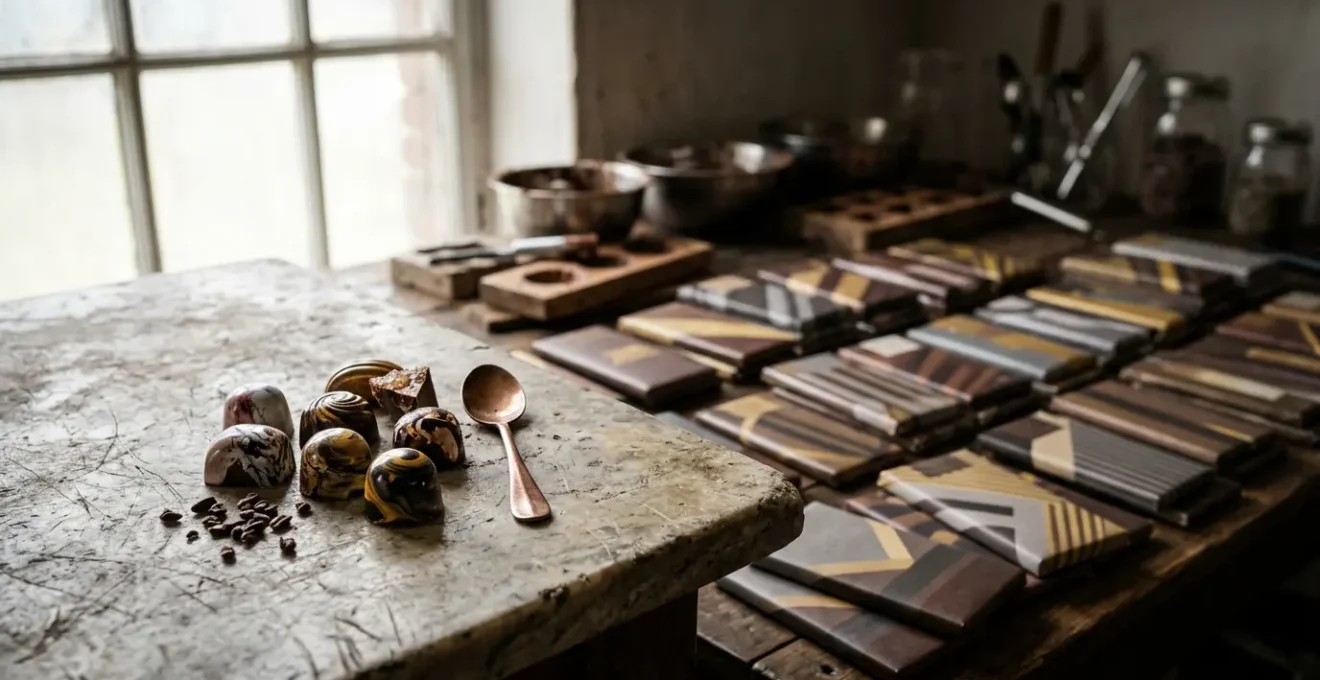
The terms “Master Chocolatier” and “Artisanal” are legally meaningless marketing fluff in France, designed to confuse tourists and connoisseurs alike.
- The state-awarded Meilleur Ouvrier de France (MOF) is the only verifiable designation of elite, peer-reviewed craftsmanship.
- Most “artisans” are transformateurs who create unique ganaches from factory-made couverture—a legitimate practice where skill is judged by taste, not marketing.
Recommendation: Assess chocolatiers not by their packaging or claims, but by their staff’s bean knowledge, their seasonal offerings, and—if available—their verifiable MOF title.
For the discerning UK chocolate connoisseur, a trip to Paris should be a pilgrimage. Yet, stepping into a chic chocolaterie on the Rue Saint-Honoré often presents a paradox of choice. The air is thick with the scent of cacao and the weight of words: “Maître Chocolatier,” “Artisanal,” “Fabrication Maison,” “Grand Cru.” Every elegant box seems to whisper promises of unparalleled quality, yet the sheer ubiquity of these claims dilutes their meaning. You are left wondering: am I paying for genuine craft, or for clever marketing and exquisite packaging?
The common wisdom—to simply frequent the famous shops in Saint-Germain-des-Prés or to equate high prices with high quality—is an insufficient guide for those who truly seek to understand the substance behind the style. These platitudes fail to distinguish between the industrial producer masquerading as an artisan and the genuine craftsperson dedicated to their metier. The frustration is real: how do you apply the same discerning, auditor’s eye you might use for single-malt whisky or specialty coffee to the world of French chocolate?
But what if the key to navigating this landscape wasn’t in deciphering these ambiguous marketing terms, but in ignoring them entirely? The truth is, a clear, verifiable benchmark of excellence exists, but it’s not the one most shops advertise. This guide will dismantle the myths perpetuated by label dilution. We will explore the legally protected titles that matter, differentiate the various levels of production, and equip you with a practical framework for identifying verifiable craftsmanship. It’s time to move beyond the tourist trail and discover the true masters of French chocolate.
To navigate this complex world, this article breaks down the key signals of authentic craftsmanship. From understanding the most prestigious—and legally protected—title in France to deconstructing the price of a luxury chocolate box, you will gain an auditor’s toolkit for your next tasting journey.
Summary: Why Do “Master Chocolatier” Labels Mean Nothing When Every High Street Shop Uses Them?
- Why Is the MOF Designation Worth More Than Any Marketing Claim for French Chocolatiers?
- How to Find Real Chocolate Artisans in Paris Rather Than Tourist-Targeted Chain Shops?
- Michel Cluizel or Patrick Roger: Which Chocolatier Style Matches Your Taste Preferences?
- The Workshop Claim That Reveals Most “Master” Chocolatiers Buy From Factories
- When Do Master Chocolatiers Release Limited Collections and How to Access Them?
- Why Can French Factories Legally Call Mass-Produced Items “Artisanal”?
- Why Do Some Grand Cru Wines Cost 10 Times More Than Equally Rated Neighbours?
- Why Does £50 French Chocolate Taste Different but Not Necessarily Better Than £10 Options?
Why Is the MOF Designation Worth More Than Any Marketing Claim for French Chocolatiers?
In the fog of marketing jargon, one title stands alone, protected by French law and respected globally: Meilleur Ouvrier de France (MOF). This is not a company award or a purchased certification; it is a prestigious, state-recognized honour bestowed upon individuals at the absolute pinnacle of their craft. The competition, held only every three to four years, is so notoriously difficult that it defines the upper echelon of French artisanship. Entrants are not judged against each other, but against an uncompromising standard of perfection.
The selectivity is breathtaking. According to France Today, the competition is so demanding that fewer than 100 MOF titles are awarded annually across more than 200 craft categories, from cheesemaking to carpentry. To win, competitors must demonstrate flawless technique, speed, and savoir-faire under the intense scrutiny of a jury of their peers—all of whom are existing MOFs. It is a test of a lifetime’s dedication, not just a snapshot of skill.
Nothing illustrates the MOF’s absolute standard better than the outcome of its competitions. There is no obligation to award a winner if no candidate meets the required level of excellence. This principle was starkly demonstrated in the 2015 chocolatiers’ final.
Case Study: The 2015 MOF Chocolatier Competition – When Perfection Was Unattainable
In February 2015, the MOF Chocolatier competition concluded with a shocking result: no title was awarded. Despite nine highly skilled finalists from prestigious establishments reaching the final stage, the jury of renowned MOF holders determined that not a single one had demonstrated the level of perfection required. As reported by So Good Magazine at the time, this event proved that the MOF is not a “best of the year” prize but an absolute benchmark. This outcome solidifies its status: a chocolatier wearing the iconic blue, white, and red striped collar has not just won a contest; they have been certified by the state as a master of their craft, capable of achieving near-perfection under immense pressure.
This is why the MOF designation is the only true north for a connoisseur. While any business can call its founder a “Master Chocolatier,” only a select few individuals have earned the right to be called a Meilleur Ouvrier de France. It is a verifiable, non-negotiable mark of elite talent.
How to Find Real Chocolate Artisans in Paris Rather Than Tourist-Targeted Chain Shops?
Beyond the rare MOF title holder, a class of genuine artisans operates quietly, their quality evident not in loud marketing but in subtle, observable details. To find them, you must adopt an auditor’s eye, looking past the polished storefronts and assessing the substance within. A true artisan’s workshop is a hub of fresh ingredients and deep product knowledge, a world away from the static, centrally produced inventory of a chain.
The key is to engage and observe. Tourist-targeted shops are designed for quick, transactional sales, with staff often having little more than a cursory knowledge of the products. In contrast, an authentic chocolaterie is the public face of a craftsperson’s passion. The staff, and often the chocolatier themselves, are custodians of that passion and can speak to it with detail and enthusiasm. The difference is palpable once you know what to look for.
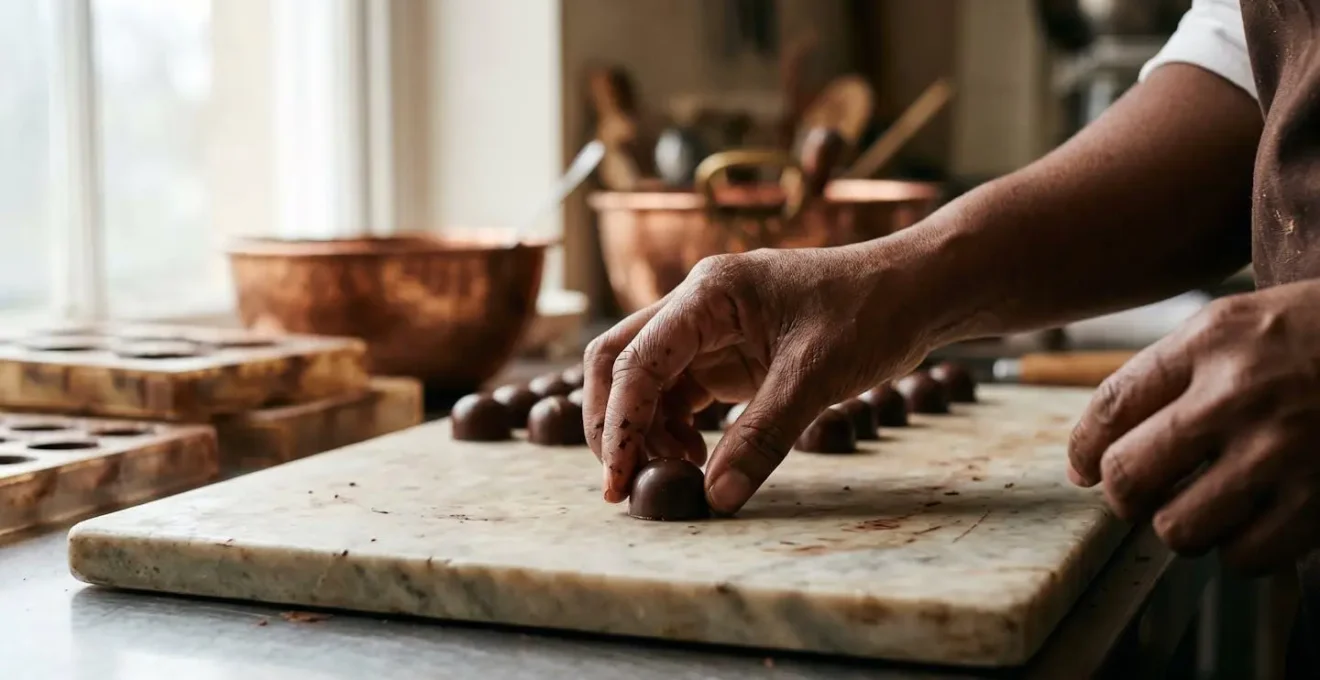
The visual of a bustling, hands-on workshop is a powerful indicator, but the real proof is in the details you can verify yourself. The following checklist provides a simple but effective framework for auditing any Parisian chocolate shop for authenticity. It transforms you from a passive consumer into an active investigator of craft.
Your 5-Point Authenticity Audit for Parisian Chocolateries
- The Single-Origin Litmus Test: Ask, “Could you tell me the origin of the couverture for this specific bonbon?” A true artisan’s team can answer precisely (e.g., “a 70% dark from Peru’s Piura region”), while chain staff will likely falter.
- Check for Seasonal Rotation: Look for a limited, evolving menu. The presence of rhubarb or cherry in spring and fig or chestnut in autumn signals a connection to fresh ingredients, unlike the static, year-round lines of industrial production.
- Examine the Price-to-Packaging Ratio: Be wary of extravagant, heavy packaging that seems to justify the price. True artisans invest in the chocolate itself, favouring minimalist, elegant packaging that puts the product first.
- Look for the “Fabriqué à Paris” Label: This official city designation guarantees that the final transformation or production occurred in Paris, helping to identify shops with genuine local manufacturing credentials.
- Visit During Off-Peak Hours: Use quieter moments to engage. Staff in authentic shops can discuss roasting techniques, fermentation, and bean origins—conversational depths that chain employees are rarely equipped for.
By applying this simple audit, you shift the power dynamic. You are no longer swayed by superficial claims but are instead looking for tangible evidence of craftsmanship, ingredient knowledge, and a genuine connection to the product.
Michel Cluizel or Patrick Roger: Which Chocolatier Style Matches Your Taste Preferences?
Even within the world of elite, verifiable artisans, a wonderful diversity of philosophies exists. Not all great chocolatiers are the same, just as not all Grand Cru Bordeaux taste alike. Understanding these stylistic differences is the next step in a connoisseur’s journey, allowing you to match a chocolatier’s signature style to your personal palate. Two of France’s most revered names, Michel Cluizel and Patrick Roger, perfectly illustrate this spectrum.
One is a purist, a “perfumer” of chocolate obsessed with terroir; the other is a sculptor, an “architect” using chocolate as a medium for avant-garde statements. Patrick Roger, who earned his prestigious title in 2000, is a confirmed member of the craft’s elite. As Le Marais Mood notes, his work is rooted in monumental sculpture, a discipline he applies to his daring flavour creations.
Patrick Roger won the Chocolate World Cup in 1994 and was honored with the title of Meilleur Ouvrier de France Chocolatier in 2000. His work is based on sculpture, often monumental, a discipline that he practices with chocolate for his gourmet creations.
– Le Marais Mood Editorial, These best workers in France (MOF) from the Marais
This highlights a key point: Roger is an artist whose medium is chocolate. Cluizel, on the other hand, is a bean-to-bar pioneer whose art is expressing the purest essence of the bean itself. The following comparison breaks down their distinct approaches, helping you decide which philosophy you’d rather taste.
| Aspect | Michel Cluizel (The Perfumer) | Patrick Roger (The Architect) |
|---|---|---|
| Philosophy | Purist, terroir-driven, obsessed with single-origin bean nuances and expressing the inherent character of each plantation’s cacao | Bold, sculptural, using chocolate as both edible art and architectural medium with avant-garde flavor combinations |
| Flavor Profile | Subtle, complex, classic—emphasizing natural cocoa notes, gentle acidity, and the terroir expression of beans from specific estates (Madagascar, Peru, Colombia) | Intense, often savory or acidic—incorporating lemon, basil, vinegar, and unexpected ingredients in stark, memorable contrasts |
| Texture Signature | ‘Fondant’ (the melt)—exceptional smoothness, velvety ganache, and long finish on the palate due to meticulous conching and bean selection | Contrast—the sharp snap of a thin, crisp chocolate shell against liquid or soft ganache filling, creating textural drama |
| Visual Style | Elegant, restrained, classic French aesthetic with focus on the chocolate itself; minimal decoration, emphasis on pure forms | Sculptural, monumental, theatrical—famous for large-scale chocolate sculptures and bold, artistic shop displays that resemble galleries |
| Wine Analogy | Burgundy Pinot Noir—subtle, terroir-driven, requires attention to appreciate layers of complexity and delicate balance | Powerful Bordeaux—bold, tannic, with intensity and structure that commands immediate attention |
| Production Method | Bean-to-bar pioneer since 1997; one of few chocolatiers roasting own beans; no soy lecithin; uses only cane sugar and Bourbon vanilla bean | Transformateur using premium couverture (often Valrhona); focus is on ganache mastery and sculptural tempering techniques |
| Best For | Connoisseurs seeking subtle terroir differences, single-origin exploration, and classic French chocolate refinement | Adventurous eaters seeking bold flavor statements, artistic presentation, and chocolate as experiential art form |
Ultimately, neither style is “better”—they simply serve different purposes. Are you in the mood for an intellectual exploration of terroir, or a visceral, artistic flavour experience? Answering that question is the key to finding your perfect chocolate artisan.
The Workshop Claim That Reveals Most “Master” Chocolatiers Buy From Factories
One of the most misunderstood aspects of the chocolate world is the “bean-to-bar” concept. There’s a romantic notion that every great chocolatier personally sails to a remote plantation, harvests beans, and roasts them in their Parisian basement. The reality is that the vast majority of chocolatiers, including many world-class artisans, are not bean-to-bar producers. They are *transformateurs* (transformers). They buy meticulously crafted chocolate, known as ‘couverture’, from a handful of specialized factories and ‘transform’ it into their own unique ganaches, pralines, and bonbons.
This is not cheating; it is the industry standard and a legitimate craft in its own right. The skill of a *transformateur* lies in their palate, their creativity in flavour pairing, and their technical mastery of tempering and ganache-making. The rarity of true bean-to-bar production is evident in market data; the global bean-to-bar chocolate market was valued at only USD 14.60 billion in 2024, a tiny fraction of the overall chocolate market. True bean-to-bar producers are the exception, not the rule.
Case Study: Michel Cluizel – The Artisan Who Became a Supplier
Michel Cluizel’s history perfectly illustrates this dynamic. Starting as a chocolatier in 1948, the company evolved to produce its own couverture in 1983, becoming a true bean-to-bar pioneer by 1997. However, today Cluizel’s business is twofold: they sell their own branded chocolates to consumers, but they also sell their professional-grade couverture to other “master chocolatiers.” These artisans then use Cluizel’s exceptional chocolate as the foundation for their own branded creations. This demonstrates that using third-party couverture is a standard, high-quality practice, allowing chocolatiers to focus on the art of the ganache rather than the industrial process of bean roasting and grinding.
This distinction is crucial. When a shop claims “fabrication maison” (house-made), they are almost always referring to the transformation of couverture into bonbons, not the creation of chocolate from the bean. Recognizing this allows you to assess them on the right criteria: the quality of their fillings, the balance of their flavours, and the texture of their ganaches, rather than holding them to a “bean-to-bar” standard that few can or should meet.
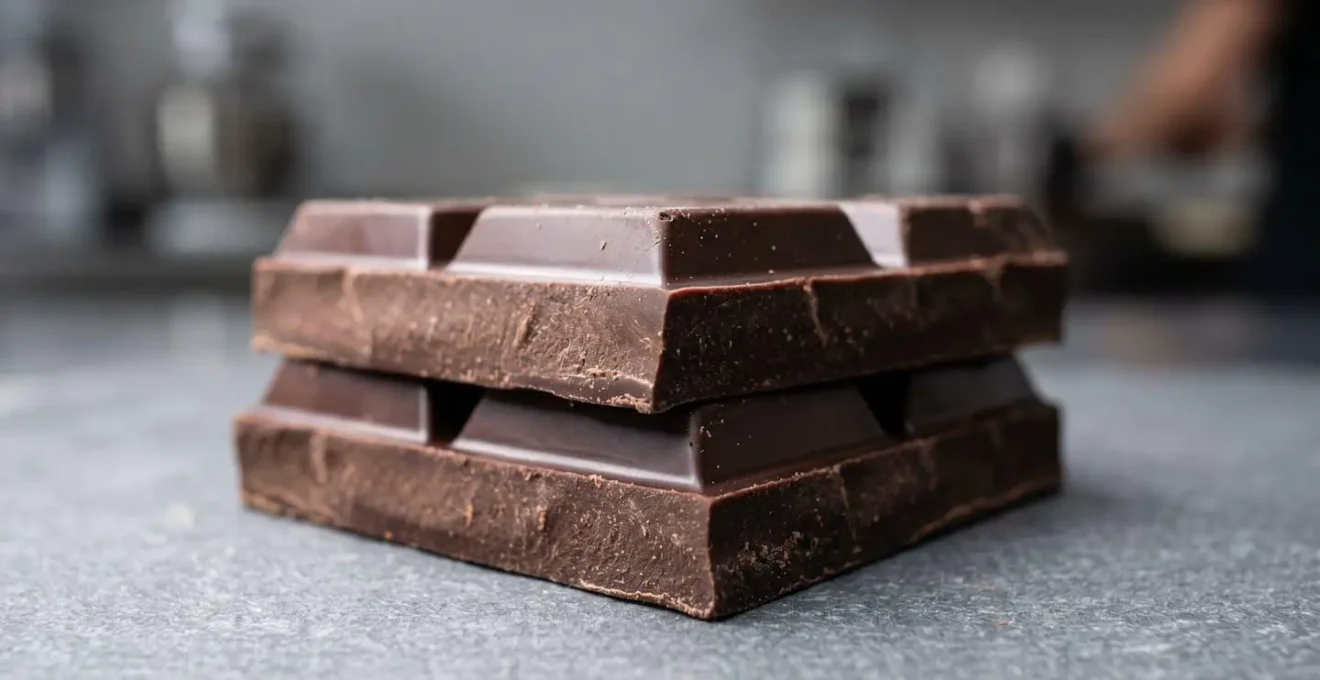
The image of industrial-sized couverture blocks is not a sign of “cheating,” but a sign of the professional reality. The true art is what the chocolatier does with this exceptional raw material.
When Do Master Chocolatiers Release Limited Collections and How to Access Them?
For the true connoisseur, the ultimate prize is gaining access to a master chocolatier’s limited-edition creations. These are the “haute couture” of the chocolate world: small-batch collections using rare, seasonal ingredients or exceptional vintage beans, released outside the standard product line. Accessing them requires moving beyond the mindset of a typical tourist and behaving like a loyal, local patron. As the Paris Convention and Visitors Bureau notes, while Easter and Christmas are peak seasons, creativity is a year-round affair for master chocolatiers, with new creations appearing for those in the know.
These exclusive releases are rarely advertised to the masses. They are rewards for the engaged customer, announced quietly through mailing lists or shared discreetly with regulars in-store. The key is to understand the rhythm of the haute couture chocolate calendar and to build a relationship with the boutiques you admire. Timing and personal connection are everything.
Here is a calendar to guide your hunt for these exclusive releases:
- January-February: Post-Holiday ‘Capsule Collections’. After the Christmas rush, many artisans release small, experimental batches using rare winter ingredients like Corsican citrus or Alpine honey. Your strategy: Sign up for their mailing lists in December to be notified.
- March-April: Easter ‘Prêt-à-Porter’. While this is a major production period, the real finds are the limited-edition sculptural pieces or special single-origin collections. These are often announced only on the chocolatier’s personal Instagram account 2-3 weeks before Easter.
- May-September: The Summer Ganache Hiatus. High temperatures are the enemy of delicate ganaches, so many top-tier shops reduce their offerings. The exception is new single-origin bars or shelf-stable praliné collections, which are less sensitive to heat.
- October-November: Pre-Holiday Preview Tastings. Elite chocolatiers often host private tastings for loyal clients to preview their Christmas collections. Your strategy: Visit your favourite shops in person in September, express genuine interest in their craft, and politely ask to be added to their ‘client privilégié’ (privileged client) list.
- December: Christmas ‘Haute Couture’. This is the peak season for the most elaborate creations and vintage bean releases. The most prestigious items almost always require pre-ordering in October or November. Follow individual MOF chocolatiers on social media for surprise weekend-only releases.
Beyond the calendar, the most effective tool is the ‘known customer’ strategy. Frequent, small purchases and genuine conversation build recognition. Many artisans reserve their most prized creations for regulars who they know will truly appreciate the craftsmanship.
Why Can French Factories Legally Call Mass-Produced Items “Artisanal”?
Here lies the heart of the confusion for consumers: in France, the word “artisanal” as a product descriptor for food has no legal definition. It is a purely marketing term. Any manufacturer, regardless of their production scale, level of automation, or use of industrial ingredients, can legally label their products “artisanal.” This loophole allows mass-producers to adopt the language of small-scale craft, deliberately blurring the lines and making it nearly impossible for a customer to distinguish based on the label alone.
This stands in stark contrast to titles and terms that *are* legally protected and rigorously controlled by the French state. The most relevant example is the MOF designation, which is not a marketing claim but a third-level degree awarded by the French Ministry of Labour. This is a critical distinction: unlike the unregulated term ‘artisanal,’ legitimate French craftsmanship titles like MOF are awarded after a grueling, state-organized competition held only every few years. The same goes for the title of “Maître Artisan,” which is awarded by the regional Chamber of Crafts based on proven experience and qualifications.
Even the term “Chocolatier” itself is not protected in the same way as “Boulanger” (baker), which requires specific qualifications and on-site bread-making. Any business can call itself a “chocolaterie” even if it simply resells chocolates made elsewhere. The table below clarifies the vast difference between legally binding titles and empty marketing phrases.
| Term | Legal Status | Verification Method | Requirements |
|---|---|---|---|
| Meilleur Ouvrier de France (MOF) | Legally protected state-recognized title, organized by French Ministry of Labour | Official tricolor collar; name listed in national MOF society directory; awarded at Sorbonne by French President | Grueling 2-year competition process; peer-judged technical exam; held every 4 years; no quota of winners—candidates judged against absolute standard of perfection |
| Maître Artisan | Legally protected title awarded by Chamber of Crafts (Chambre de Métiers et de l’Artisanat) | Official certificate; registry verification through regional Chamber of Crafts | Minimum professional diplomas (CAP/BEP); minimum years of experience in the trade; business must be registered as artisan enterprise |
| “Artisanal” (as product descriptor) | NOT legally protected for food products in France; purely marketing term | No verification possible; no regulatory definition; no enforcement body | None—any manufacturer can use this term regardless of production method, scale, or automation level |
| “Chocolatier” (as business name) | NOT legally protected (unlike ‘Boulanger’ which requires specific qualifications) | No official verification; no required credentials | None—any business can call itself a ‘chocolaterie’ regardless of whether chocolate is made on-site, purchased from suppliers, or mass-produced |
| AOC/AOP (Protected Designation of Origin) | Legally protected EU and French designation for specific geographic products | Official certification body audits; regular compliance inspections | Strict geographic origin; traditional production methods; regular third-party audits (applies to some ingredients but rarely finished chocolate products) |
The lesson for the connoisseur is clear: ignore the front-of-box claims like “artisanal” and “master.” Instead, look for legally verifiable credentials like the MOF collar or the “Maître Artisan” certificate, or use your own observational skills to judge the quality of the craft itself.
Why Do Some Grand Cru Wines Cost 10 Times More Than Equally Rated Neighbours?
The world of fine chocolate is increasingly mirroring the world of fine wine, especially in its pricing structure. A connoisseur knows that a 95-point Burgundy can cost ten times more than a 94-point wine from an adjacent plot. The price difference is not solely about a marginal difference in quality; it’s about provenance, brand prestige, and scarcity. The same forces are at play in luxury chocolate, creating a phenomenon one could call the “Parkerization” of chocolate, where critic scores and brand reputation can inflate prices far beyond the intrinsic cost of production.
This effect means that two chocolatiers might use the exact same high-quality Valrhona couverture, but the one with an MOF title, a feature in a prestigious guide, and a shop in a prime location can command a significantly higher price. The price you pay is a blend of the chocolatier’s *savoir-faire* (skill) and their *faire-savoir* (marketing and reputation).
Case Study: The ‘Parkerization’ of Chocolate and the Brand Premium
Influential guides, such as the Club des Croqueurs de Chocolat in France, act much like wine critic Robert Parker. Their ratings can create enormous demand and pricing power. A bonbon from a “95-point” chocolatier can sell for 40-60% more than a technically similar bonbon from a “91-point” competitor next door. This ‘Brand Premium’—built on awards, media coverage, and collector demand—often outweighs the ‘Savoir-Faire Premium,’ which is the actual, often marginal, difference in skill. The 2015 MOF competition, where no winner was declared from a field of elite finalists, underscores this: even at the highest level, skill can be closely matched, yet market prices vary wildly based on brand narrative.
Furthermore, the story behind the chocolate adds another layer of perceived value. As in wine, a compelling narrative about sustainability or ethical sourcing can directly translate to a higher price tag. In fact, recent market analysis shows that brands with strong sustainability narratives can command a price premium of up to 20% compared to conventional products. This is not to say the quality isn’t there, but it confirms that you are paying for both the product and its story.
For a connoisseur, this means understanding that the most expensive chocolate is not always the “best” in a blind taste test. It is often the one with the most prestigious story, the most famous creator, or the most desirable address.
Key Takeaways
- The MOF title is the only state-guaranteed mark of elite excellence; “Master Chocolatier” is a meaningless marketing term.
- Most artisans are skilled transformateurs using factory couverture. Judge them on their ganache mastery and ingredient knowledge, not on an unrealistic “bean-to-bar” standard.
- Price is driven by labour intensity, ingredient rarity, and brand prestige, not just taste. Train your palate to appreciate the complexity you pay for.
Why Does £50 French Chocolate Taste Different but Not Necessarily Better Than £10 Options?
This is the ultimate question for any connoisseur. After navigating the marketing, identifying the true artisans, and understanding the pricing, you are left with two boxes of chocolate. One costs £10, the other £50. The expensive one is undeniably different—less sweet, more complex, with a lingering finish. But is it “better”? The answer is contextual. A £10 box is often designed to satisfy an immediate craving for sweetness and comfort. A £50 box is designed to offer an intellectual and sensory experience that demands your attention.
The £40 price gap is not arbitrary. It is a direct reflection of dramatically different choices made at every step of the production process, from sourcing rare, ethically-traded beans to the hundreds of hours of manual labour required for small-batch creation. The cost is primarily in labour, ingredient quality, and retail prestige, not elaborate packaging. The following table deconstructs where your money actually goes.
| Cost Component | £10 Mass-Market Box (per 100g) | £50 Artisan Box (per 100g) | Explanation of Difference |
|---|---|---|---|
| Raw Cacao | £0.80 – Industrial blend, commodity-grade beans, bulk purchasing | £4.50 – Single-origin or micro-lot beans, direct trade pricing 2-4x commodity rate | Premium chocolatiers pay up to 4x commodity prices for specific terroir beans with traceability to individual farms |
| Sugar & Ingredients | £1.20 – High proportion (40-50%), beet sugar, soy lecithin, artificial vanilla | £1.80 – Lower proportion (25-35%), cane sugar, real Bourbon vanilla bean, no lecithin | Fine chocolate uses less sugar to showcase bean character; natural ingredients cost significantly more |
| Labor & Production | £1.50 – Automated mass production, minimal human intervention, 1000+ units per hour | £15.00 – Hand-piped ganaches, manual tempering, individual finishing; artisan produces 50-100 pieces per hour | Small-batch production is 10-20x more labor-intensive; artisan hourly wage much higher than factory |
| R&D & Recipe Development | £0.10 – Standardized recipes unchanged for years | £8.00 – Continuous experimentation, seasonal innovations, chef’s creative time amortized across limited production | MOF chocolatiers spend months perfecting single recipes; cost distributed across small batch sizes |
| Packaging | £2.50 – Elaborate, heavy, often excessive to create perceived value | £3.50 – Elegant but restrained; focus on protecting chocolate, not compensating for quality | Contrary to expectation, fine chocolate packaging is not the primary cost driver |
| Retail & Distribution | £2.90 – Supermarket margins 30-40%, volume-based efficiency | £12.00 – Boutique retail margins 60-70%, prime location rent (Rue Saint-Honoré, Saint-Germain), limited distribution | Real estate in prestigious Paris neighborhoods commands premium; small-scale distribution lacks economies |
| Branding & Marketing | £1.00 – Mass advertising, generic positioning | £5.20 – MOF competition costs, artisan reputation building, influencer/press relationships, award submissions | Building ‘MOF’ or ‘artisan’ brand requires years of competition participation, media cultivation, and credibility |
| TOTAL | £10.00 | £50.00 | The £40 difference primarily reflects labor intensity (30%), ingredient quality (9%), R&D (16%), retail location (24%), and brand positioning (10%) |
To truly appreciate the value in that £50 box, however, you must know how to taste it. Chewing fine chocolate is like shouting in a library; you miss all the nuance. To unlock its value, you need to train your palate to listen.
- Temperature Matters: Always bring chocolate to room temperature (18-20°C). Coldness mutes the subtle aromatic compounds that you are paying for.
- Let It Melt, Don’t Chew: Place a small piece on your tongue. Let it melt slowly. This allows you to perceive the “length” (how long the flavour lasts) and the evolution of taste.
- Breathe Through Your Nose: As it melts, breathe gently. This “retronasal olfaction” reveals the secondary and tertiary notes (fruit, spice, earth) that separate fine chocolate from simple candy.
- Identify the Flavor Layers: Look for the three stages: the primary notes (immediate sweetness/bitterness), the secondary notes (fruit, nuts that develop after 5-10 seconds), and the tertiary notes (the finish or aftertaste). Premium chocolate will have all three.
- Practice Comparative Tasting: Taste the £10 and £50 chocolates side-by-side. The difference in complexity, texture, and finish becomes dramatically obvious when experienced in direct comparison.
Armed with this auditor’s toolkit, your next trip to a Parisian chocolaterie will no longer be an exercise in guesswork. You now have the framework to see past the marketing, identify verifiable craftsmanship, and truly appreciate the profound difference between a simple sweet and a complex work of art. Begin to taste the pinnacle of French chocolate craftsmanship with the confidence of a true connoisseur.