You’ve likely noticed that the wine pairings suggested by your app are rarely what you find in a true French bistro. That’s because algorithmic advice, based on simple flavour matching, misses the point entirely. True French pairing is not a formula; it’s a philosophy built on “terroir memory” and structural harmony—the deep, historical connection between a region’s food and its specific, often unheard-of, local wines. This guide decodes that very logic.
You’re seated in a charming Lyon bouchon, the aroma of Coq au Vin filling the air. You pull out your phone, and a trusted wine app suggests a robust Cabernet Sauvignon. Yet, the sommelier confidently recommends a light, earthy Gamay from a nearby Beaujolais village you’ve never heard of. You’ve just encountered a fundamental truth: the digital world’s logic and the centuries-old wisdom of French gastronomy are often at odds. While apps offer convenient, if generic, advice like “pair acidic wines with fatty foods,” they operate on a global, simplified model that ignores the soul of French pairing.
This disconnect leaves many enthusiasts feeling confused, wondering if their palate is wrong or if the French are simply guarding their secrets. The reality is that French pairing isn’t about rigid rules but about a deeper, more intuitive understanding of place. It’s a language of texture, history, and context that no algorithm can currently speak. This is because, in France, wine is not an accessory to the meal; it is an integral part of its architecture, born from the same soil and culture.
So, how do you move beyond the app and start thinking like a sommelier? The key is not to memorise more pairings, but to understand the philosophy behind them. It involves training your palate to recognise structural harmony over simple flavour matching and appreciating the concept of terroir memory—the idea that what grows together, goes together. This article will guide you through that very process, deconstructing the principles that French sommeliers use instinctively.
We will explore the logic behind hyper-local pairings, learn how to feel the mechanics of a classic match, and understand the contextual factors like temperature and aeration that can make or break an experience. By the end, you will grasp why that perfect restaurant pairing so often fails to impress at home and be equipped to make more insightful, memorable choices yourself.
Contents: Unlocking the French Pairing Code
- Why Do French Locals Pair Wines You’ve Never Heard of With Their Regional Dishes?
- How to Train Your Palate to Feel Why Sancerre and Goat Cheese Work Together?
- Champagne with Oysters or Burgundy with Boeuf: Which Pairing Impresses More at a Dinner Party?
- The Temperature Mistake That Ruins 70% of French Wine Pairings in British Homes
- When Should You Open a Bordeaux Before Dinner to Pair Perfectly With Your Main Course?
- Why Can Cassoulet Never Taste Exactly Right When Made Outside Its Home Region?
- Why Does Summer Comté Taste Completely Different From Winter Comté Despite Same Producer?
- Why Does the Perfect Wine Pairing at a French Restaurant Fail at Your Home Table?
Why Do French Locals Pair Wines You’ve Never Heard of With Their Regional Dishes?
When you travel through France, you quickly realise that the famous international names—Bordeaux, Burgundy, Champagne—are just the tip of the iceberg. Each region has its own ecosystem of grapes and dishes, a hyper-local world that rarely makes it into global apps. This is because French wine culture is built on the foundation of Appellation d’Origine Contrôlée (AOC), a system designed to protect the unique identity of a specific place. It’s not just about grapes; it’s about a legally defined terroir, including soil, climate, and traditional practices. This system is so dominant that over 51% of the value of all exported French wine comes from these specific AOCs.
This regional pride is the source of the pairings that baffle outsiders. A Parisian will drink Muscadet from the Loire with their oysters, not because an app told them to, but because for centuries, that’s the wine that grew nearest to the Atlantic oyster beds. This philosophy is elegantly simple and is the first and most important principle of French pairing. As the old saying goes, “What grows together, goes together.”
What grows together, goes together.
– Traditional French wine pairing philosophy, Taste France Magazine
This concept of terroir memory explains why a local in the Jura might pair a Comté cheese with a Vin Jaune, a sherry-like oxidative wine that tastes of walnuts and spice. The cows graze on mountain pastures, and the wine ages in cellars nearby. They are two parts of the same story. An app, lacking this historical context, might suggest a generic Chardonnay, a technically “correct” but soulless pairing that misses the entire point of the experience. The unknown wine isn’t an obscure choice; it’s the most logical one possible.
So, the next time a sommelier suggests a wine you don’t recognise, don’t see it as a challenge. See it as an invitation into that region’s unique story, a taste of place that no algorithm can offer.
How to Train Your Palate to Feel Why Sancerre and Goat Cheese Work Together?
Moving beyond philosophy requires training your palate to identify not just flavours, but structures. The classic pairing of Sancerre (a Sauvignon Blanc from the Loire Valley) and local goat cheese (like Crottin de Chavignol) is a perfect lesson in this. An app might simply tag it as “acidic wine” with “tangy cheese.” A sommelier, however, feels the mechanics of the interaction. It’s a masterclass in structural harmony, where the wine’s components physically interact with the food’s texture to create a new, elevated experience.
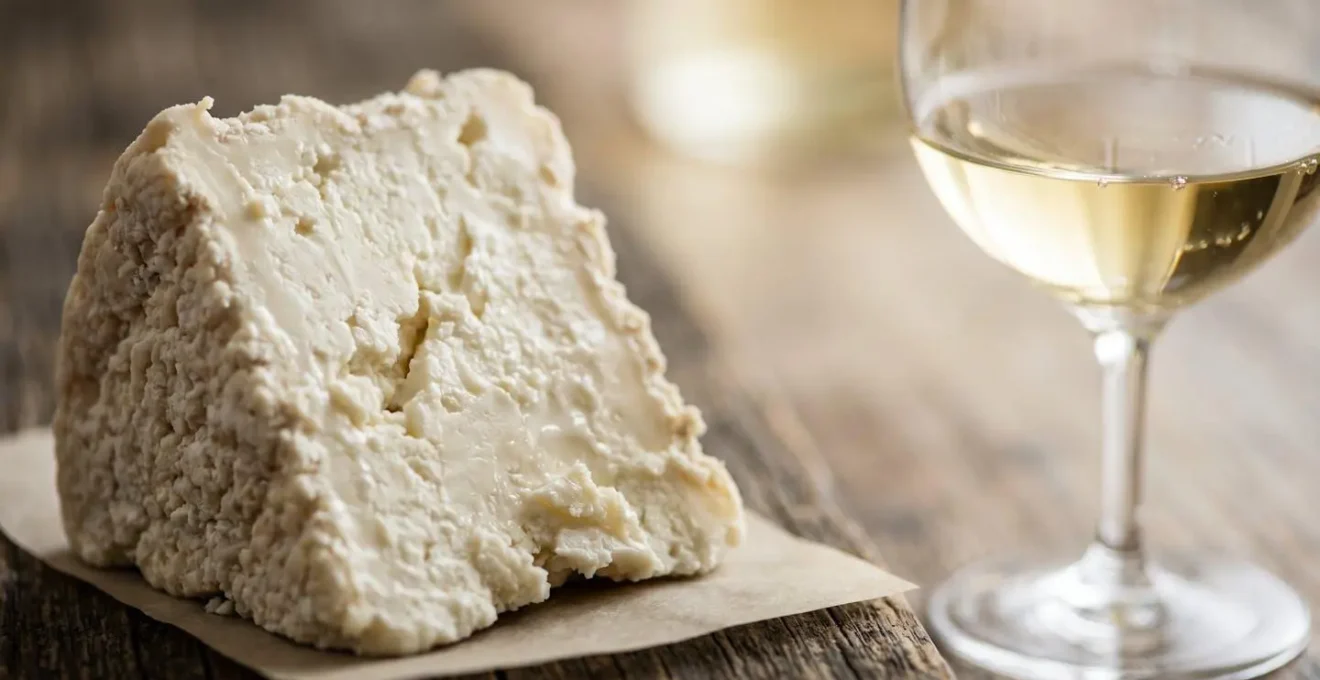
The key here is acidity. Sancerre is known for its high, racy acidity and flinty minerality, a direct result of the region’s limestone-rich soils. Goat cheese, particularly when young, is creamy and fatty, with a distinct lactic tang. When you take a sip of the Sancerre after a bite of cheese, the wine’s acidity acts like a solvent, cutting through the rich, palate-coating fat. This cleanses your palate, making it ready for the next bite, and prevents the pairing from feeling heavy. As wine experts note, this interaction does more than just cleanse. The experts at Drink and Pair explain, “The high acidity of Sancerre brings out the subtle earthy flavours of goat cheese while complementing the Cheese’s tartness.” It’s a dialogue: the wine brightens the cheese, and the cheese softens the wine’s sharp edges.
To train your palate, try this at home. Take a bite of the cheese and pay attention to how it coats your mouth. Notice the texture and the richness. Now, take a sip of chilled Sancerre. Don’t just swallow; let the wine wash over your tongue. Feel that cleansing sensation? Notice how the cheese’s flavour seems to re-emerge, but cleaner and more defined? That feeling is structural harmony. You’re not just tasting; you’re feeling the architecture of a perfect pairing.
This is the sensory data that apps miss. They can match “acid” and “fat,” but they can’t teach you to feel the beautiful collision of textures that makes this pairing a timeless classic.
Champagne with Oysters or Burgundy with Boeuf: Which Pairing Impresses More at a Dinner Party?
Once you understand structure, the next layer of the sommelier’s art is context. A pairing doesn’t exist in a vacuum; its success is measured by the moment and the emotion it creates. At a dinner party, your goal might be to “wow” your guests. So which is more impressive: the vibrant spectacle of Champagne and oysters, or the profound depth of a fine Burgundy with Boeuf Bourguignon? The answer depends entirely on the kind of impression you want to make: one of celebration or one of contemplation.
Champagne with oysters is a pairing of high-contrast energy. The crisp bubbles and searing acidity of the Champagne slice through the briny, soft texture of the oyster. It’s an explosive, refreshing start to an evening. It creates an immediate “wow factor,” a moment of pure, celebratory pleasure. The experience is bright, loud, and universally understood as luxurious. It’s the vinous equivalent of fireworks.
A mature Pinot Noir from Burgundy with a slow-cooked Boeuf Bourguignon, on the other hand, is a pairing of deep, resonant harmony. Here, the wine isn’t contrasting the dish; it’s merging with it. The earthy, forest-floor notes of the aged Burgundy echo the mushrooms and rich stock of the stew. The wine’s soft tannins bind with the proteins of the tender beef. This pairing doesn’t shout; it whispers. It requires more attention from the drinker and rewards them with a complex, evolving experience that speaks of tradition and patience.
Case Study: Spectacle vs. Depth in Pairing Psychology
An analysis from wine experts on pairing psychology highlights this exact difference. They note that pairing Champagne with a creamy Brie de Meaux creates an immediate spectacle, as the bubbles and acidity cleanse the palate after each rich bite. Conversely, pairing a complex red like Gevrey-Chambertin with a pungent, earthy cheese like Le Fougerus often evokes a more emotional, thoughtful response from diners, showcasing a connection to tradition and depth over a fleeting “wow” moment.
Ultimately, neither pairing is “better.” One provides a thrilling spectacle, the other a profound, soulful connection. An app might recommend both based on flavour profiles, but it can’t ask the most important question: what kind of memory do you want to create tonight?
The Temperature Mistake That Ruins 70% of French Wine Pairings in British Homes
You’ve sourced the perfect regional wine and the authentic ingredients. You’ve followed the recipe to the letter. Yet, the pairing falls flat. The culprit is often the most overlooked element in wine service: temperature. In my experience, this is the single biggest mistake wine lovers make at home. Serving a wine too warm or too cold can completely mute its character and destroy the delicate balance you’re trying to achieve. It’s like playing a finely tuned instrument that is horribly out of tune.
The most common crime is serving red wines at “room temperature.” Modern central heating means the average British room is often 20-22°C, which is far too warm for almost any red wine. At this temperature, the alcohol becomes more pronounced, giving the wine a soupy, “hot” feeling in the mouth. The subtle aromas are cooked off, and the structure becomes flabby. A delicate Burgundy will lose its fresh berry notes and feel heavy, while a powerful Bordeaux will taste harsh and unbalanced. As wine service experts at Gambero Rosso warn, this is a widespread issue: “The reds in particular are still opened and served too hot in 90% of cases, thus muting their pleasantness, freshness and drinkability.” This is why a wine that tasted vibrant in a cool French cellar or restaurant tastes clumsy in a warm living room.
Conversely, over-chilling whites and rosés is just as damaging. When a complex white Burgundy or a textural Rhône white is served straight from the fridge (around 3-4°C), its aromas are completely locked down. You’ll get the cold sensation and the acidity, but none of the nuanced notes of stone fruit, brioche, or nuts that make the wine special. You are essentially paying for complexity that you can’t taste.
Your Action Plan: The Sommelier’s Temperature Guide
- Light reds (e.g., Beaujolais): Serve at 12-13°C. This means putting it in the fridge for about 20 minutes before you plan to pour it.
- Medium-bodied reds (e.g., many Rhône or Merlot-based wines): Aim for 13-15°C. This is significantly cooler than room temperature. A few minutes in the fridge can work wonders.
- Full-bodied reds (e.g., Bordeaux, Cabernet Sauvignon): Serve at 15-18°C. Never serve at a warm room temperature. Let it come up from a cellar temperature or give it 10 minutes in the fridge if the room is warm.
- Light, crisp whites (e.g., Sancerre, Muscadet): Serve well-chilled at 8-9°C. About 45 minutes to an hour in the fridge is ideal.
- Full-bodied, complex whites (e.g., White Burgundy, oaked Chardonnay): Serve lightly chilled at 10-13°C. Take it out of the fridge 20-30 minutes before serving to let its aromas open up.
Before you even think about the food, get the temperature of your wine right. It costs nothing, but it makes all the difference, allowing the wine to perform as the winemaker intended.
When Should You Open a Bordeaux Before Dinner to Pair Perfectly With Your Main Course?
Just as temperature can mute a wine, so can a lack of oxygen. Many powerful, structured red wines, especially when young, are “closed” upon opening. Their aromas are tightly wound, and their tannins can feel aggressive and drying on the palate. Giving these wines time to breathe before serving is not just a ritual; it’s a crucial step in preparing them for their role alongside your food. This process, known as aeration, softens the tannins and allows the complex aromatic compounds to unfurl. The question isn’t *if* you should let it breathe, but for how long.
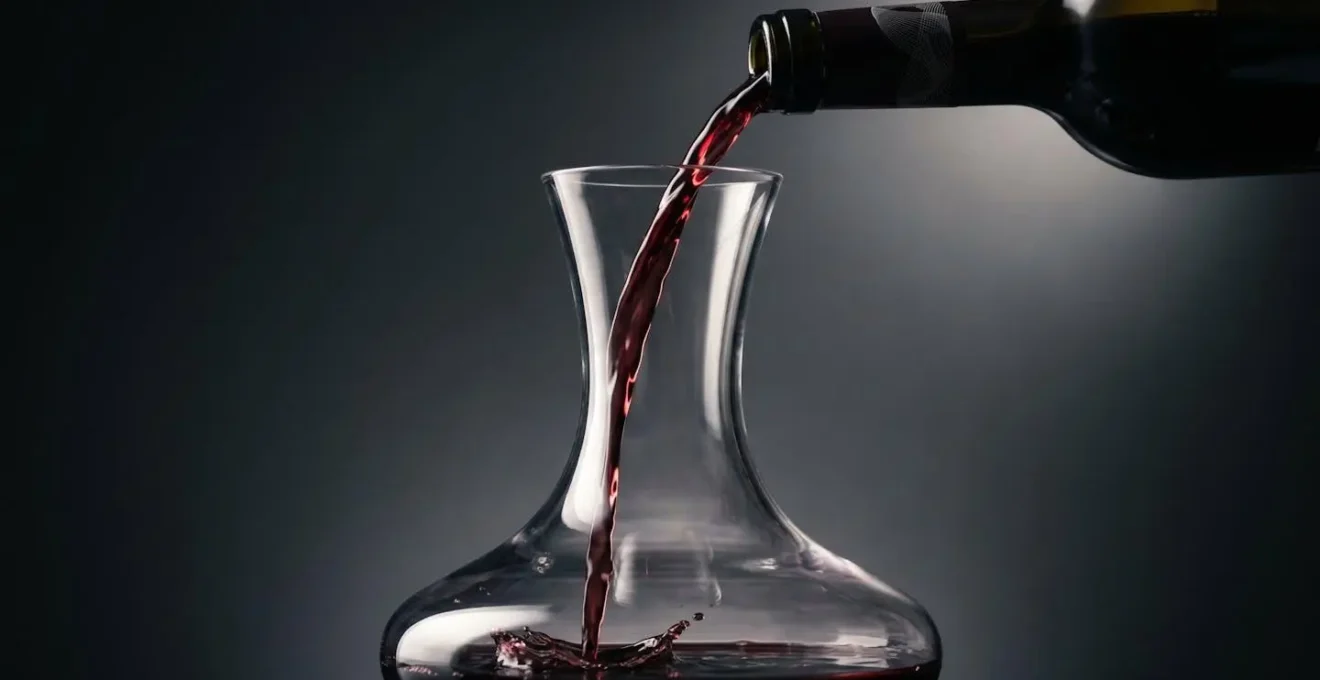
For a young, powerful Bordeaux (less than 5-7 years old), the tannins are often formidable. Pairing it with a rich dish like roast lamb immediately upon opening can be a clash. The wine’s assertive structure can overpower the food, and the pairing can feel harsh. However, by decanting the wine—pouring it into a separate vessel to expose it to oxygen—you can dramatically change the outcome. This is especially true for young, tannic wines.
The advice from the top châteaux is clear. As Vincent Millet, General Director of the esteemed Château Calon-Ségur, states in an interview, aeration is key for youth: “Our recommendation for young wines is to let them breathe through decanting a few hours before tasting, because the aromas will be released much more easily.” For a young Bordeaux or a similarly structured red, decanting it one to two hours before you plan to serve it with your main course is a good rule of thumb. This gives the wine enough time to soften and open up, transforming it from a tightly coiled spring into a silky, expressive partner for your food.
What about very old, fragile wines (20+ years)? Here, the logic reverses. Extended aeration can cause their delicate, tertiary aromas to dissipate quickly. For these venerable bottles, you might simply pull the cork 30 minutes before serving, or decant gently just before pouring to separate the wine from its sediment, not for extensive aeration.
Timing is everything. By anticipating the wine’s needs and giving it the time it requires to breathe, you ensure it arrives at the table at its peak, ready to create a harmonious pairing rather than an abrasive one.
Why Can Cassoulet Never Taste Exactly Right When Made Outside Its Home Region?
Some dishes are so deeply entwined with their place of origin that they resist replication elsewhere. Cassoulet is the quintessential example. This hearty, slow-cooked casserole of white beans, duck confit, pork, and sausage is the soul of the Languedoc region in southwest France. You can follow an authentic recipe in a London kitchen, using the finest imported ingredients, and it will be delicious. But it will never taste exactly like it does in Toulouse or Carcassonne. The reason goes beyond the recipe; it lies in the very terroir that the dish and its traditional wine pairing share.
The concept of “terroir memory” is at its most potent here. The specific variety of white beans (Tarbais beans), the fat from the ducks and geese raised locally, even the water used—all contribute subtle but crucial characteristics to the dish. This is not romanticism; it’s a matter of micro-regional agriculture and environment. The dish didn’t just appear; it evolved over centuries using what was abundant in that specific place.
The same is true for the wine. The classic pairing for Cassoulet is not a generic, full-bodied red. It is specifically a red from the Languedoc, often from appellations like Corbières or Minervois. These wines are typically blends of Grenache, Syrah, and Mourvèdre, grapes that thrive under the hot southern sun. They have rustic, earthy notes, hints of wild herbs (garrigue), and a sturdy tannic structure that is a perfect foil for the rich, fatty Cassoulet. The wine didn’t just happen to work; it grew up alongside the dish’s ingredients.
Case Study: The Inseparable Bond of Cassoulet and Languedoc Red
The traditional service of Cassoulet in the Languedoc illustrates this bond. As detailed in analyses of French regional pairings, the dish is served in traditional earthenware pots within the cities of Toulouse and Carcassonne. The pairing is invariably a local red blend. The wine’s tannins cut through the fat of the confit and sausage, its earthy spice notes complement the beans and herbs, and its robust character stands up to the dish’s intensity. This isn’t a pairing created by a committee; it’s the result of generations of shared existence in the same terroir.
When you eat Cassoulet with a Languedoc red in its home region, you are tasting more than just food and wine. You are tasting a complete, self-contained ecosystem—a flavour profile that simply cannot be exported in its entirety.
Why Does Summer Comté Taste Completely Different From Winter Comté Despite Same Producer?
Even within a single, highly specific terroir, there are layers of complexity that apps can’t capture. Seasonality is one of the most profound. A perfect example is Comté, the magnificent hard cheese from the Jura mountains of eastern France. An app might simply list “Comté” and suggest a wine. But a sommelier knows a critical secret: a Comté made from summer milk is a completely different cheese from one made from winter milk, and each demands a different pairing.
This difference is a direct result of the cows’ diet, which is strictly regulated by the Comté AOC. In the summer (from April to November), the Montbéliarde and Simmental cows graze on high-altitude pastures, feasting on a diverse array of over 150 types of flowers and grasses. This rich, varied diet produces milk that is intensely aromatic, yielding a cheese with complex floral, fruity, and nutty notes. This is known as Comté d’Été (Summer Comté).
In the winter, the cows are brought down to the barns and fed locally harvested hay. While still high-quality, this diet is far less diverse. The resulting milk is richer in fat but has a simpler aromatic profile. The cheese, Comté d’Hiver (Winter Comté), tends to have more milky, lactic, and vegetal notes. Both are aged, but their fundamental character is set by the season of their creation.
This seasonal variation completely changes the pairing game. The aromatic complexity of a 24-month-old Summer Comté can be beautifully matched with a nuanced, oxidative Vin Jaune from the Jura. The wine’s walnut and spice notes create a stunning harmony with the cheese’s dense, crystalline paste. As pairing experts from Chef & Sommelier advise, for this specific match, even the glassware matters: “Aged Comté & Vin Jaune (Jura) → Wide, round glass to release walnut and spice notes in echo to the dense paste.” The milder, creamier Winter Comté, however, might be better served by a less intense local white wine, like a Chardonnay from Arbois, which won’t overwhelm its more delicate profile.
An app that just says “Comté” is giving you a fraction of the story. A true enthusiast learns to ask: is this a summer or a winter cheese? The answer opens up a new world of pairing possibilities.
Key Takeaways
- True French pairing is based on “terroir memory”—the idea that what grows together, goes together—not generic flavour matching.
- Focus on structural harmony (acidity, tannin, texture) over simple flavour. Learn to feel how a wine interacts with food.
- Context is crucial. Technical details like serving temperature and aeration can make or break a pairing, regardless of how perfect it is on paper.
Why Does the Perfect Wine Pairing at a French Restaurant Fail at Your Home Table?
We’ve now arrived at the heart of the matter. You’ve experienced a transcendent food and wine pairing at a great French restaurant. The memory is seared into your brain. You buy the exact same wine and cook the exact same dish at home, yet the magic is gone. The experience is pleasant, but it’s a pale echo of the original. This frustrating phenomenon is not your fault, nor is it a failure of your palate. It happens because you are missing the most crucial, invisible ingredient: professional curation.
In a serious French restaurant, the wine list and the menu are not created in isolation. They are the result of a constant dialogue between the chef and the sommelier. The sommelier knows the cellar inside and out, and the chef understands every component on the plate. Together, they architect the meal. This is a level of synergy that is almost impossible to replicate at home. France has long been considered the global benchmark for this, with a cultural emphasis on creating a seamless experience.
This “dialogue between glass and plate” allows for incredibly precise adjustments. The chef might add a dash more acidity to a sauce to better match a high-acid wine, or the sommelier might choose a wine from a specific vintage whose tannins have softened perfectly to complement a particular cut of meat. It’s a holistic process where every element we’ve discussed—terroir, structure, temperature, and aeration—is controlled and optimized by two experts working in concert.
Master Sommelier analysis reveals that in traditional French dining, wine is rarely an afterthought; it is part of the meal’s architecture. When chefs and sommeliers work together from the beginning of menu development, wines can be chosen to highlight specific ingredients or contrast certain textures, creating a dialogue between glass and plate that is difficult to replicate without professional curation.
– Sommelier analysis, Somm.us
Instead of feeling discouraged, see this as empowering. You now understand the principles. You can control the temperature, you can aerate your wine, and you can seek out regional pairings. You may not have a Michelin-starred team in your kitchen, but by applying this sommelier mindset, you can get infinitely closer to recreating that magic at your own table.