The exorbitant price of a Grand Cru wine is rarely a simple reflection of its quality, but rather a signal of market mechanics you can learn to exploit.
- Scarcity and brand prestige create “Veblen goods,” where high prices themselves drive demand, disconnecting cost from intrinsic quality.
- True value is often found in Premier Cru vineyards with Grand Cru-level reputations or by strategically timing purchases to avoid critic-driven hype.
Recommendation: Shift your focus from buying famous labels to understanding market inefficiencies. This is the key to acquiring exceptional wines without paying a premium for marketing alone.
You’re a discerning collector. You see two bottles of Burgundy, both rated 96 points by a trusted critic. One, a Premier Cru, is £200. The other, from a Grand Cru parcel just a stone’s throw away, commands £2,000. The logical part of your brain screams that the quality difference cannot possibly justify a tenfold price increase. You are, of course, correct. The fine wine market is not a straightforward meritocracy; it is a complex theatre of economics, psychology, and carefully managed scarcity.
The common advice to “buy what you like” or “look for rarity” is insufficient. It fails to explain the powerful forces that dictate these eye-watering prices. The truth, known to auction house insiders and seasoned collectors, is that the price tag on a Grand Cru is often more about its status as a Veblen good—a luxury item whose demand increases as its price rises—than its objective superiority in the bottle. This disconnect, however, is not a trap for the wealthy but an opportunity for the wise.
This article will not give you a list of “top 10 bargain Burgundies.” Instead, it will equip you with the strategic mindset of a market insider. We will deconstruct the architecture of prestige pricing, expose the red flags of the secondary market, and reveal the actionable strategies used to acquire extraordinary wines at prices that reflect their quality, not just their fame.
This guide provides a framework for navigating the complexities of the fine wine market. We will explore the economic principles behind pricing, compare the major French regions, and offer practical tools for authentication and acquisition, allowing you to build a collection based on knowledge, not just expenditure.
Summary: Decoding the True Value of Prestigious French Wines
- Why Do Some Grand Cru Wines Cost 10 Times More Than Equally Rated Neighbours?
- How to Find Grand Cru Quality at Premier Cru Prices From Lesser-Known Domaines?
- Burgundy or Bordeaux Grand Cru: Which Prestigious Wine Suits Your Taste and Budget?
- The Provenance Red Flag That Exposes 15% of Secondary Market Grand Cru As Suspect
- When Should You Buy the New Vintage for Best Price Before Critics Drive Demand?
- Champagne with Oysters or Burgundy with Boeuf: Which Pairing Impresses More at a Dinner Party?
- Why Are the Same Artists Priced Different in Paris Versus London Galleries?
- Why Does Your Wine Pairing Advice From Apps Never Match What French Restaurants Serve?
Why Do Some Grand Cru Wines Cost 10 Times More Than Equally Rated Neighbours?
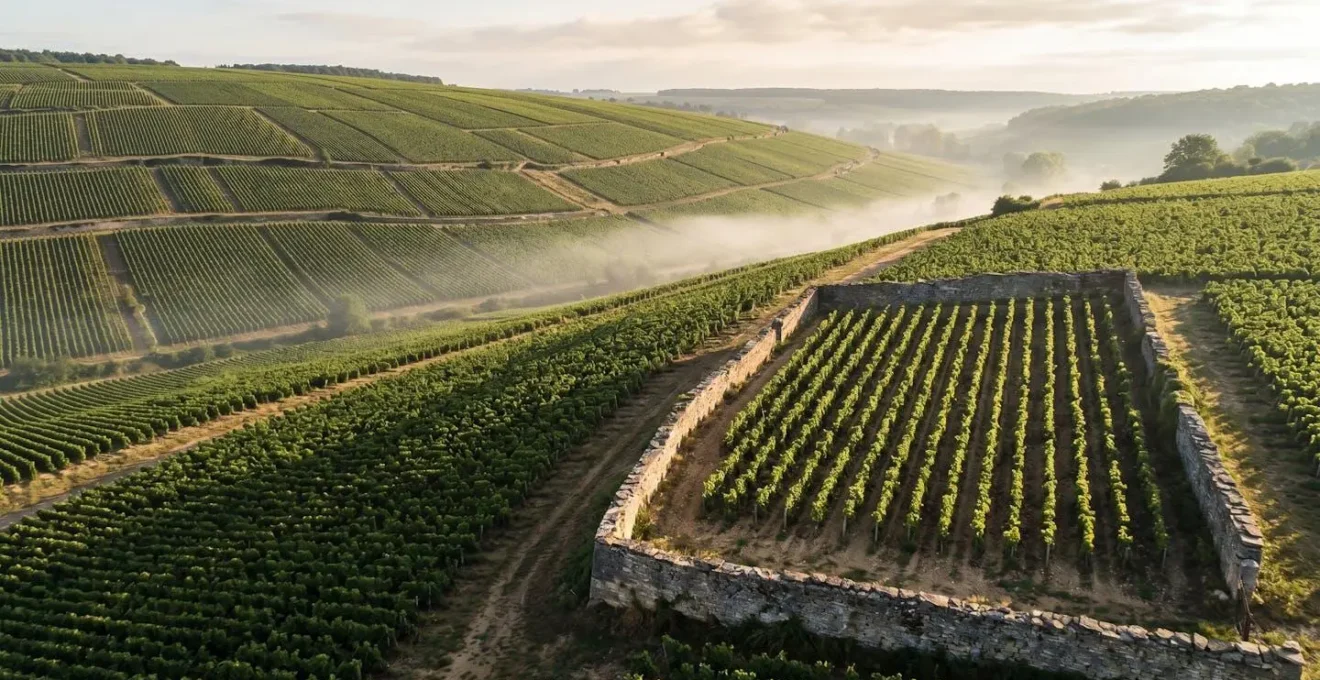
The answer lies in a potent combination of extreme scarcity and powerful economic psychology. The first part is simple geography and regulation. In Burgundy, the Grand Cru appellations are minuscule, often just a few hectares. These hallowed plots produce a tiny fraction of the region’s output; in fact, Grand Crus represent only 2.5% of volume but generate 20% of total export value. This inherent scarcity of land creates a foundational scarcity of product. When a globally desired wine is produced in quantities that can be counted in barrels, not lorry loads, high prices are inevitable.
However, scarcity alone doesn’t explain a tenfold price differential. This is where the market departs from simple logic and enters the realm of behavioural economics. The most coveted Grand Crus function as “Veblen goods,” a concept first described by economist Thorstein Veblen. As he noted in The Theory of the Leisure Class:
A Veblen good is a type of luxury good for which the demand increases as the price increases, in apparent contradiction of the law of demand, resulting in an upward-sloping demand curve.
– Thorstein Veblen, The Theory of the Leisure Class (1899)
For these wines, the exorbitant price is part of the product. It acts as a powerful signal of status, success, and connoisseurship. A collector isn’t just buying fermented grape juice; they are acquiring a tangible piece of a legend, a story, and an exclusive club. The high price validates the purchase, creating a feedback loop where the more expensive it gets, the more desirable it becomes to a certain segment of the market. This is why a neighbouring plot with identical soil and climate can be a fraction of the price: it lacks the specific brand magic and historical momentum to have achieved this Veblen status.
How to Find Grand Cru Quality at Premier Cru Prices From Lesser-Known Domaines?
The smartest collectors don’t just chase the most famous Grand Cru labels; they engage in what I call “classification arbitrage.” This strategy involves identifying vineyards that were, for historical or political reasons, denied Grand Cru status but are universally acknowledged to produce wine of that calibre. The system of appellation is not a perfect measure of quality; it’s a bureaucratic framework, and its quirks create pockets of incredible value for those who know where to look.
You must hunt for the overachievers—the Premier Cru vineyards that consistently outperform their classification. These are often parcels adjacent to famous Grand Crus, sharing similar terroir but not the name. Look for producers who are fanatical about their farming and winemaking, effectively elevating their Premier Cru sites to Grand Cru levels of quality through sheer effort and talent. These “lesser-known” domaines are often where true passion for viticulture outshines a lust for marketing, resulting in wines of profound character and relative value.
The key is to follow the critics and the market, but with a nuanced eye. When you see a specific Premier Cru consistently receiving scores on par with its Grand Cru neighbours, and when sommeliers at top restaurants speak of it in hushed tones, you’ve found a candidate. This is where knowledge, not just wealth, builds an exceptional cellar.
Case Study: Clos Saint-Jacques, the Uncrowned Grand Cru
A textbook example of classification arbitrage is the Premier Cru vineyard Clos Saint-Jacques in Gevrey-Chambertin. It is widely considered to produce wine of Grand Cru quality, despite its official classification. Esteemed critics like Clive Coates have stated it is “clearly head and shoulders above all the other Gevrey premier crus” and, crucially, is “priced accordingly as the equal of a grand cru.” The vineyard’s exclusion from Grand Cru status in the 1930s was not due to a deficit in quality, but because of an arbitrary INAO rule requiring direct adjacency to the famous Le Chambertin vineyard. For the informed collector, Clos Saint-Jacques offers the prestige and quality of a Grand Cru, often without the same level of speculative frenzy attached to its officially classified neighbours.
Burgundy or Bordeaux Grand Cru: Which Prestigious Wine Suits Your Taste and Budget?
The choice between the two titans of French wine, Burgundy and Bordeaux, is one of the most fundamental decisions a collector faces. It is a choice not just of grape variety—Pinot Noir and Chardonnay versus Cabernet and Merlot blends—but of market philosophy, risk profile, and cellar strategy. Viewing them through an investment lens reveals their starkly different personalities. Bordeaux is akin to a blue-chip stock, while Burgundy is a high-growth tech startup.
Bordeaux, with its large, historic Châteaux, offers stability and liquidity. Production volumes are vastly higher, making the market more predictable. Price movements are generally more measured. Burgundy, by contrast, is a game of micro-production and extreme scarcity. This creates a market characterised by higher volatility but also the potential for explosive price appreciation. Indeed, while the entire fine wine market experiences corrections, the nature of the swings differs; recent indices show that Burgundy Grands Crus can exhibit sharp rebounds after periods of correction, reflecting their high-risk, high-reward nature.
This comparative table, based on recent market analysis, breaks down the key differences for a collector considering where to allocate their capital. It highlights how Bordeaux offers a more stable, liquid investment, while Burgundy presents a path to potentially greater, albeit more volatile, returns.
| Investment Factor | Bordeaux Grand Cru | Burgundy Grand Cru |
|---|---|---|
| Price Volatility | Lower (4.4% decline Q3 2024) | Higher (2% decline Q3 2024, but more dramatic swings) |
| Production Volume | Larger estates, more bottles | Micro-production, extreme scarcity |
| Investment Profile | Blue-chip stock: stable, predictable | Tech startup: volatile, high-risk/high-reward |
| Market Liquidity | High – easier to buy and sell | Lower – fewer bottles available |
| Price Appreciation Potential | Moderate, consistent growth | Explosive potential due to scarcity |
| Drinking Window Risk | Many vintages mature in 15-20 years | Young Grand Crus often undrinkable for 10+ years |
The Provenance Red Flag That Exposes 15% of Secondary Market Grand Cru As Suspect
In the high-stakes world of fine wine, the single most important word is provenance. It is the record of a bottle’s ownership history and storage conditions, and it is the ultimate guarantor of authenticity and quality. A pristine bottle of 1982 Lafite that has been stored in a hot garage is worth less than an empty bottle. Worse, the secondary market is rife with sophisticated forgeries. While the exact figure is debated, it’s not uncommon for insiders to estimate that up to 15% of high-end bottles in circulation could be suspect. Your best defence is not a leap of faith in a dealer, but a healthy dose of scepticism and a forensic mindset.
You must become a detective, learning to spot the subtle “tells” that separate a genuine, well-stored bottle from a clever fake or a poorly treated one. This involves a meticulous examination of the bottle itself, a process I call “Bottle CSI.” It’s about looking for anachronisms—a modern font on a supposedly old label, a capsule design that doesn’t match the vintage, or a cork that appears too new. It also involves assessing the physical signs of aging. The fill level (ullage) is a critical indicator of storage; a low shoulder fill on a 20-year-old bottle is a major red flag for poor storage or tampering.
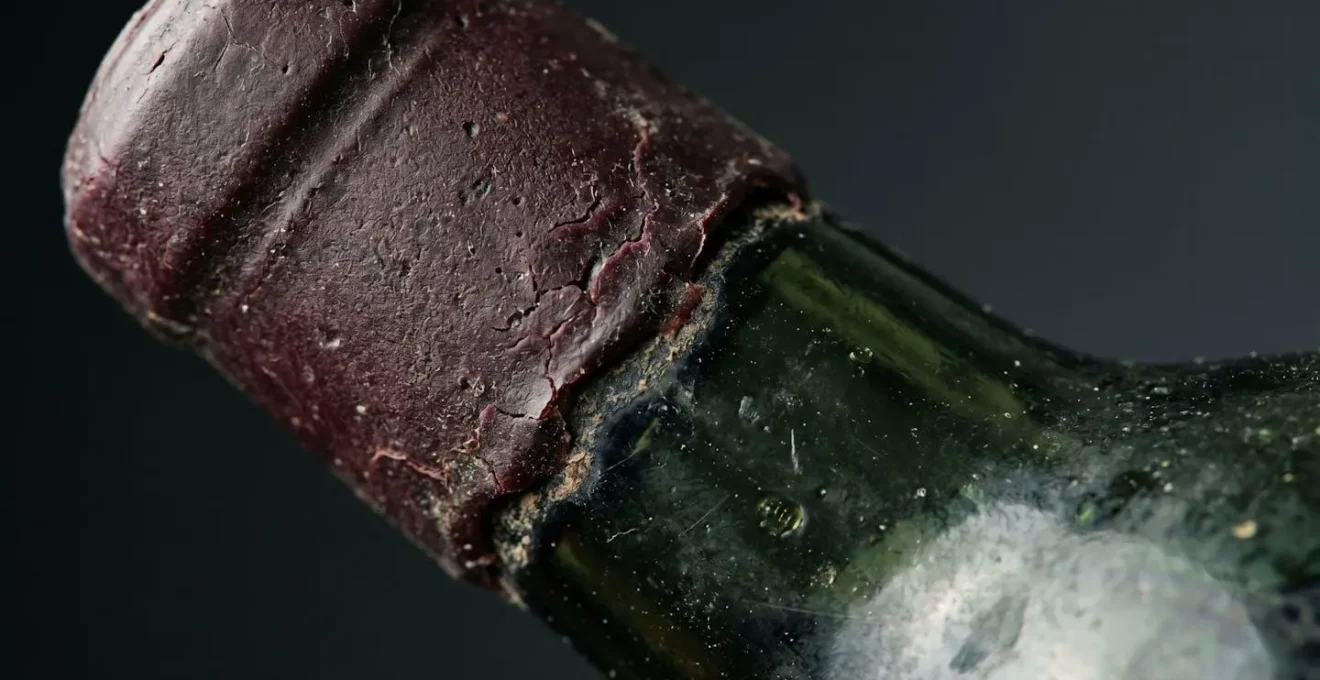
By training your eye to spot these inconsistencies, you shift from being a passive buyer to an active authenticator. The following checklist outlines the key steps in this forensic examination. It is the routine every serious collector should perform before committing to a significant secondary market purchase.
Your Bottle CSI: A 5-Point Authentication Checklist
- Check ullage (fill level): Examine the air space against the wine’s age. Excessive ullage is a primary red flag for poor storage, evaporation, or potential refilling.
- Examine label and capsule: Scrutinise the design, paper, and printing for anachronisms. Compare them against verified examples from the same vintage. A modern barcode on a 1970s bottle is an obvious fake.
- Identify re-corking signs: Look for mismatched cork branding, inconsistencies in the wax seal, or signs that the original capsule has been disturbed. Reputable Châteaux have specific re-corking protocols.
- Assess sediment patterns: A mature wine, particularly Burgundy, should display fine, light sediment. An absence of sediment in a very old bottle, or the presence of coarse, heavy sediment, can be suspicious.
- Verify provenance documentation: The paper trail is paramount. Trace the bottle’s history through import strips, auction house stickers, and any available records to confirm its journey and storage conditions.
When Should You Buy the New Vintage for Best Price Before Critics Drive Demand?
Timing is a critical, and often misunderstood, element of acquiring fine wine for value. The common assumption is that buying “En Primeur” (as futures, before bottling) or immediately upon release is always the cheapest option. This is a dangerous oversimplification. The fine wine market is cyclical and heavily influenced by critic scores and subsequent hype. The key is not to buy earliest, but to buy smartest, often by moving against the tide of popular demand.
The strategic moment to purchase is often in the quiet period after the initial release but before the major critics publish their in-bottle scores. During this window, the initial flurry of En Primeur interest has subsided, and the market is relatively calm. This is your opportunity. Once a critic like Neal Martin or Antonio Galloni awards a high score (98-100 points), demand can surge overnight, and prices can jump by 20-50% or more. Your goal is to have already secured your allocation before that happens.
Conversely, there is also an opportunity for patience. Hype cycles are not permanent. Wines bought at the peak of a “vintage of the century” frenzy can often be found for less a few years later, once the market’s attention has moved on. As a recent industry report noted, this phenomenon provides a second chance for savvy buyers. This insight from WineCap’s analysis of the market is telling:
Many wines from the 2019 vintage, which had previously appreciated in value, have now returned to their original release prices.
– WineCap, Q2 2024 Fine Wine Report
This demonstrates that patience can be rewarded. The collector who resists the initial FOMO (Fear Of Missing Out) can often acquire the same wines later, after the speculative heat has dissipated. The ultimate strategy is a dual approach: identify and buy potential superstars before the major scores are released, and patiently wait for the hype around other vintages to cool down.
Champagne with Oysters or Burgundy with Boeuf: Which Pairing Impresses More at a Dinner Party?
At a certain level of dining, wine pairing transcends simple flavour matching and becomes a form of social communication. Both “Champagne with Oysters” and “Burgundy with Boeuf Bourguignon” are classic, correct pairings. But for the connoisseur, they broadcast very different messages. The choice you make reveals the depth of your understanding and the specific kind of impression you wish to cultivate. It’s not about which is “better,” but which is more sophisticated in context.
Champagne with Oysters is the epitome of classic luxury. It’s elegant, celebratory, and universally understood as a high-end experience. The acidity and minerality of a good Blanc de Blancs cut through the brininess of the oyster perfectly. However, it is also a “safe” choice. It signals wealth and good taste but doesn’t necessarily signal deep, nuanced wine knowledge. It is the a choice that is difficult to get wrong, and for that reason, it can feel a bit expected in knowledgeable circles.
Burgundy with Boeuf Bourguignon, on the other hand, is a pairing of profound regional and historical synergy. It speaks to a deeper understanding of terroir and culinary tradition. To select not just any Pinot Noir, but a specific Gevrey-Chambertin or Pommard that echoes the earthy, savoury notes of the classic Burgundian stew, is a masterstroke. This choice says, “I understand not just flavours, but culture.” It is a more intellectual, and arguably more impressive, pairing because it demonstrates a commitment to the “why” behind the match, not just the “what.” It elevates the meal from a display of luxury to a curated cultural experience.
Why Are the Same Artists Priced Different in Paris Versus London Galleries?
This question, translated to the wine world, is: why does the same bottle of Grand Cru cost something different in Beaune, London, or Hong Kong? The answer is market friction and geographic arbitrage. A wine bottle is not a globally standardized commodity like a share in a company. Its price is heavily influenced by local taxes, import duties, shipping costs, and, most importantly, the dynamics of the local market and the prestige of the sales channel. A top London auction house, for example, attracts a global client base willing to pay a premium for impeccable provenance and the thrill of competition, driving prices to stratospheric levels.
The prices realized at a high-profile auction are not just a reflection of the wine’s quality, but of the auction house’s brand and the concentration of wealth in the room. A recent WineCap report highlights this, noting that at a London auction, the average case price for Domaine de la Romanée-Conti hit an astonishing £221,233. That same wine, sourced through a different channel closer to the vineyard, would almost certainly have a different price point. This discrepancy creates opportunities for the savvy collector.
Case Study: Sotheby’s Historic Beaune Auction
The power of location and prestige was perfectly illustrated on July 5, 2024. Sotheby’s held its first-ever single-owner Burgundy sale in Beaune, the heart of the region. The sale, held in the historic Caves du Couvent des Cordeliers, achieved €2 million. In a stunning demonstration of auction dynamics, six bottles of Chevalier Montrachet from Domaine d’Auvenay 2009 fetched €106,250. This event proved that bringing the prestigious brand of a global auction house directly to the source could create a unique, high-energy sales environment, influencing prices in a way that would be different from a standard auction in London or New York.
For the collector, this means that where you buy is as important as what you buy. Building relationships with trusted merchants in different markets, understanding local tax implications, and being willing to buy outside the major auction hubs can lead to significant savings. It requires more effort than a single click on a London merchant’s website, but it’s the professional way to build a collection with an eye on value.
Key Takeaways
- The price of elite wines is driven by scarcity and psychology (Veblen effect), not just quality.
- Find exceptional value by targeting top-tier Premier Cru vineyards that perform at a Grand Cru level.
- Authentication is paramount; learn to spot the forensic red flags of fake or poorly stored bottles.
Why Does Your Wine Pairing Advice From Apps Never Match What French Restaurants Serve?
You’ve experienced it. You use a sophisticated wine pairing app that tells you a crisp, high-acid white is the “perfect” match for your dish. Yet, when you’re in a Michelin-starred restaurant in Lyon, the sommelier confidently presents a light, earthy red. The app, driven by algorithms that match flavour profiles like acidity, tannins, and sweetness, is not wrong. But the sommelier is operating on a completely different, and arguably higher, plane of understanding. The app is playing checkers; the sommelier is playing three-dimensional chess.
Algorithmic pairing focuses on a scientific, deconstructed view of food and wine. It breaks them down into component parts and seeks a complementary or contrasting balance. This can be effective, but it misses the soul of the pairing: terroir and tradition. A French sommelier’s first thought is not “what flavour profile does this dish have?” but “where does this dish come from?” The most revered pairings in French gastronomy are born from centuries of regional co-evolution. The ingredients, the recipes, and the wines of a specific place grew up together. They are part of the same cultural DNA. The lamb from the Pauillac region has an affinity for the local Cabernet Sauvignon-based wines that no algorithm can fully quantify.
This philosophy is embodied by legendary figures in the wine world who prioritize authenticity over simple flavour matching. Their approach is a powerful reminder that wine is more than a beverage; it is a cultural artefact. As the influential importer Kermit Lynch, a champion of this ethos, might argue:
Legendary wine importer Kermit Lynch, who has won two James Beard awards, built his reputation as a proponent of natural wines that exemplify the region they originate in. His philosophy prioritizes terroir and traditional knowledge over algorithmic flavor matching, stating that wines should channel the characteristics of their geographic origin.
– Kermit Lynch
This is the secret. The app gives you a chemically correct answer. The sommelier gives you a culturally and historically resonant one. They are pairing the dish not just with a wine, but with a place. This is why their choices feel more profound, more “right,” even when they defy the simple logic of the algorithm. It is the pinnacle of the connoisseur’s mindset—an understanding that the greatest wines are, above all, a taste of somewhere.
The next time you consider a prestigious bottle, your first question shouldn’t be ‘What is the score?’ but ‘What is the story, and what is the market telling me?’ Begin applying this strategic framework today to transform your collection from a list of expensive labels into a portfolio of intelligent acquisitions.